
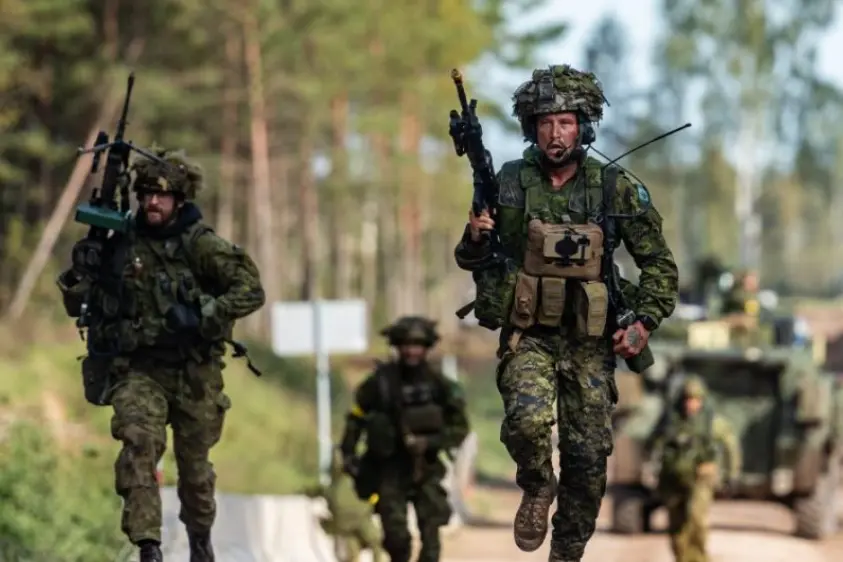
If you only know London by its quiet tree-lined streets and thriving food scene, you might never guess that this city once thundered with the boots of British regulars, the rumble of tank training, and the tearful goodbyes of tens of thousands of soldiers heading off to war.
For nearly 200 years, London was one of Canada’s most important military centres, not because of battles fought here, but because of battles launched from here.
Today, the military presence is quieter. But if you know where to look, from a bicycle saddle, no less, the evidence of London’s martial past is carved into its parks, barracks, and boulevards.
So let’s take a ride through time. Here’s how London grew from a British militia outpost into a national military heavyweight, and why that legacy is still worth celebrating today.
The Seed (1826–1837): A Town Built for Defence
Before London was a city, it was a strategic bet.
When London was founded in 1826, it was chosen for a reason. It wasn’t just picturesque; it was defensible. Situated inland, far from the threat of an American invasion, the original town plan featured unusually wide streets so that troops and artillery could manoeuvre. The Crown also set aside “King’s Reserves” – military land that would prove crucial later.
At this point, defence was strictly a British affair. There was no “Canadian military” yet. But London’s bones were already being built for one.
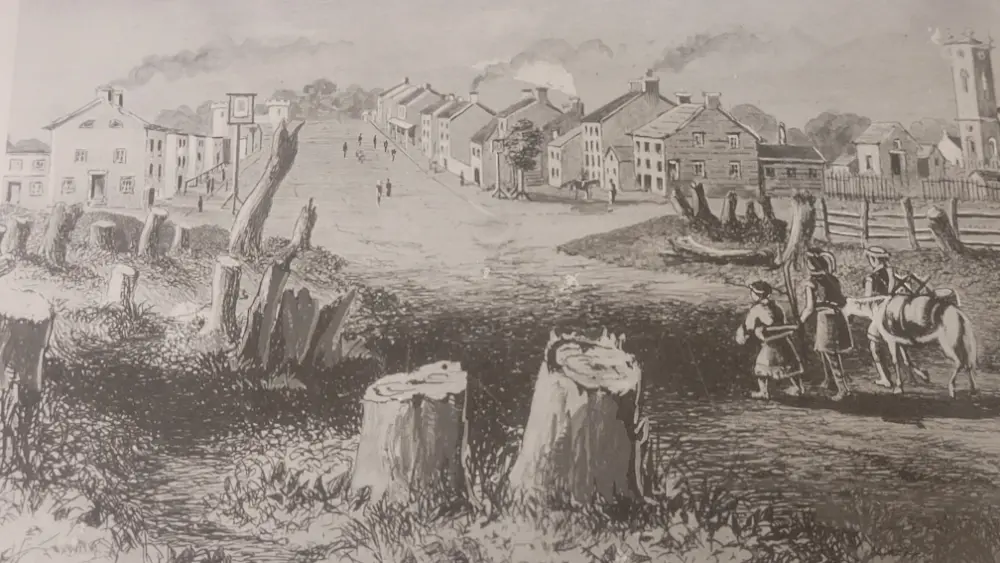
(From a painting by Lady Eveline-Marie Mitchell Alexander, courtesy of the 1999 Orr Collection at Museum London).
The Wake-Up Call (1837–1838)
London’s first real military test didn’t come from a foreign country. Instead, discontent was more local.
In December 1837, just outside London, a local reformer named Dr. Charles Duncombe gathered nearly 400 armed farmers. Their goal: march on the capital of Upper Canada, in support of William Lyon Mackenzie’s rebellion in Toronto.
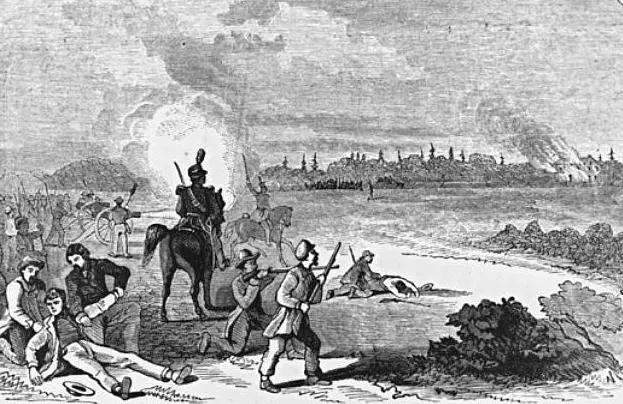
(Illustration by an Unknown artist, Canadian Military Heritage, Department of Defence. via Wikipedia).
However, enthusiasm for the uprising fizzled after Duncombe heard of Mackenzie’s defeat in the capital. When government forces approached Duncombe and his group near Hamilton, the rebels scattered without a single shot being fired. Duncombe and others fled to the USA.
But the aftermath for London was profound. The British Army decided it needed a permanent garrison in the frontier town.
“London was so thickly beset with disaffected Americans during the rebellion, that it was deemed necessary…to station this force in the heart of the district…”
~ Sir Richard Henry Bonnycastle, Canada and the Canadians, 1849
For the next 15 years (1838–1853), British regulars were stationed where Victoria Park now stands.
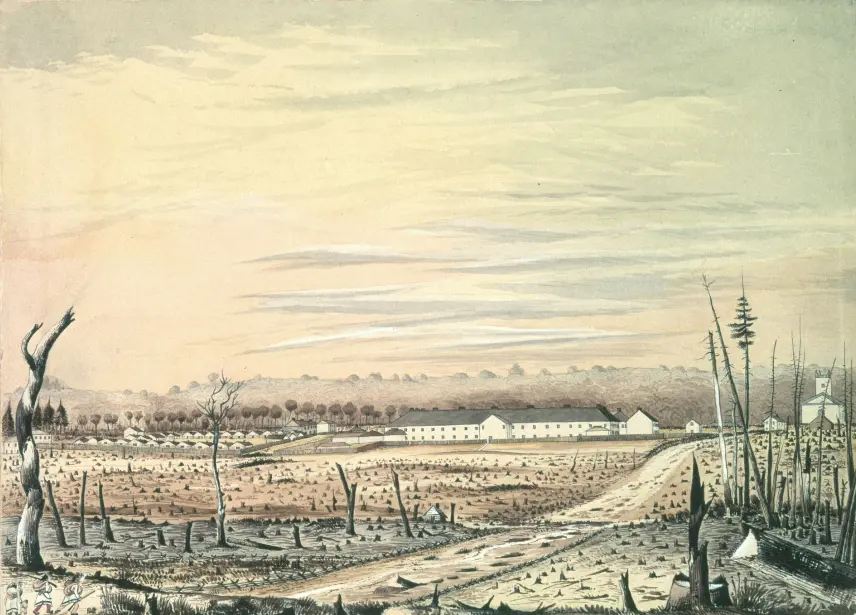
(Painting by Henry Ainslie, Library and Archives Canada).
The Birth of Canada’s Own Military (1855)
When the Crimean War pulled British troops to Europe from 1853 until 1861, London’s garrison of soldiers disappeared. Rather than leaving Canada defenceless, the Province of Canada passed the Militia Act of 1855, the true birth certificate of the Canadian Army.
Local volunteers stepped up. By 1866, London had formed the 7th Battalion Infantry, the direct ancestor of today’s famed Royal Canadian Regiment (The RCR). For the first time, Londoners were defending Canadian soil under a Canadian command.
Between 1866 and 1871, the American-based Fenian Brotherhood hoped to secure Ireland’s independence from Britain by capturing Canada.
British and Canadian officials, monitoring Fenian activity, deployed military forces to Sarnia, Windsor, and the Niagara Peninsula to engage the Fenians.
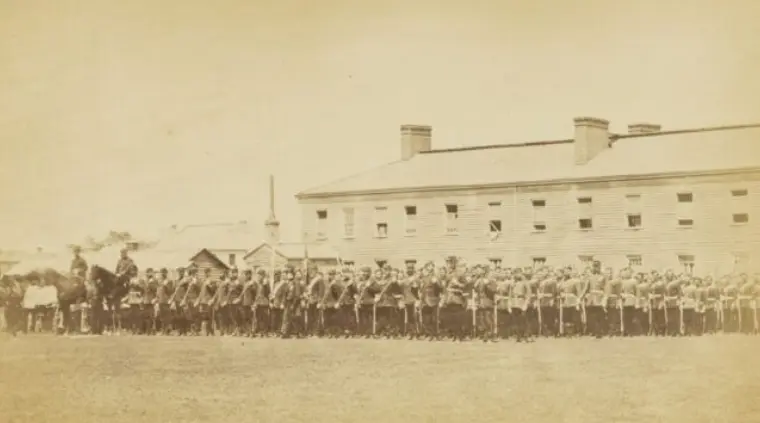
(Photo credit: H.J. Cleeve/ Museum London).
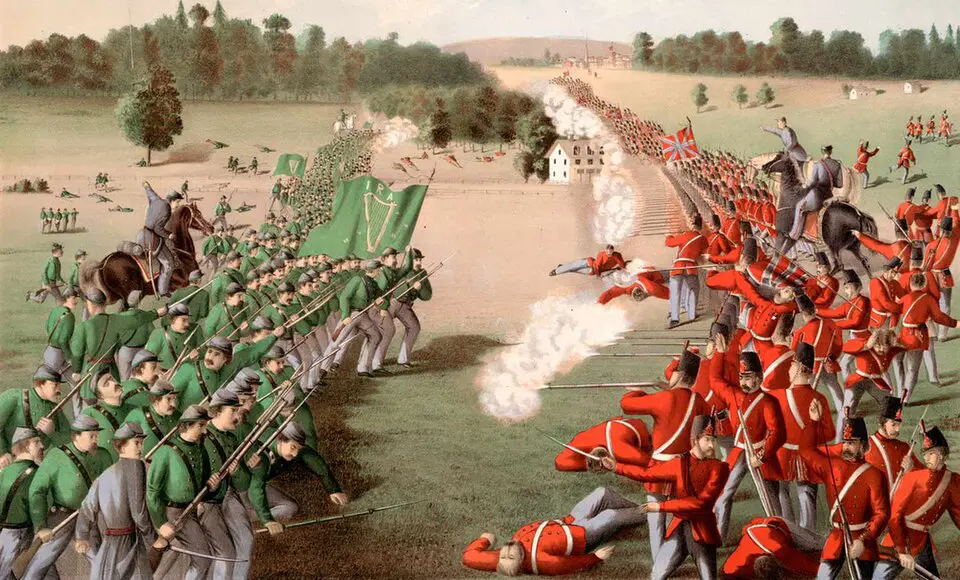
(Source: Library and Archives Canada).
London Becomes a Military Hub (1886–1918)
After Canada became a separate Dominion in 1867 and the Fenian threat was eliminated in 1871, the British military left Canada for good.
This is where London’s military reputation exploded.
Wolseley Barracks (1886) – Canada’s First Permanent Base
In 1886, the federal government built Wolseley Barracks on Oxford Street – one of Canada’s first permanent military installations. It was a game-changer. London was no longer just a militia town; it was a garrison town with full-time professional soldiers.
The RCR was born here in all but name, and Wolseley Barracks became the heartbeat of military life in Southwestern Ontario.
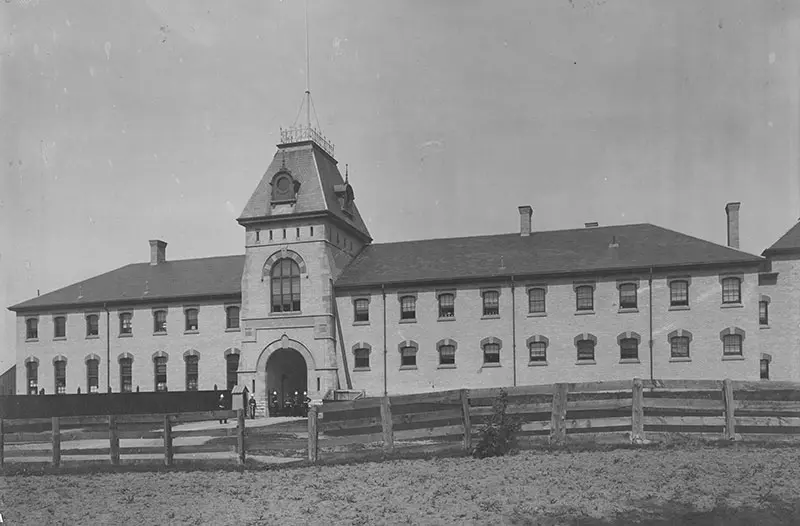
(Photo credit: National Historic Sites of Canada).
In addition to the regular forces at the Wolseley Barracks, a healthy reserve force was also built up at the London Armoury on Dundas Street.
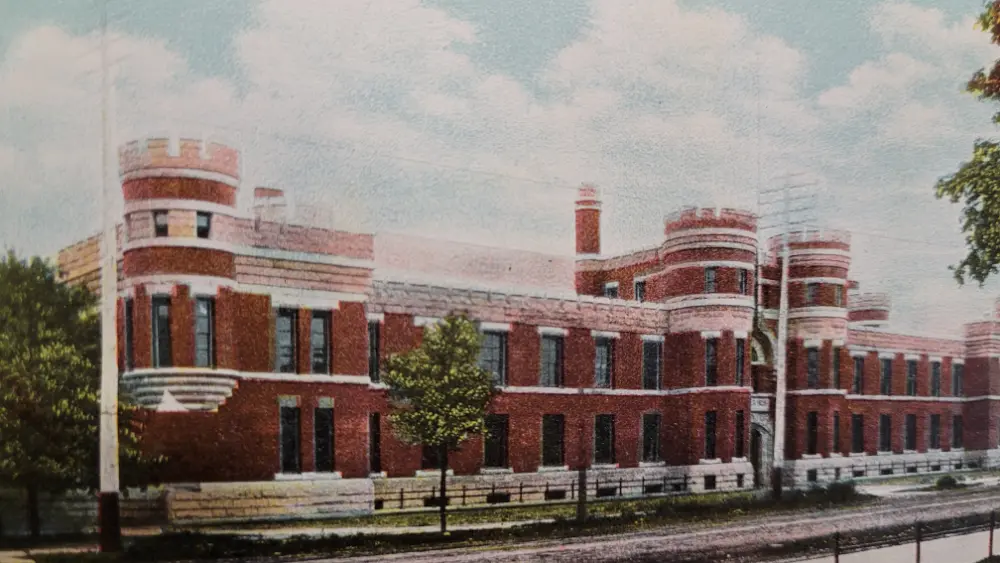
(Photo credit: London Post Card Collection, Box #97, Album #1, p. 3, pocket 2, Ivey Family London Room, London Public Library, London, Ontario, Canada).
When Great Britain went to war with the Boer Republic in South Africa, many English Canadians enlisted in the army, believing it was their duty to support the Mother Country. Many also hoped for adventure and an escape from humdrum lives.
On the home front, Londoners supported the troops, harnessed economic opportunities the war presented, and mourned their dead.
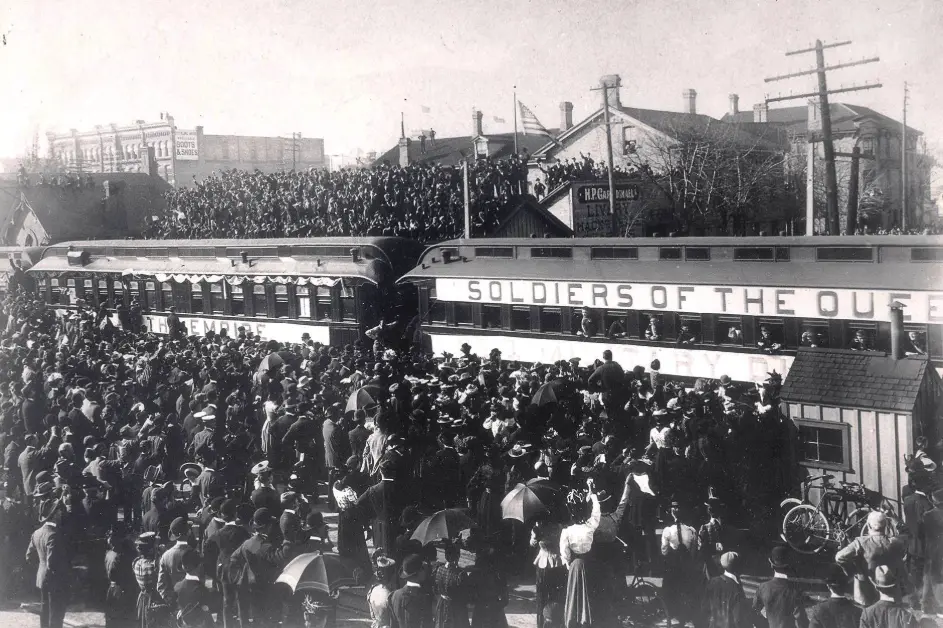
(Photo credit: Museum London).
World War I – Carling Heights Camp
During the Great War of 1914 to 1918, London was transformed into a giant training camp. Fields near the Western Fairgrounds and along Oxford Street became tent cities, where over 30,000 soldiers trained before shipping overseas. It’s hard to imagine today, but the area once echoed with drill sergeants and marching battalions.
London’s hospitals, Victoria and St. Joseph’s, became military wards. Local factories switched to war production. The entire city mobilized.
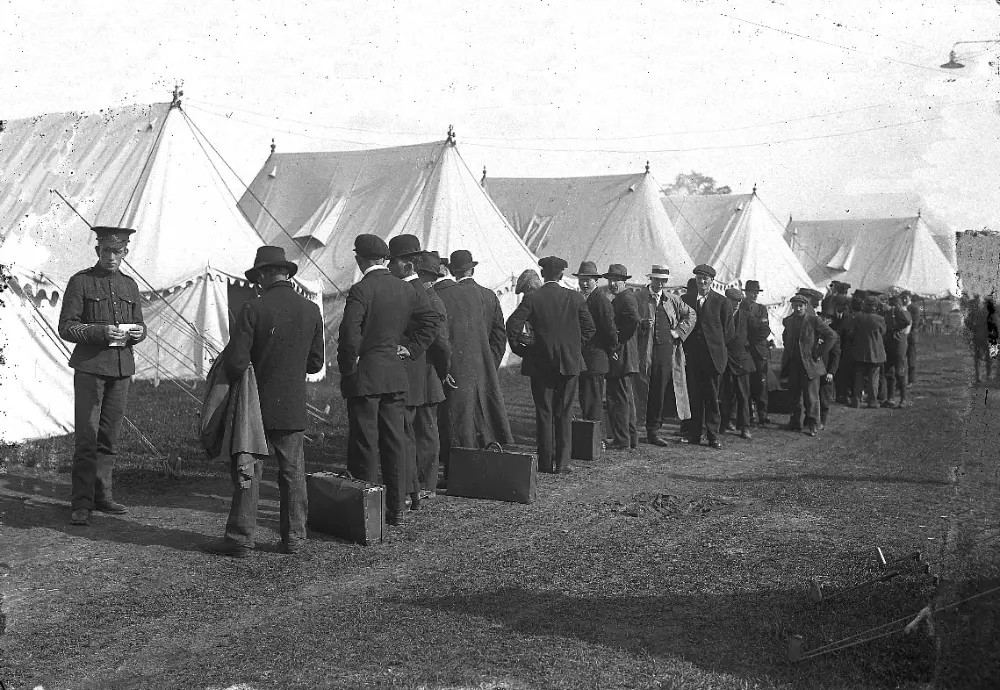
(Photo credit: Hines Studio Collection, Archives and Special Collections, Western University, London, Ontario).
London Military at Its Peak (1939–1945)
World War II was London’s finest military hour, and its heaviest lift.
- Over 100,000 soldiers were processed through No. 1 District Depot at Wolseley Barracks.
- 1st Hussars (London’s own armoured regiment) landed in Normandy just after D-Day. A London tank named the Holy Roller was the first Allied tank to enter Brussels.
- The Royal Canadian Regiment fought through Sicily, Italy, and the Netherlands, earning 26 battle honours.
- London’s factories were retooled for war. The city didn’t just support the war effort. It was the war effort in miniature.
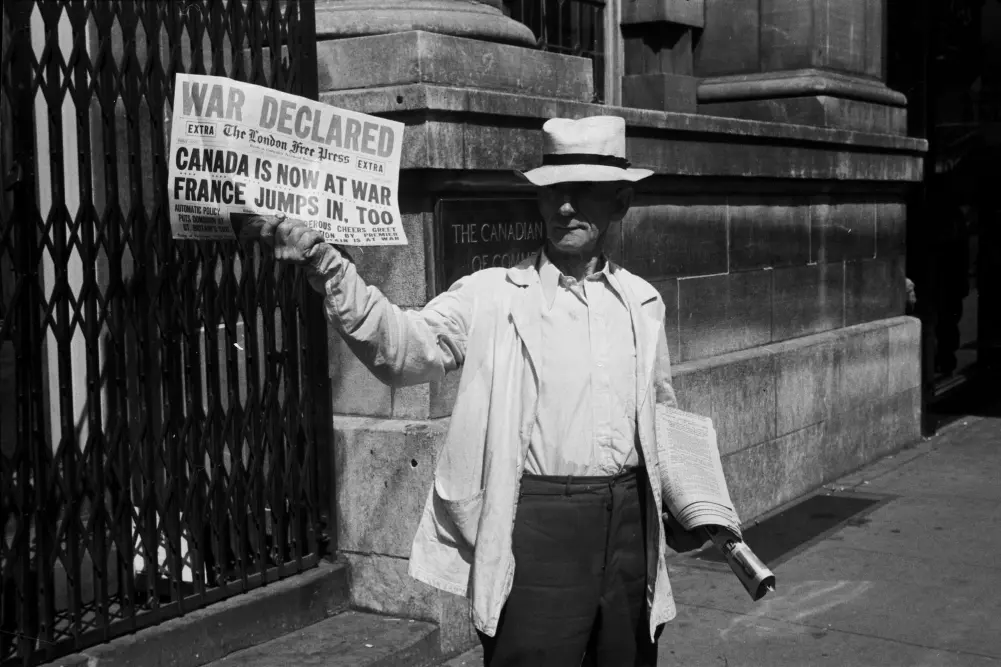
(Photo credit: Archives and Special Collections, Western University).
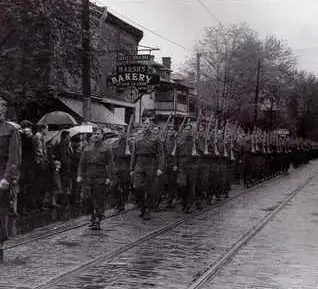
(Photo credit: Archives and Special Collections, Western University).
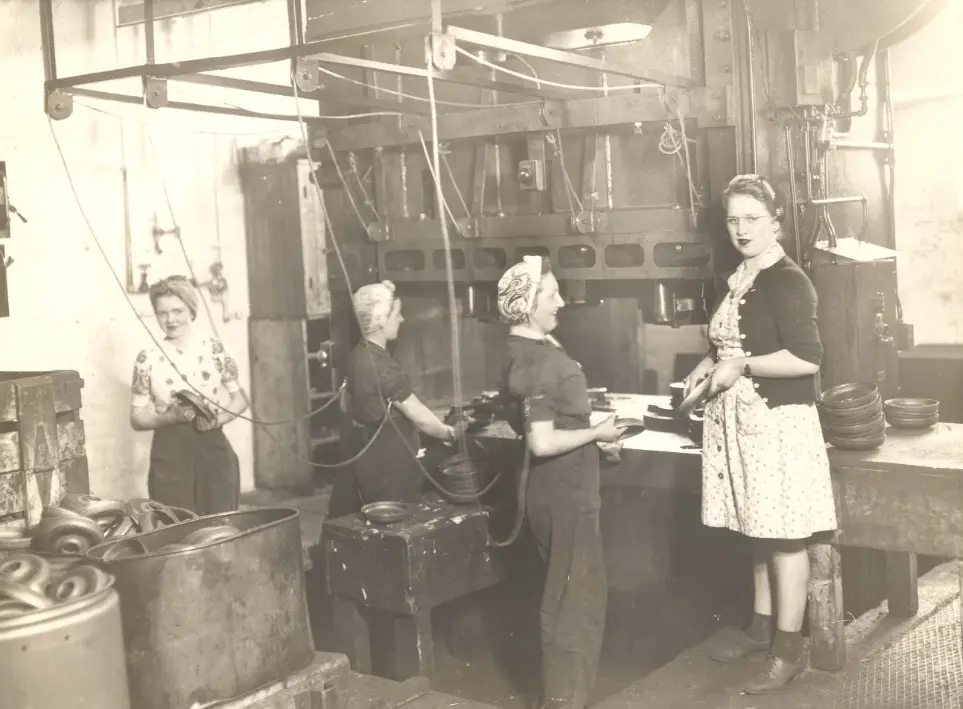
(Photo credit: Gift of Helen Cox/ Museum London).
The Human Side
Nearly every family in London had someone in uniform. The city’s armouries and fairgrounds were packed with fresh recruits. And at the train stations, crowds gathered to wave goodbye, often for the last time.
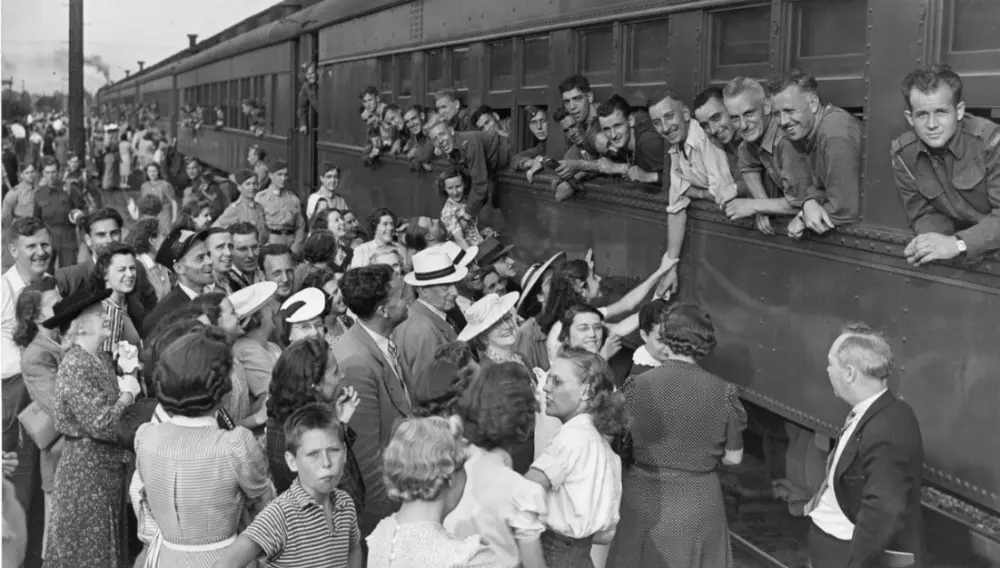
(Photo credit: Ivey Family London Room, London Public Library, London, Ontario, Canada).
The Long Plateau (1945–1994)
After WWII, most Canadian cities saw their military presence shrink. In contrast, London’s military presence stayed big.
CFB London
Wolseley Barracks was upgraded into Canadian Forces Base (CFB) London, a major training centre for infantry, small arms, and logistics. The 1st Battalion of The RCR was based here. Soldiers from across Canada came to London to learn how to fight.
For decades, London was one of the most important military towns in the country, second only to places like Petawawa or Halifax.
Peacekeeping and the Korean War
London soldiers served in Korea, Cyprus, the Golan Heights, and the former Yugoslavia. The city’s military wasn’t just training – it was actively keeping peace around the world.
The Slow Shift (1994–Present)
In 1994, defence cuts closed CFB London. The 1st Battalion, RCR moved to Petawawa. For the first time in over a century, London no longer had full-time regular force soldiers.
But that’s not the end of the story. It’s just a new chapter.
Today’s Military in London
London remains a proud reserve force hub:
- 4th Battalion, The Royal Canadian Regiment (reserve infantry)
- 1st Hussars (reserve armoured reconnaissance)
- 31 Service Battalion (logistics and support)
These aren’t weekend hobbyists. London reservists have served in Afghanistan and Bosnia. They’ve also responded to the COVID-19 pandemic and domestic disasters like floods and forest fires.
The military presence is quieter, but it’s still deeply professional, and deeply London.
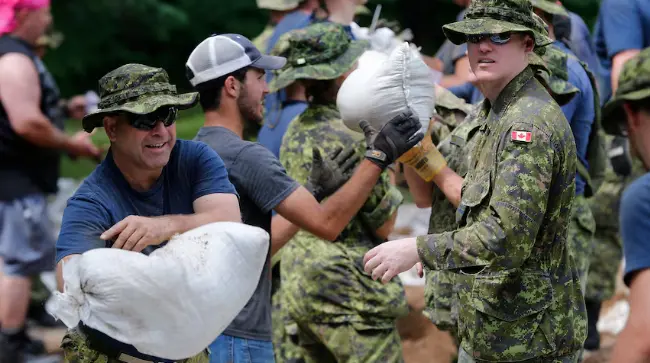
(Photo credit: John Woods/the Canadian Press).
Why This History Matters for a Visitor
Here’s the thing about London’s military story: it’s not about glorifying war. It’s about understanding how a quiet Canadian city became a quiet hero.
London has sent its sons and daughters to help others, over and over. The barracks, armouries, and parks aren’t battle monuments. They’re monuments to service.
And today, that service continues quietly. Reservists train on weekends. Cadet corps meet in the same drill halls their great-grandfathers did. The uniforms have changed, but the spirit hasn’t.
See It for Yourself – From a Bicycle Seat
You could read about London’s military history in a book. You could Google photos of Wolseley Barracks.
Or you could pedal it.
Here’s the best part for a curious traveller: almost all of London’s military history is visible from a bicycle seat. These sites are within easy cycling distance of each other. You don’t need a tank. All you need is a bicycle helmet and a little curiosity.
| Site | What You’ll See | Era |
|---|---|---|
| Victoria Park | Former British garrison site; with monuments to London’s fallen soldiers | 1838–1868 |
| Wolseley Barracks | Historic stone buildings, still an active reserve base | 1886–present |
| London Armouries | Former drill hall, now a 4-star hotel | 1905–1976 |
| Western Fair District | Grounds of “Camp London” (WWI & WWII training) | 1914–1945 |
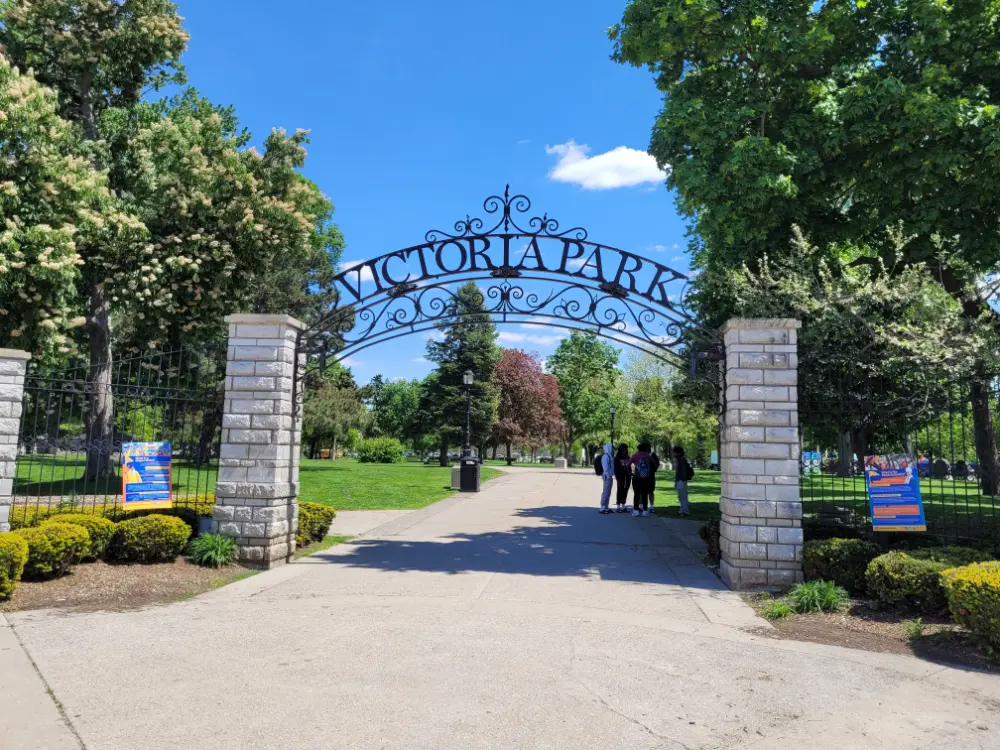
(Photo credit: Lawrence Durham).
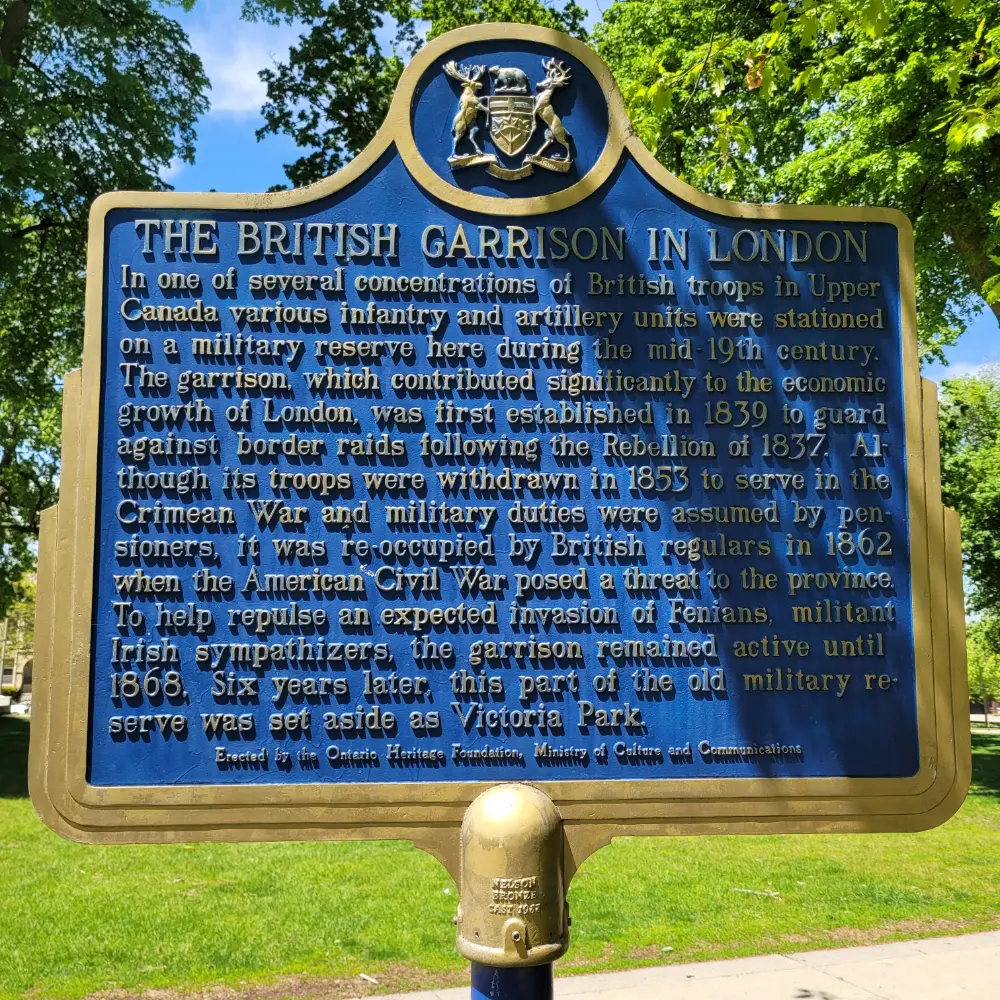
(Photo credit: Lawrence Durham).
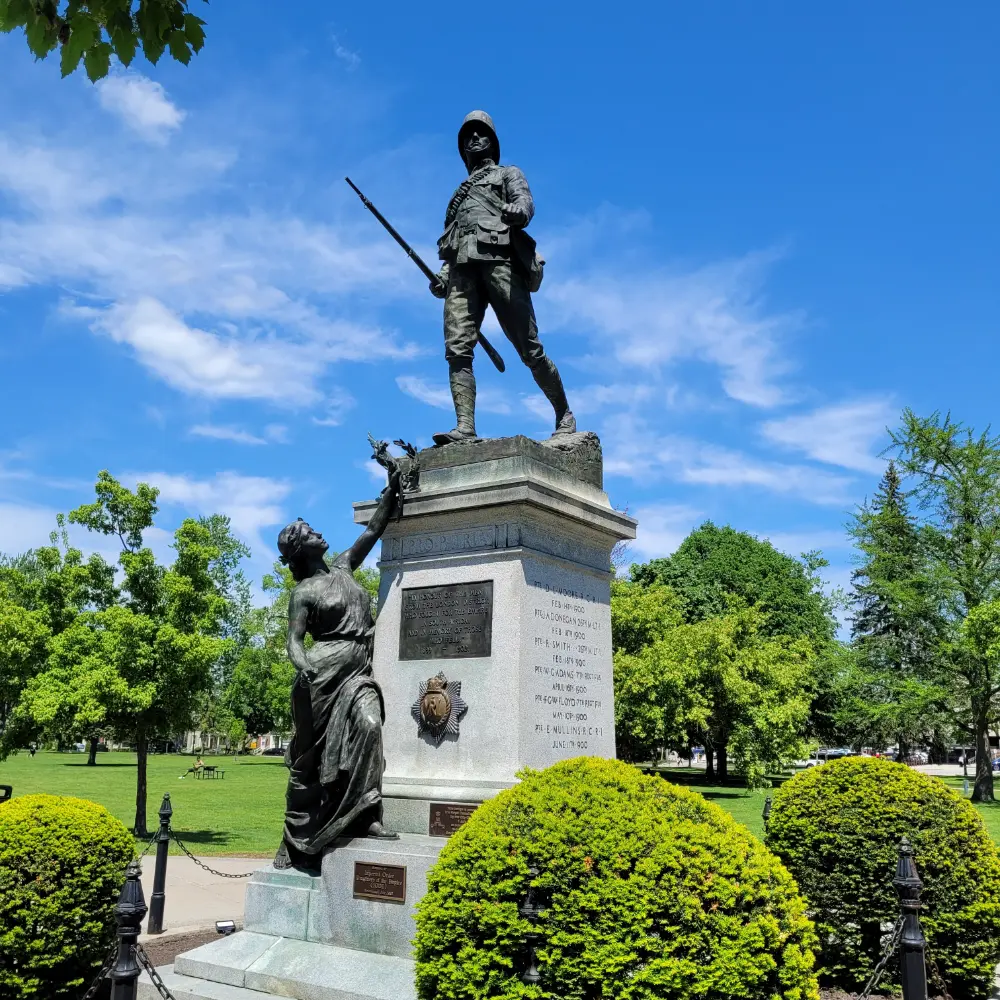
(Photo credit: Lawrence Durham).
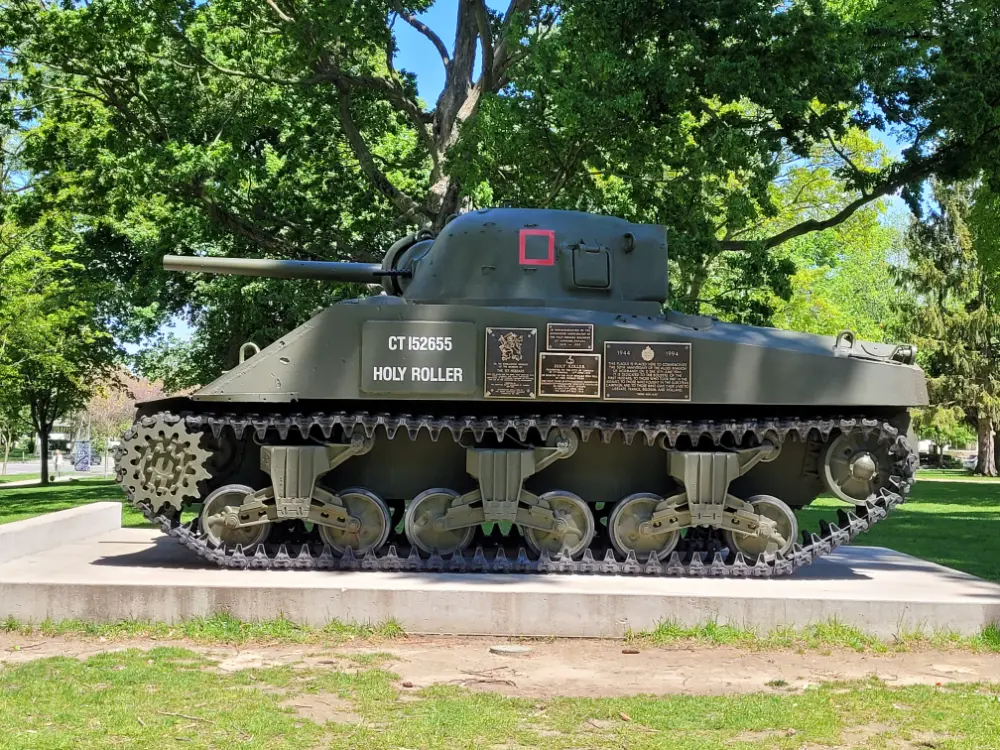
(Photo credit: Lawrence Durham).
There’s something magical about riding past an 1880s stone barracks, feeling the breeze off the Thames, and realizing you’re in a place where Redcoats once marched, tank crews once trained, and a city once gave everything it had.
That’s the London I want to show you.
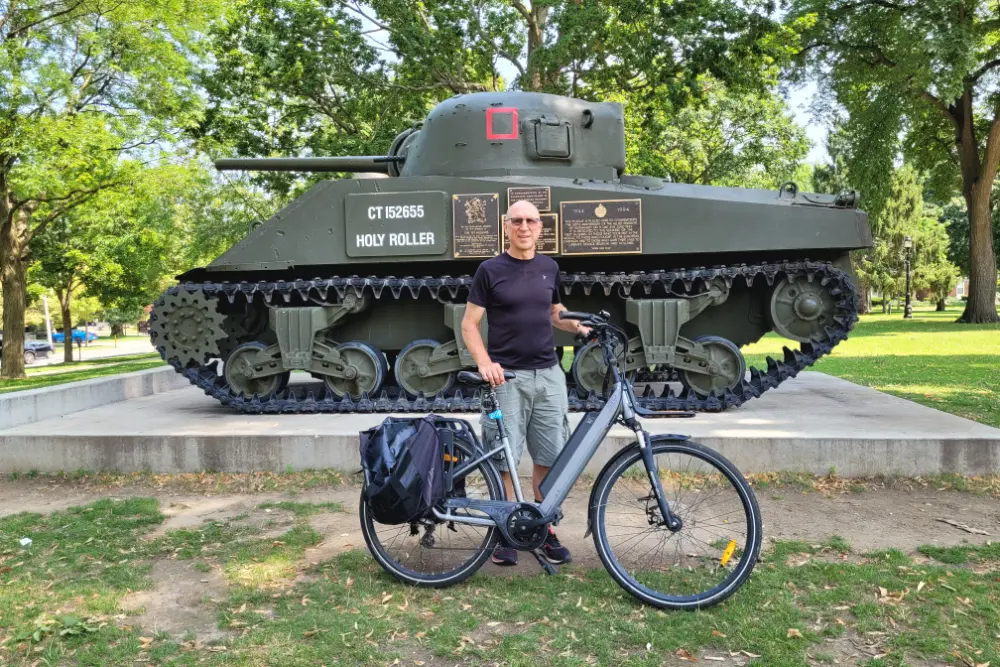
I’m Lawrence, and I run London Bicycle Tours. I’m a storyteller with a bicycle, a love for this city, and a deep respect for the people who shaped it. If you’d like to see London’s military landmarks up close, plus London’s other hidden gems, come join me for a guided tour. Small groups, easy pace, and plenty of stories you won’t find on Wikipedia.
Click here to learn more. Your next adventure is just a pedal stroke away.
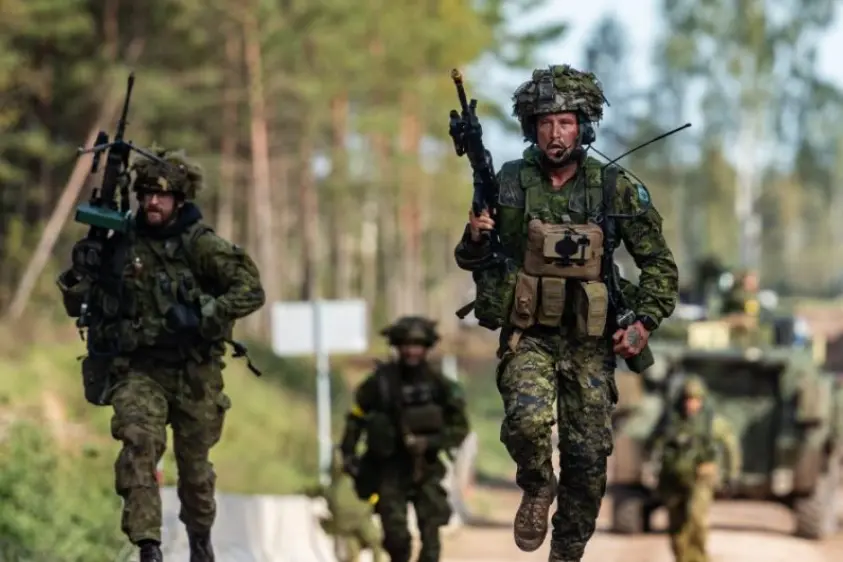
Credit for featured cover photo: Canadian Army Today.