
Although there’s something romantic about the image of riding a stagecoach through the wilderness, the reality is that actually traveling in one of those contraptions was absolute misery.
The low-ceilinged wooden cabin was cramped. The leather thoroughbraces did precious little to soften the brutality of unpaved roads. Every rut, every stone, every exposed tree root sent sharp shudders through the carriage frame. Passengers bounced against each other in a chaotic tangle of elbows, top hats, and stray baggage. A mere ten-mile journey became an exhausting test of physical endurance.
This was the reality of overland travel in 19th-century southwestern Ontario. And it’s exactly why the stagecoach in London met its inevitable end.
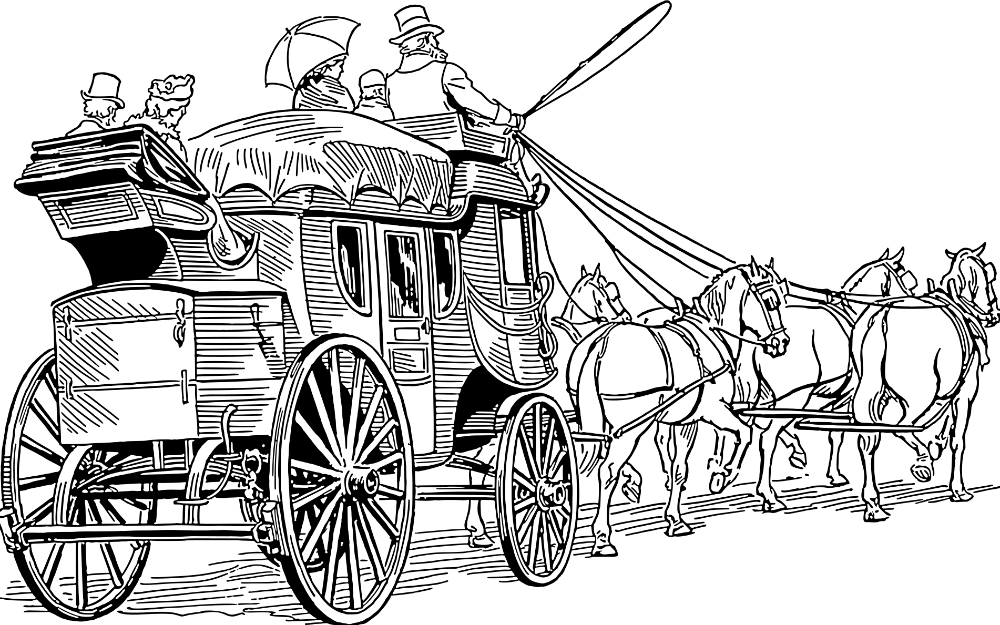
Typical stagecoach in the 19th century, being pulled by a team of four horses.
(Illustration credit: OpenClipart-Vectors).
The Stagecoach Era: Rumbling Through the Wilderness
During the first half of the 19th century, if you wanted to travel any distance across Upper Canada, the stagecoach was your only option. These heavy, four-wheeled vehicles were marvels of frontier engineering, suspended on heavy leather thoroughbraces and pulled by teams of four or six horses. They maintained regular routes that connected growing settlements, carrying passengers, luggage, and government mail from station to station.
In London, stage lines crawled along rudimentary dirt tracks, connecting the growing city with surrounding hubs like Hamilton, Windsor, and Sarnia. The coaches were designed to carry six to nine passengers inside, with additional hardy souls perched on the roof or beside the driver if they didn’t mind the weather. Storage compartments called “boots” at both ends of the vehicle held valuable mail pouches and luggage.
But here’s the thing about those routes – they were entirely at the mercy of the elements.
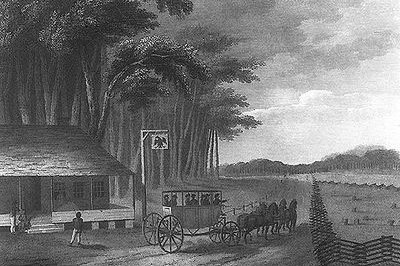
(Photo credit: Library and Archives Canada).
The Muddy Reality of Early Roads
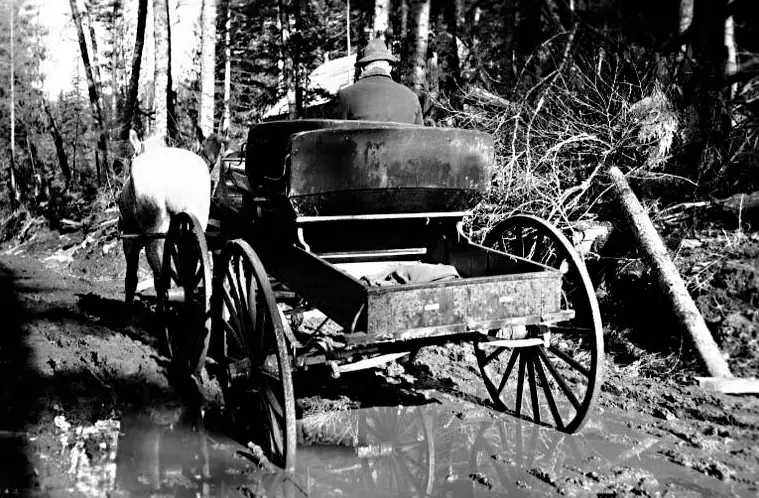
Most routes connecting London to surrounding settlements were nothing more than dirt tracks carved out of the wilderness. When the weather cooperated, they were merely bumpy and slow. When it didn’t, they became nightmares.
(Photo credit: Wikimedia Commons).
Spring thaws turned these tracks into bottomless mud pits. Heavy autumn rains did the same. Winter snows rendered them impassable. Even the famous “break-up” season, that muddy period between winter and spring, could paralyze regional travel for weeks at a time.
Stagecoach operators established staging posts every 10 to 15 miles along routes, where exhausted horses could be swapped for fresh teams. Even so, the coaches could only manage about 5 to 10 miles per hour. And when the mud got particularly deep, passengers were sometimes forced to get out and push.
The “romance” of stagecoach travel was, in reality, a grueling test of patience and physical endurance.
The Railway Revolution Arrives
Everything changed on October 23, 1847. That’s when construction of the Great Western Railway in London officially began. The iron horse was finally coming to town.
The transformative moment arrived on December 15, 1853. The Great Western Railway (GWR) opened its line to London for regular service. Londoners could now travel to Hamilton by train, and from there, onward to the rest of the continent.
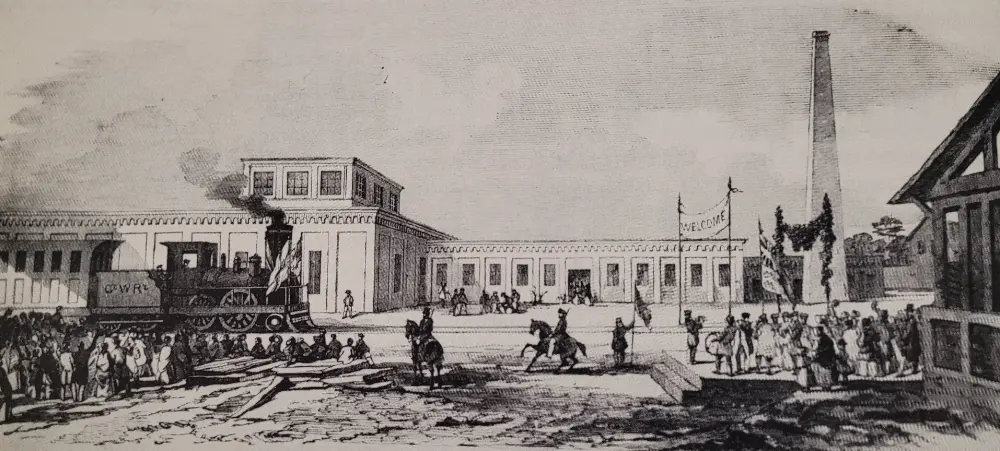
(Photo credit: Archives and Special Collections, Western University).
The contrast with stagecoach travel couldn’t have been starker.
Steam locomotives could reach speeds exceeding 90 kilometers per hour. They could move dozens or even hundreds of passengers at once. They could haul heavy freight that would have required a fleet of wagons. And crucially, they offered all-weather reliability that horse-drawn carriages could never match.
Rain didn’t stop a train. Snow didn’t paralyze the iron rails. Spring mud was simply irrelevant to the locomotive.
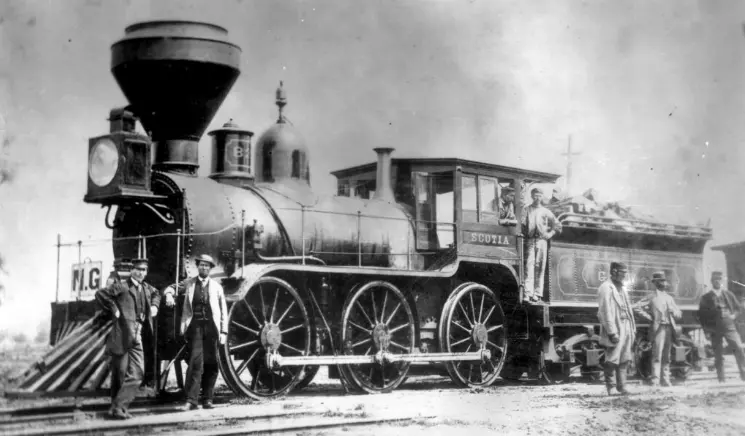
(Photo credit: Ingenium Digital Archives).
The Final Blow: The Railway Web Expands
The replacement of stage lines accelerated as the railway network expanded, often directly over the old stage corridors.
Before the rail boom, one particularly agonizing stagecoach route connected London through dense wilderness to western settlements like Sarnia. Travelers would spend days bouncing and lurching along this route, praying for dry weather and sound horses.
In April 1853, a group of businessmen associated with the Great Western Railway incorporated the London & Port Sarnia Railway Company. When this 50-mile line officially opened for revenue traffic in December 1858, it effectively dismantled the old western stage network.
The math was simple. Trains were faster, cheaper, and more reliable. Government mail contracts, which had sustained many stagecoach operations, shifted rapidly to the tracks. Commercial cargo followed. Local stage operators lost the primary revenues required to maintain their expensive teams of horses and constant stable of vehicles.
By the 1870s, subsequent lines like the London, Huron and Bruce Railway further crisscrossed the region. London was transforming from an isolated stagecoach stop into a premier industrial and logistical rail hub.
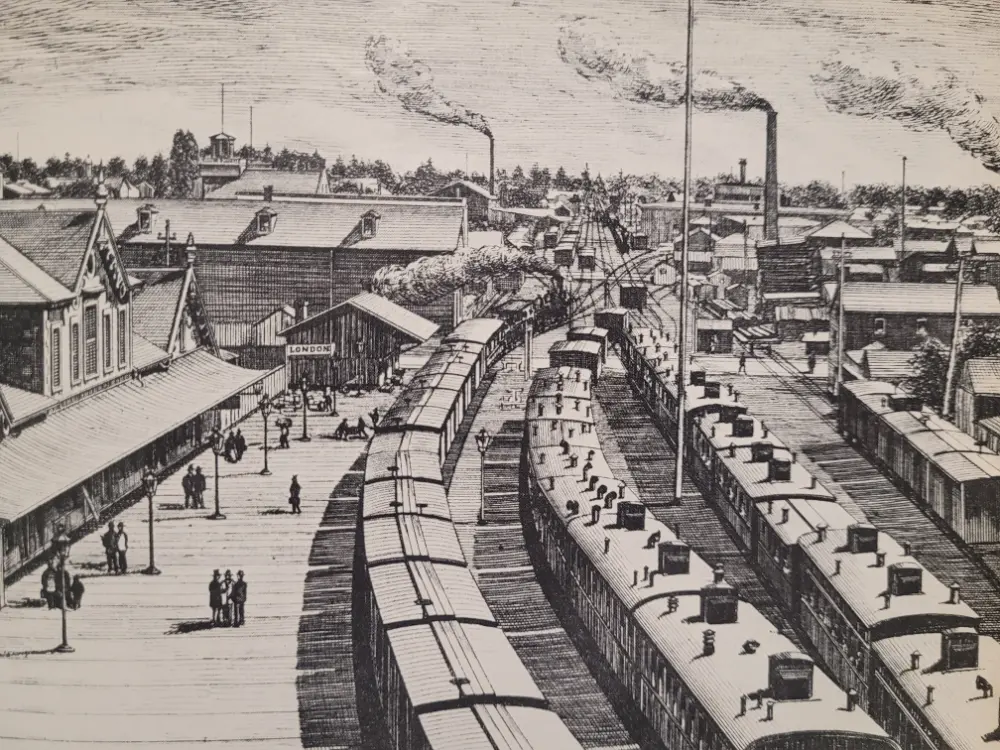
(Source: Canadian Illustrated News).
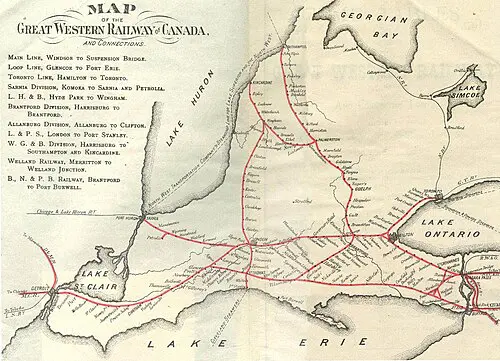
(Photo credit: Great Western Railway).
What Became of the Stagecoach?
Stagecoaches didn’t disappear overnight. In fact, they adapted and found a new purpose.
While long-distance stage routes were completely displaced along main corridors, these rugged vehicles continued serving as local shuttles. They carried mail and passengers from isolated rural settlements to the nearest railway “whistle stops.” Farmers who needed to get their goods to market, families visiting distant relatives, businesses needing to connect with the wider world – they all still relied on horse-drawn transport for that final leg of the journey.
But by the late 19th century, even those roles were shrinking. The Great Western Railway system, later absorbed into the Grand Trunk Railway in 1882, operated hundreds of kilometers of track carving through southwestern Ontario.
The age of long-distance horse-drawn travel had become a relic of Ontario’s frontier past.
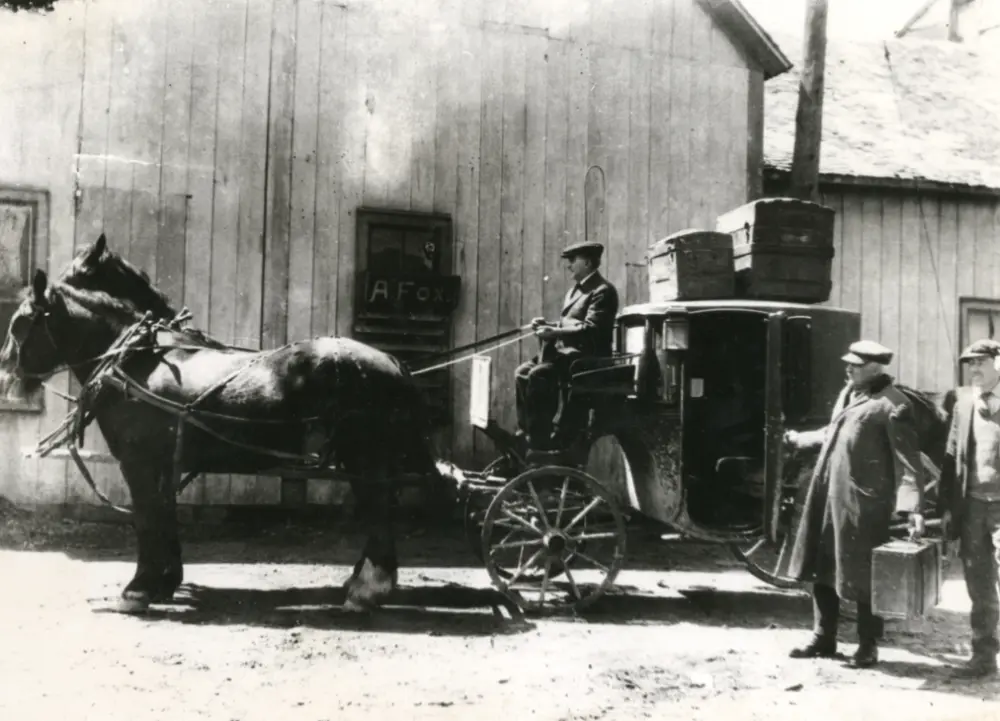
(Photo credit: Walkerville Times Collection).
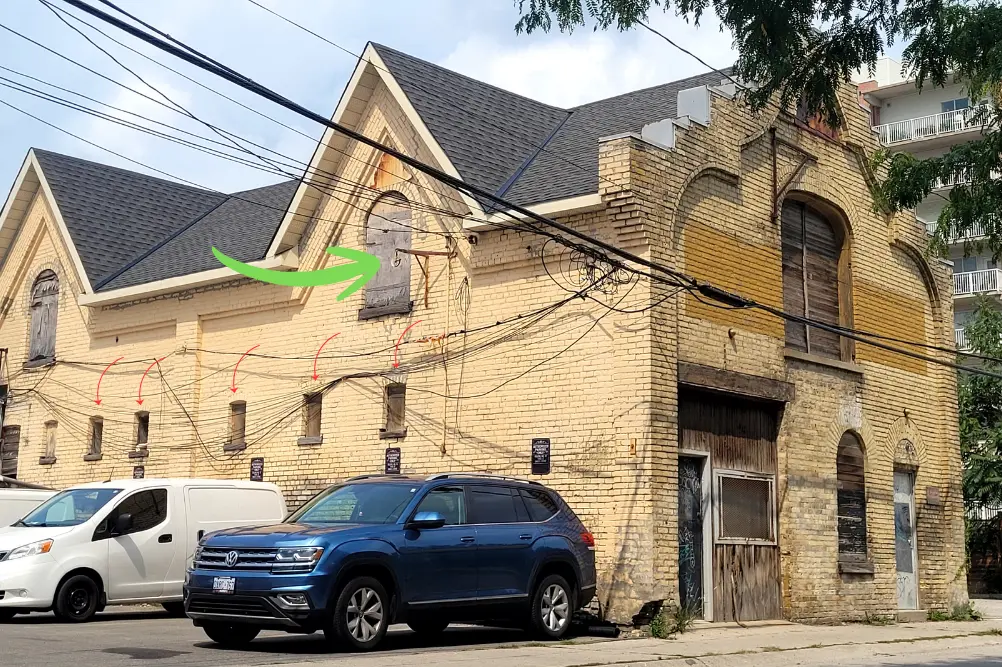
(Photo credit: Lawrence Durham).
Your Own London Adventure Awaits
As the stagecoach faded into history, its routes swallowed by iron rails and its passengers seduced by the speed and comfort of steam, the Great Western Railway made London a transportation hub.
But here’s the thing about history: it never really ends. It just transforms.
Those muddy tracks that once defeated stagecoach passengers? They became gravel roads, then paved highways. Those railway lines that spelled the end of the stagecoach era? They eventually gave way to automobiles, buses, and a modern transportation network that connects London to the world in ways our ancestors could scarcely imagine.
And yet, if you know where to look, the echoes of that earlier age are still all around us. The routes are still there, even though the ruts have been filled in. The stories are still there, even if the storytellers have long since passed on. The spirit of adventure that drove those early travelers to brave mud, cold, and exhaustion is still there, waiting for a new generation to discover it.
That’s what I love about exploring London’s history. Every street corner has a story. Every old building has a secret. Every road we travel today was once someone’s frontier.
So here’s my invitation to you: come see it for yourself. The stagecoaches may be gone, but the adventure is still waiting. And trust me, the views are much better when you’re not being tossed around in the cabin of a cramped wooden stagecoach.
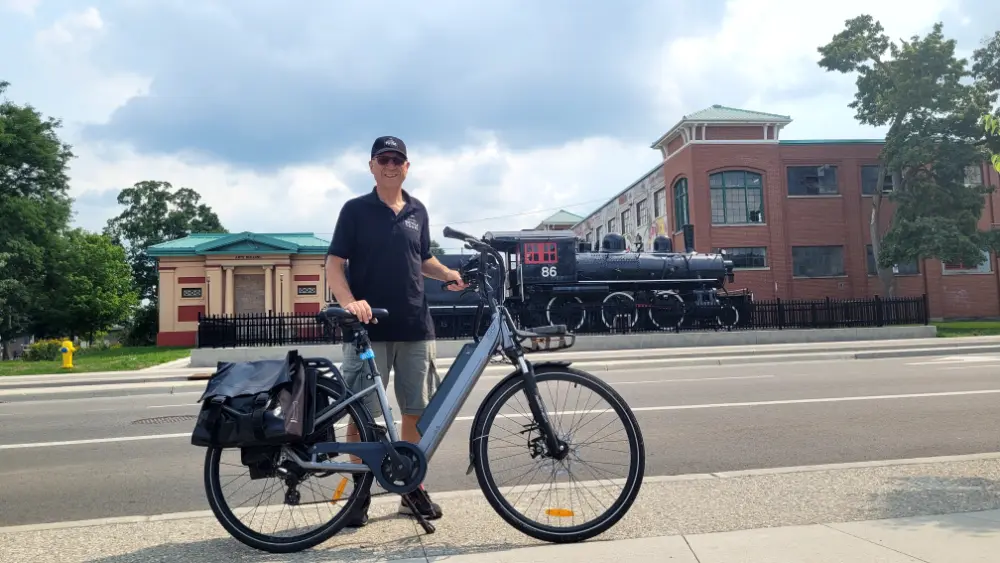
(Photo credit: Lawrence Durham).
Hi. I’m Lawrence – bicycle tour guide, storyteller, and history nerd. I help curious folks like you discover the best parts of London, from a bicycle seat, of course: small groups, big laughs, and a front-row seat to history.
So come explore with me. The mud is gone, the routes are paved, and your next adventure awaits. Click here to learn more!