
If you find yourself standing near the Labatt Brewery or the spires of First St. Andrew’s United Church on a warm late summer evening, look up. You might think you are witnessing a trick of the fading light. But that swirling vortex of tiny, cigar-shaped bodies is something far rarer: a “swift-nado.”
Welcome to London, Ontario: the unlikely capital of Chaetura pelagica, better known as the Chimney Swift.
For a city often defined by its forks of the Thames and its historic architecture, London holds a secret superpower. We are a global pitstop for one of nature’s most incredible aerialists. While you might visit London for the culture, you’ll leave amazed by the birds.
The Cigar with Feathers
Before we dive into the statistics, picture this: a bird that looks like a flying cigar with scythe-shaped wings. Chimney Swifts never land on the ground if they can help it. They eat and even bathe on the wing. In an era of extinction and loss, London has become a fortress for these threatened travellers.
Since 2009, the Chimney Swift has been designated as “Threatened” in Ontario, suffering a staggering 90% population decline since the 1970s.
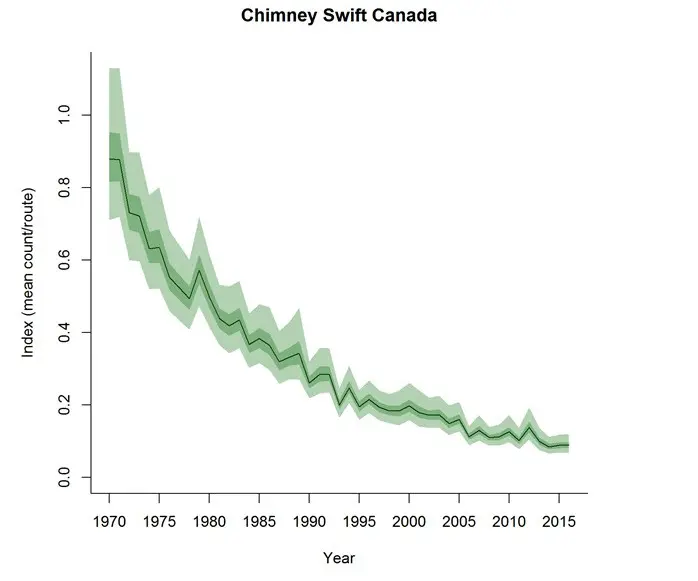
(Graph based on Breeding Bird Survey data).
And yet, when the swifts return to the Forest City from their Amazonian wintering grounds every April, they find a welcome mat rolled out by local volunteers.
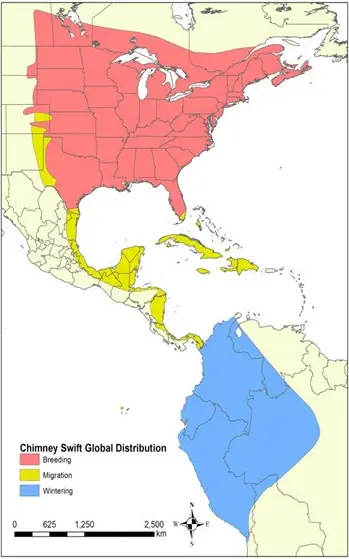
(Map created by Bird Studies Canada).
Why London?
To understand the swift, you have to understand our chimneys.
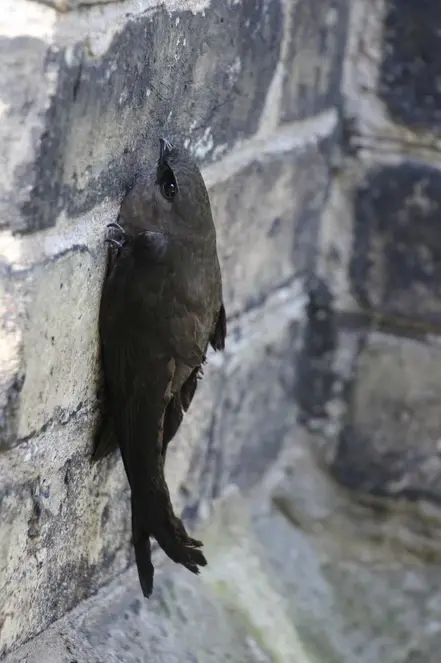
Over 400 years ago, before European settlement, swifts nested in old-growth forests, using hollowed-out giant trees. As London grew into a bustling industrial hub in the 19th and early 20th centuries, those forests disappeared. But the swifts adapted. They moved into the unlined, rough brick chimneys of our factories, schools, and churches, typically using chimneys built before the 1960s, made of brick, stone, or concrete blocks.
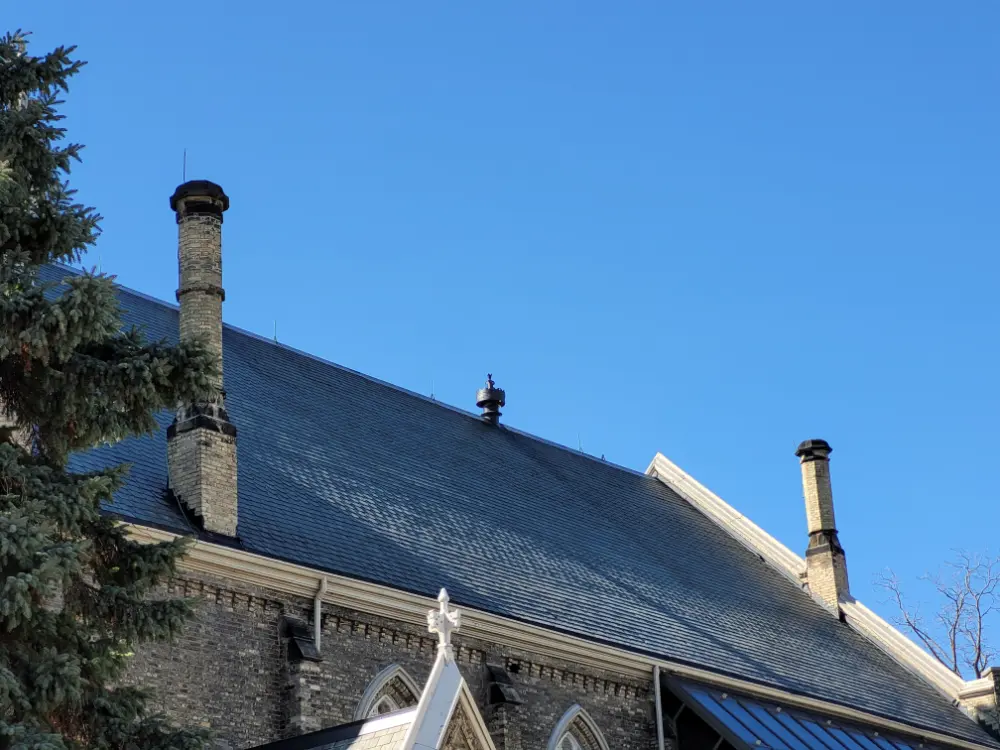
(Photo credit: Lawrence Durham).
In 2021, London earned its official “Bird-Friendly City” status from Nature Canada, based on threat reduction, protecting natural habitats, and community education. Whereas some cities see old masonry as a liability, London sees a habitat for swifts. Since 2003, Nature London volunteers have actively monitored over 50 chimneys downtown, tracking thousands of birds during peak migration. One of the most famous roosts? Six years ago, in just 30 minutes, over 1,400 swifts were recorded by Dr Brenden Samuals funneling into a single chimney at dusk at Labatt’s Brewery.
Click on the video above to watch a chaotic swirling “swift-nado” (watch time 59 seconds).
A Cycle of Sky and Smoke
For the culture seeker visiting in June or July, you might catch the quiet breeding season. Only one pair nests per chimney, raising their young in relative secrecy. Each pair generally mates for life.
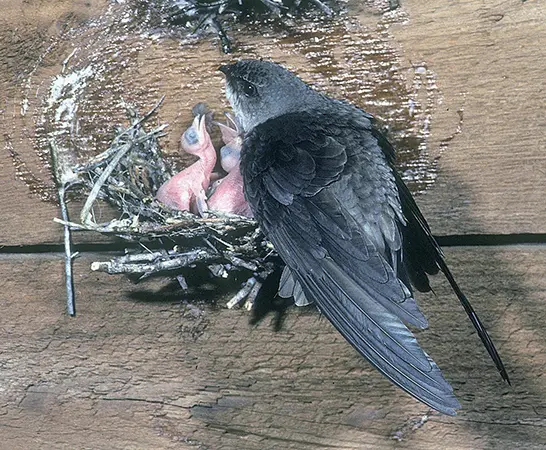
(Photo credit: George Peck)
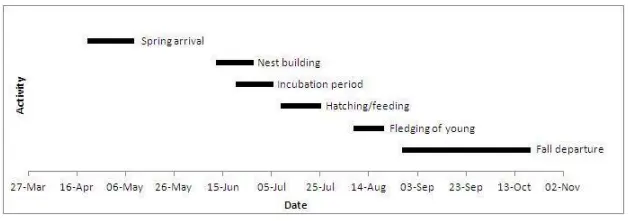
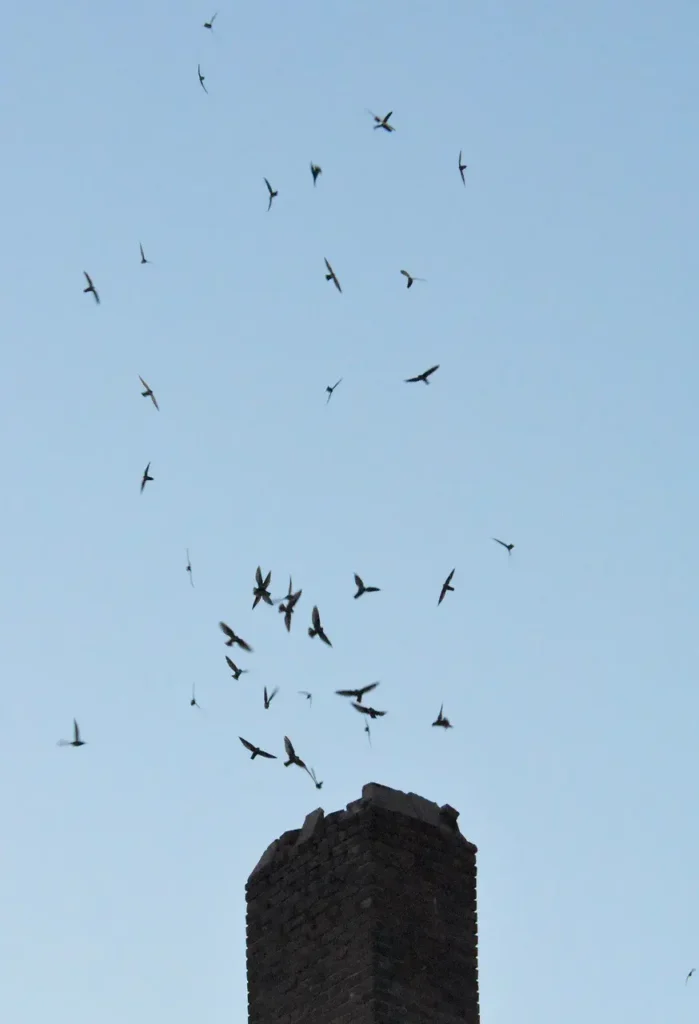
If you time your visit for late August or September, you are in for a blockbuster show: the fall migration. As the swifts prepare to fly 5,000 kilometers back to the upper Amazon basin, they gather in massive communal roosts. Hundreds, sometimes thousands, of birds spiral down at sunset, creating a tornado-like funnel directly into an old brick chimney.

swift making body and wing adjustments and using its
tail to brake and control its descent into the Labatt’s
chimney. (Photo sequence by Glenn Berry).
(Photo credit: Peter Middleton)
(Photo credit: Dave Wake).
Click on the video above to hear the sounds of the chimney swift. (Watch time: 2:39 min).
The Challenges
Of course, being a threatened species means the swifts face steep odds. Their story is a mirror of our own urban development.
Habitat Loss: Since 2003, London has lost roughly one-third of its identified swift chimneys. Modern metal linings and safety caps, while good for fire safety, are death traps for swifts. They cannot grip the metal of lined chimneys, and they cannot enter capped chimneys.
Food Scarcity: As aerial insectivores, they eat up to 1,000 insects a day. Pesticides and climate change have reduced the bug population, making it harder for migrating swifts to fuel up.
But here is the uplifting part: London fights back.
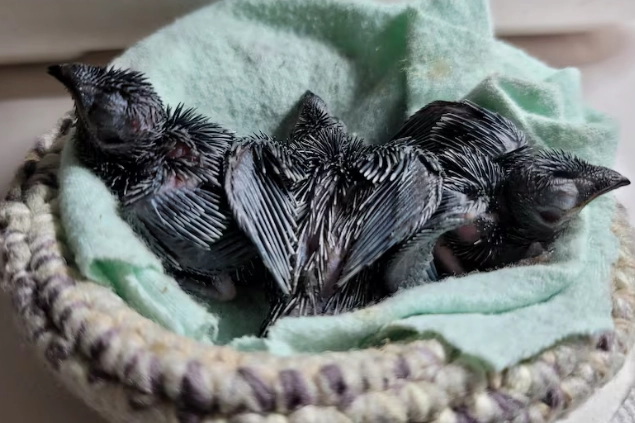
We are not just a city with a problem; we are a city with a solution. London is a key site for the release of orphaned swifts. Wildlife rescuers from across eastern Canada bring their rehabilitated birds to London because our monitored chimneys offer the best chance of reintegration into the wild. When just-released orphaned swifts join a swoop of more mature swifts at the local roosts, the younger birds learn how to survive in the open from older birds before migrating with them back to their wintering grounds in the Amazon.
(Photo credit: Connie Black).
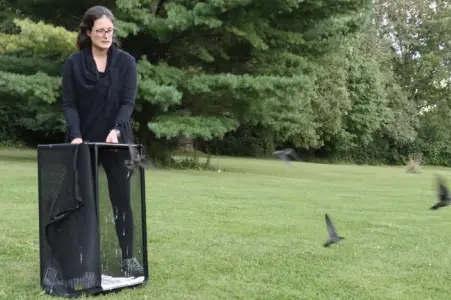
(Photo credit: Winifred Wake).
Where You Can Witness the Magic
You don’t need binoculars to see this show, though they help. You just need to know where to stand.
- First-St. Andrew’s Church (350 Queens Ave): The city has installed a viewing bench and interpretive sign here. It is the most accessible spot for a sunset vigil.
- South Collegiate & Old Schools: Many of the older school buildings in the core remain swift hotspots.
- Downtown Industrial Zones: As you ride through the old warehouse districts, look for the tall, uncapped brick towers.
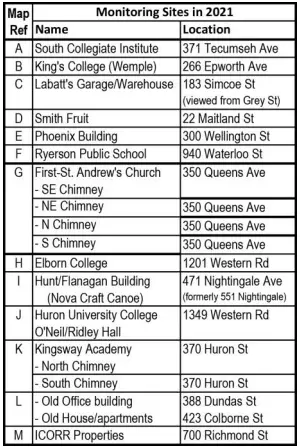
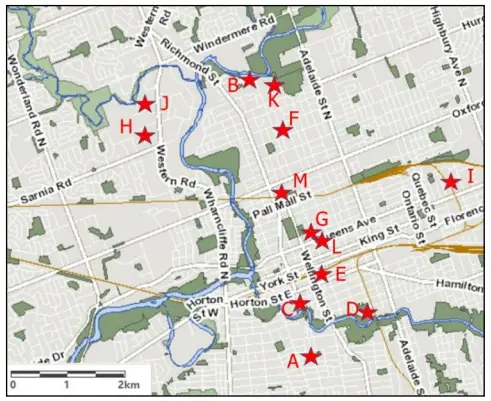
Table 1 (above left) shows the 18 London chimneys where weekly monitoring was carried out by Nature London in 2021. The letter references in Table 1 refer to the swift monitoring sites shown on the map in Figure 1 (above right).
(Source: Winifred Wake).
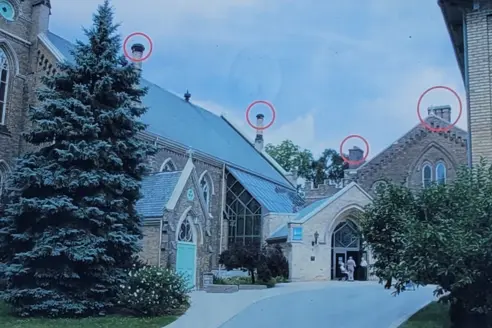
(Photo credit: Dave Wake).
A Quick Ask from a Tiny Traveller
If you fall in love with the swifts (and you will), there are easy ways to protect them. If you own an older home, avoid capping or lining your chimney between May and September. Better yet, report your sightings to Nature London. Because swifts are a protected species, we are all lucky to be their guardians.
The City of London, for its part, incorporates SwiftWatch data into municipal planning and development guidelines to protect known swift chimneys.
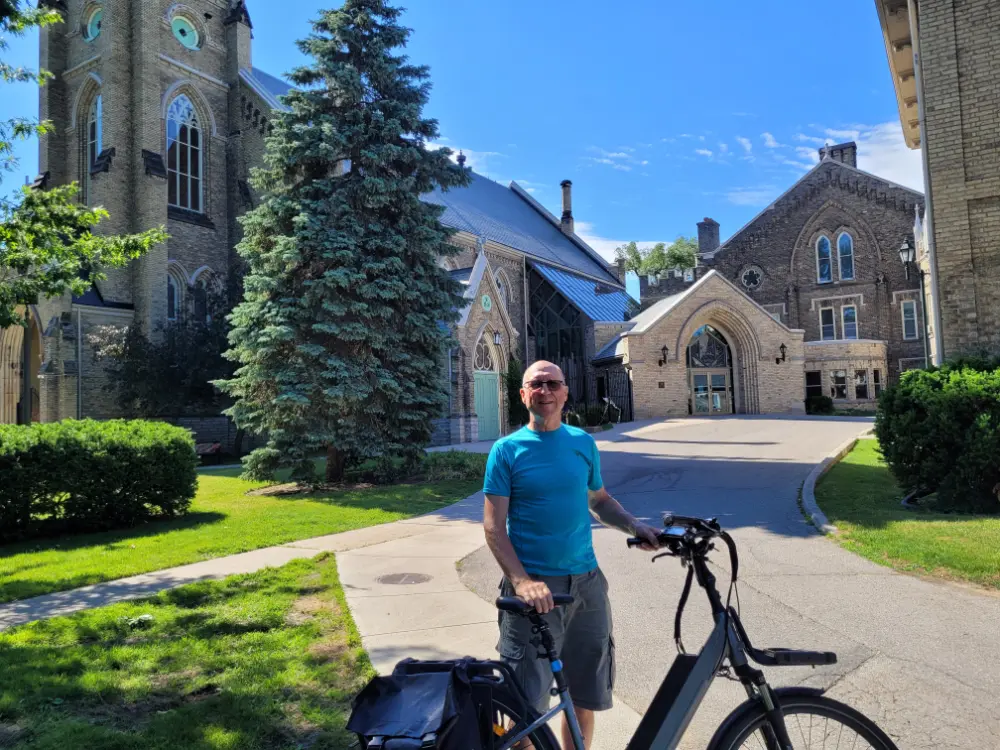
(Photo credit: Lawrence Durham).
Hi, I’m Lawrence. When I lead bicycle tours through downtown London, I usually point out the architecture of the 1800s or the flow of the Thames. But some of my favourite times happen when I’m riding at dusk, looking up at a chimney and watching a “swift-nado” spin against the clouds; I realize that London isn’t just a city of human history; it’s a sanctuary for winged wonders.
Seeing a swift-nado is just one of the things I’ve discovered while riding around London on my bicycle. This city is full of many more hidden gems. Why don’t you come discover them with me?
Click here to learn more!. Your next adventure awaits.
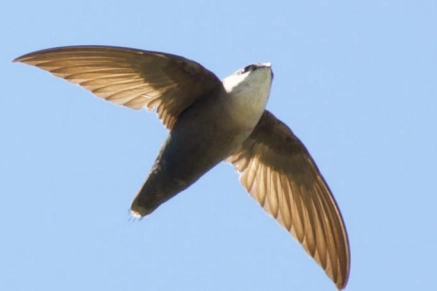
Credit for featured cover photo: Glenn Berry.