
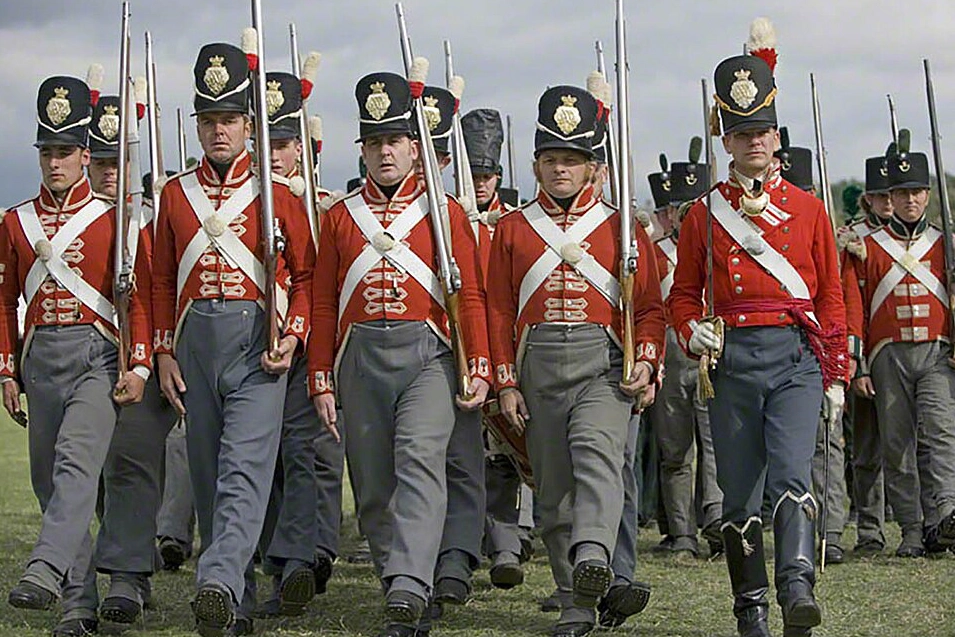
When you think of a British Army occupation, you probably don’t picture cheering locals, booming breweries, and a village finally dragging itself out of the muddy frontier.
But that is exactly what happened in London starting in the winter of 1838.
Just weeks after an armed rebellion shook Upper Canada, red-coated soldiers marched into our snow-covered settlement. The townsfolk didn’t hide their daughters and lock their pantries. Instead, they opened their homes and watched as their rough-around-the-edges village was transformed into a proper British outpost.
Here’s the surprising story of how Her Majesty’s Army came to London, and why most folks were delighted to see them.
A Rebellion Erupts
In December 1837, armed uprisings broke out across Upper Canada (present-day Ontario).
While Toronto got most of the headlines, London was very much a hotspot of rebel sympathy. While nervous Loyalists watched their neighbours with suspicion, the British government decided swift action was needed.
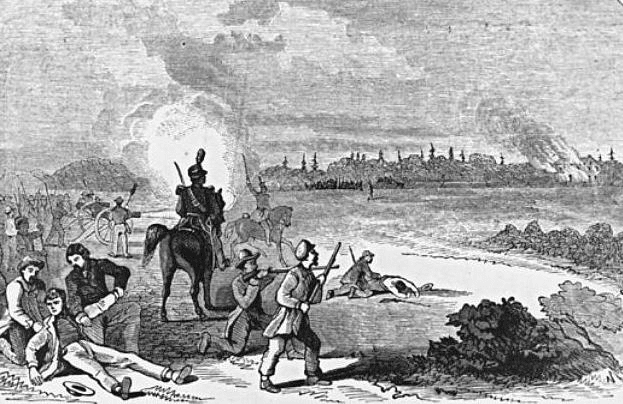
By January 1838, British troops were marching into London.
There were no barracks waiting for them. At first, the soldiers were housed in temporary buildings across from the courthouse. When that wasn’t enough, local families billeted soldiers inside their modest homes.
Imagine inviting a uniformed stranger to sleep by your fire, not out of fear, but out of duty.
Building a Garrison in the Middle of a Forest
It quickly became clear that London needed permanent military facilities. The chosen site? A heavily forested area north of the village.
The soldiers grabbed their axes and got to work.
What emerged was enormous. The military reserve occupied a full ten city blocks, stretching from Dufferin Street in the south to Kenneth Avenue in the north, and from Richmond Street in the west to Waterloo Street in the east.
Two generations of buildings rose on that land. The first, built between 1838 and 1840, was the so-called “Framed Barracks,” built with sawn lumber. The second, the Log Barracks, was built with hand-hewn logs between 1841 and 1842. Together with the Infantry Drill Ground, an Artillery Range, and assorted buildings that included a hospital, the military reserve soon became the beating heart of early London.
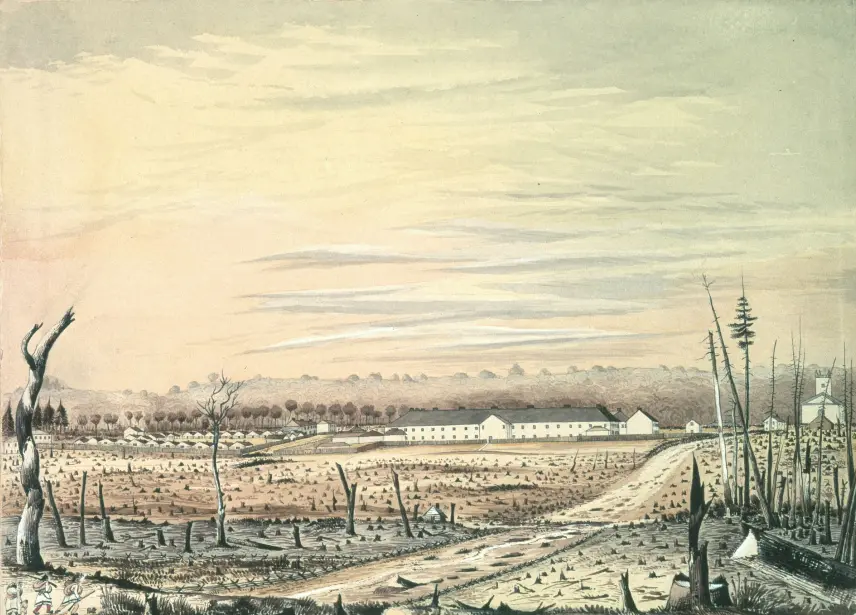
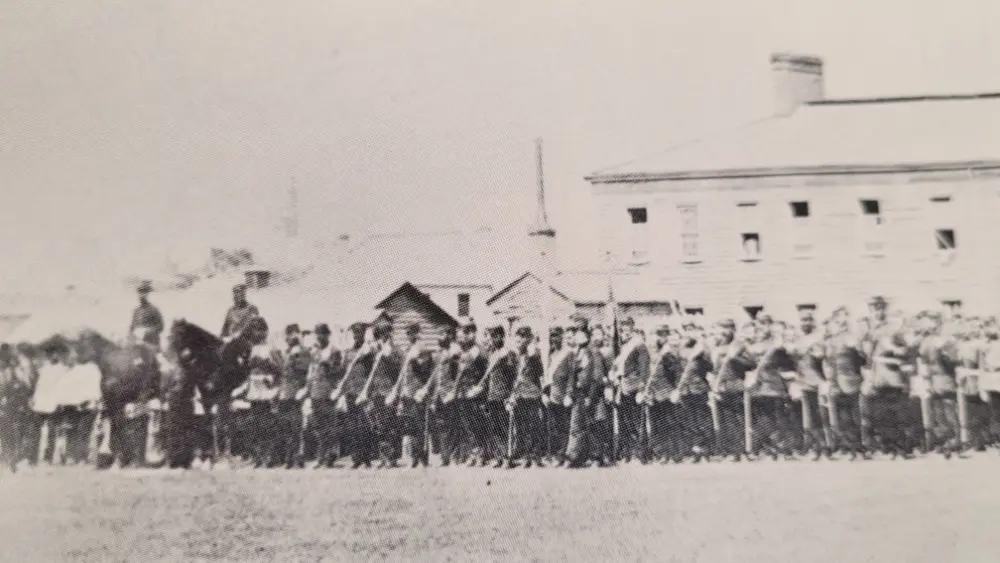
(Photo credit: Archives & Special Collections, Western University).
How the Army Built a Cash Economy
Here is where Londoners really started to love their guests.
The garrison was paid in solid currency, not the barter goods or shaky credit that dominated frontier life. When soldiers spent their pay, they didn’t just buy things. They transformed the entire local economy.
Local fortunes were founded on military provisioning. Tanneries landed contracts for boots and saddles. Breweries kept the troops supplied with beer. Local contractors grew rich building the barracks themselves.
Before the garrison, London traded in eggs and labour. After the garrison, London traded in pounds and pence. That shift from barter to cash economy was the single most important economic event of the village era.
From Frontier Town to British Outpost
London had been a district capital, but it had never felt truly connected. The arrival of the military changed that overnight.
Regiments rotated through London after serving across the vast expanse of the British Empire. Officers and men brought stories, habits, and expectations from distant corners of the world. A town that had felt distinctly American in its rough frontier character suddenly became decidedly British.
Not every interaction was polite. Townspeople and garrison troops clashed, especially in the taverns lining Richmond Street opposite the reserve. (Let’s be honest: where soldiers gather, grog shops and houses of ill repute are never far behind.)
But for every tavern brawl, there was a wedding. Many soldiers married the daughters of settlers. And a surprising number of those soldiers never left. They finished their service and stayed right here in London, planting roots that still run deep.
Cricket, Horse Racing, and a Desperate Need for Culture
Let’s be frank about early London: it offered very little in the way of intellectual stimulation.
The officers, accustomed to the social lives of British garrison towns, found themselves bored stiff. So they did what any enterprising officer would do: they built their own culture.
A section of the parade square became a cricket ground. More adventurous souls threw themselves into horse racing and steeplechasing. Theatrical plays were staged. Watercolour paintings were produced, and thank goodness for that, because those trained in drawing left some of the earliest visual records of what our town looked like.
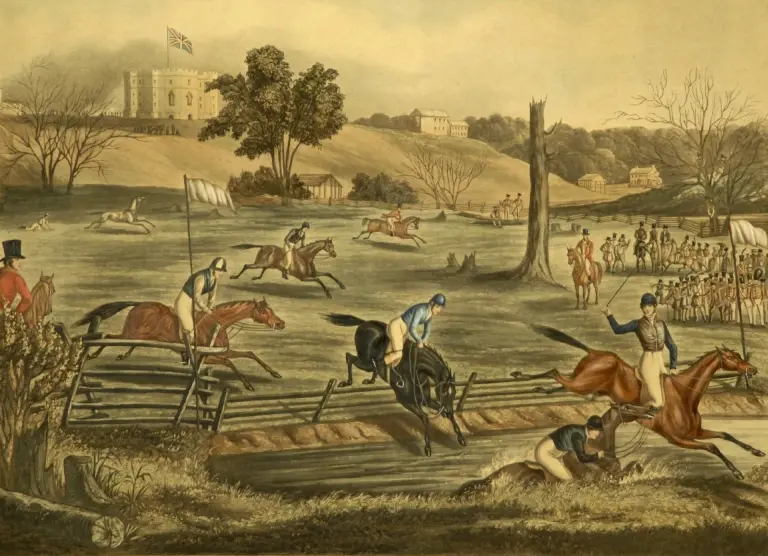
For officers at the top of the social pyramid, life became a whirlwind of parties, balls, teas, gaming, dances, military ceremonies, sleighing parties, and endless visiting. They provided a social standard against which the local elite measured themselves, and often found themselves wanting.
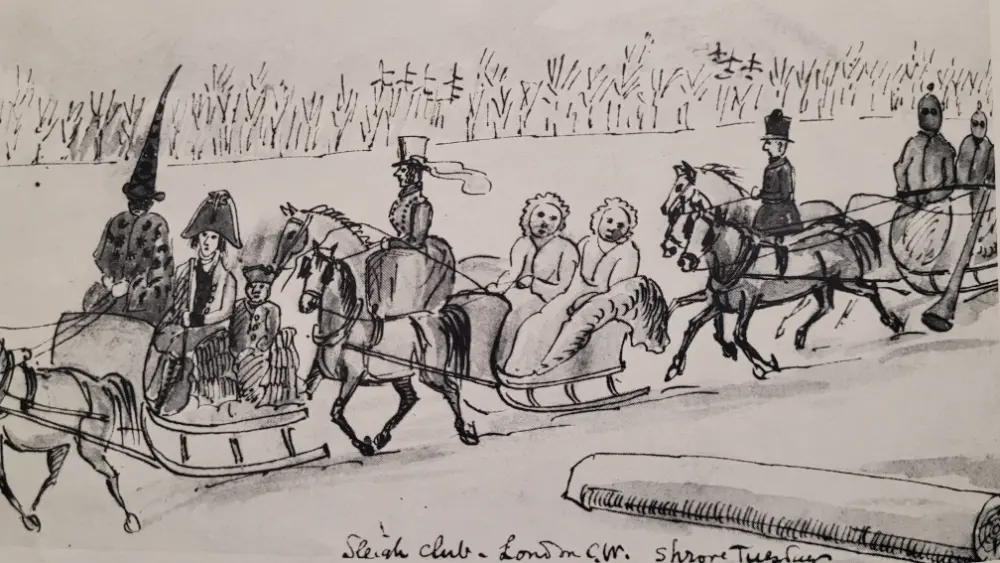
(Sketch by Sir James Alexander).
The Ugly Side of the Empire
We should not romanticize everything.
For the ordinary soldier, life in the Imperial Army could be absolute hell. Inflexible rules meant minor infractions brought major punishments. The cat-o’-nine-tails saw frequent use.
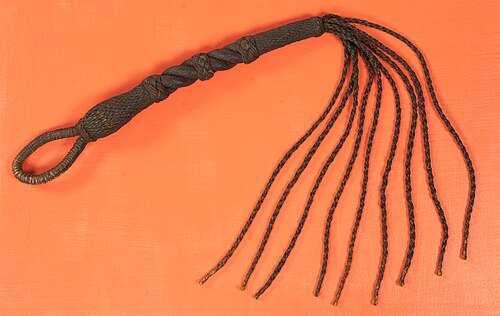
Consider this: a sentry who left his post for a single moment to answer the call of nature was given a hundred lashes and branded with the letter D, as a deserter.
Living conditions in the barracks were often unsanitary and cramped. Disease was a constant companion. For all the prosperity the garrison brought to London’s merchants, the men wearing the red coats paid a steep price.
Heroes in a Crisis
London in the 1840s was built mostly of wood. Few brick buildings existed. And wood-frame buildings, as you might guess, are terribly flammable.
Two major fires devastated the downtown, one in 1844 and another in 1845.
Both times, the soldiers stepped up.
Squads were dispatched to help residents move their belongings ahead of the flames. The day after the fires, soldiers stood guard with fixed bayonets to repel looters. In London’s darkest hours, the garrison was not an occupying force. They were neighbours. Protectors. Heroes.
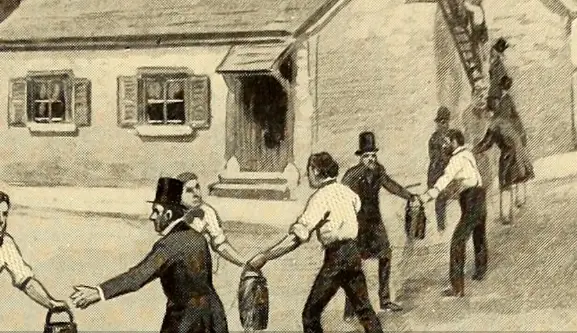
(Photo credit: Wiktionary).
Keeping Americans (and Fenians) at Bay
Beyond the daily life of the village, the garrison served a critical strategic purpose.
Throughout the 1840s, 1850s, and 1860s, there were always political groups in the United States who talked openly about invading Canada. Later came the threat of Irish-American Fenian raids, armed attacks launched from across the border.
The presence of British regulars in London acted as a powerful deterrent. Would-be invaders thought twice when they knew professional soldiers were garrisoned just north of the forks.
The Union Jack Comes Down
In 1867, Canada became an independent dominion. Britain handed over responsibility for defense to the new Canadian government. The writing was on the wall: the British troops would soon be leaving.
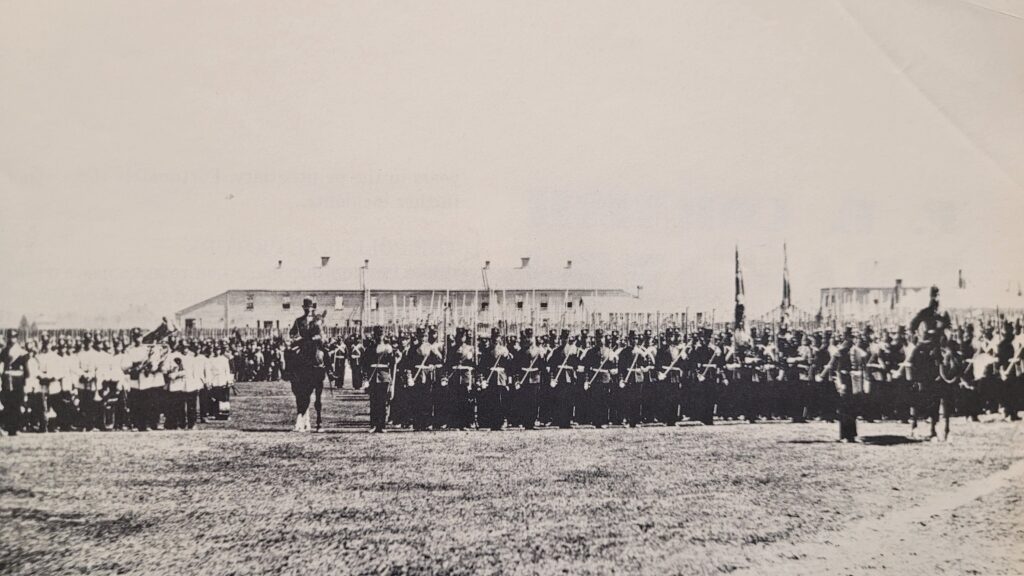
(Photo credit: Photographic Conservatory of Canada).
Here is the remarkable thing about London in 1867: the city was no longer economically dependent on the military payroll. Local industries had matured, merchants had diversified, and London could now stand on its own two feet.
But high society? That was another matter.
The officers, many of them from the British aristocracy, had provided a social standard that elevated the entire community. When they left, local high society suddenly looked rather dull in comparison. Balls became less frequent. Theatrical performances dwindled. A certain glittering energy departed with the last red coats.
Most of the British troops marched out of London in 1869, two years after Confederation.
In all, British troops were garrisoned in London for 31 years, except for an eight-year gap during which they were recalled to Europe to fight in the Crimean War.
The Army’s Parting Gift
What happened to that enormous military reserve, those ten city blocks of cleared forest, log barracks, and framed buildings?
The former military reserve became the property of the city. The barracks were sold off. And part of the land was transformed into Victoria Park, something that remains at the very heart of London.
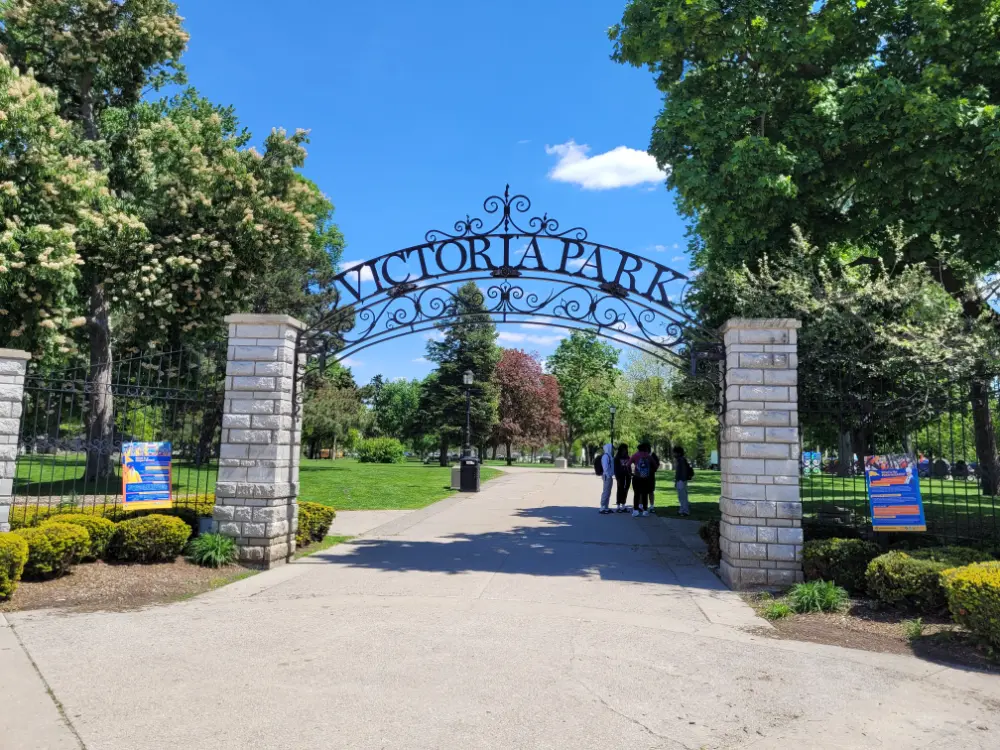
(Photo credit: Lawrence Durham).
Today, Victoria Park hosts concerts and festivals in the summer and outdoor skating in the winter. Most people who stroll through the park today are blissfully unaware that British troops once lived and marched on the same ground.
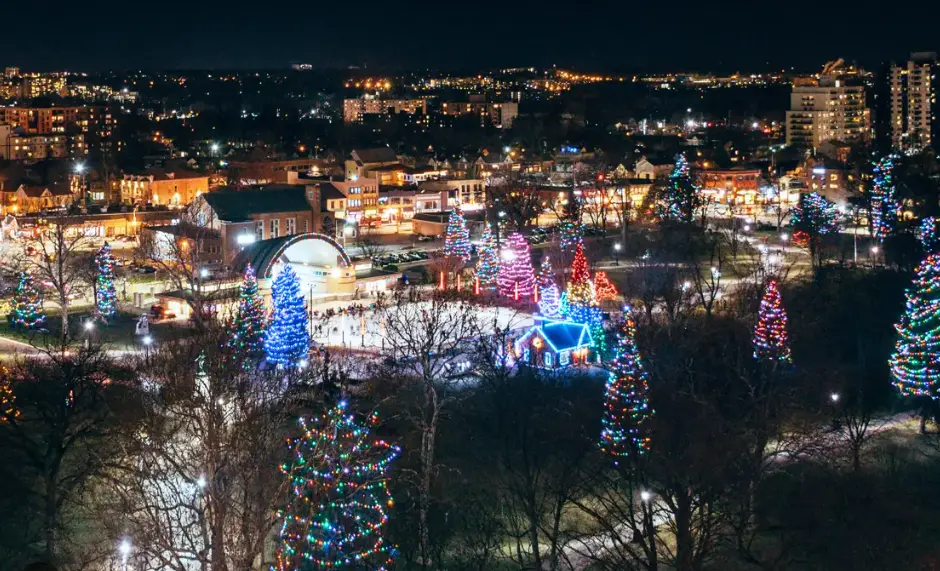
(Photo credit: Matthew Trevithick).
Why This History Matters for Your Visit
London is not a city that hides its past. You can still feel the bones of that British garrison when you know where to look. While the military reserve is now parkland, Richmond Street’s old row of grog shops is now a vibrant restaurant hub. And that confident, loyal, slightly proper British character the soldiers planted? It never entirely left.
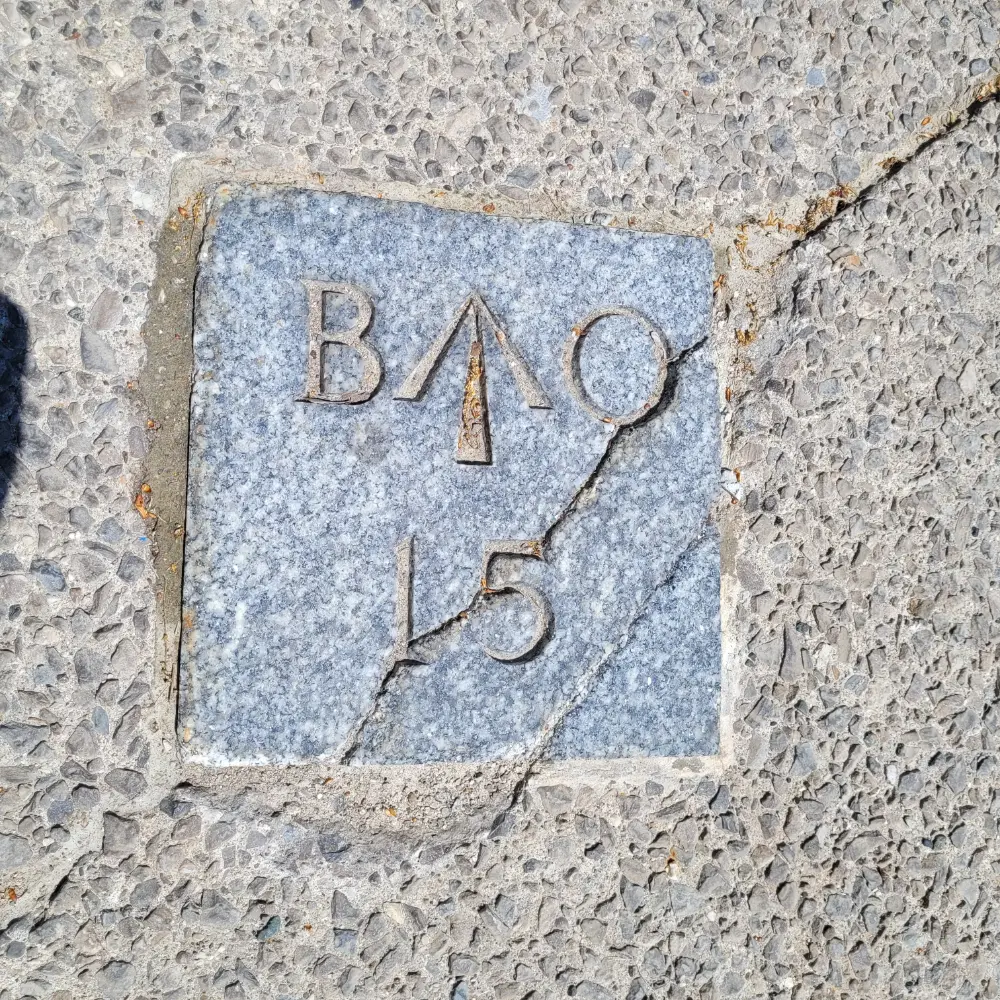
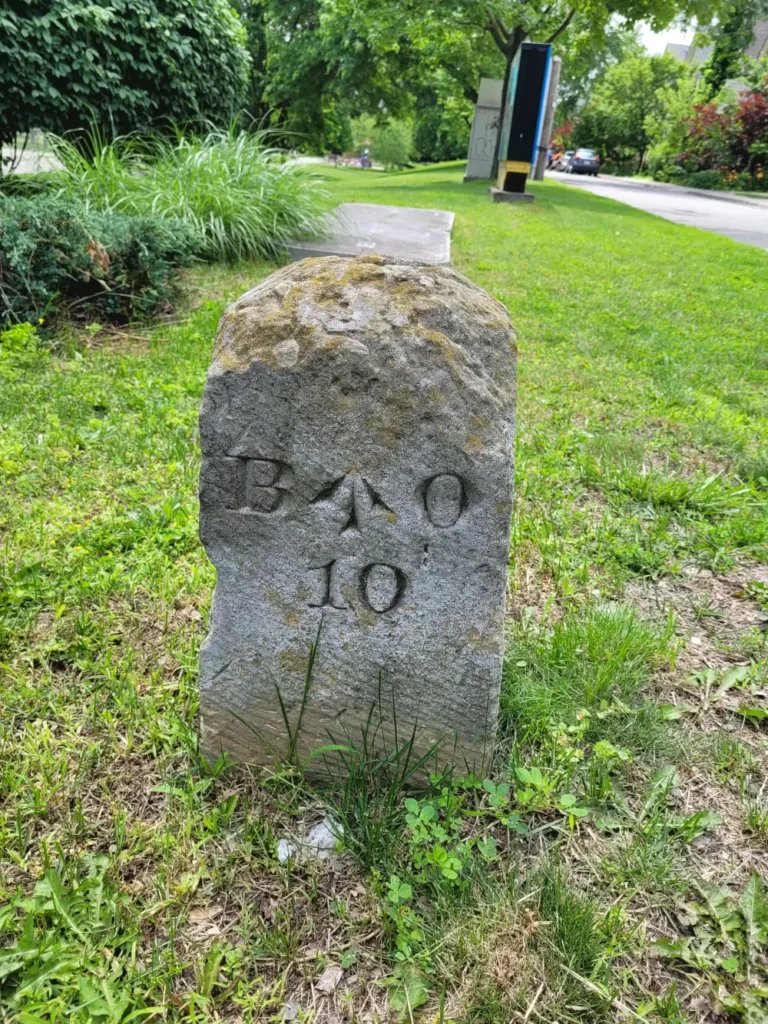
There are only two remaining boundary stones marking the perimeter of the military reserve. The one on the left (above) is located at the south-west entrance to Victoria Park, embedded in the sidewalk.
The one on the right (above) is located on the north-east corner of the former military lands, at the corner of Waterloo Street and Kenneth Ave in present-day Piccadilly Park.
The B and O, separated by an upwards-facing arrow, stand for Board of Ordnance and indicate British Government property (p. 3-4).
(Photo credit: Lawrence Durham).
When you cycle through our tree-lined streets or ride through Victoria Park, you are rolling across the same ground where soldiers once drilled, cricketers once batted, and a rough little frontier town first learned what it meant to be part of something larger.
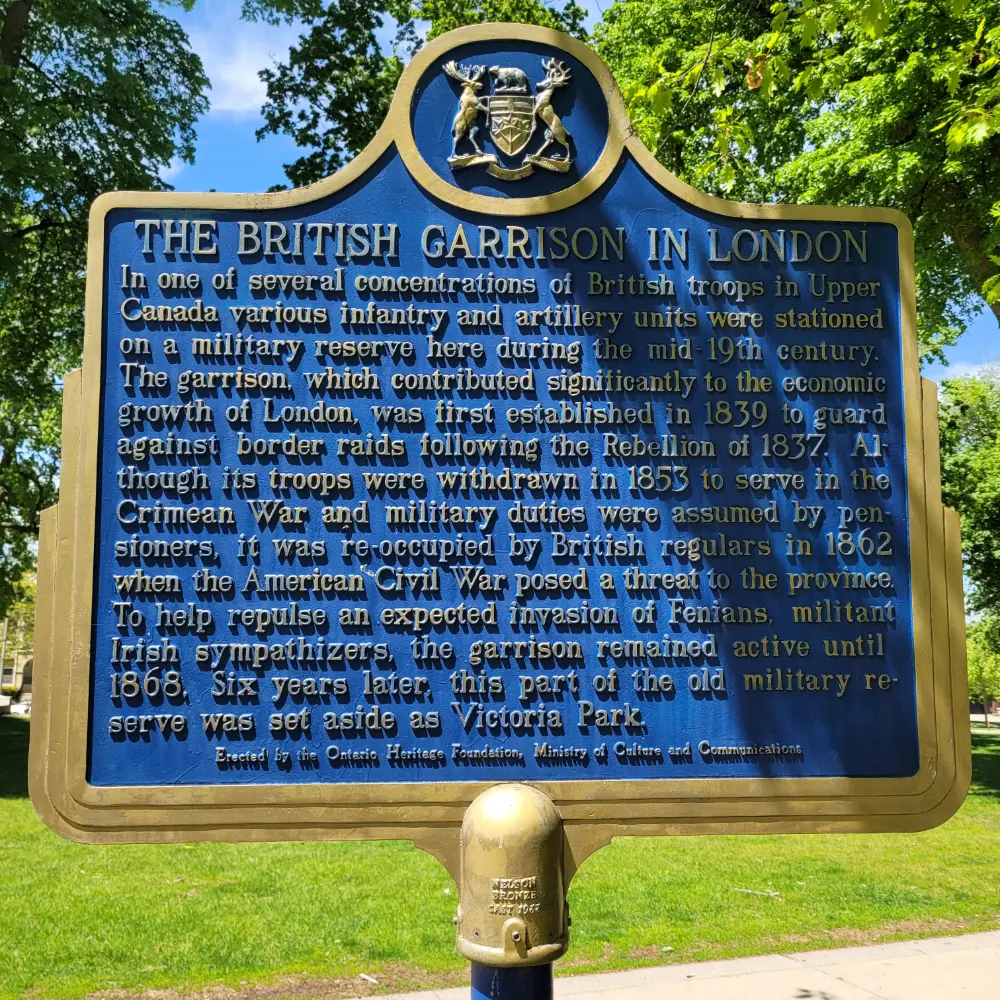
(Photo credit: Lawrence Durham).
The British Army came to London because of a rebellion. But they stayed; they built, they spent, they married, they mourned, and they left behind a city that was immeasurably better than the one they found.
And that, dear reader, is a story worth celebrating.
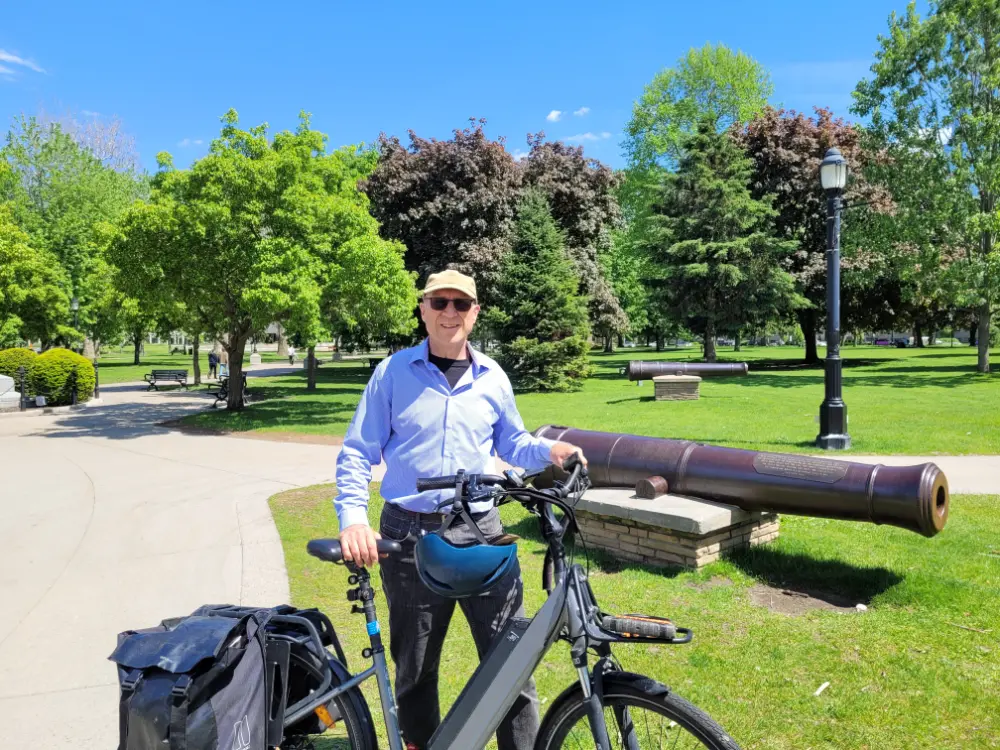
(Photo credit: Lawrence Durham).
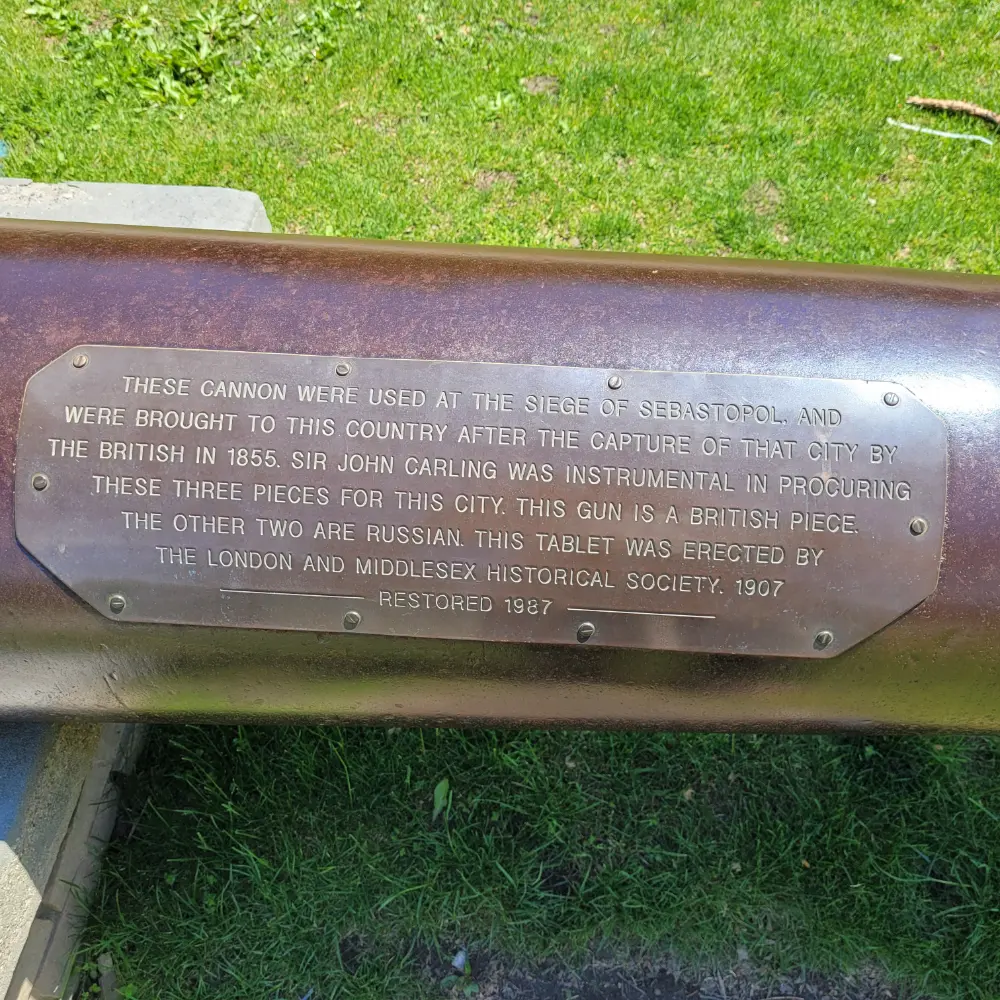
(Photo credit: Lawrence Durham).
Hi, I’m Lawrence. I’m a bicycle tour guide, a proud Londoner, and a collector of the kind of strange, wonderful stories that don’t show up in guidebooks. I help curious travellers discover the hidden layers of our city, from the echoes of 1838 in Victoria Park to the modern gems most people pedal right past. If you’d like to see London’s history up close (and have a few laughs along the way), come join me on a guided bicycle tour. Small groups, big stories, and the wind in your hair. Click here to learn more!
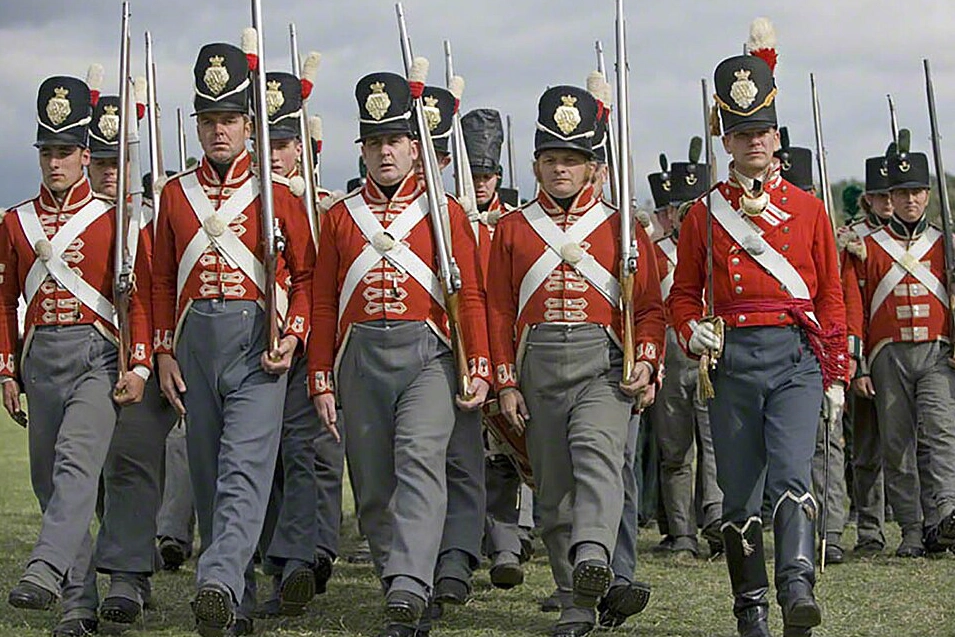
Featured cover photo: Wikipedia.