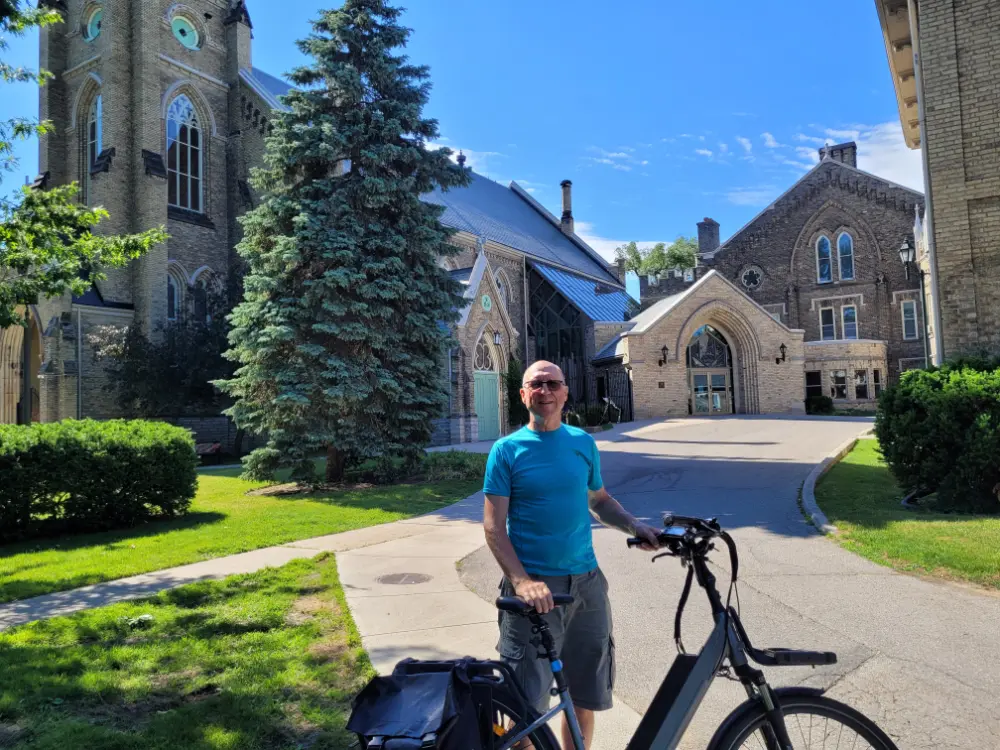
Tag: hidden gems London Ontario

  • Why This Iconic Bridge in London Was Cut in Half

    Why This Iconic Bridge in London Was Cut in Half

    Blackfriars Bridge had stood for almost 150 years. It was beloved by its residents, was a vital transportation link, and was celebrated by generations of artists.

    So why did the City of London decide to cut its most famous symbol in half in 2017?

    Before we answer that question, let’s examine how Blackfriars Bridge came to be.

    The Bridge That Came by Train

    Here is the neat thing. Blackfriars Bridge wasn’t built from scratch on site. It was ordered from a catalogue, specifically, from the Wrought Iron Bridge Company of Canton, Ohio.

    In the 1870s, a city like London could send away for a bridge the same way you might order a bookshelf from IKEA today, except this bookshelf weighed over 200 tons and had to survive spring floods.

    The company in Ohio prefabricated every single piece: the curved tubular arches, the vertical struts, the diagonal tie‑rods, and hundreds of metal pins. They packed it all into crates, shipped it north by railway across the U.S. border, and dumped it on the banks of the North Thames River.
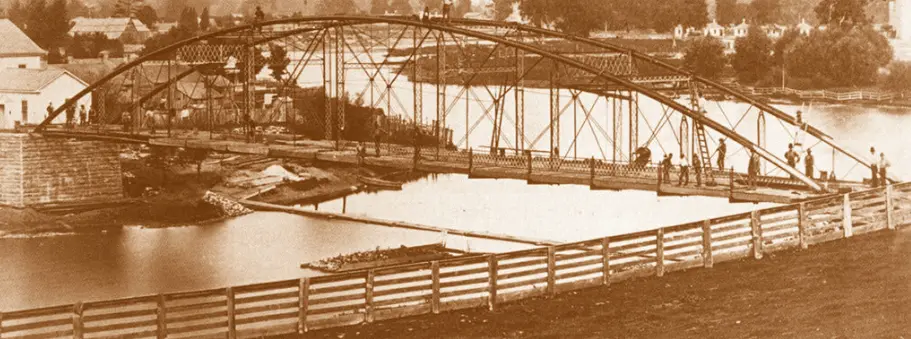
    Blackfriars Bridge under construction in 1875.
    Blackfriars Bridge under construction in 1875.
    (Photo credit: Dillon Consulting).

    Total cost for this massive metal puzzle? $14,711. That’s roughly $1.8 million today, a bargain for a bridge that would last a century and a half.

    Why London Needed a Bridge That Wouldn’t Wash Away

    To understand Blackfriars Bridge, you have to understand the problem it solved.

    Before 1875, the only way to cross the Thames between central London and the nearby community of Petersville, now known as the Blackfriars/Petersville neighbourhood, was via wooden bridges. And those wooden bridges had a nasty habit of disappearing every spring.

    Severe freshets, the old‑timey word for dramatic snowmelt floods, would routinely lift those wooden spans off their foundations and send them tumbling downstream like kindling.

    London needed something tougher. Something flood‑resistant. Something made of iron.
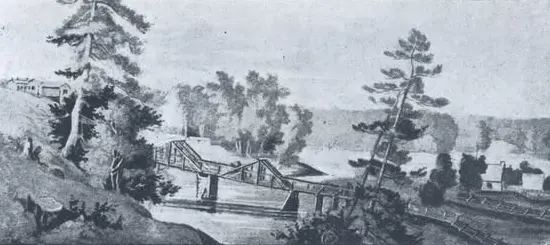
    A 1943 painting by James Hamilton, showing an early Blackfriars Bridge made of wood.
    (Photo credit: Fred Weyerman).

    Enter the bowstring arch‑truss: a single‑span design that needed no central pillars. It was a prototype, the Victorian equivalent of building for climate resilience, and it worked.
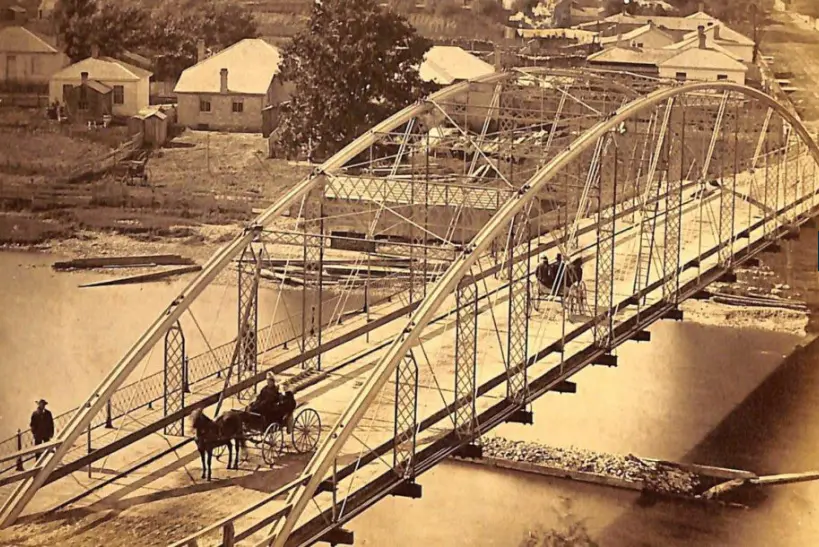
    High angle view of Blackfriars Bridge in London, Canada with horses and buggies crossing it, c.  late1800s.
    In the horse-and-buggy age, Blackfriars Bridge provided the first permanent link between the Blackfriars/Petersville neighbourhood and downtown London.
    (Photo credit: Dillon Consulting).

    A Rare, Single‑Span Wonder

    What makes Blackfriars so special, and why it draws engineering nerds from across the continent, is its design. It is a wrought‑iron, bowstring‑arch truss bridge with a single span.

    Translation: the curved top acts like an archer’s bow, absorbing all the tension and compression so that the deck below doesn’t need any annoying central pillars. That means when you stand underneath it, you see one clean, graceful arc leaping from bank to bank.
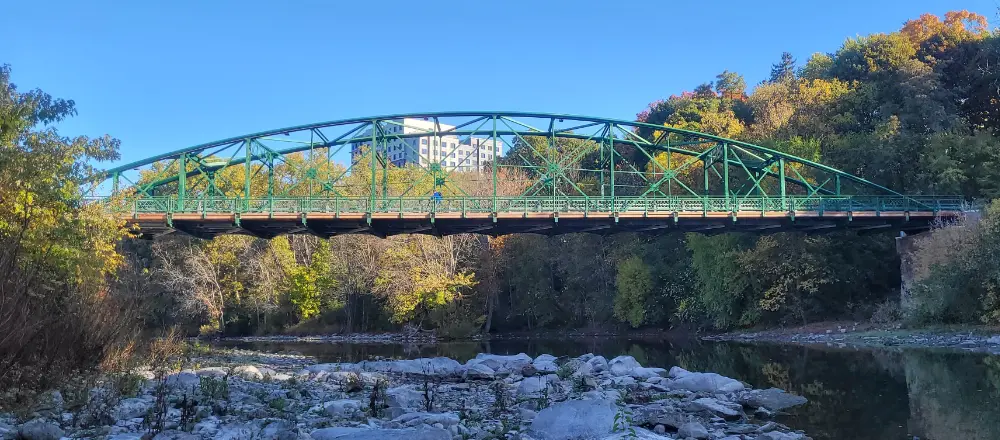
    View of Blackfriars Bridge, as seen from the riverbed.
    View of Blackfriars Bridge, as seen from the riverbed.
    (Photo credit: Lawrence Durham).

    And here’s the kicker: Blackfriars Bridge isn’t just the city’s oldest iron bridge. It is the longest and oldest surviving wrought‑iron bowstring truss bridge in all of North America that is still able to accommodate vehicular traffic.

    Today, it is recognized as a historic site under the Ontario Heritage Act. But really, its truest monument is the fact that you can still walk, cycle, or drive across it, more than 151 years later.
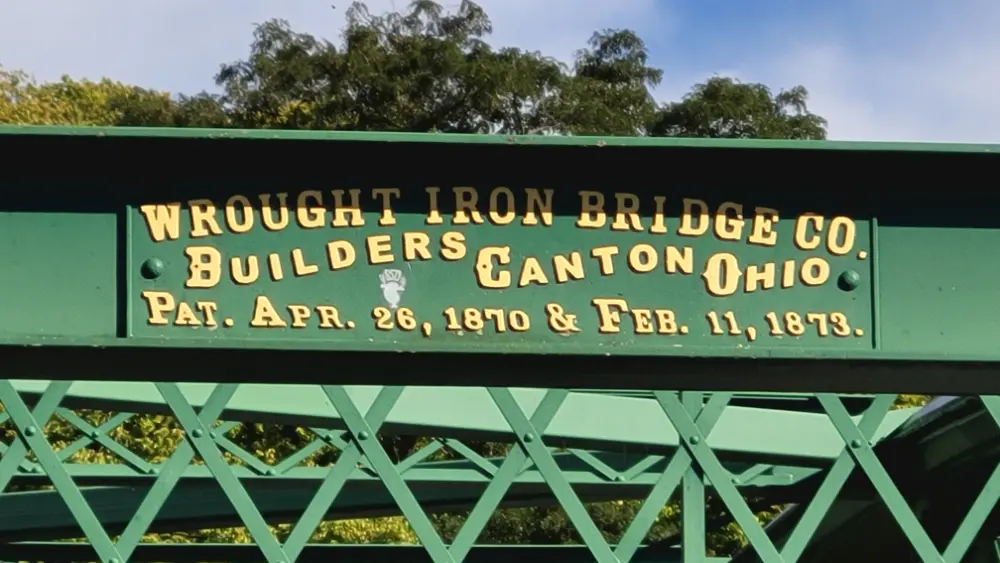
    Plaque on Blackfriars Bridge showing the Wrought Iron Bridge Co. Builders from Canton, Ohio and their two patents used in the bridge.
    A plaque mounted at the top of the bridge highlights two patents that made the Blackfriars Bridge prototype one of North America’s most innovative wrought-iron bridges at the time.
    (Photo credit: Lawrence Durham).
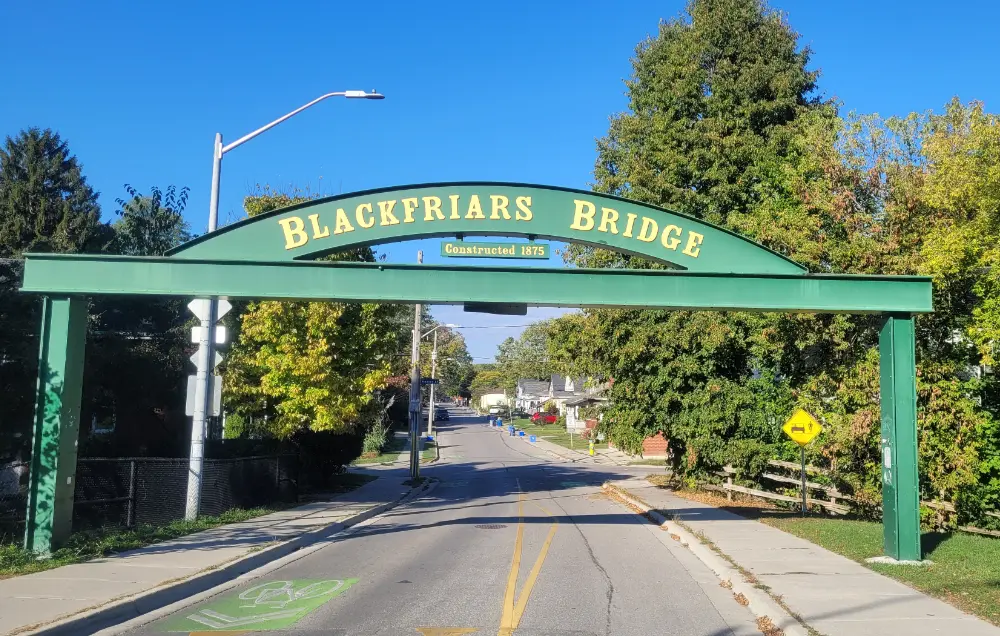
    The archway over the roadway leading to the Blackfriars/Petersville Heritage Neighbourhood.
    Looking west, you head under this archway on your way into the Blackfriars/ Petersville Heritage Neighbourhood.
    (Photo credit: Lawrence Durham).

    The Assembly: No Welding, Just Pins and Nuts

    In 1875, there were no welding torches. There weren’t even power tools. So how did Isaac Crouse, a local London contractor, and his crew put this thing together?

    They used pins. Big, thick metal pins that slotted through the eyes of the iron struts, exactly like the plastic connectors in a child’s building set. Once the pins were in place, workers tightened threaded tie‑rods with nuts to pull everything into perfect alignment.

    Close-up view showing the pins that were slotted through the metal struts in the bridge.
    Close-up view showing the pins that were slotted through the metal struts in the bridge.
    (Photo credit: Mike Hensen).

    Think of it as Victorian Lego, but every piece weighed a hundred pounds, and one wrong move meant a trip to the river.

    The vertical posts. The diagonal rods. The curved top chords. All of it clicked together on‑site, piece by piece, until, just like that, London had a bridge that looked like it had a future.

    The 2017-2018 “Do‑Over”: Cutting the Bridge in Half

    Bridges don’t last nearly a century and a half without a little help. By 2017, after 142 years of spring floods, freezing winters, and relentless traffic, Blackfriars was showing its age. The wrought iron had decayed. The pins were tired.

    So the City of London embarked on an $8.6‑million rehabilitation, a nine‑month labour of love that would make history all over again.

    Here’s how they did it:

    Step 1: Lift and Cut. In late 2017, a massive crane carefully lifted the entire 1875‑built wrought‑iron structure off its stone abutments. Then came the dramatic moment: crews cut the bridge in half so they could move it to the riverbank.
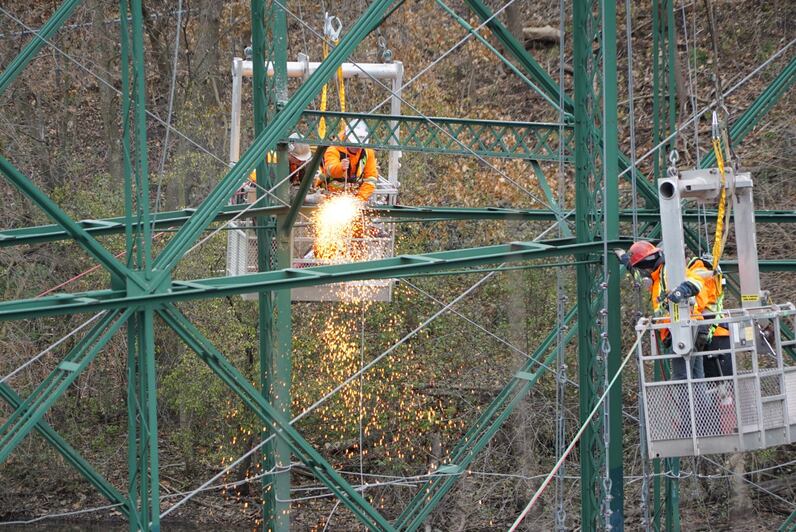
    Sparks fly as workers, suspended by cranes, cut through the historic bridge to split the structure in half.
    Sparks fly as workers cut through the historic bridge to split the structure in half.
    (Photo credit: Colin Butler/CBC News).
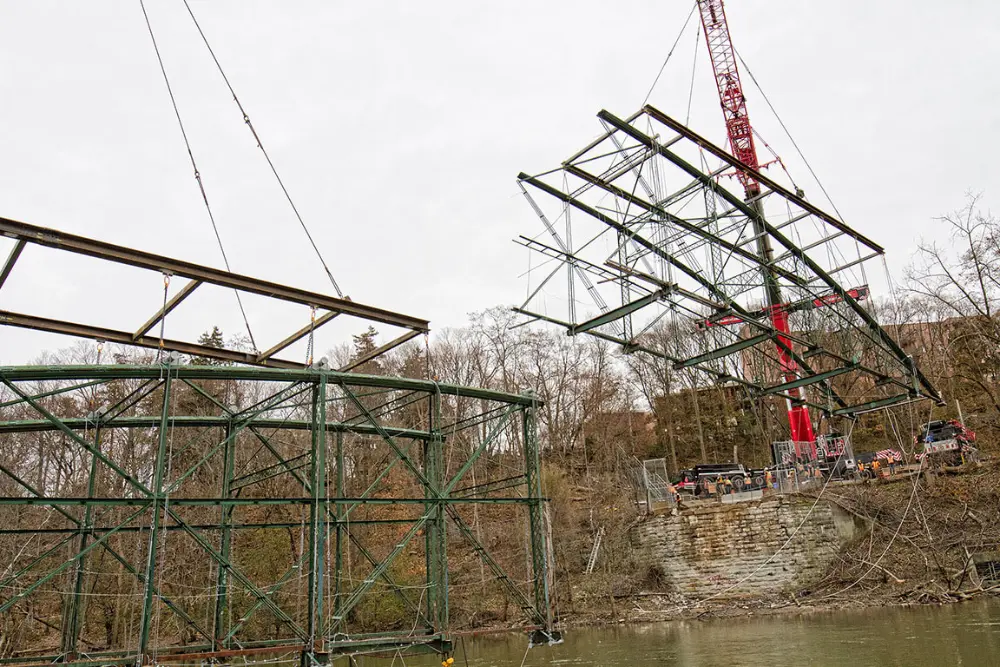
    Half of the Blackfriars Bridge sails above the urban canopy while suspended by chains.
    Half of the Blackfriars Bridge sails above the urban canopy while suspended by chains.
    (Photo credit: McLean Taylor Stone Town).

    Step 2: Crane to Shore. Each half was then lifted by crane and gently carried to the riverbank. From there, the disassembled sections were transported indoors, where the real magic happened.

    Step 3: Sandblasting and Hot Rivets. Over the winter months, specialized crews sandblasted away 140 years of rust and decay. They repaired the curved top chords, strengthened the vertical posts, and used historic hot‑riveting techniques to put it back together, the same way Isaac Crouse’s men would have done in 1875. No shortcuts. Just authentic, glowing‑hot rivets hammered into place.

    Step 4: The Big Swing. On August 15, 2018, a clear summer day, an 800‑tonne crane, the largest crane in Ontario at the time, arrived on the riverbank. The fully restored bridge, now reassembled into a single piece, was hooked to the crane’s cables and slowly, majestically, swung across the Thames River back onto its brand‑new concrete bearings and stone abutments.

    The refurbished Blackfriars Bridge being slowly lowered into place by a crane.
    Blackfriars Bridge being slowly lowered into place.
    (Photo credit: Mike Henson)

    The bridge had come home.

    Step 5: Reopening Day. After months of final touches, Blackfriars Bridge officially reopened to both vehicle and pedestrian traffic on December 1, 2018. The little neighbourhood of Blackfriars had its lifeline back.

    Hundreds of Londoners turned up to witness the reopening of the Blackfriars Bridge.
    Hundreds of Londoners turned up to witness the reopening of the Blackfriars Bridge.
    (Photo credit: Christian D’Avino).

    Blackfriars Bridge Today

    Blackfriars Bridge serves many purposes. Not only is it a vital multimodal connector and transit link between the downtown core and the Blackfriars neighbourhood, but it is also an historic link to a simpler time. Today, it continues to inspire generations of artists and remains the most recognizable symbol of the Forest City.

    The author, standing in front of Blackfriars Bridge as the autumn leaves are about to show their colours.
    The author, standing in front of Blackfriars Bridge as the autumn leaves are about to show their colours.
    (Photo credit: Lawrence Durham).

    Hi. I’m Lawrence. Bicycle tour guide and storyteller. And yes, Blackfriars Bridge is one of my absolute favourite stops on our tours

    If you want to feel the flex of that wrought‑iron arch for yourself and discover other hidden gems along the Thames, come ride with me. Small groups, big laughs, and the best bridge story on the continent.
    Click here to learn more! 

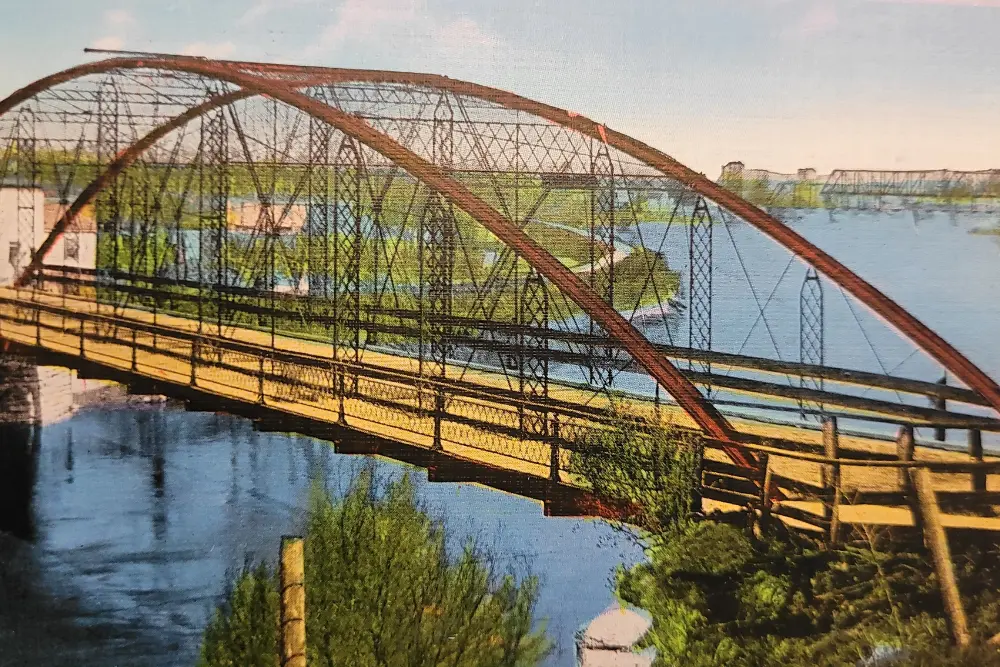
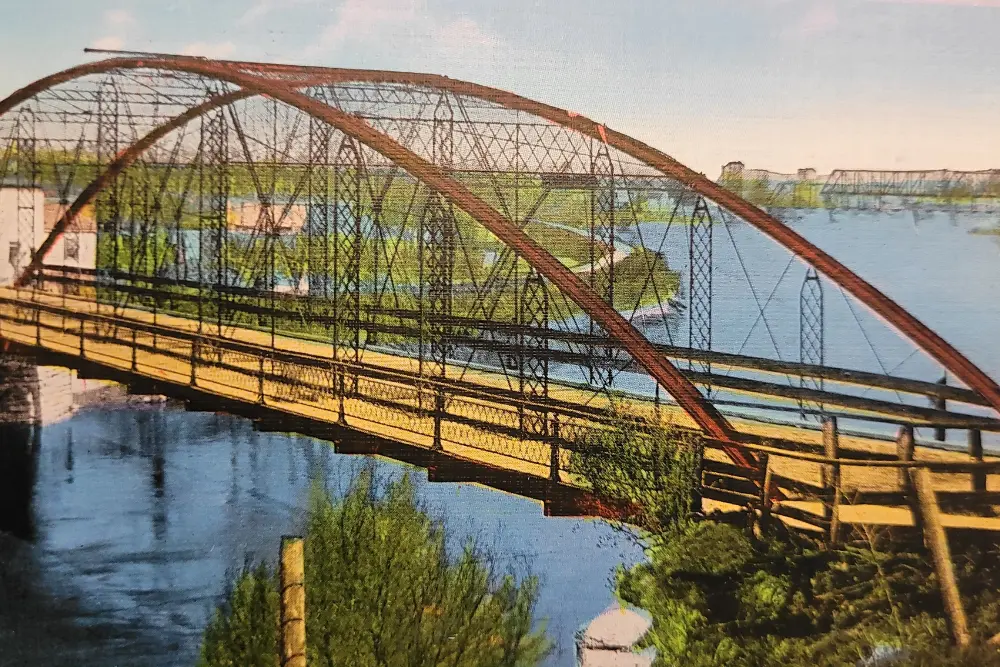
    Credit for featured cover Image: London Post Card Collection, Ivey Family London Room, London Public Library.
  • Why London Is The Best Place In Canada To Witness A “Swift-nado”

    Why London Is The Best Place In Canada To Witness A “Swift-nado”

    If you find yourself standing near the Labatt Brewery or the spires of First St. Andrew’s United Church on a warm late summer evening, look up. You might think you are witnessing a trick of the fading light. But that swirling vortex of tiny, cigar-shaped bodies is something far rarer: a “swift-nado.”

    Welcome to London, Ontario: the unlikely capital of Chaetura pelagica, better known as the Chimney Swift.

    For a city often defined by its forks of the Thames and its historic architecture, London holds a secret superpower. We are a global pitstop for one of nature’s most incredible aerialists. While you might visit London for the culture, you’ll leave amazed by the birds.

    The Cigar with Feathers

    Before we dive into the statistics, picture this: a bird that looks like a flying cigar with scythe-shaped wings. Chimney Swifts never land on the ground if they can help it. They eat and even bathe on the wing. In an era of extinction and loss, London has become a fortress for these threatened travellers.

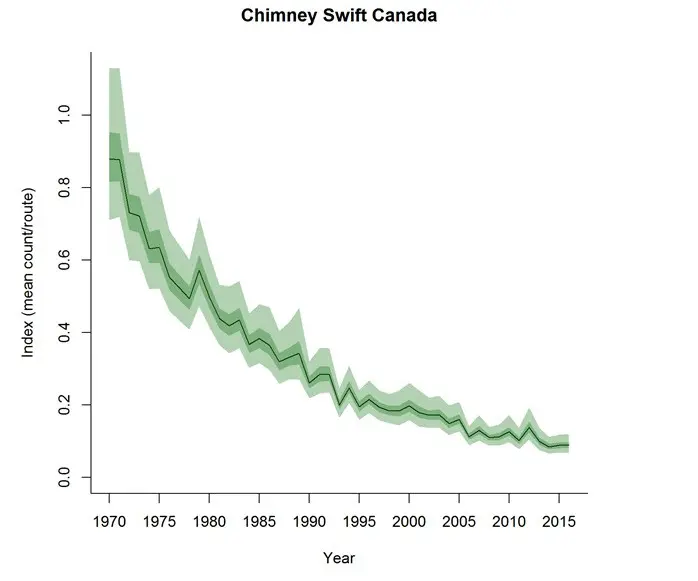
    Since 2009, the Chimney Swift has been designated as “Threatened” in Ontario, suffering a staggering 90% population decline since the 1970s.

    Chart showing the decline of chimney swifts in Canada (1970-2015).
    Note the steep decline in the swift population in Canada since the 1970s.
    (Graph based on Breeding Bird Survey data).

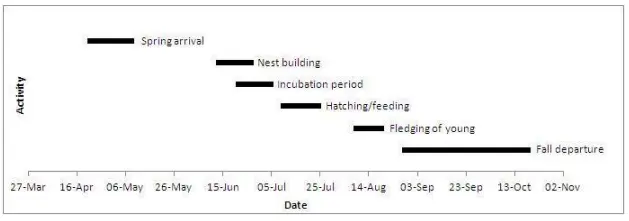
    And yet, when the swifts return to the Forest City from their Amazonian wintering grounds every April, they find a welcome mat rolled out by local volunteers.

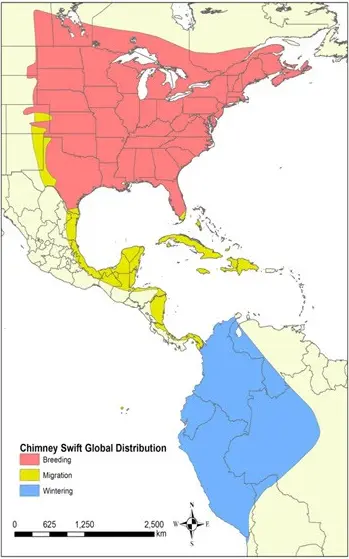
    Map showing the range, distribution, and migration route of chimney swifts throughout North and South America.
    The amazing 5,000 km migration of swifts from the Amazon Rainforest in the south to Canada in the north
    (Map created by Bird Studies Canada).

    Why London?

    To understand the swift, you have to understand our chimneys.

    Over 400 years ago, before European settlement, swifts nested in old-growth forests, using hollowed-out giant trees. As London grew into a bustling industrial hub in the 19th and early 20th centuries, those forests disappeared. But the swifts adapted. They moved into the unlined, rough brick chimneys of our factories, schools, and churches, typically using chimneys built before the 1960s, made of brick, stone, or concrete blocks.

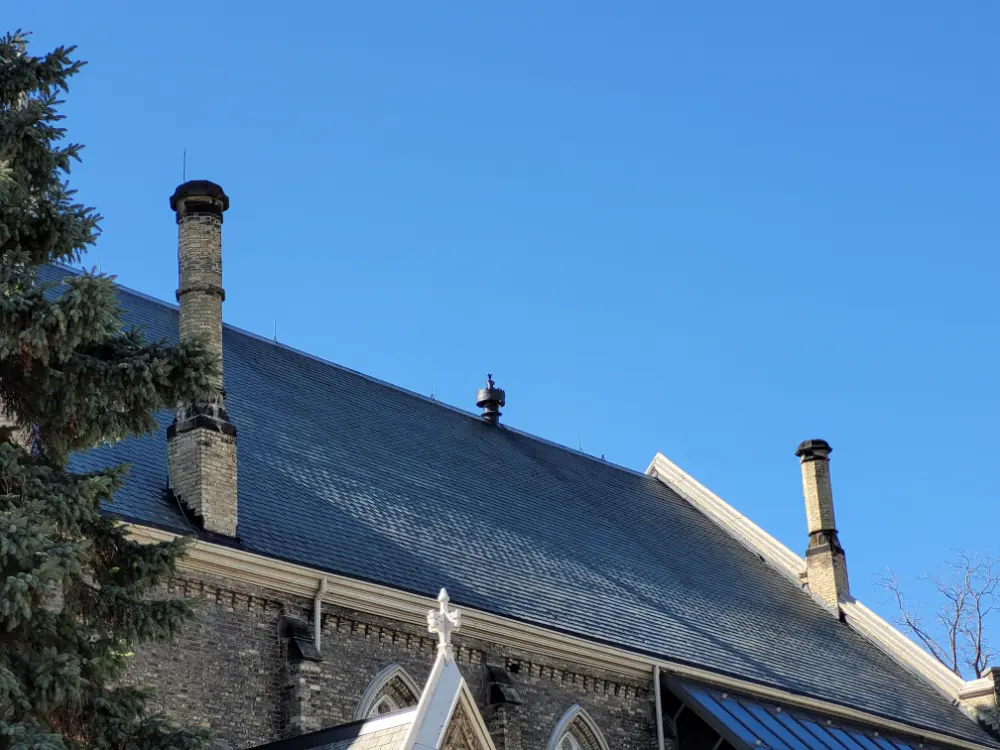
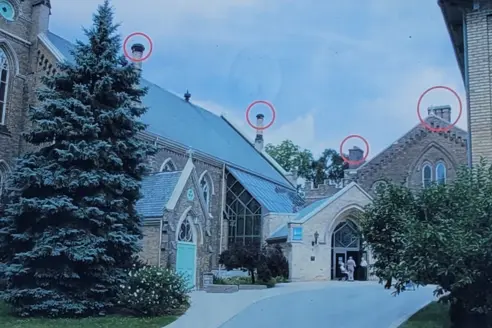
    Roof top of First St Andrews United Church in London, Ontario, showing swift chimneys.
    Old chimneys, such as these ones at First St. Andrew’s United Church, are prime locations to observe swifts at dusk.
    (Photo credit: Lawrence Durham).

    In 2021, London earned its official “Bird-Friendly City” status from Nature Canada, based on threat reduction, protecting natural habitats, and community education. Whereas some cities see old masonry as a liability, London sees a habitat for swifts. Since 2003, Nature London volunteers have actively monitored over 50 chimneys downtown, tracking thousands of birds during peak migration. One of the most famous roosts? Six years ago, in just 30 minutes, over 1,400 swifts were recorded by Dr Brenden Samuals funneling into a single chimney at dusk at Labatt’s Brewery.

    Click on the video above to watch a chaotic swirling “swift-nado” (watch time 59 seconds).

    A Cycle of Sky and Smoke

    For the culture seeker visiting in June or July, you might catch the quiet breeding season. Only one pair nests per chimney, raising their young in relative secrecy. Each pair generally mates for life.

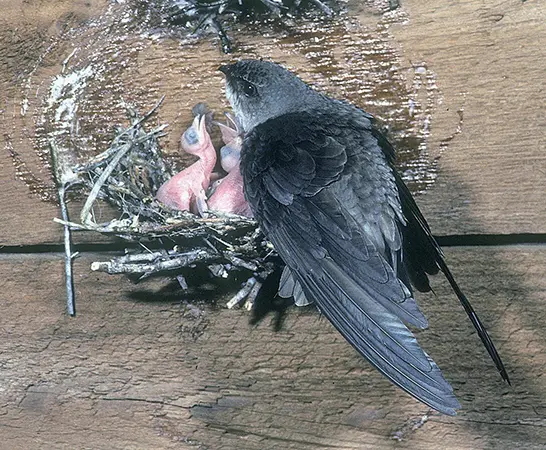
    Adult swift and two baby swifts in a swift nest.
    Swift babies manage to stay in small nests attached precariously to vertical surfaces. The nests are attached to the wall using a glue-like saliva.
    (Photo credit: George Peck)
    Timeline showing when chimney swifts arrive and leave London.
    A typical swift season in London.

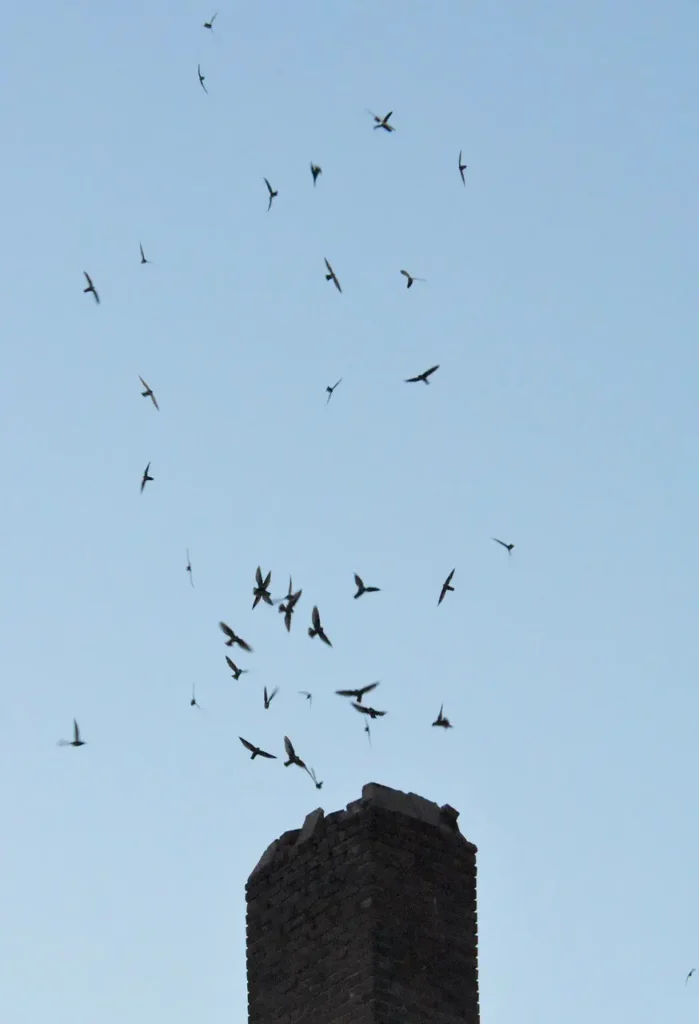
    If you time your visit for late August or September, you are in for a blockbuster show: the fall migration. As the swifts prepare to fly 5,000 kilometers back to the upper Amazon basin, they gather in massive communal roosts. Hundreds, sometimes thousands, of birds spiral down at sunset, creating a tornado-like funnel directly into an old brick chimney.

    Photo sequence of descent of a swift into a chimney.
    This series of frames from a video shows a single
    swift making body and wing adjustments and using its
    tail to brake and control its descent into the Labatt’s
    chimney. (Photo sequence by Glenn Berry).
    Multiple chimney swifts circling a brick chimney before descending into it.
    Swifts entering a chimney.
    (Photo credit: Peter Middleton)
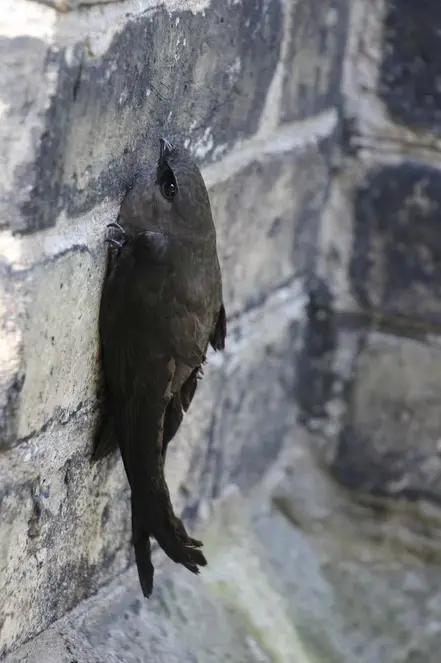
    Chimney swift clinging to the side of a brick wall.
    This close-up photo shows how the swift clings to the rough surfaces with its sharp hooked claws. Swifts also have spiked tail feathers for bracing against chimney walls.
    (Photo credit: Dave Wake).

    Click on the video above to hear the sounds of the chimney swift. (Watch time: 2:39 min).

    The Challenges

    Of course, being a threatened species means the swifts face steep odds. Their story is a mirror of our own urban development.

    Habitat Loss: Since 2003, London has lost roughly one-third of its identified swift chimneys. Modern metal linings and safety caps, while good for fire safety, are death traps for swifts. They cannot grip the metal of lined chimneys, and they cannot enter capped chimneys.

    Food Scarcity: As aerial insectivores, they eat up to 1,000 insects a day. Pesticides and climate change have reduced the bug population, making it harder for migrating swifts to fuel up.

    But here is the uplifting part: London fights back.

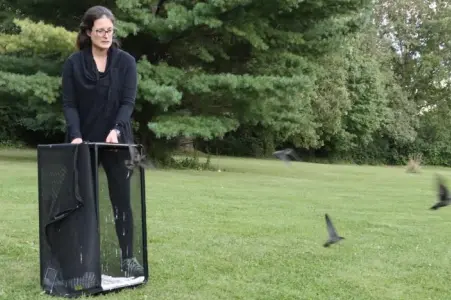
    We are not just a city with a problem; we are a city with a solution. London is a key site for the release of orphaned swifts. Wildlife rescuers from across eastern Canada bring their rehabilitated birds to London because our monitored chimneys offer the best chance of reintegration into the wild. When just-released orphaned swifts join a swoop of more mature swifts at the local roosts, the younger birds learn how to survive in the open from older birds before migrating with them back to their wintering grounds in the Amazon.

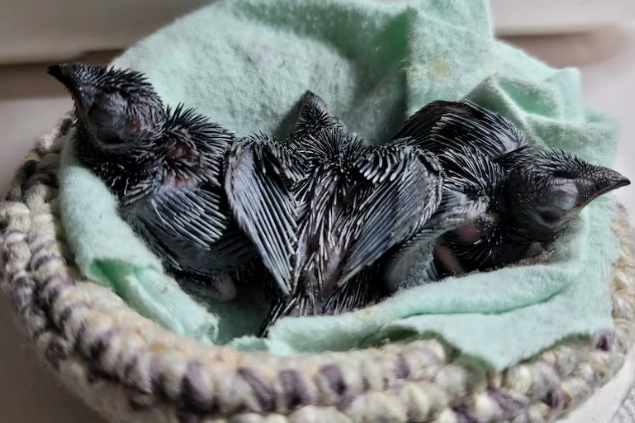
    Orphaned chimney swifts nestled into a makeshift nest.
    This group of orphaned baby swifts was cared for by Destined to Fly bird rescue, located about 30 km north of Kingston, Ont.
    (Photo credit: Connie Black).
    Release of orphaned chimney swifts in London, Ontario.
    Sue Wylie of Le Nichoir in Hudson, Quebec, shown in 2021, has been bringing swifts to London for release since 2008. In the photo above, she has just unzipped the swift travelling case, and some of the young swifts are whizzing by in their first experience of totally unrestricted flight. How many swifts can you spot in the photo? (There are actually four).
    (Photo credit: Winifred Wake).

    Where You Can Witness the Magic

    You don’t need binoculars to see this show, though they help. You just need to know where to stand.

    • First-St. Andrew’s Church (350 Queens Ave): The city has installed a viewing bench and interpretive sign here. It is the most accessible spot for a sunset vigil.
    • South Collegiate & Old Schools: Many of the older school buildings in the core remain swift hotspots.
    • Downtown Industrial Zones: As you ride through the old warehouse districts, look for the tall, uncapped brick towers.

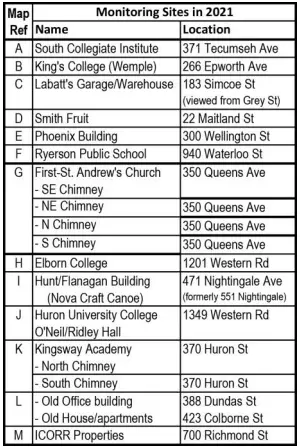
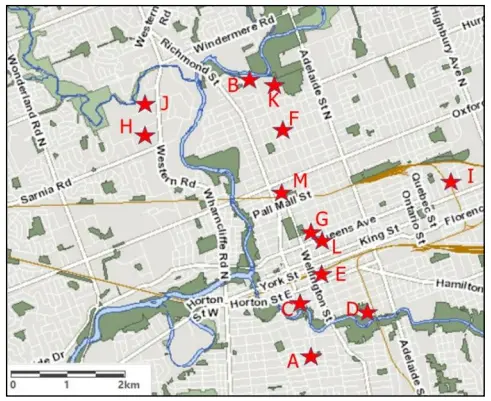
    Table 1 (above left) shows the 18 London chimneys where weekly monitoring was carried out by Nature London in 2021. The letter references in Table 1 refer to the swift monitoring sites shown on the map in Figure 1 (above right).

    (Source: Winifred Wake).

    The courtyard at First St. Andrew's United Church, 220 Queens Ave, with four of its chimneys circled in red.
    The courtyard at First St. Andrew’s United Church, 220 Queens Ave, with four of its chimneys circled in red.
    (Photo credit: Dave Wake).

    A Quick Ask from a Tiny Traveller

    If you fall in love with the swifts (and you will), there are easy ways to protect them. If you own an older home, avoid capping or lining your chimney between May and September. Better yet, report your sightings to Nature London. Because swifts are a protected species, we are all lucky to be their guardians.

    The City of London, for its part, incorporates SwiftWatch data into municipal planning and development guidelines to protect known swift chimneys.

    The author, Lawrence Durham, in front of First St. Andrew's United Church.
    The author, in front of First St. Andrew’s United Church.
    (Photo credit: Lawrence Durham).

    Hi, I’m Lawrence. When I lead bicycle tours through downtown London, I usually point out the architecture of the 1800s or the flow of the Thames. But some of my favourite times happen when I’m riding at dusk, looking up at a chimney and watching a “swift-nado” spin against the clouds; I realize that London isn’t just a city of human history; it’s a sanctuary for winged wonders.

    Seeing a swift-nado is just one of the things I’ve discovered while riding around London on my bicycle. This city is full of many more hidden gems. Why don’t you come discover them with me?

    Click here to learn more!. Your next adventure awaits.

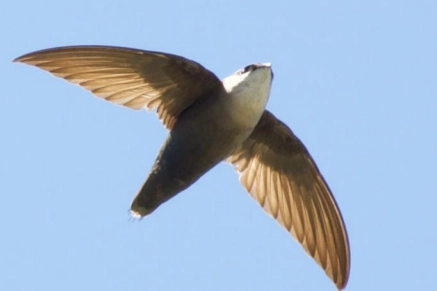
    Chimney swift in flight.

    Credit for featured cover photo: Glenn Berry.