
When you pedal through the tree-lined streets of London, Ontario, today, you’re breathing fresh air, enjoying the beauty of our historic architecture, and maybe even stopping for a coffee at a sidewalk café. It’s hard to imagine that not so long ago, this same city was plagued by something far less pleasant: raw sewage flowing through the streets, toxic rivers, and outbreaks of disease that terrified the population.
Welcome to the surprisingly fascinating (and occasionally stomach-churning) history of how London cleaned up its act. It’s a story of public health crises, brilliant engineering, and a whole lot of horse manure.
Part One: The Honey Wagon Era
What Exactly Was a “Honey Wagon?”
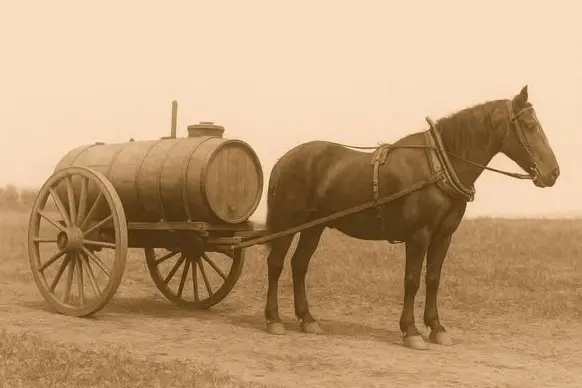
In Victorian-era London, discussing human waste was considered deeply taboo. The yellowish-brown sludge collected from outhouse vaults bore an unfortunate resemblance to honey, and so the sarcastic euphemism was born. The term “honey wagon” made an unpleasant reality sound somewhat more palatable, though nobody was fooled.
These horse-drawn carts were the city’s primary method of waste removal before indoor plumbing became widespread. Managed by the municipal Board of Health, these nightly operations were a vital but deeply maligned public health necessity.
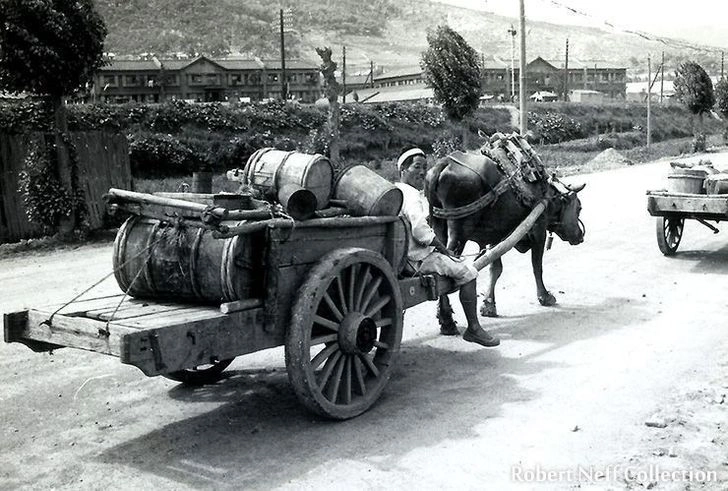
This 1952 photo from Korea shows that the use of “honey wagons” was still in practice in the recent past.
(Photo credit: The Korea Times).
The Nightmen: London’s Unseen Heroes
Because the job was considered offensive and the odors unbearable, collection crews worked strictly overnight. They were known as “nightmen” or “night soil men,” titles that sound almost romantic until you understand what they actually did.
Working in the dark hours, these crews would navigate horse-drawn wagons through back alleys, slide out waste pails from “pail closets,” or use long-handled dippers to scoop sludge from deep cesspools. The foul cargo was emptied directly into open oak half-barrels positioned in the wagon bed.
The working conditions were brutal:
- Night shifts in all weather conditions
- Overwhelming, nauseating odors
- Social stigma that made the job taboo
- Constant exposure to disease-causing bacteria
- Heavy manual labor with rudimentary equipment
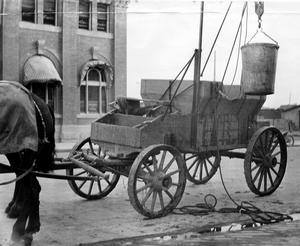
(Photo credit: Lethbridge Historical Society).
Disease Prevention
Early London suffered from rampant outbreaks of typhoid and cholera. These waterborne illnesses were often traced directly to cesspools leaking into local well water and, more problematically, the Thames River.
The night soil collection was the city’s primary defense against these deadly epidemics. Once the wagons were filled, they hauled the cargo outside city limits, frequently transporting it to surrounding agricultural land to be spread as fertilizer.
It wasn’t a perfect system, far from it, but it was all London had.
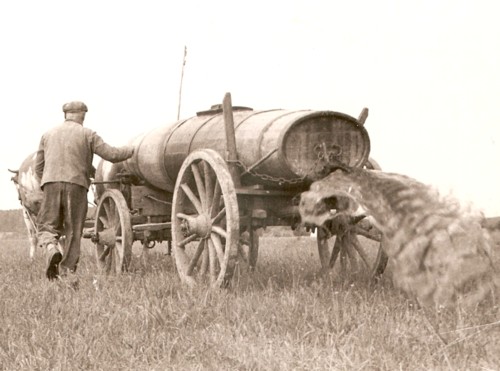
(Photo credit: lindaseccaspina).
Part Two: The Public Health Crisis That Forced Change
Cholera, Typhoid, and a Toxic River
Before underground infrastructure existed, early Londoners dumped household waste directly into backyard outhouses or, shockingly, into the streets, where rainwater washed it into local wells and creeks.
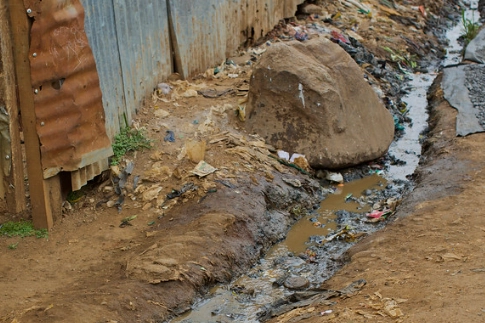
(Photo credit: ICIMOD)
The results were catastrophic.
London was hit by multiple waterborne epidemics throughout the 19th century. Because citizens drew drinking water from shallow private wells positioned just feet from leaky outhouse cesspools, bacteria spread rapidly through the population.
The Thames River crisis was particularly dire. As the population grew, the city built rudimentary “storm drains” intended only for rainwater. However, citizens and businesses illegally hooked their waste lines into them anyway. This turned London’s beautiful Thames River into an open sewer, leaving parts of it a biological hazard thick with sludge.
The situation had become intolerable, dangerous, and frankly, embarrassing for a growing city with ambitions of greatness.
The Legislative Push That Saved Lives
In 1882, Ontario established the first Provincial Board of Health, later mandating local branches. These health officers quickly realized that relying on independent “nightmen” to scoop out outhouses could no longer prevent mass disease epidemics.
Something had to change, and fast.
Part Three: Building the Modern Sewer System
Clean Water Arrives First (1878)
The first major step toward sanitation wasn’t removing waste; it was providing clean water. The city established the Springbank Waterworks to pump fresh spring water into London, dramatically reducing reliance on contaminated backyard wells.
Clean water was the foundation upon which everything else would be built.
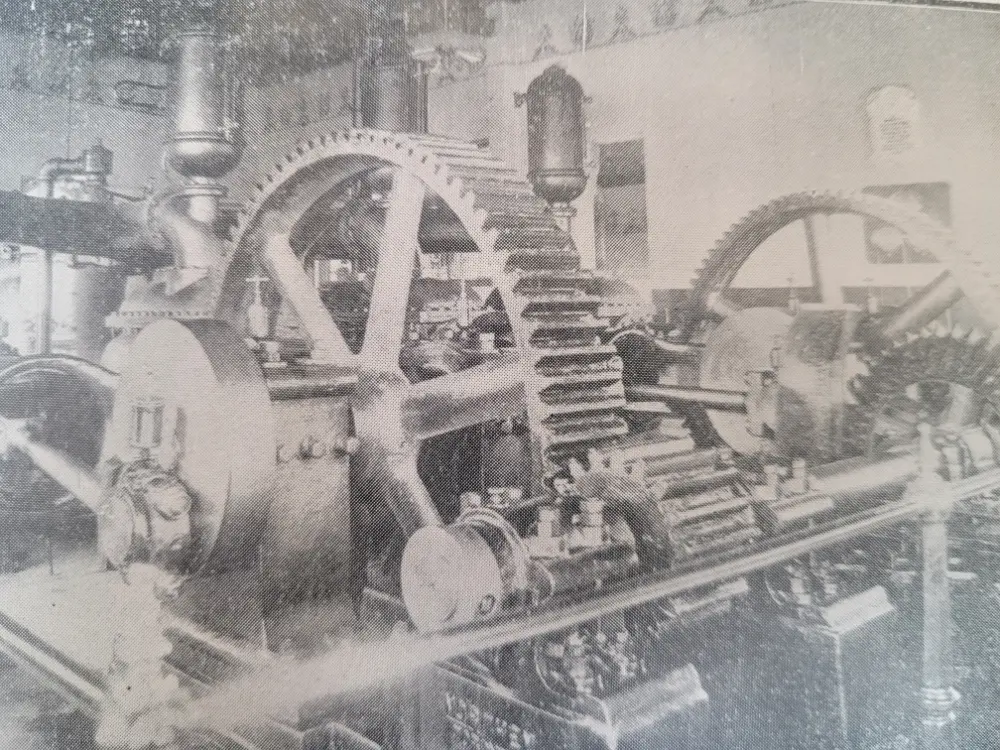
(Photo credit: Public Utilities Commission 27th Annual Report to the City of London, 1905).
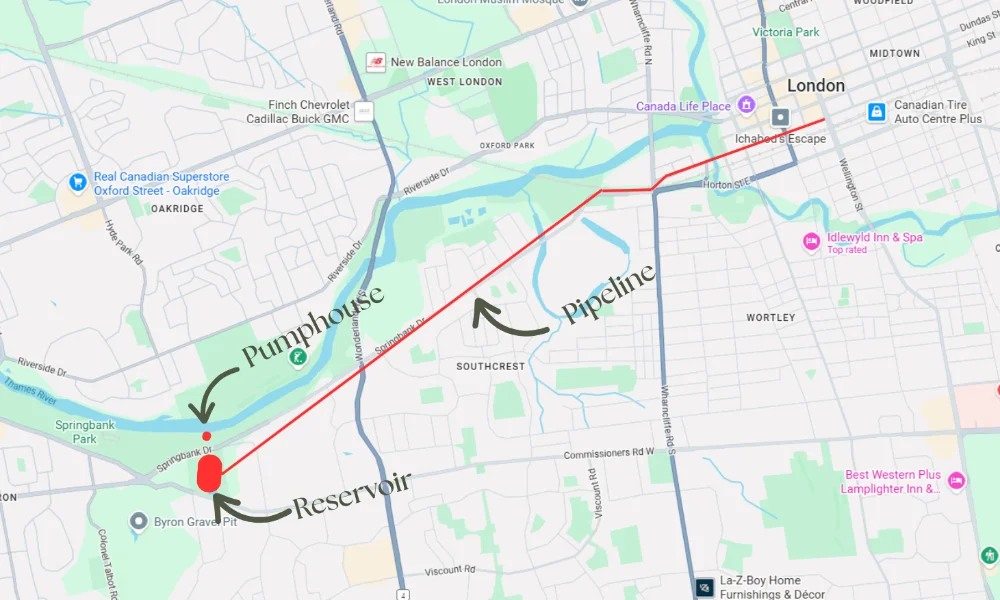
(To explore the area around the waterworks, click here on Google Maps)
Enter Willis Chipman: London’s Engineering Genius
In 1891, the City hired Willis Chipman, one of Canada’s legendary civil engineers, to completely redesign London’s sanitation map. His vision was bold, brilliant, and forward-thinking.
Chipman’s design broke away from standard Victorian engineering using three core principles:
1. The Intercepting Trunk System
Instead of allowing individual north-south neighborhood sewers to drain directly into the Thames River, Chipman mapped out a massive, continuous east-west intercepting trunk sewer grid. This massive line ran parallel to the riverbanks, catching all the city’s downhill wastewater flow before it could breach the shoreline.
2. Separation of Waste (The Double Sewer Concept)
Chipman championed the “separate system” over the dangerous “combined system.” He designed a strict layout where storm runoff was separate from the highly toxic sanitary sewage, which went into dedicated, watertight clay pipes. This later culminated in the Egerton Double Sewer (1916), where a designated sanitary pipeline was safely insulated inside a massive brick storm tunnel, a rare engineering achievement. It lasted for 100 years before being replaced in 2016.
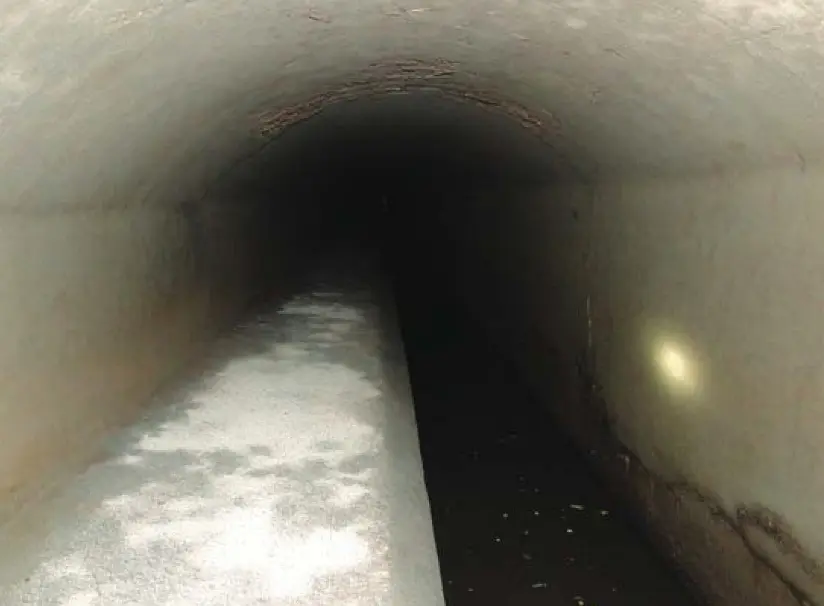
(Photo credit: City of London Engineering Department).
3. Gravity and Strategic Siphons
Chipman masterfully used London’s natural topography, engineering the grid so gravity pulled waste downhill toward a centralized collection point. To cross river valleys without exposing waste to the air, he utilized inverted siphons, underground U-shaped pressurized pipe networks that pulled wastewater directly beneath the riverbeds.
Treatment Infrastructure
Rather than letting raw sewage flow directly downstream, London began constructing centralized wastewater treatment facilities in the early 20th century. These facilities drastically reduced waterborne illnesses and marked the beginning of the modern sanitation system we enjoy today.
Part Four: The Forced Transition
The Economic Reality of Indoor Plumbing
Engineering a world-class sewer grid meant nothing if ordinary Londoners couldn’t afford to connect to it. And the costs were staggering.
The financial breakdown for a typical 1890s household:
- The fixtures: A basic earthenware toilet cost between $6.00 and $12.00. Premium porcelain models with copper-lined wooden tanks pushed closer to $20.00-$25.00.
- Labor and materials: Homeowners had to hire licensed plumbers to dig up lawns, lay lead or cast-iron drainage lines, build air vents, and connect to the city’s clay sewer tiles. This typically cost between $40.00 and $75.00.
- Total financial burden: The complete indoor plumbing overhaul averaged $50.00 to $90.00 per household.
To put this in perspective: An average London laborer earned roughly $1.25 to $1.50 per day ($350-$450 annually). Installing a toilet cost two to three months of their entire gross income.
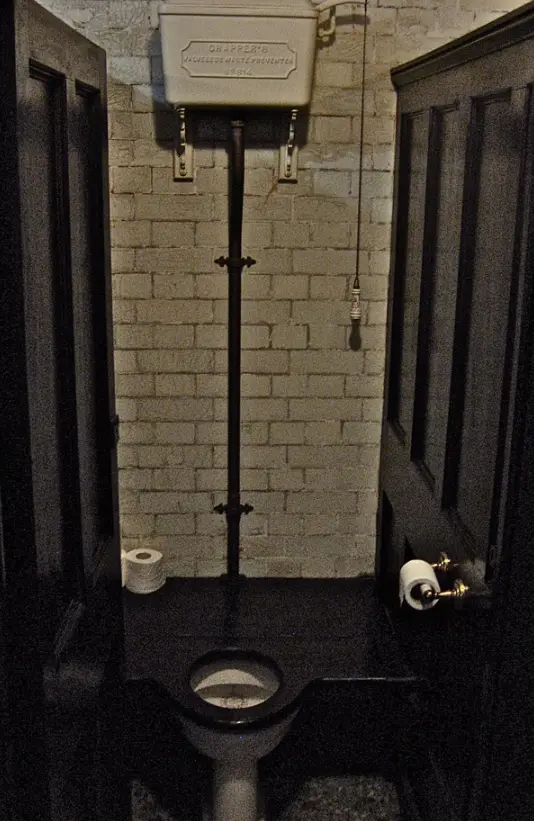
An original Thomas Crapper toilet from the nineteenth century, still in perfect working order.
(Photo credit: Spitalfields Life).
The Board of Health’s Aggressive Bylaws
To enforce compliance, London’s Board of Health utilized the Public Health Act to pass draconian municipal bylaws:
Forced Outhouse Bans: The city declared that any privy vault, cesspool, or “dry earth closet” located within 150 feet of a newly laid municipal sewer line was an illegal public nuisance.
The Compulsory Connection Bylaw: If a property line touched a street with a new sewer tile, landlords and homeowners received strict legal notice. They were given just 30 to 60 days to permanently fill their outhouse pits with lime and earth, demolish the structures, and install indoor plumbing.
Aggressive Fines and Penalties: For every day a citizen resisted, the Board levied daily compounding fines. If a homeowner refused to comply, municipal workers could enter the property, forcibly seal the outhouse, and install the plumbing connections themselves. The total bill was slapped onto the citizen’s property tax roll as a lien—and if they couldn’t pay, the city could seize and auction the home.
It was heavy-handed, yes. But it worked.
Part Five: From Horse Carts to Motor Vehicles
The Urban Horse Crisis
By the late 1890s, thousands of working horses populated London’s streets, creating an additional crisis of hundreds of tons of manure and urine daily. Moving away from horses wasn’t just about modernizing sewage removal; it was required to clean up the streets themselves.
The horse-drawn era was coming to an end, and not a moment too soon.
Early Motorized Vacuum Carts
In the 1910s and 1920s, the city began purchasing early motorized utility trucks. For areas not yet hooked up to the expanding sewer grid, these trucks were outfitted with heavy iron tanks and primitive mechanical suction pumps, replacing the manual oak-barrel loading process.
The Mid-Century Phase-Out
Horse-drawn waste and utility wagons disappeared completely by the onset of World War II. They were replaced by fully sealed, specialized vacuum trucks, the direct ancestors of modern commercial sanitation fleets.

(Photo credit: Porta Serve).
The Legacy: A Clean, Beautiful London
By utilizing Chipman’s mathematical grid and using terrifying financial penalties to force compliance, London successfully eradicated the horse-drawn honey wagon lifestyle and transitioned into a clean, modern city with a modern sewage system.

Hi. I’m Lawrence, bicycle tour guide, storyteller, and history nerd. I help curious folks like you discover the best parts of London, from a bicycle seat, of course. Whether you’re a local who wants to see your city with fresh eyes or a visitor looking for an authentic experience, I’d love to show you around. Small groups, big laughs, and unforgettable stories await.
Have you ever wondered what other surprising stories London’s streets could tell? Join a tour and find out!
Featured cover photo by Porta Serve.