
When you think of London, Ontario, what comes to mind? The Thames River. The historic Blackfriars Bridge. Maybe the sulfur spring that launched a Victorian spa empire.
But here’s a fact that stops people in their tracks: London once built the largest dump truck the world had ever seen.
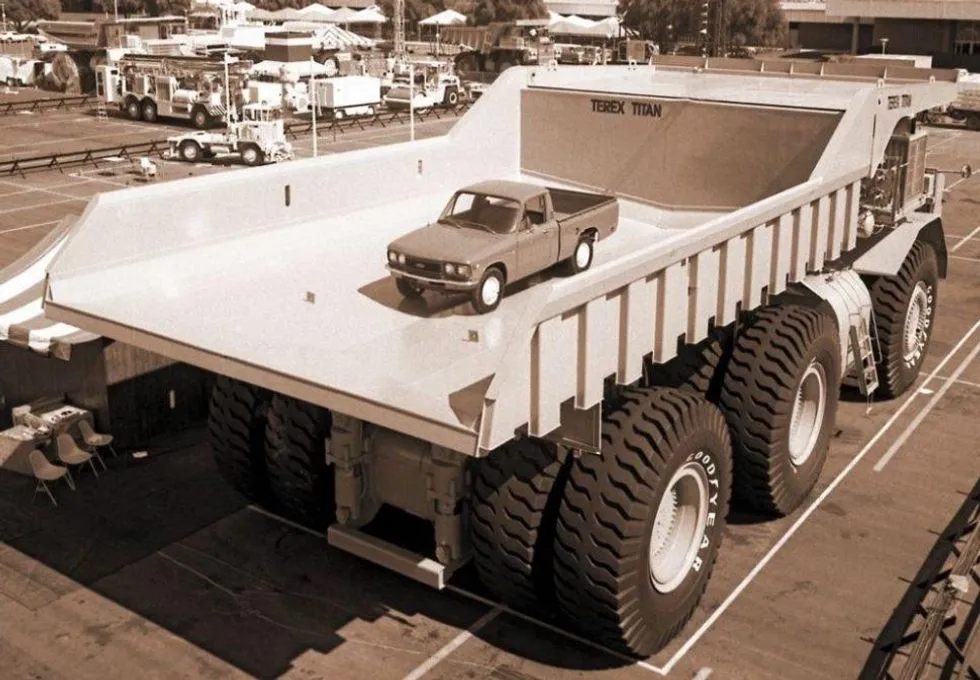
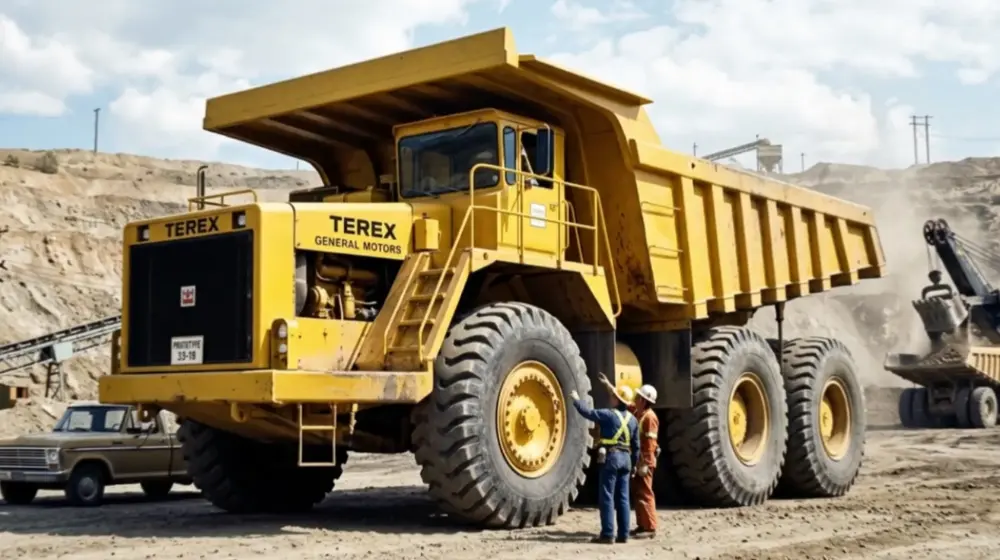
A 3,300-horsepower, 1.2-million-pound, house-sized behemoth that held the Guinness World Record for a quarter of a century. It was called the Terex 33-19 “Titan,” and it was assembled right here in 1973 at the General Motors Diesel Division plant at 2021 Oxford Street East.
Why Build a Truck the Size of a Building?
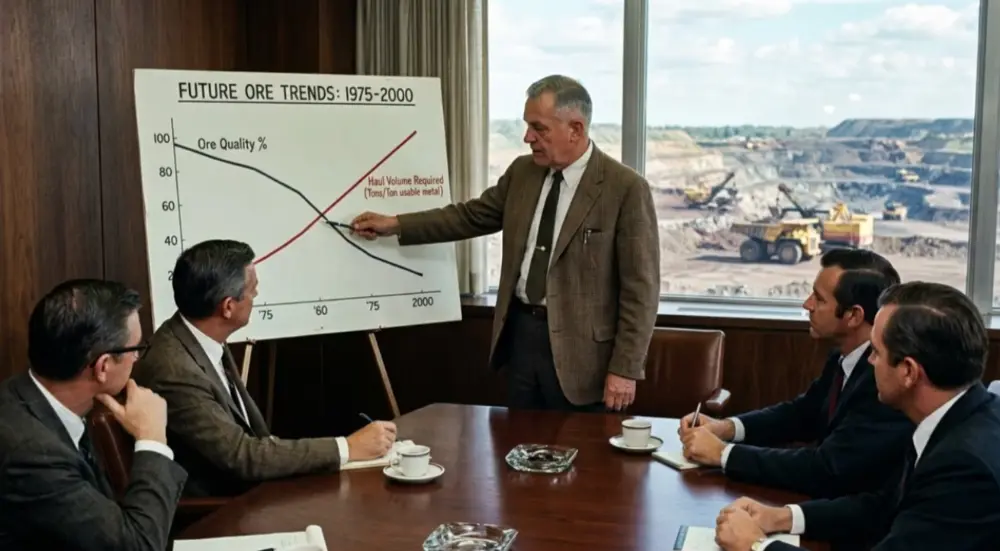
In the early 1970s, General Motors’ Terex division saw a problem brewing. Open-pit mines around the world were digging deeper, and the quality of ore was declining. To stay profitable, miners needed to move more rock, a lot more, in fewer trips.
The solution? Build a truck so massive it would make every other large haul truck look like a toy.
(Photo credit: Car Clever)
GM’s engineers sketched out a prototype that defied all existing conventions: a three-axle, rigid-frame, diesel-electric hauler with a payload capacity of 350 tons. It was the biggest in the Terex 33 series, a line of off-road trucks that had already made a name for itself in mining circles.
The project was ambitious. Maybe too ambitious. But London was about to make history.
Assembly in London: 1973
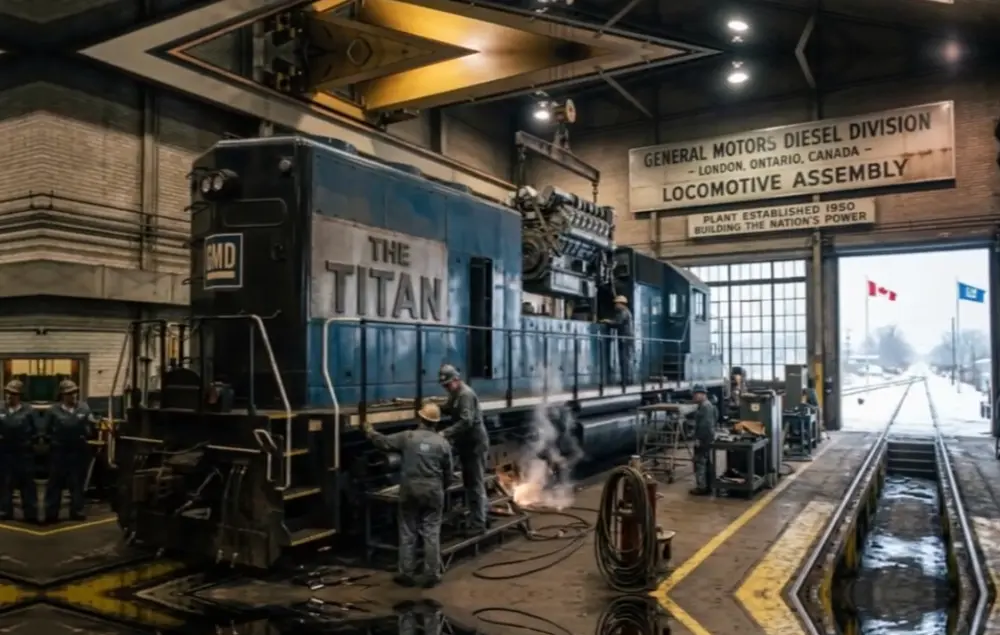
The Titan was assembled at the General Motors Diesel Division plant in London, Ontario; the same facility that had been building railway locomotives and heavy equipment since 1950. The plant was no stranger to big projects, but this one was different.
This was a one-off prototype. Only one Titan would ever be built.
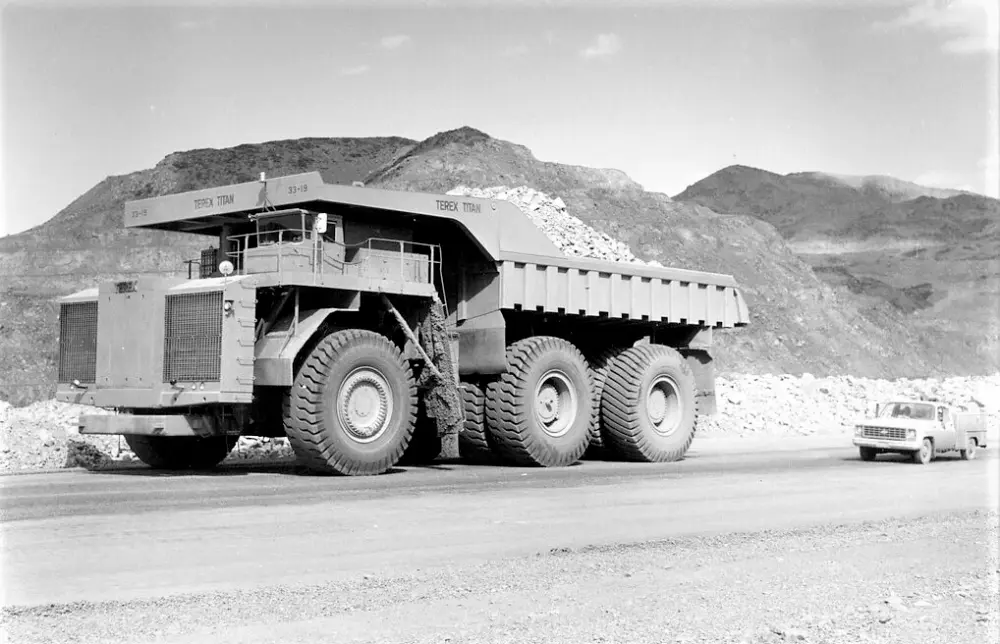
Workers pieced together a machine that would stretch 66 feet, 9 inches long, longer than a city bus, and stand 22 feet, 7 inches tall. When the dump box was fully raised, it towered 56 feet into the air.
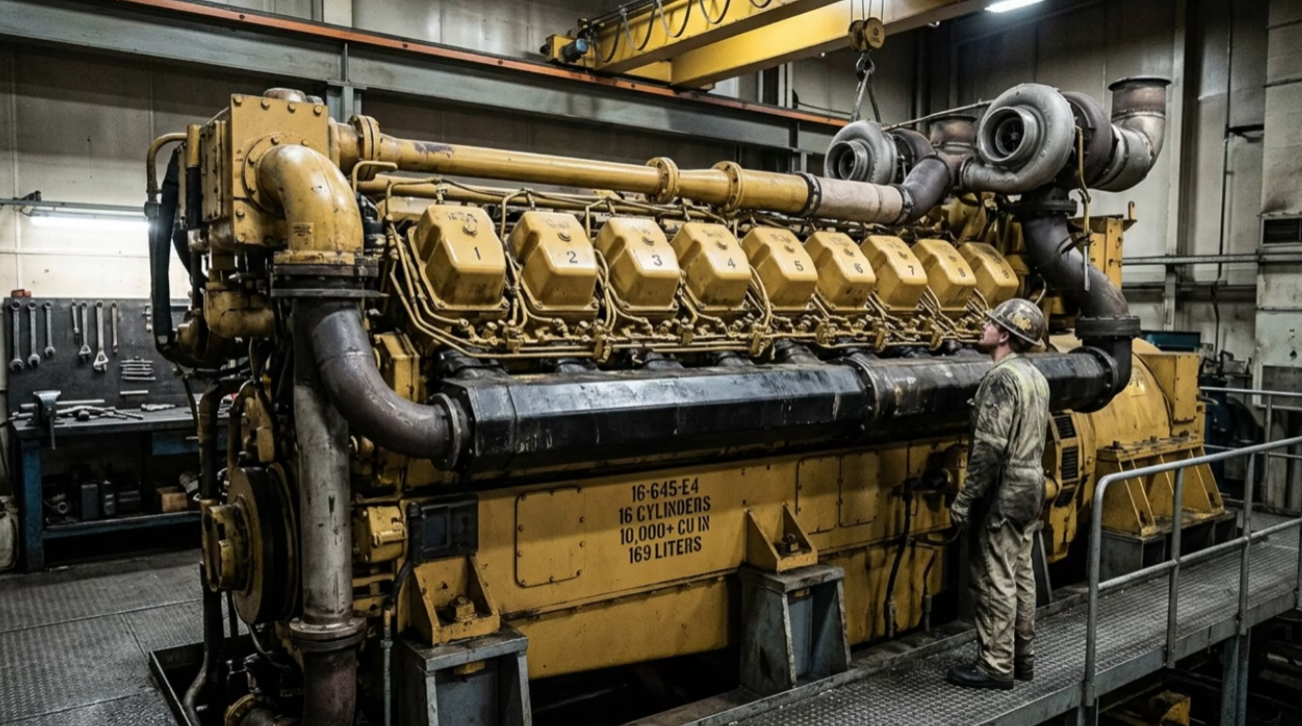
Because the Titan relied on a massive 16-cylinder Electro-Motive locomotive engine and a diesel-electric powertrain, it was assembled inside the exact same bays used to build heavy railway locomotives.
(Photo credit: Car Clever)
(Photo credit: Car Clever)
Once basic assembly was completed in 1974, the truck was rolled out into the plant’s expansive open yards and rear test track areas along Oxford Street to undergo initial mechanical testing before being disassembled for rail transport.
It was unveiled to the public in October 1974 at the American Mining Congress in Las Vegas.
The mining world gasped.
What Made the Titan So Incredible?
Let’s break down the numbers, because they are genuinely staggering:
- Engine: A 16-cylinder, 10,343-cubic-inch Electro-Motive Division (EMD) locomotive engine pumping out 3,300 horsepower. Yes, locomotive, the same kind of engine that pulls trains across the prairies.
- Gross Vehicle Weight: When fully loaded with 350 tons of ore, the Titan weighed 1,209,500 pounds, over 1.2 million pounds of steel, rubber, and raw power.
- Tires: Twelve feet tall. Each one weighed more than a car.
- Fuel Consumption: The Titan drank fuel at a rate of 5 gallons per mile. It carried 1,560 gallons in its tank, and it needed every drop.
- Steering: All ten wheels, including the eight rear wheels, could steer, giving this monster surprising agility despite its size.
- Braking: The Titan used regenerative braking, with the electric motors acting as generators to slow the truck and produce up to 5,400 horsepower of braking force.
The driver sat in a cabin nearly 20 feet off the ground, essentially a second-story view of the mine. Contemporary reports said the truck was surprisingly easy to drive.
We’ll take their word for it.
(Photo credit: Car Clever)
A Commercial Star (With Jack Nicklaus!)
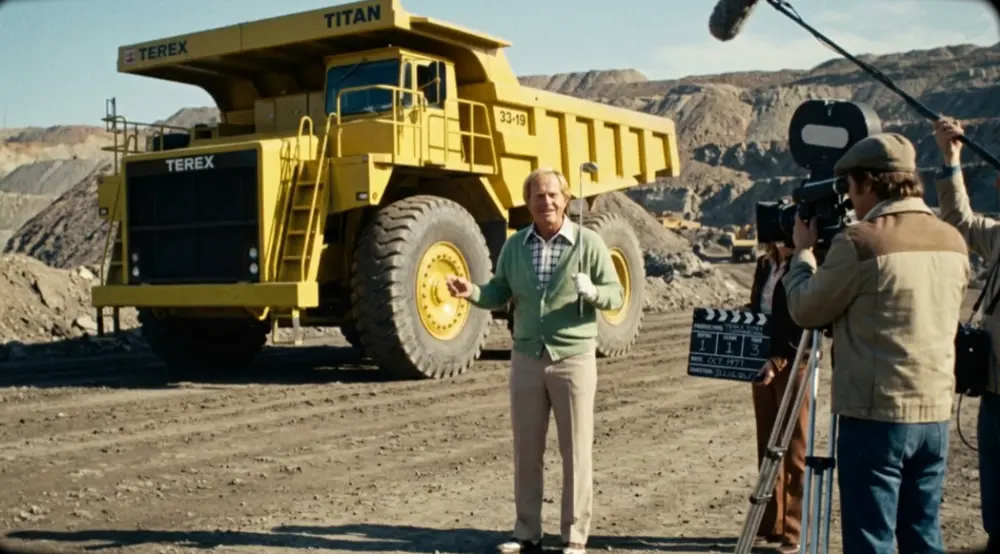
In 1977, the Titan became a celebrity. Terex filmed a television commercial featuring golf legend Jack Nicklaus standing inside the loaded bed of the Titan, hitting golf balls.
Imagine the scene: the greatest golfer of his era, surrounded by 350 tons of rock, swinging away inside a truck built in London, Ontario.
(Photo credit: Car Clever)
From California to British Columbia
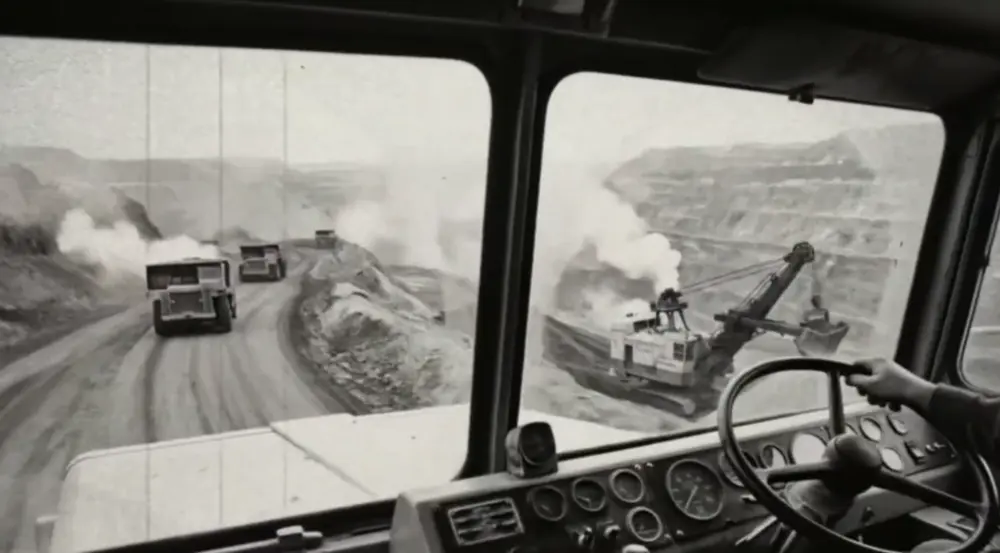
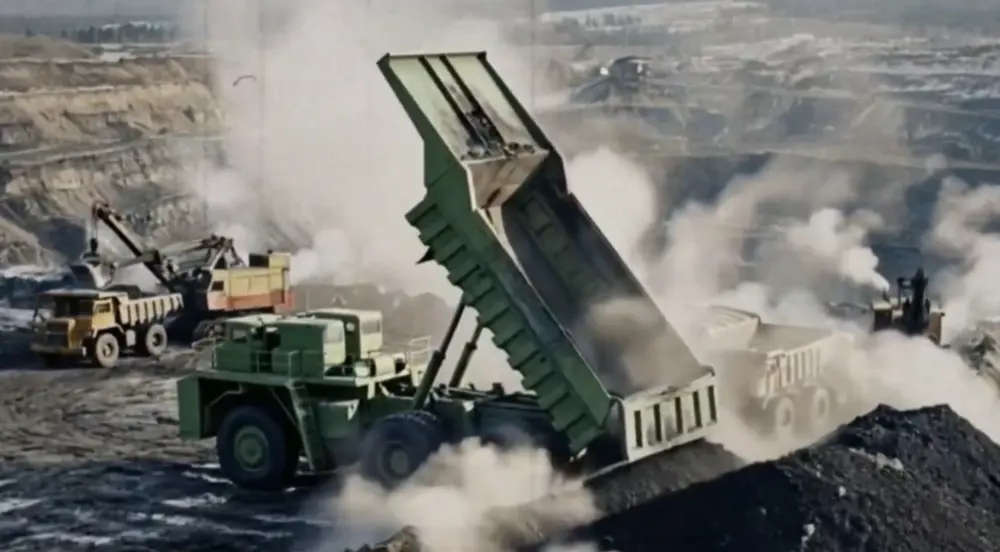
After its Las Vegas debut, the Titan went to work. In January 1975, it was put into service at Kaiser Steel’s iron mine in Eagle Mountain, California. It hauled approximately 3.5 million tons of earth over four years.
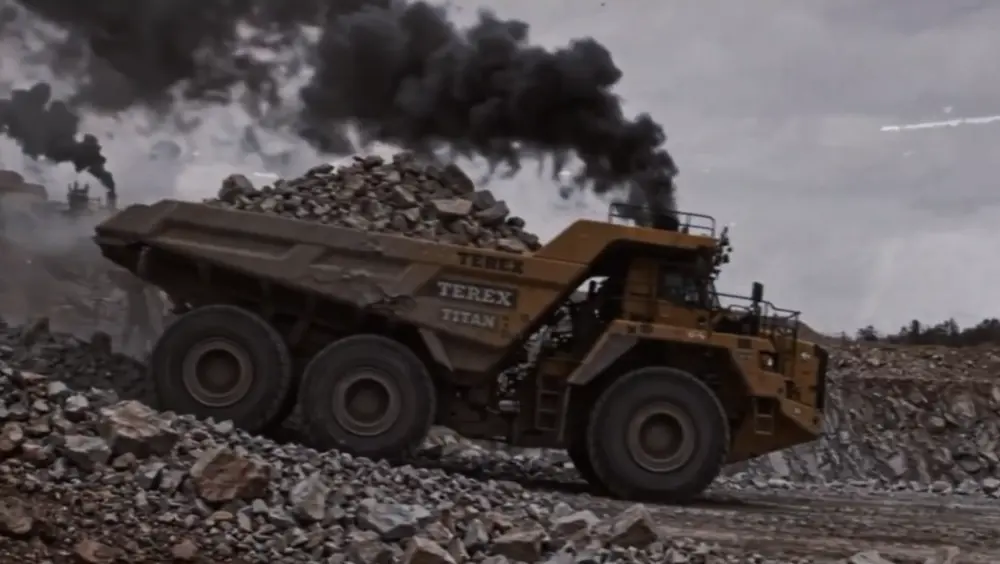
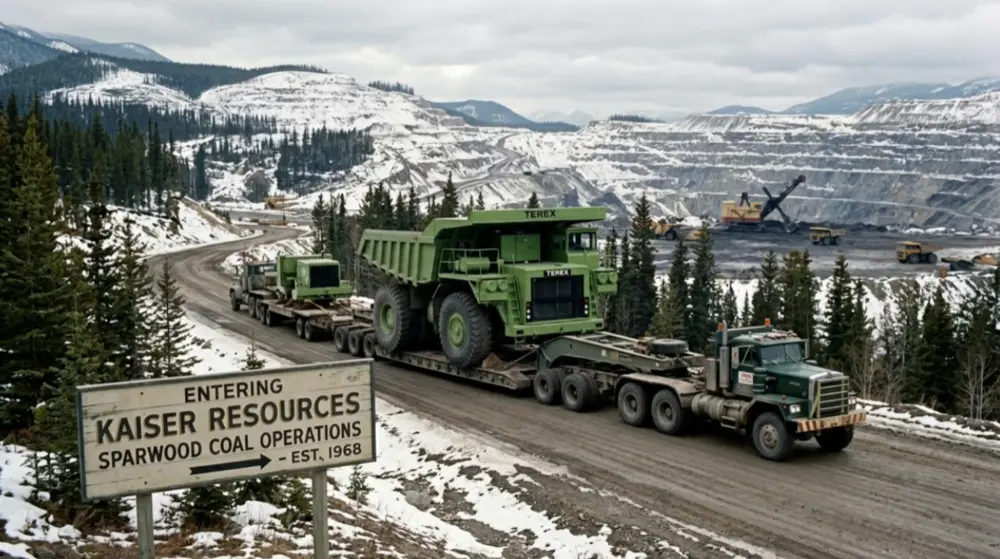
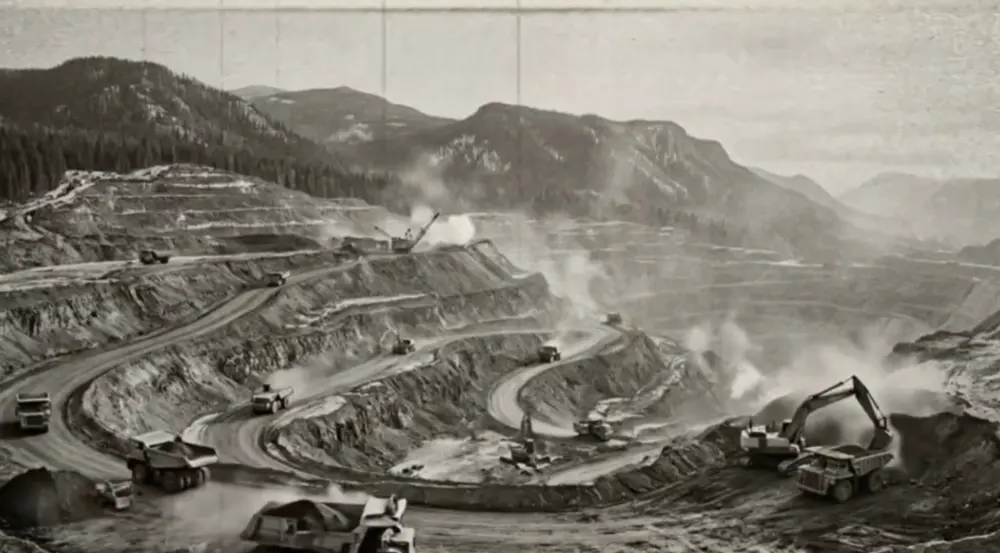
Then, in late 1978, the Titan was disassembled, loaded onto rail cars, and shipped north to Sparwood, British Columbia. It would spend the next 13 years working in the Canadian Rockies, hauling coal for Westar Mining.
(Photo credit: Car Clever)
(Photo credit: Car Clever)
(Photo credit: Car Clever)
(Photo credit: Car Clever)
(Photo credit: Car Clever).
During that time, the Titan was repainted from its original Terex lime green to Westar’s blue and yellow livery. It regularly hauled loads exceeding 350 tons, pushing the limits of its already legendary design.
(Photo credit: Graham Newell on Flickr).
Retirement and a Second Life
By 1991, the Titan had logged nearly two decades of hard labour. Maintaining a one-off prototype was expensive; every replacement part had to be custom-made. So the mine operators retired the giant.
But the story didn’t end there.
In 1992, Teck Corporation acquired the Sparwood mine and offered the Titan for preservation as a public monument. The Sparwood Chamber of Commerce raised funds, restored the truck, and put it on display in Titan Park, right off Highway 3.
Today, the Titan sits proudly in Sparwood, British Columbia, as a roadside monument and tourist attraction. The engine has been removed (a necessary step for preservation), but the massive frame, towering tires, and unmistakable silhouette remain. It draws visitors from around the world who want to stand beside the truck that once held the title of the largest in the world.
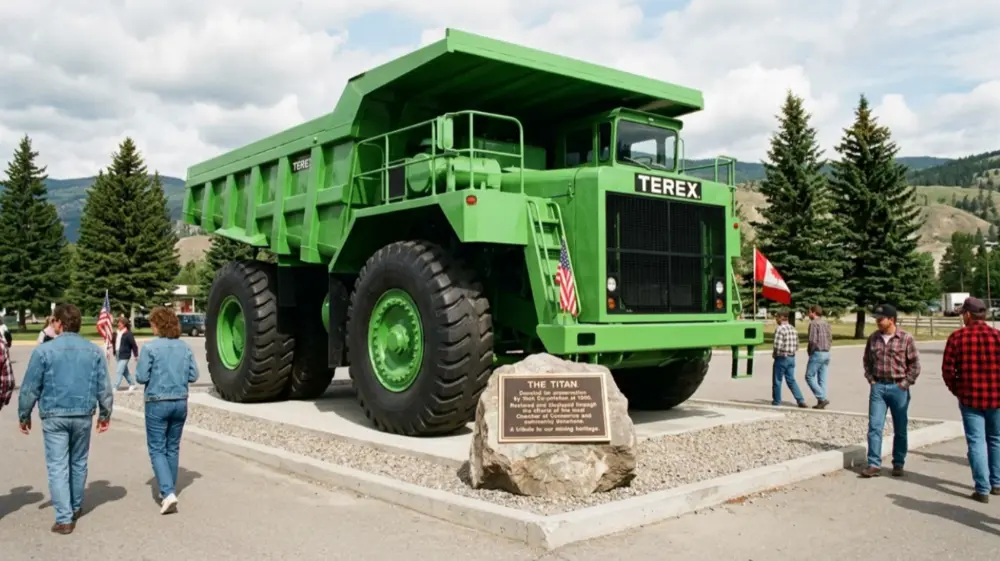
(Photo credit: Car Clever).
The Titan’s Legacy
For 25 years, from 1973 until the debut of the Caterpillar 797 in 1998, the Terex Titan was the largest, high-capacity haul truck on the planet. No other truck held that title longer.
The Titan never went into full production. The global coal market softened in the late 1970s, and the projected demand for ultra-class haul trucks never materialized. But for those of us in London, the Titan remains a source of quiet pride: proof that this city can build world-class, world-record, world-stopping things.
See London’s Bigger Picture
The Titan may now be 4,000 kilometres away in British Columbia. But its legacy is part of London’s DNA, a city that has always been willing to dream big, build bold, and surprise the world.
When you visit London today, you can still see the bones of that ambition: the historic factories in London’s east end, the railway lines that carried industrial products across the country, and the innovative spirit that put this city on the map.
I might not be able to take you to see the Titan itself. But I can show you, one bicycle pedal at a time, the city that built it.
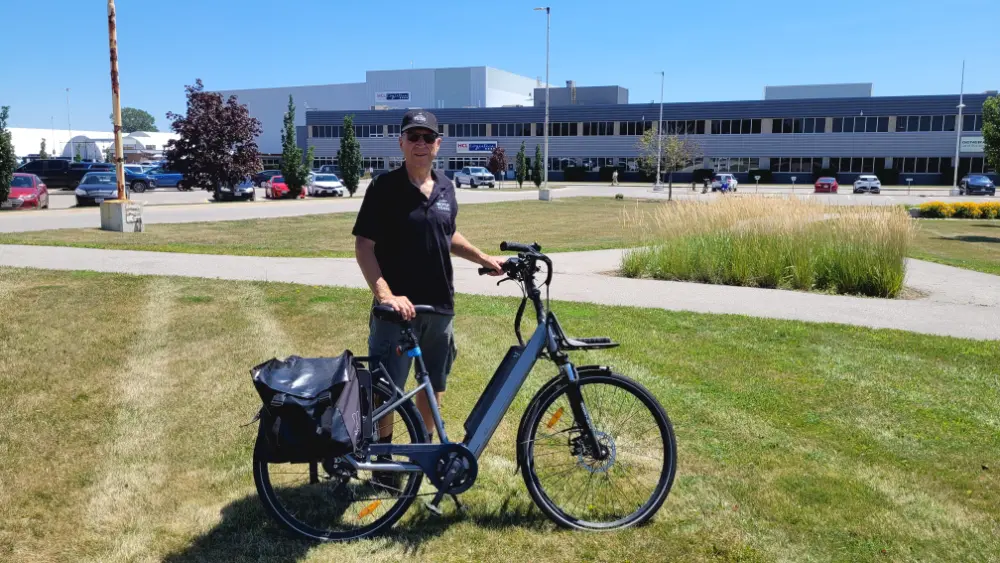
The General Motors factory shut down in 2012 following a prolonged labor dispute, ending over six decades of locomotive manufacturing in London. A new industry now occupies the plant
(Photo credit: Lawrence Durham).
Hi. I’m Lawrence.
I’m a bicycle tour guide, a storyteller, and a proud Londoner who loves sharing the unexpected stories of this city. The Titan is proof that London has zeal and drive, and that spirit is alive and well today.
If you want to explore London’s hidden history, its industrial past, and its charming present, come ride with me. Small groups, big laughs, and a city full of surprises.
Featured cover photo: Terry Shea.