Tag: London Ontario heritage

  • What Led to the Collapse of The Stagecoach Industry in London?

    What Led to the Collapse of The Stagecoach Industry in London?

    Although there’s something romantic about the image of riding a stagecoach through the wilderness, the reality is that actually traveling in one of those contraptions was absolute misery.

    The low-ceilinged wooden cabin was cramped. The leather thoroughbraces did precious little to soften the brutality of unpaved roads. Every rut, every stone, every exposed tree root sent sharp shudders through the carriage frame. Passengers bounced against each other in a chaotic tangle of elbows, top hats, and stray baggage. A mere ten-mile journey became an exhausting test of physical endurance.

    This was the reality of overland travel in 19th-century southwestern Ontario. And it’s exactly why the stagecoach in London met its inevitable end.
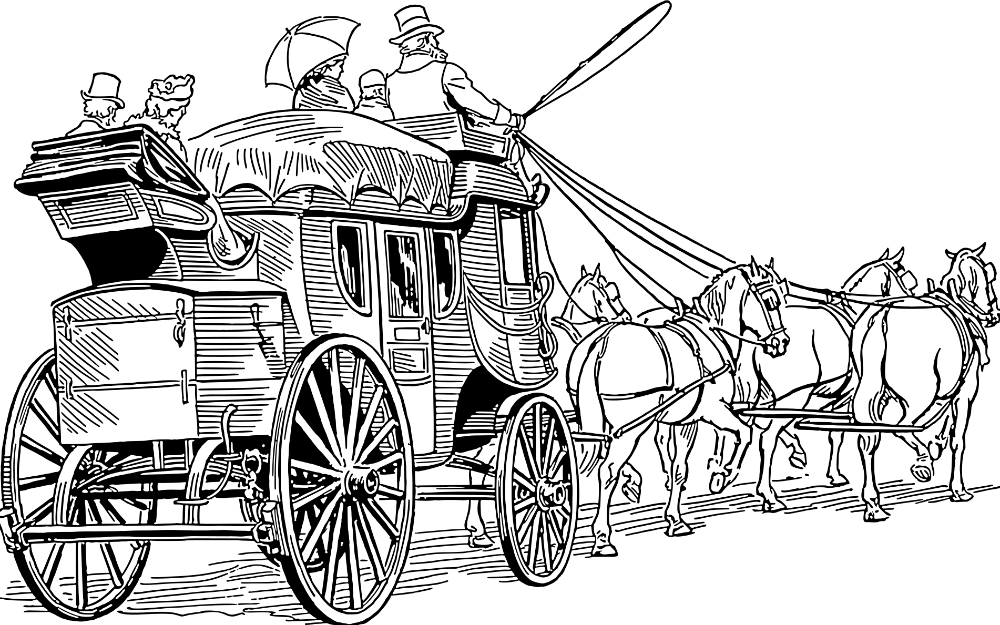
    Sketch of a typical 19th century stagecoach being pulled by a team of four horses.

    A typical stagecoach in the 19th century, being pulled by a team of four horses.
    (Illustration credit: OpenClipart-Vectors).

    The Stagecoach Era: Rumbling Through the Wilderness

    During the first half of the 19th century, if you wanted to travel any distance across Upper Canada, the stagecoach was your only option. These heavy, four-wheeled vehicles were marvels of frontier engineering, suspended on heavy leather thoroughbraces and pulled by teams of four or six horses. They maintained regular routes that connected growing settlements, carrying passengers, luggage, and government mail from station to station.

    In London, stage lines crawled along rudimentary dirt tracks, connecting the growing city with surrounding hubs like Hamilton, Windsor, and Sarnia. The coaches were designed to carry six to nine passengers inside, with additional hardy souls perched on the roof or beside the driver if they didn’t mind the weather. Storage compartments called “boots” at both ends of the vehicle held valuable mail pouches and luggage.

    But here’s the thing about those routes – they were entirely at the mercy of the elements.
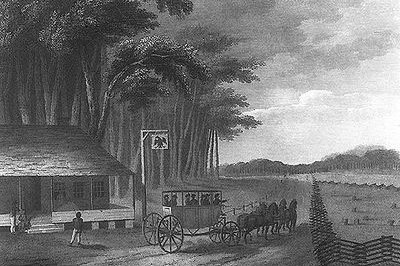
    Painting of a stagecoach in 1799 being pulled by a team of four horses.
    Travel in early Canada, 1799.
    (Photo credit: Library and Archives Canada).

    The Muddy Reality of Early Roads

    Most routes connecting London to surrounding settlements were nothing more than dirt tracks carved out of the wilderness. When the weather cooperated, they were merely bumpy and slow. When it didn’t, they became nightmares.
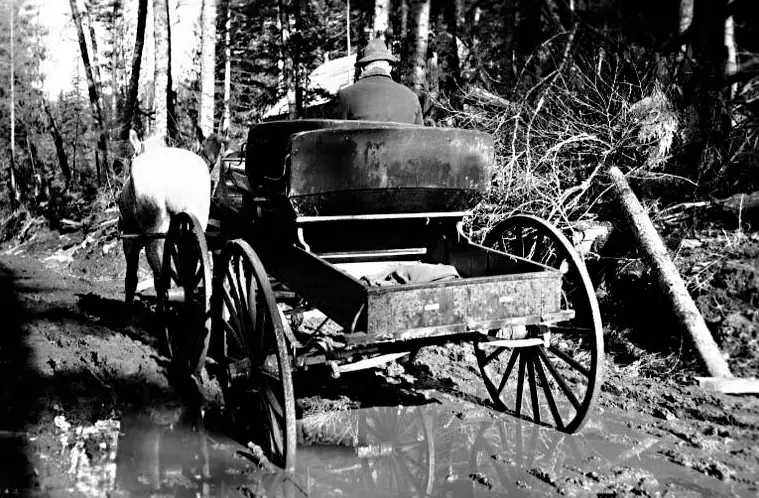
    A wagon being pulled by a team of horses along a muddy road, c 1912.
    Early pioneer roads were treacherous, bumpy, and muddy.
    (Photo credit: Wikimedia Commons).

    Spring thaws turned these tracks into bottomless mud pits. Heavy autumn rains did the same. Winter snows rendered them impassable. Even the famous “break-up” season, that muddy period between winter and spring, could paralyze regional travel for weeks at a time.

    Stagecoach operators established staging posts every 10 to 15 miles along routes, where exhausted horses could be swapped for fresh teams. Even so, the coaches could only manage about 5 to 10 miles per hour. And when the mud got particularly deep, passengers were sometimes forced to get out and push.

    The “romance” of stagecoach travel was, in reality, a grueling test of patience and physical endurance.

    The Railway Revolution Arrives

    Everything changed on October 23, 1847. That’s when construction of the Great Western Railway in London officially began. The iron horse was finally coming to town.

    The transformative moment arrived on December 15, 1853. The Great Western Railway (GWR) opened its line to London for regular service. Londoners could now travel to Hamilton by train, and from there, onward to the rest of the continent.
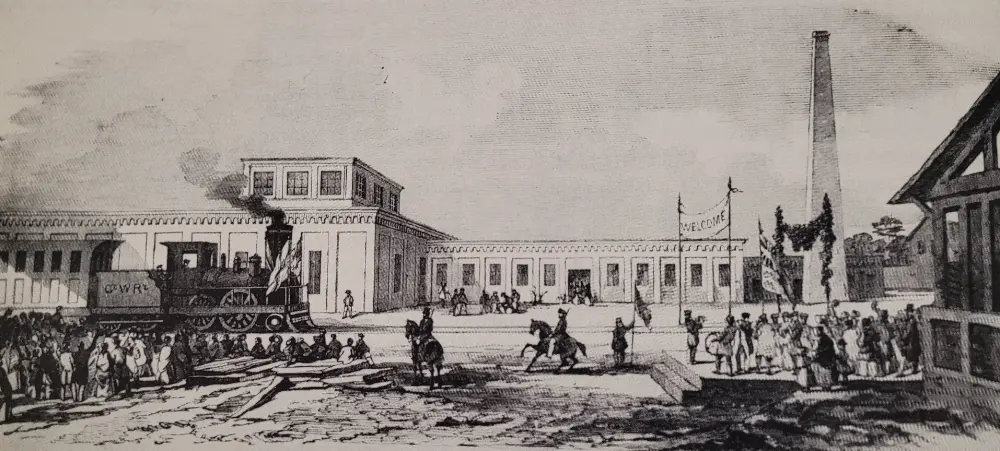
    Illustration showing the arrival of the first Grand Trunk Railway train in London in 1853.
    Great fanfare arose with the arrival of the first train in London in 1853.
    (Photo credit: Archives and Special Collections, Western University).

    The contrast with stagecoach travel couldn’t have been starker.

    Steam locomotives could reach speeds exceeding 90 kilometers per hour. They could move dozens or even hundreds of passengers at once. They could haul heavy freight that would have required a fleet of wagons. And crucially, they offered all-weather reliability that horse-drawn carriages could never match.

    Rain didn’t stop a train. Snow didn’t paralyze the iron rails. Spring mud was simply irrelevant to the locomotive.
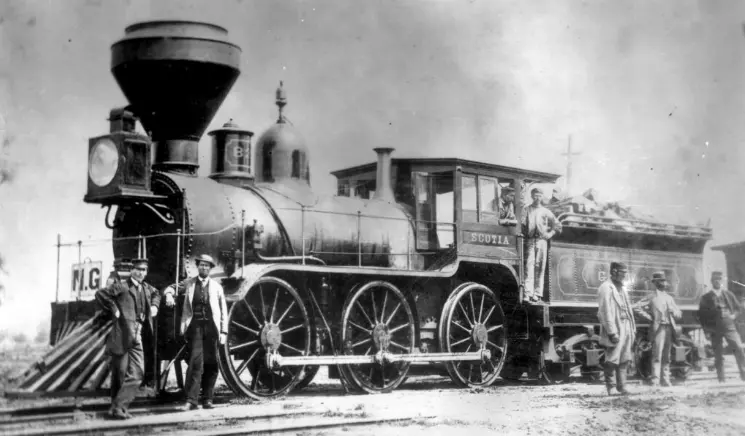
    Crew standing in front of an 1860s wood fired locomotive with tender.
    Although coal was the usual source of fuel for steam engines, this 1860s locomotive was curiously equipped with a wood-burning stack. Cordwood is visible in its tender.
    (Photo credit: Ingenium Digital Archives).

    The Final Blow: The Railway Web Expands

    The replacement of stage lines accelerated as the railway network expanded, often directly over the old stage corridors.

    Before the rail boom, one particularly agonizing stagecoach route connected London through dense wilderness to western settlements like Sarnia. Travelers would spend days bouncing and lurching along this route, praying for dry weather and sound horses.

    In April 1853, a group of businessmen associated with the Great Western Railway incorporated the London & Port Sarnia Railway Company. When this 50-mile line officially opened for revenue traffic in December 1858, it effectively dismantled the old western stage network.

    The math was simple. Trains were faster, cheaper, and more reliable. Government mail contracts, which had sustained many stagecoach operations, shifted rapidly to the tracks. Commercial cargo followed. Local stage operators lost the primary revenues required to maintain their expensive teams of horses and constant stable of vehicles.

    By the 1870s, subsequent lines like the London, Huron and Bruce Railway further crisscrossed the region. London was transforming from an isolated stagecoach stop into a premier industrial and logistical rail hub.
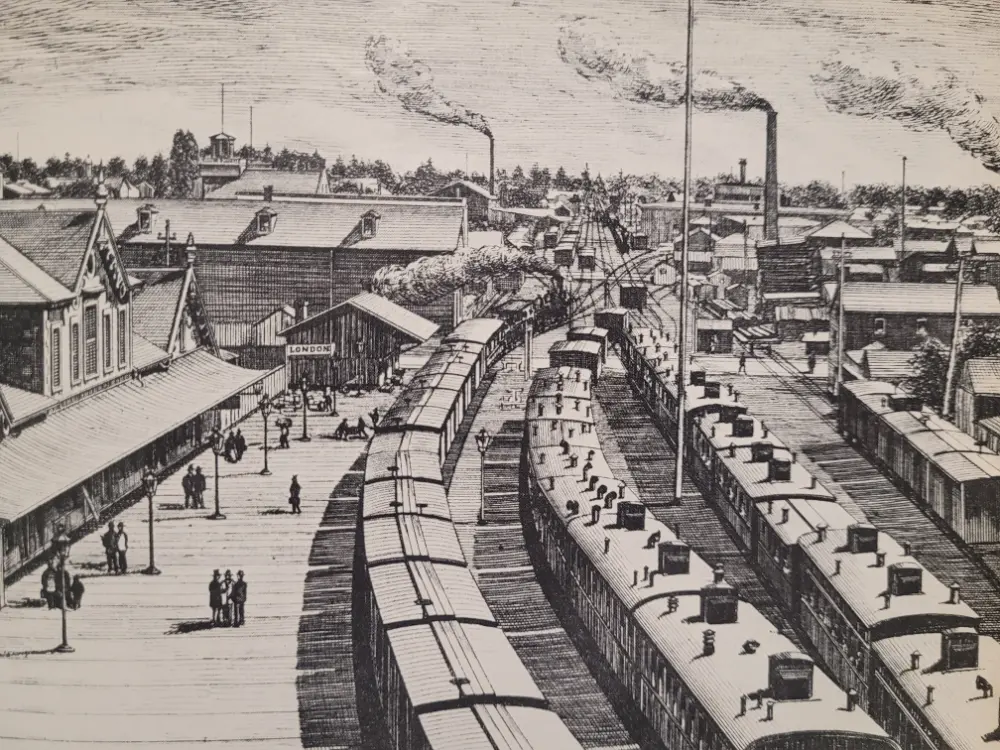
    Illustration showing the GWR train station on York Street in London in 1875.
    This illustration shows the Great Western Railway train station on York Street in 1875.
    (Source: Canadian Illustrated News).
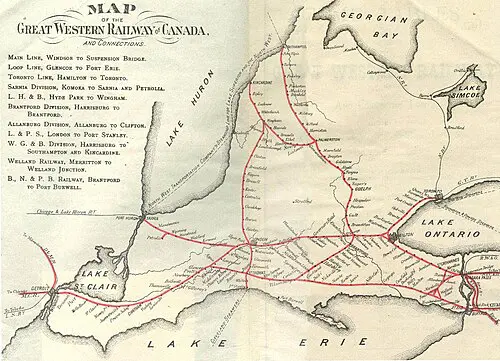
    A map of the Great Western Railway in Ontario, Canada, as it was at its height in 1879.
    A map of the Great Western Railway in Ontario, as it was at its height in 1879.
    (Photo credit: Great Western Railway).

    What Became of the Stagecoach?

    Stagecoaches didn’t disappear overnight. In fact, they adapted and found a new purpose.

    While long-distance stage routes were completely displaced along main corridors, these rugged vehicles continued serving as local shuttles. They carried mail and passengers from isolated rural settlements to the nearest railway “whistle stops.” Farmers who needed to get their goods to market, families visiting distant relatives, businesses needing to connect with the wider world – they all still relied on horse-drawn transport for that final leg of the journey.

    But by the late 19th century, even those roles were shrinking. The Great Western Railway system, later absorbed into the Grand Trunk Railway in 1882, operated hundreds of kilometers of track carving through southwestern Ontario.

    The age of long-distance horse-drawn travel had become a relic of Ontario’s frontier past.
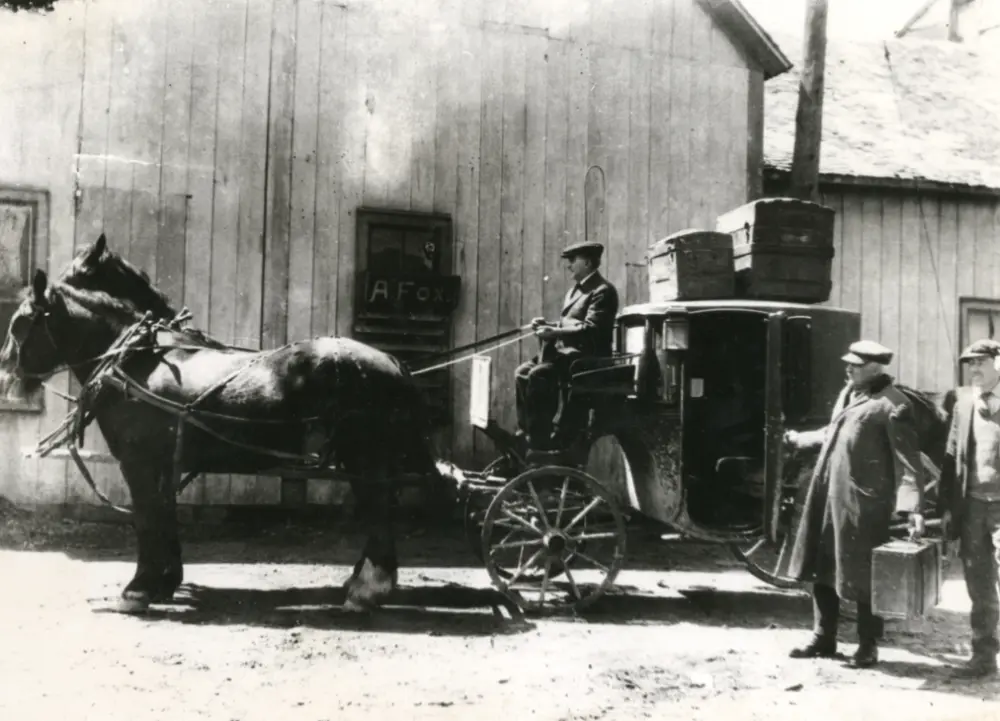
    One of the last stagecoaches in southwestern Ontario, 1907, showing a two-horse drawn stagecoach, a driver, and two passengers.
    One of the last stagecoaches in southwestern Ontario, 1907.
    (Photo credit: Walkerville Times Collection).

    Old livery stable on Marshall Street with slit windows for light and ventilation for the horses and an upper floor loading window for hay.
    An old livery stable on Marshall Street in London, probably the last remaining one in the city. Notice the window with the pulley and arm for loading supplies to the upper loft (follow the green arrow). Also, notice the slit windows (shown by the smaller red arrows) that would provide light and ventilation for the horses.
    (Photo credit: Lawrence Durham).

    Your Own London Adventure Awaits

    As the stagecoach faded into history, its routes swallowed by iron rails and its passengers seduced by the speed and comfort of steam, the Great Western Railway made London a transportation hub.

    But here’s the thing about history: it never really ends. It just transforms.

    Those muddy tracks that once defeated stagecoach passengers? They became gravel roads, then paved highways. Those railway lines that spelled the end of the stagecoach era? They eventually gave way to automobiles, buses, and a modern transportation network that connects London to the world in ways our ancestors could scarcely imagine.

    And yet, if you know where to look, the echoes of that earlier age are still all around us. The routes are still there, even though the ruts have been filled in. The stories are still there, even if the storytellers have long since passed on. The spirit of adventure that drove those early travelers to brave mud, cold, and exhaustion is still there, waiting for a new generation to discover it.

    That’s what I love about exploring London’s history. Every street corner has a story. Every old building has a secret. Every road we travel today was once someone’s frontier.

    So here’s my invitation to you: come see it for yourself. The stagecoaches may be gone, but the adventure is still waiting. And trust me, the views are much better when you’re not being tossed around in the cabin of a cramped wooden stagecoach.

    Author, Lawrence Durham, with his bicycle, standing in front of an old steam engine on display on Dundas Street.
    The author, standing in front of Engine 86, a restored steam locomotive on display at Queen’s Park near the Western Fairgrounds on Dundas Street in London. It, along with other railways, led to the collapse of the stagecoach industry.
    (Photo credit: Lawrence Durham).

    Hi. I’m Lawrence – bicycle tour guide, storyteller, and history nerd. I help curious folks like you discover the best parts of London, from a bicycle seat, of course: small groups, big laughs, and a front-row seat to history.

    So come explore with me. The mud is gone, the routes are paved, and your next adventure awaits. Click here to learn more!
  • Why Britain Sent Its Army into London, Canada in 1838

    Why Britain Sent Its Army into London, Canada in 1838

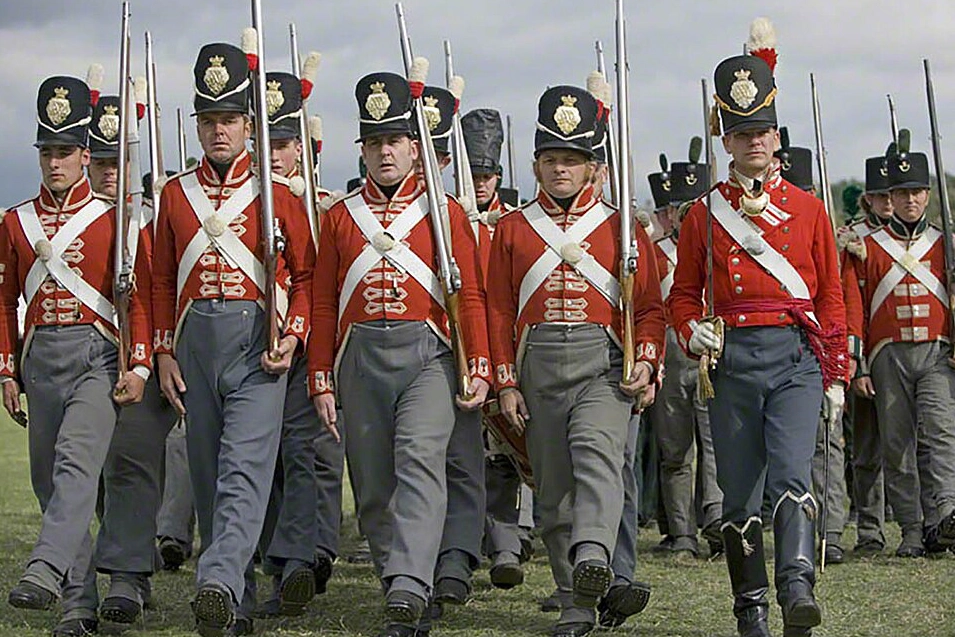
    When you think of a British Army occupation, you probably don’t picture cheering locals, booming breweries, and a village finally dragging itself out of the muddy frontier.

    But that is exactly what happened in London starting in the winter of 1838.

    Just weeks after an armed rebellion shook Upper Canada, red-coated soldiers marched into our snow-covered settlement. The townsfolk didn’t hide their daughters and lock their pantries. Instead, they opened their homes and watched as their rough-around-the-edges village was transformed into a proper British outpost.

    Here’s the surprising story of how Her Majesty’s Army came to London, and why most folks were delighted to see them.

    A Rebellion Erupts

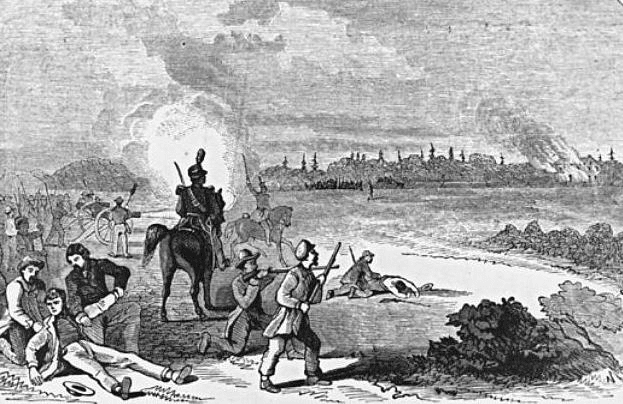
    In December 1837, armed uprisings broke out across Upper Canada (present-day Ontario).

    While Toronto got most of the headlines, London was very much a hotspot of rebel sympathy. While nervous Loyalists watched their neighbours with suspicion, the British government decided swift action was needed.

    Painting of the Battle of Montgomery’s Tavern in Toronto in 1837.
    Painting of the Battle of Montgomery’s Tavern in Toronto by an Unknown artist, from the Canadian Military Heritage Department of Defence via Wikipedia.

    By January 1838, British troops were marching into London.

    There were no barracks waiting for them. At first, the soldiers were housed in temporary buildings across from the courthouse. When that wasn’t enough, local families billeted soldiers inside their modest homes.

    Imagine inviting a uniformed stranger to sleep by your fire, not out of fear, but out of duty.

    Building a Garrison in the Middle of a Forest

    It quickly became clear that London needed permanent military facilities. The chosen site? A heavily forested area north of the village.

    The soldiers grabbed their axes and got to work.

    What emerged was enormous. The military reserve occupied a full ten city blocks, stretching from Dufferin Street in the south to Kenneth Avenue in the north, and from Richmond Street in the west to Waterloo Street in the east.

    Two generations of buildings rose on that land. The first, built between 1838 and 1840, was the so-called “Framed Barracks,” built with sawn lumber. The second, the Log Barracks, was built with hand-hewn logs between 1841 and 1842. Together with the Infantry Drill Ground, an Artillery Range, and assorted buildings that included a hospital, the military reserve soon became the beating heart of early London.

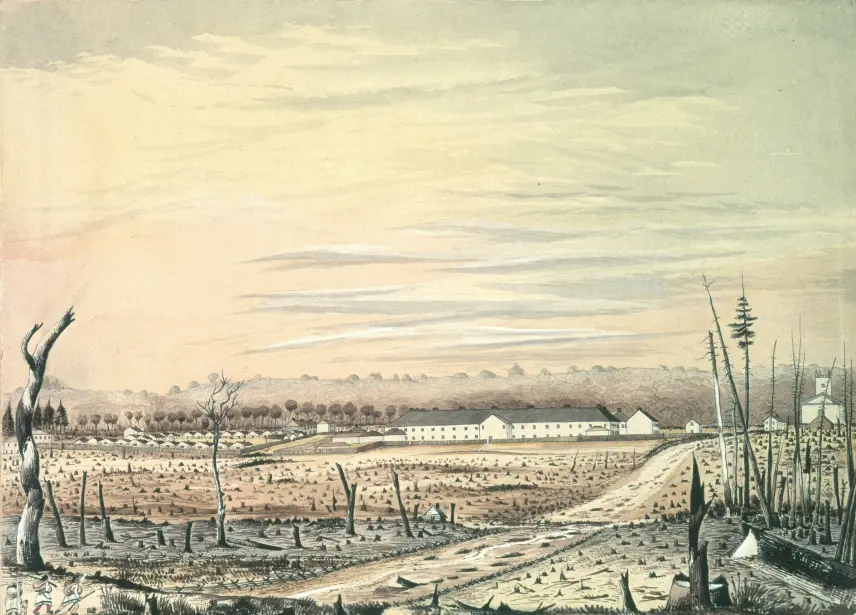
    Looking south from Oxford Street in a 1842 painting by Henry Ainslie. You can see the Framed Barracks in the distance,
    Looking south from Oxford Street in an 1842 painting by Henry Ainslie. You can see the Framed Barracks in the distance,
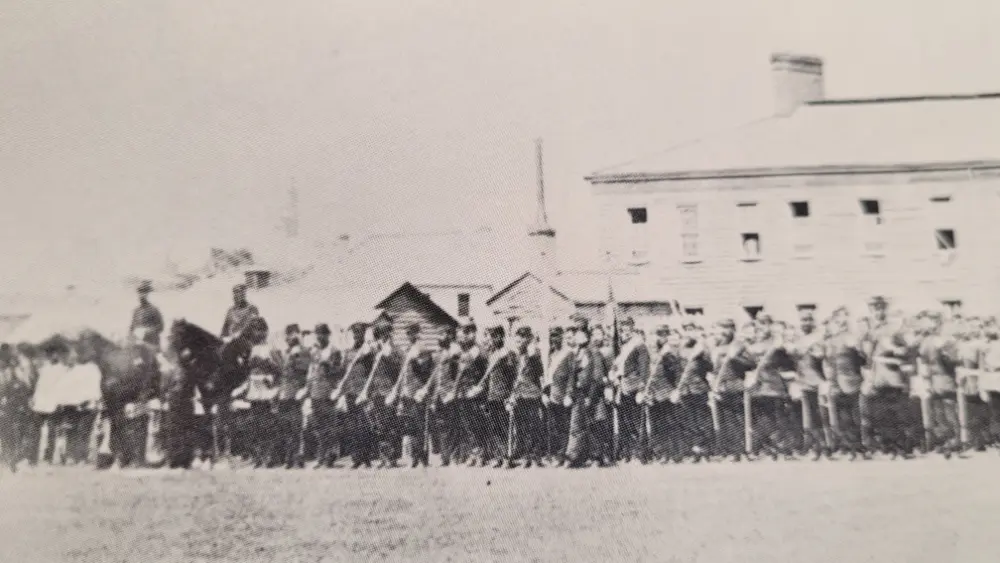
    1866 photo of the 7th Fusiliers standing at attention in the parade grounds of the military compound.
    The 7th Fusiliers, c. 1866, outside the Framed Barracks.
    (Photo credit: Archives & Special Collections, Western University).

    How the Army Built a Cash Economy

    Here is where Londoners really started to love their guests.

    The garrison was paid in solid currency, not the barter goods or shaky credit that dominated frontier life. When soldiers spent their pay, they didn’t just buy things. They transformed the entire local economy.

    Local fortunes were founded on military provisioning. Tanneries landed contracts for boots and saddles. Breweries kept the troops supplied with beer. Local contractors grew rich building the barracks themselves.

    Before the garrison, London traded in eggs and labour. After the garrison, London traded in pounds and pence. That shift from barter to cash economy was the single most important economic event of the village era.

    From Frontier Town to British Outpost

    London had been a district capital, but it had never felt truly connected. The arrival of the military changed that overnight.

    Regiments rotated through London after serving across the vast expanse of the British Empire. Officers and men brought stories, habits, and expectations from distant corners of the world. A town that had felt distinctly American in its rough frontier character suddenly became decidedly British.

    Not every interaction was polite. Townspeople and garrison troops clashed, especially in the taverns lining Richmond Street opposite the reserve. (Let’s be honest: where soldiers gather, grog shops and houses of ill repute are never far behind.)

    But for every tavern brawl, there was a wedding. Many soldiers married the daughters of settlers. And a surprising number of those soldiers never left. They finished their service and stayed right here in London, planting roots that still run deep.

    Cricket, Horse Racing, and a Desperate Need for Culture

    Let’s be frank about early London: it offered very little in the way of intellectual stimulation.

    The officers, accustomed to the social lives of British garrison towns, found themselves bored stiff. So they did what any enterprising officer would do: they built their own culture.

    A section of the parade square became a cricket ground. More adventurous souls threw themselves into horse racing and steeplechasing. Theatrical plays were staged. Watercolour paintings were produced, and thank goodness for that, because those trained in drawing left some of the earliest visual records of what our town looked like.

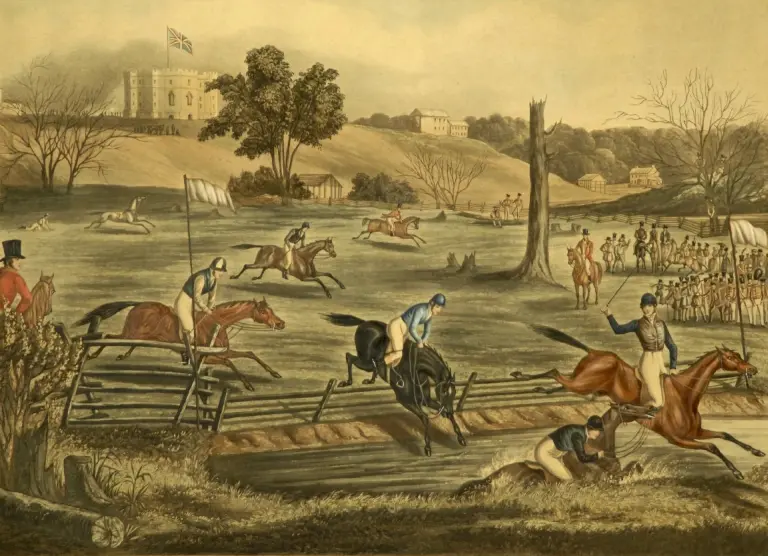
    1843 painting of the first grand military steeplechase held in Canada, which took place on May 9, 1843, on the river flats at the forks of the Thames River.
    The first grand military steeplechase held in Canada took place on May 9, 1843, on the river flats at the forks of the Thames River, as illustrated by Lady Eveline-Marie Mitchell Alexander.

    For officers at the top of the social pyramid, life became a whirlwind of parties, balls, teas, gaming, dances, military ceremonies, sleighing parties, and endless visiting. They provided a social standard against which the local elite measured themselves, and often found themselves wanting.

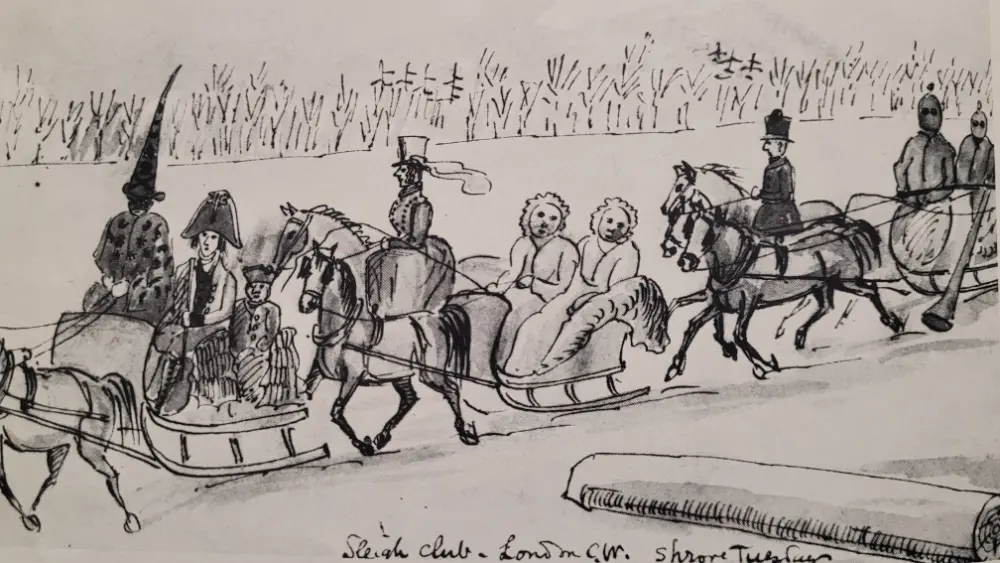
    1843 sketch of young officers of the British Garrison riding with their female guests on a Sleigh ride.
    Young officers of the British Garrison formed a Sleigh Club in 1843.
    (Sketch by Sir James Alexander).

    The Ugly Side of the Empire

    We should not romanticize everything.

    For the ordinary soldier, life in the Imperial Army could be absolute hell. Inflexible rules meant minor infractions brought major punishments. The cat-o’-nine-tails saw frequent use.

    The cat-o'-nine-tails, a whip used by  the British to lacerate the skin and cause intense pain as punishment for soldiers who disobeyed an order.

    Consider this: a sentry who left his post for a single moment to answer the call of nature was given a hundred lashes and branded with the letter D, as a deserter.

    Living conditions in the barracks were often unsanitary and cramped. Disease was a constant companion. For all the prosperity the garrison brought to London’s merchants, the men wearing the red coats paid a steep price.

    Heroes in a Crisis

    London in the 1840s was built mostly of wood. Few brick buildings existed. And wood-frame buildings, as you might guess, are terribly flammable.

    Two major fires devastated the downtown, one in 1844 and another in 1845.

    Both times, the soldiers stepped up.

    Squads were dispatched to help residents move their belongings ahead of the flames. The day after the fires, soldiers stood guard with fixed bayonets to repel looters. In London’s darkest hours, the garrison was not an occupying force. They were neighbours. Protectors. Heroes.

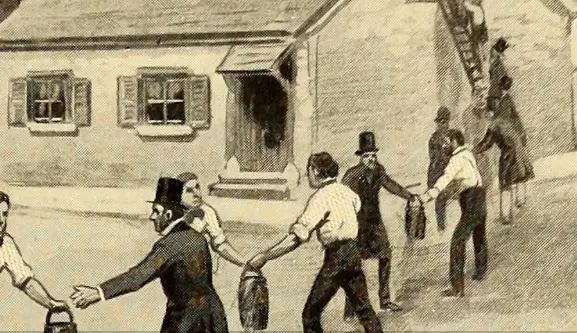
    An early bucket brigade, where a line of people passed buckets to put out a house fire.
    During a fire, everyone joined in the bucket brigade.
    (Photo credit: Wiktionary).

    Keeping Americans (and Fenians) at Bay

    Beyond the daily life of the village, the garrison served a critical strategic purpose.

    Throughout the 1840s, 1850s, and 1860s, there were always political groups in the United States who talked openly about invading Canada. Later came the threat of Irish-American Fenian raids, armed attacks launched from across the border.

    The presence of British regulars in London acted as a powerful deterrent. Would-be invaders thought twice when they knew professional soldiers were garrisoned just north of the forks.

    The Union Jack Comes Down

    In 1867, Canada became an independent dominion. Britain handed over responsibility for defense to the new Canadian government. The writing was on the wall: the British troops would soon be leaving.

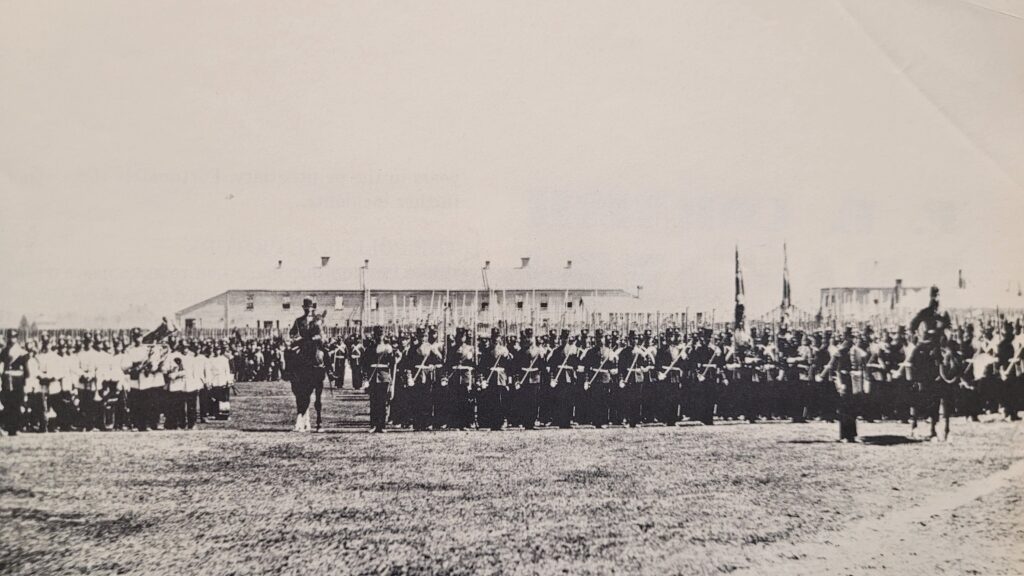
    British troops marching on the parade grounds (now Victoria Park), during celebrations on Confederation Day, July 1, 1867.
    British troops marching on the parade grounds (now Victoria Park), during celebrations on Confederation Day, July 1, 1867.
    (Photo credit: Photographic Conservatory of Canada).

    Here is the remarkable thing about London in 1867: the city was no longer economically dependent on the military payroll. Local industries had matured, merchants had diversified, and London could now stand on its own two feet.

    But high society? That was another matter.

    The officers, many of them from the British aristocracy, had provided a social standard that elevated the entire community. When they left, local high society suddenly looked rather dull in comparison. Balls became less frequent. Theatrical performances dwindled. A certain glittering energy departed with the last red coats.

    Most of the British troops marched out of London in 1869, two years after Confederation.

    In all, British troops were garrisoned in London for 31 years, except for an eight-year gap during which they were recalled to Europe to fight in the Crimean War.

    The Army’s Parting Gift

    What happened to that enormous military reserve, those ten city blocks of cleared forest, log barracks, and framed buildings?

    The former military reserve became the property of the city. The barracks were sold off. And part of the land was transformed into Victoria Park, something that remains at the very heart of London.

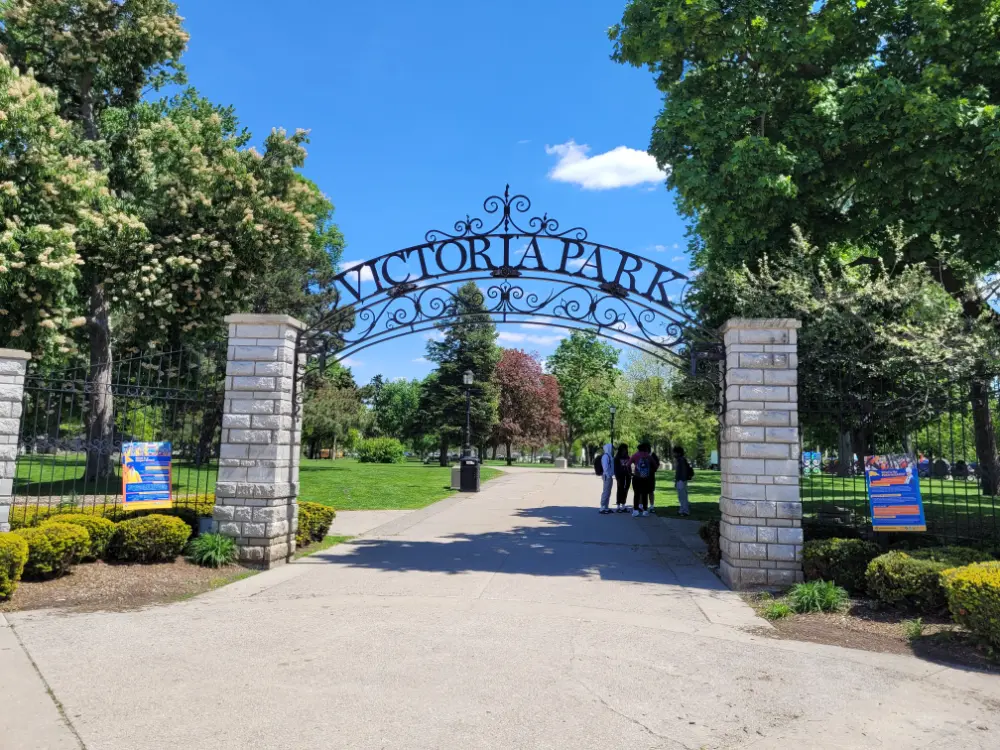
    Northwest entrance to Victoria Park, showing ornate gate.
    Northwest entrance to Victoria Park.
    (Photo credit: Lawrence Durham).

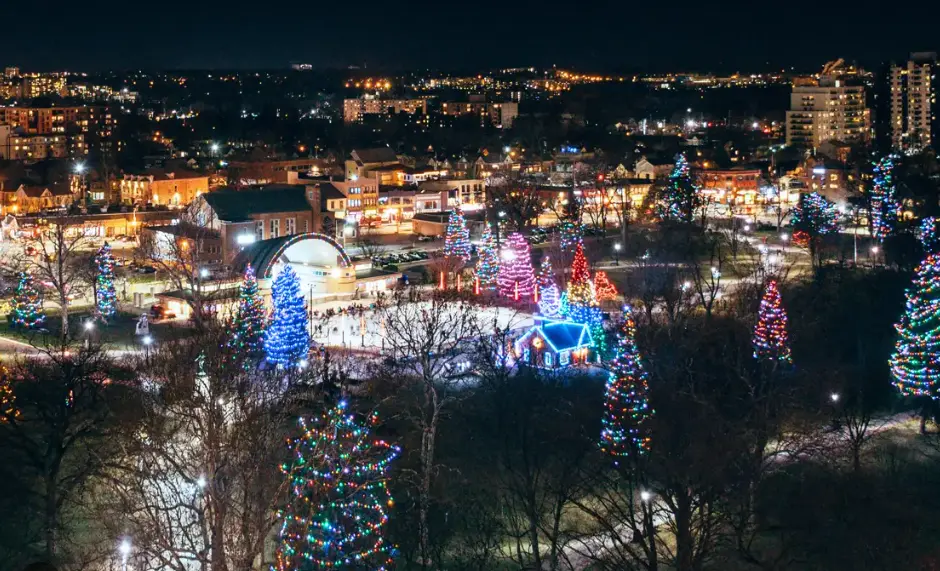
    Today, Victoria Park hosts concerts and festivals in the summer and outdoor skating in the winter. Most people who stroll through the park today are blissfully unaware that British troops once lived and marched on the same ground.

    Night view of Victoria Park at Christmas time, as seen from City Hall.
    Night view of Victoria Park at Christmas time, as seen from City Hall.
    (Photo credit: Matthew Trevithick).

    Why This History Matters for Your Visit

    London is not a city that hides its past. You can still feel the bones of that British garrison when you know where to look. While the military reserve is now parkland, Richmond Street’s old row of grog shops is now a vibrant restaurant hub. And that confident, loyal, slightly proper British character the soldiers planted? It never entirely left.

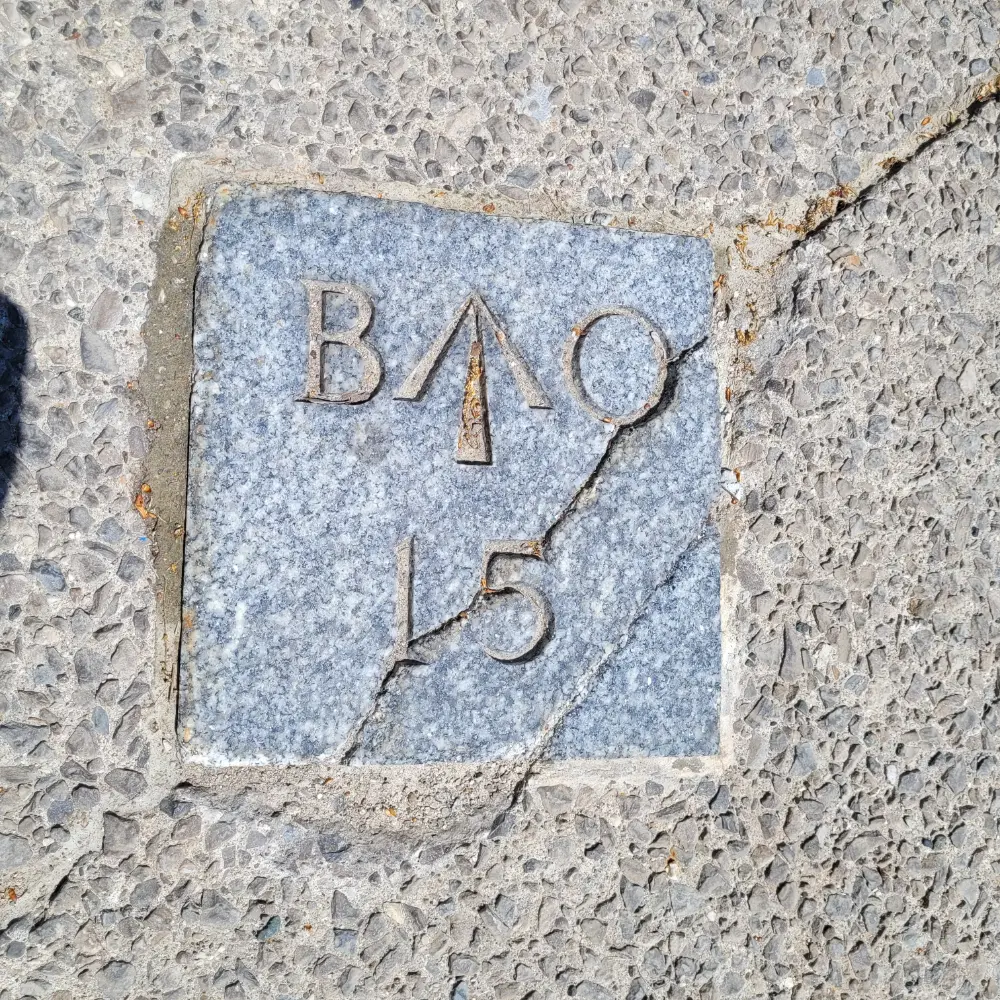
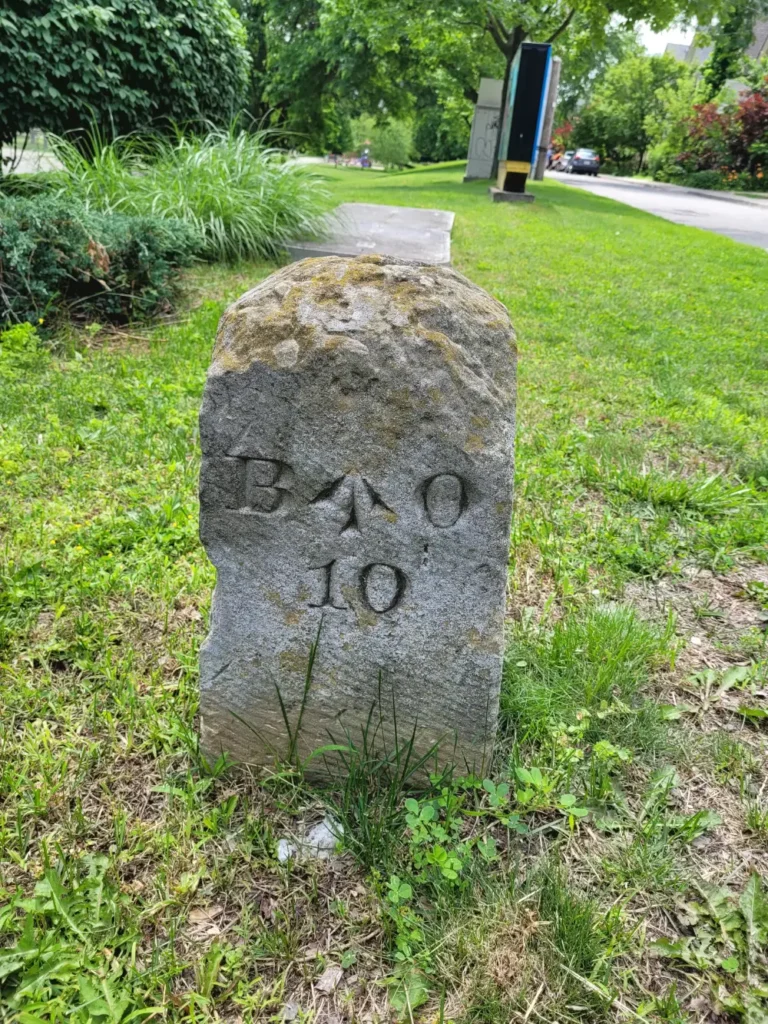
    There are only two remaining boundary stones marking the perimeter of the military reserve. The one on the left (above) is located at the south-west entrance to Victoria Park, embedded in the sidewalk.

    The one on the right (above) is located on the north-east corner of the former military lands, at the corner of Waterloo Street and Kenneth Ave in present-day Piccadilly Park.

    The B and O, separated by an upwards-facing arrow, stand for Board of Ordnance and indicate British Government property (p. 3-4).
    (Photo credit: Lawrence Durham).

    When you cycle through our tree-lined streets or ride through Victoria Park, you are rolling across the same ground where soldiers once drilled, cricketers once batted, and a rough little frontier town first learned what it meant to be part of something larger.

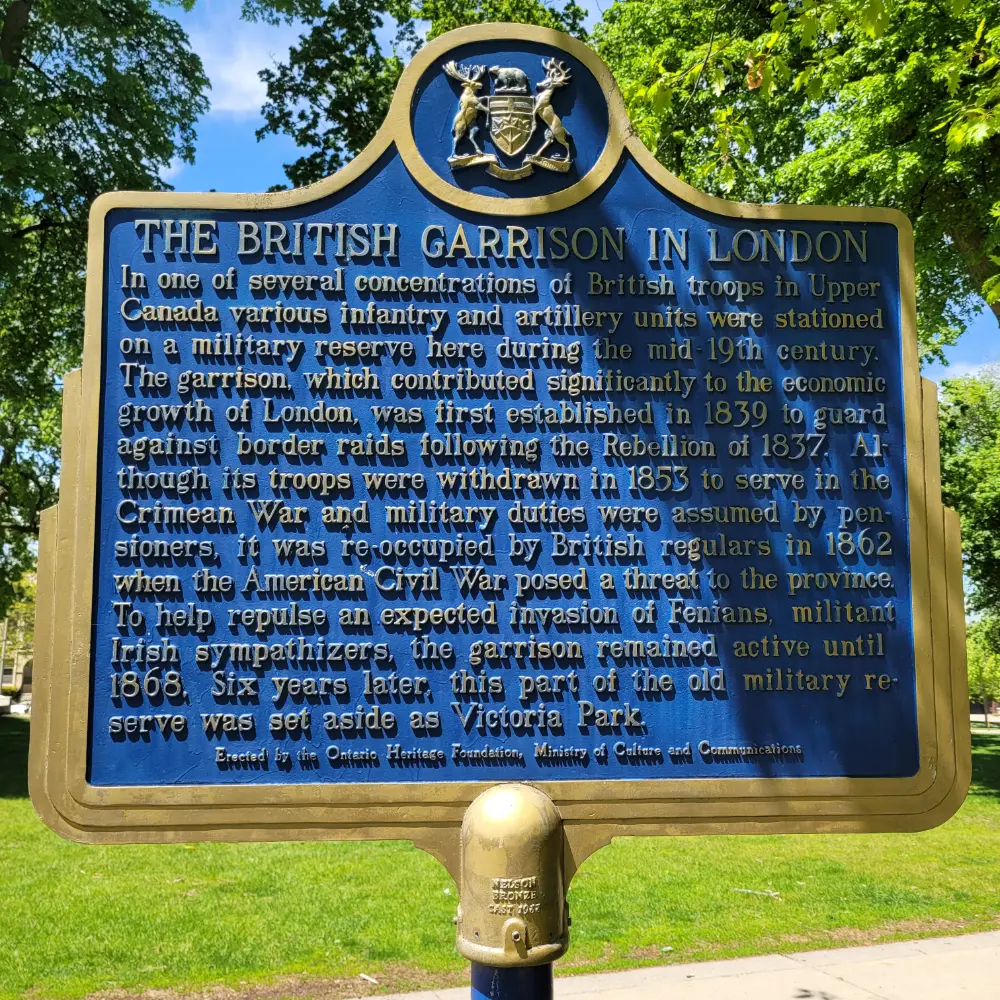
    Historic plaque on the north side of Victoria Park describing the years when this area was a British Garrison.
    Historic plaque on the north side of Victoria Park.
    (Photo credit: Lawrence Durham).

    The British Army came to London because of a rebellion. But they stayed; they built, they spent, they married, they mourned, and they left behind a city that was immeasurably better than the one they found.

    And that, dear reader, is a story worth celebrating.

    The author in Victoria Park, standing in front of one of three restored cannons from the British troop era.
    The author in Victoria Park, standing in front of one of three restored cannons from the British troop era.
    (Photo credit: Lawrence Durham).
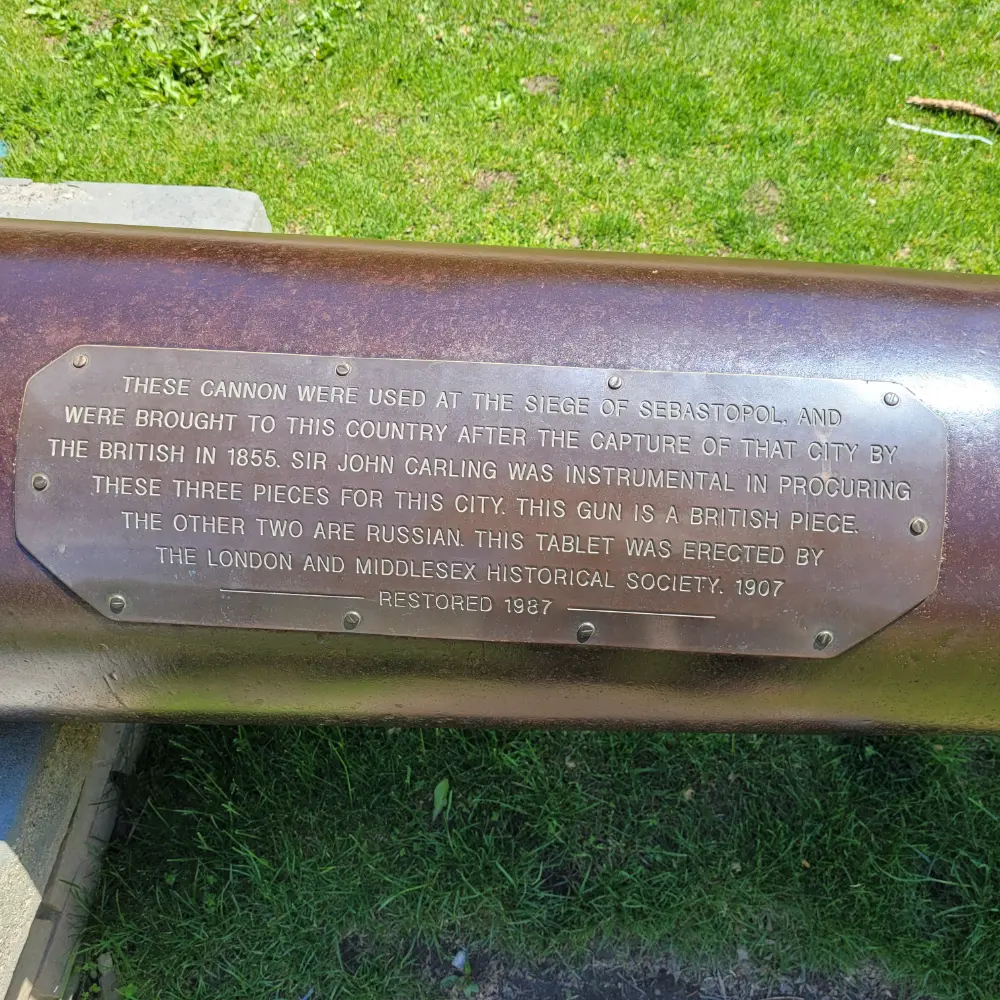
    Label on the British cannon in Victoria Park.
    Label on the British cannon in Victoria Park, artifacts from the Crimean War.
    (Photo credit: Lawrence Durham).

    Hi, I’m Lawrence. I’m a bicycle tour guide, a proud Londoner, and a collector of the kind of strange, wonderful stories that don’t show up in guidebooks. I help curious travellers discover the hidden layers of our city, from the echoes of 1838 in Victoria Park to the modern gems most people pedal right past. If you’d like to see London’s history up close (and have a few laughs along the way), come join me on a guided bicycle tour. Small groups, big stories, and the wind in your hair. Click here to learn more!
    Featured cover photo: Wikipedia.