Tag: London Ontario history

  • How Early London Finally Conquered the Scourge of the “Blue Death”

    How Early London Finally Conquered the Scourge of the “Blue Death”

    Imagine a time when a simple drink of water could be a death sentence.

    In 1832, that was the grim reality for the settlers of Upper Canada. Cholera was entirely new to North America, a mysterious and brutal killer that originated in India and tore across Europe before being carried across the Atlantic in the crowded, unsanitary holds of immigrant ships. When it made landfall in Quebec City in June, it began a relentless journey along the St. Lawrence River and the Great Lakes, carried inadvertently by panicked people fleeing the cities. It was only a matter of time before it reached the small but growing settlement of London, with a population of just 400 souls.
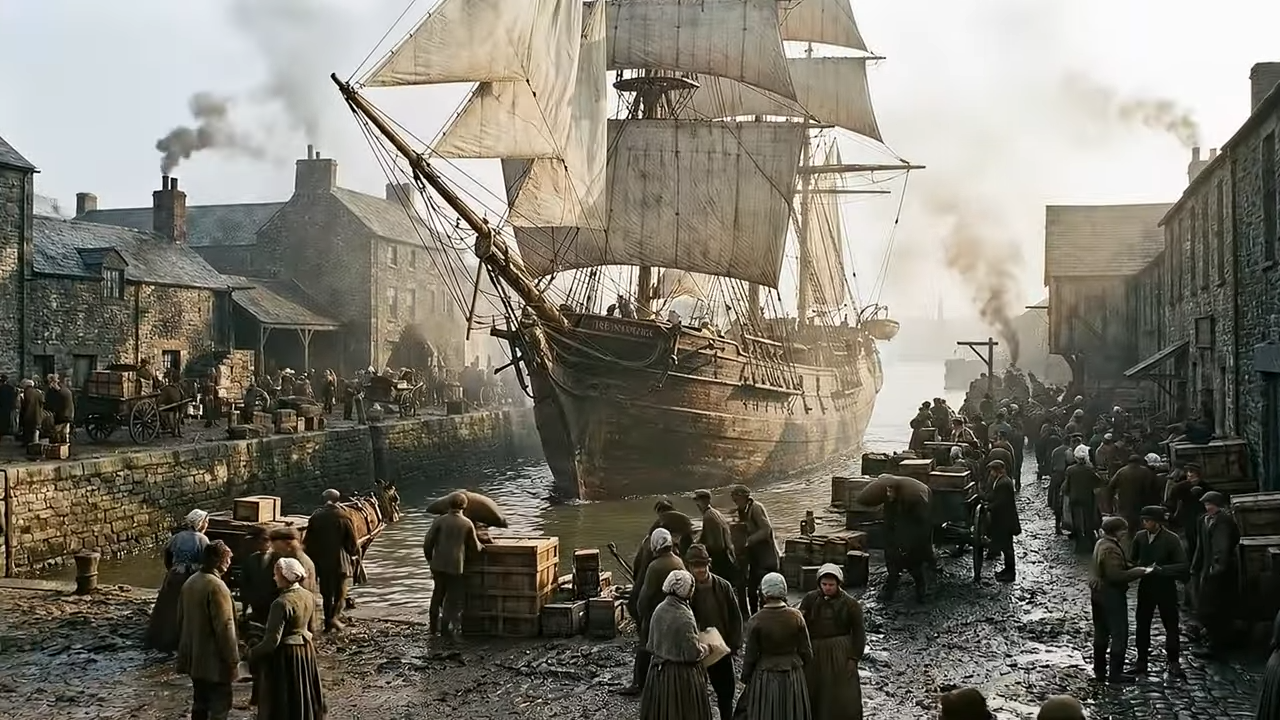
    Sailing ship arrives at the port of Quebec City in 1832.
    Immigrants on ships from Europe helped spread the cholera pandemic to North America.
    (Image credit: NorthNomics).

    The Cholera Outbreak of 1832

    A Perfect Environment

    Nineteenth-century London was a frontier town with a fatal flaw. The community relied on shallow, hand-dug wells for drinking water and shared outdoor privies for waste. With no public waste management or sewer systems, human waste seeped directly into the local water table. This turned the town’s very source of life, its drinking water, into a massive delivery system for the Vibrio cholerae bacteria. The stage was set for a catastrophe.

    The “Blue Death”: A Swift and Terrible Killer

    What terrified Londoners most was the horrifying speed of the disease. A person could wake up feeling perfectly healthy, contract cholera in the morning, and be dead by nightfall. The symptoms were agonizing and unmistakable. The bacteria caused sudden, severe, and uncontrollable watery diarrhea and vomiting, leading to extreme and rapid dehydration (up to 25 liters of fluid in a single day). As victims lost fluid volume, their blood thickened, their eyes sank into their skulls, and their skin lost all elasticity. Most distinctively, the intense lack of oxygen turned their skin a ghostly, bruised shade of slate-grey or blue, earning cholera its grim and unforgettable nickname: “The Blue Death.”
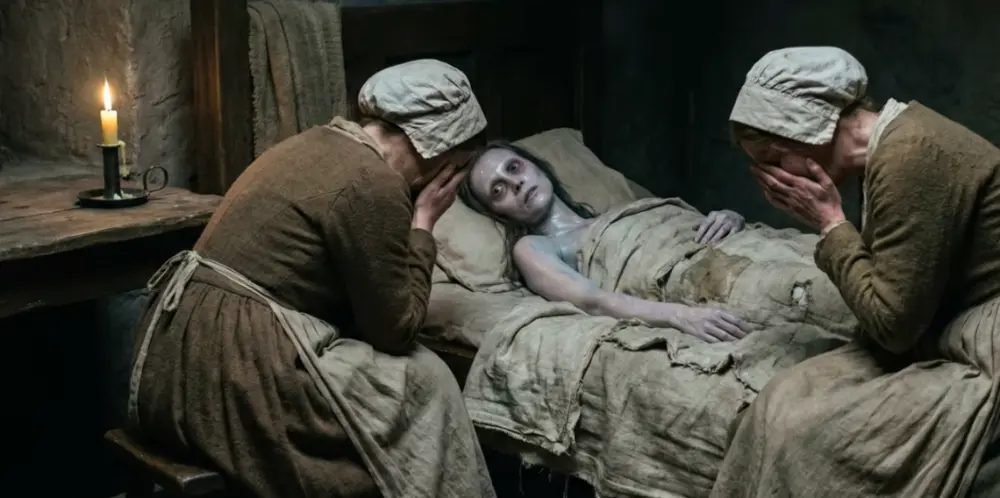
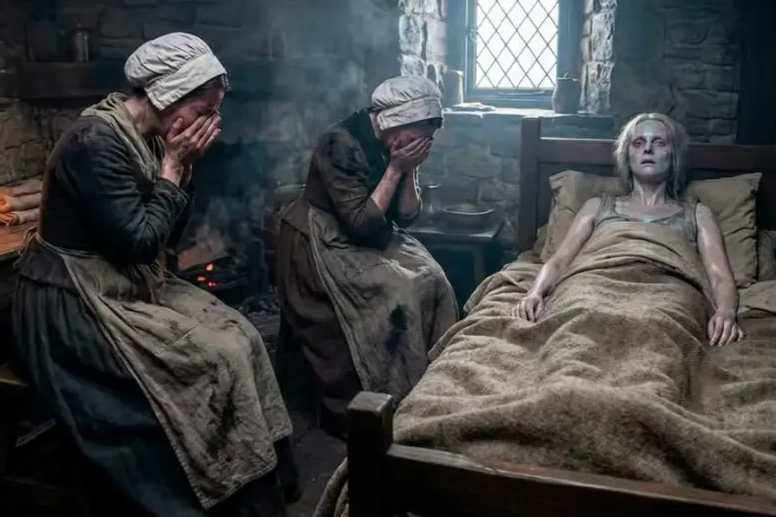
    Two women crying over a young woman in bed dying of cholera. Dying woman is blue in complexion.
    People died of cholera quickly, sometimes within hours of ingesting the bacteria.
    (Image credit: NorthNomics).

    Medical Ignorance at the Time

    The medical community of the time was utterly helpless. They had no idea how cholera spread. The prevailing theory was “miasma,” which held that diseases were caused by poisonous vapors or foul odors rising from rotting matter in the air. Because doctors were targeting the air instead of the water supply, their containment strategies and medical treatments were often more dangerous than the disease itself.

    Modern historians have even referred to the standard treatments as a form of “benevolent murder.” That is, despite the physicians’ well-meaning intention to cure their patients, their highly extreme methods often directly caused or accelerated the patient’s death.

    For example, physicians routinely practiced bloodletting, draining a half-litre to a full litre of blood from patients who were already dying of severe fluid loss. They administered heavy doses of calomel, a toxic mercury compound, to “purge” the bowels, often until patients’ gums bled from acute mercury poisoning. And in a final, tragic twist, they frequently denied water to patients who were literally crying out from dehydration, believing that drinking liquids would worsen internal cramping.
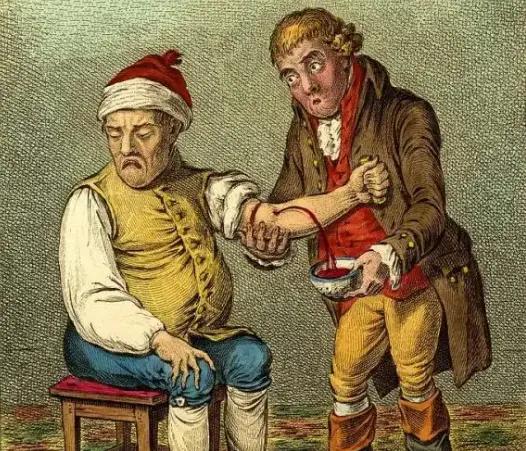
    Illustration of bloodletting from the forearm of a man, 1800s.
    Bloodletting in the 1800s.
    (Image credit: James Gillray, 1804).

    Those who survived cholera at this time usually did so because they had a milder version of the infection or, perhaps, because they ignored medical advice and drank water anyway.

    The Deaths Kept Coming

    In London, the earliest churchyards were instantly overwhelmed. To minimize the spread of the “miasma,” the dead were quickly wrapped, sometimes covered in quicklime to accelerate decomposition, and buried in mass graves or closely packed plots known as “Potter’s Fields.”
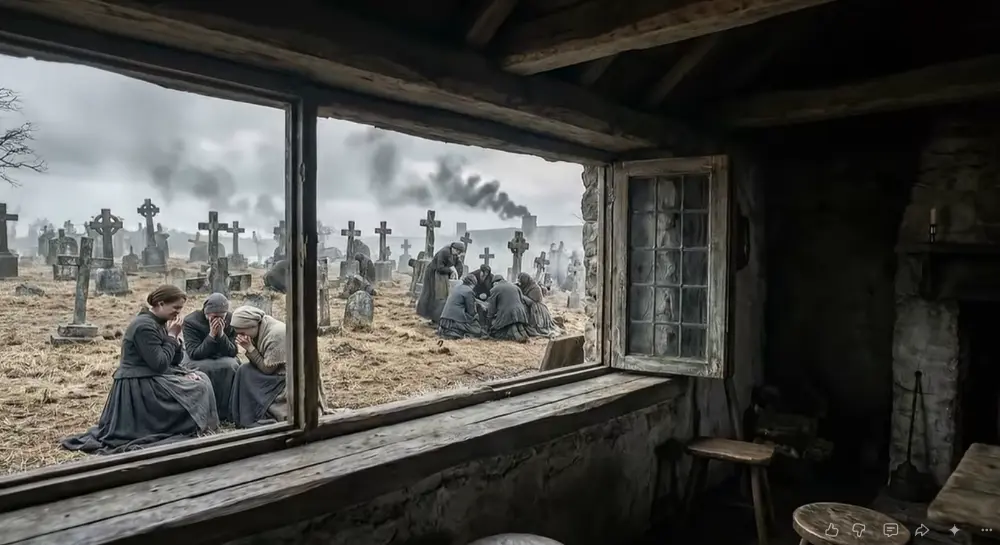
    Scene showing smoke wafting over a graveyard with many mourners lamenting the death of their loved ones.
    To clear the “poisonous air,” local authorities set up large smudge pots of burning tar. Obviously, in retrospect, these measures were not successful, and so people continued to die.
    (Image credit: NorthNomics).

    Because these victims were hastily buried without proper monuments, their exact resting places were largely lost to time, which explains why so many remains were missed when the city later attempted to move the bodies out of the city limits.

    In all, the 1832 wave killed an estimated 8,000 to 12,000 people across Upper and Lower Canada.

    The Return of Cholera: Outbreaks in 1849 and 1854

    Cholera was not finished with London. The disease returned with a vengeance in 1849 and again in 1854, but this time the community was better prepared. The city had learned that passivity meant mass casualties, and local authorities shifted their strategy from chaotic panic to structured civic intervention.

    The Creation of a Board of Health

    The most significant change was the formation of a dedicated municipal Board of Health. This civic body was granted emergency powers to bypass standard bureaucracy. Health inspectors systematically patrolled the town’s wards, monitored overcrowding, and issued fines for unsanitary properties. By 1854, the board had become an information and enforcement hub, tracking cases, distributing warning fliers, and taking over local resources to streamline emergency medical care.
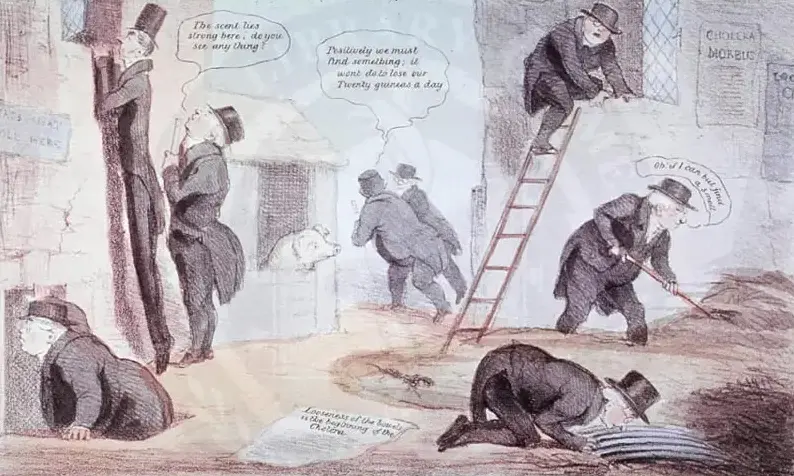
    Cartoon depicting the London Board of Health in the United Kingdom looking everywhere, for the source of cholera, with no success
    People everywhere were mystified as to the source of the disease. This cartoon depicts the London Board of Health in the United Kingdom looking everywhere, with no success
    (Image credit: Broadview Press).

    The Creation of Cholera Sheds

    During the 1832 crisis, the sick had mostly been left to die in their homes.

    In the subsequent outbreaks, London turned to institutional segregation. The city erected temporary wooden structures, grimly known as “cholera sheds,” well away from the downtown core. Health inspectors removed cholera victims from overcrowded boarding houses and placed them into these isolated facilities. While this succeeded in separating the sick from the general population, the conditions inside the sheds were stark, and they primarily functioned as places for the destitute to die in isolation.

    The Irony of the Clean-Up Efforts

    Despite the increased organization, London’s efforts suffered from a tragic flaw. By aggressively flushing the streets and digging deeper drainage ditches to wash away “miasma-causing” waste, the city unintentionally accelerated the flow of human and animal filth directly into the local water table and the Thames River. Because residents still drew their drinking water from shallow wells right next to these drainage areas, the municipal cleaning campaigns inadvertently helped the waterborne bacteria spread even faster.

    The Real Solution: Clean Water and Proper Sewers

    It would take decades more before London finally conquered cholera, but the solution, when it came, was transformative. The establishment of a permanent full-time Provincial Board of Health in 1882 marked a turning point in public health administration. But the true victory came with the development of a centralized municipal water system and proper sewage treatment infrastructure in the later part of the century.
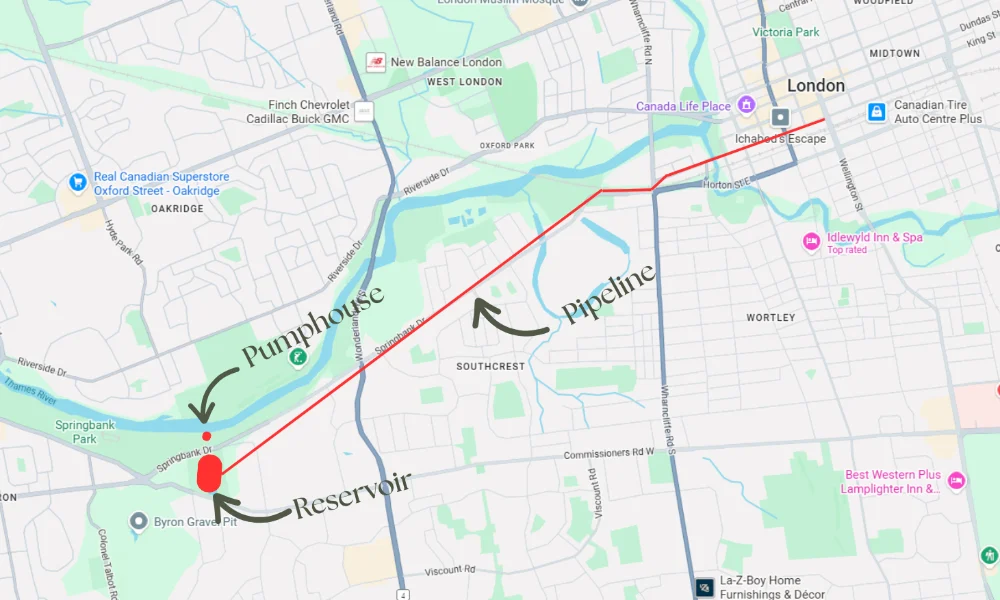
    Map showing the 1878 Waterworks Plan to get water from the reservoir to London via a pipeline.
    Map showing the 1878 Waterworks Plan to get water from the reservoir to London via a pipeline.

    With clean, piped drinking water from the Springbank Reservoir, the city eliminated the shallow wells that had served as delivery systems for the bacteria. Adding proper sewers removed human waste from the immediate environment, preventing contamination of the water supply. These engineering marvels, combined with a growing understanding of disease transmission, finally broke the cycle of cholera outbreaks that had plagued London for decades.

    A Legacy of Resilience

    The story of London’s cholera outbreaks is a powerful reminder of how far we have come. It is a tale of a community that faced unimaginable tragedy and, through hard-won experience and civic determination, laid the groundwork for the modern, safe, and vibrant city we enjoy today. The next time you turn on your water faucet or stroll through Covent Garden Market, take a moment to remember the cholera outbreaks of 1832, 1849, and 1854. They are a part of our story, a testament to the resilience of Londoners, and a hidden layer of history waiting to be discovered.

    The author, Lawrence Durham, atop Reservoir Hill at the entrance to Reservoir Park, where millions of gallons of safe drinking water are stored.
    The author, atop Reservoir Hill at the entrance to Reservoir Park, where millions of gallons of safe drinking water are stored.
    In 1878, this was the place where the city took its first steps to finally conquer the scourge of the Blue Death.
    (Photo credit: Lawrence Durham).

    Hi there. I’m Lawrence, a bicycle tour guide, storyteller, and history nerd. I help curious folks like you discover the best parts of London, from a bicycle seat, of course. Stories like this one, of tragedy and triumph, are woven into the very streets we ride. If you want to experience some of these hidden gems, come on a bicycle tour with me. Click here to learn more! Your next adventure awaits.
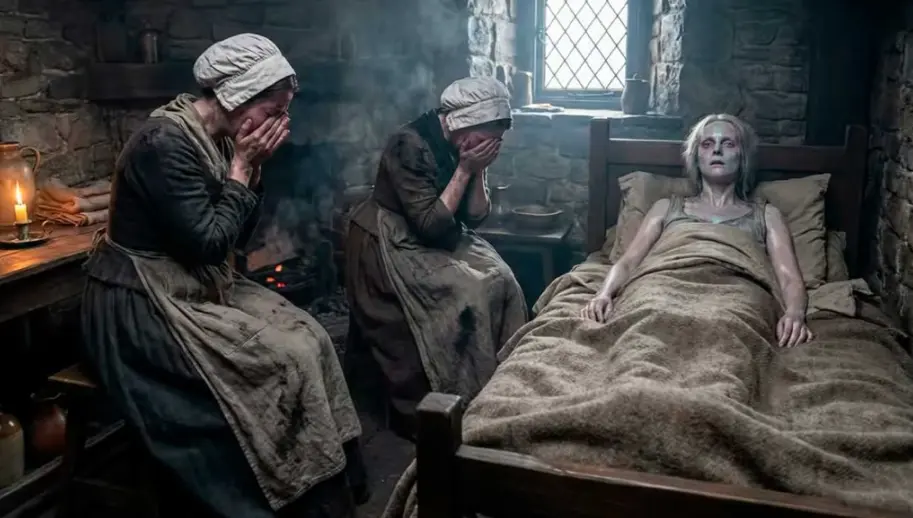
    Two women in 1832 mourning over the death of a young woman in bed with cholera.

    Credit for featured cover Image: NorthNomics.
  • What It Took To Force the City of London to Finally Hire Its First Building Inspector

    What It Took To Force the City of London to Finally Hire Its First Building Inspector

    Here’s a question you probably haven’t asked lately: Who makes sure your hotel’s second floor won’t cave in?

    If you’re visiting London, Ontario, you might spend an afternoon admiring our Victorian brick architecture, grabbing coffee in a converted warehouse, or climbing a creaky staircase to a quirky local shop. And you’ll never once worry about the floor giving way beneath you.

    That peace of mind came at a cost. A steep one.

    For nearly two decades around the turn of the 20th century, London was a city that learned things the hard way, by collapsing, burning, and burying its own citizens in rubble. Again and again, tragedy struck. And again and again, the city shrugged.

    Until finally, London did what it should have done years earlier: it hired its first professional building inspector.

    This is the story of what it took to make that happen.

    The Problem: A Boomtown With No Brakes

    In the 1880s and 1890s, London was growing fast. Railroads, factories, and warehouses were springing up overnight. The Ontario Building Code wouldn’t arrive until 1975, so each city made its own rules.

    London’s rules were polite suggestions (at best).  

    Landlords renovated without permits. Contractors removed load-bearing walls because they wanted a better view. And the city’s “inspection” system, such as it was, amounted to little more than a part-time alderman squinting at a beam and saying, “Probably fine.”

    They were wrong.

    Terribly wrong.

    City Hall Collapses (1898)

    On the evening of January 3, 1898, London’s old City Hall was packed.

    Hundreds of citizens had gathered on the second floor to celebrate Mayor-elect Dr. John Wilson. The mood was joyful, loud, and boisterous. People cheered, stamped their feet, and jumped up and down.

    Then came the crack.

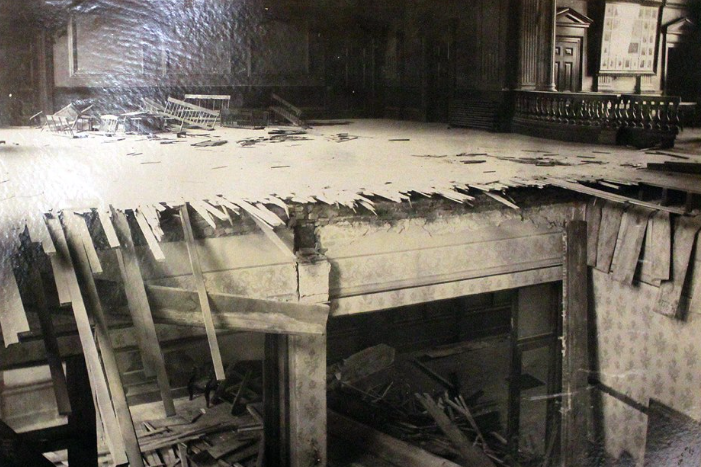
    A massive wooden support beam snapped. The entire second floor buckled and dropped twenty feet into the city engineer’s office below (how ironic). And then, for good measure, a 500-pound safe and a heavy steam radiator crashed down on top of the fallen crowd.

    Twenty-three Londoners died. One hundred and fifty were injured.

    The gaping hole in the floor of Old City Hall after the supporting timbers gave way.
    The floor collapse at the old City Hall.
    (Photo credit: Archives and Special Collections, Western University).

    A vacant store next door became a makeshift hospital. Queen Victoria herself sent condolences from England.

    Surely, surely, this collapse would force change.

    It did not.

    Among the dead was a local shoemaker named John Burridge. Seventeen years earlier, Burridge had miraculously survived the sinking of the SS Victoria on the Thames River, a disaster that claimed nearly two hundred lives. He beat the odds once.

    However, on that cold January night in 1898, his luck ran out.

    An investigation revealed that Mayor John Little himself had removed a supporting wall on the first floor during renovations years earlier, ignoring the city’s own first (and very weak) building bylaw passed in 1893. The tragedy was entirely preventable. And yet, in the aftermath, London did almost nothing to enforce its rules.

    Old habits die hard.

    Sterling Brothers Fire (1904)

    Six years later, another disaster struck.

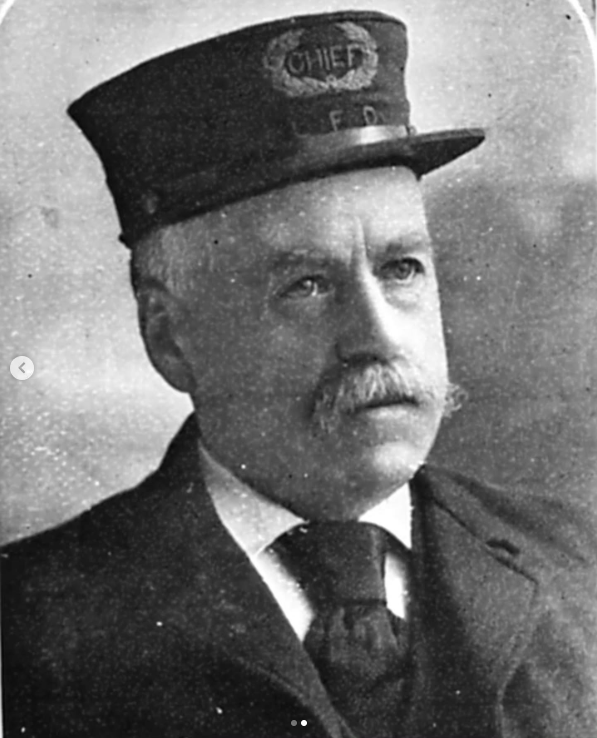
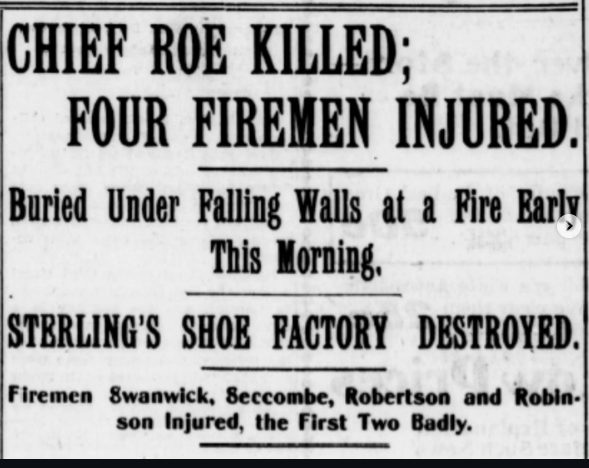
    On January 6, 1904, a major fire broke out at the Sterling Brothers shoe factory on York Street. Fire Chief John A. Roe, a 24-year veteran and one of the most respected men in the city, was directing his crew when a weakened exterior wall collapsed without warning.

    Chief Roe was crushed and killed instantly. Four other firefighters were seriously injured.

    Fire Chief John Roe.
    Fire Chief John Roe.
    (Photo credit: londonfirebuff).
    Newspaper clipping announcing the death of Chief Roe and the injured firemen.
    Headline in the local newspaper.
    (Photo credit: londonfirebuff).

    It was one of the darkest days in London’s fire history. Today, Fire Station No. 3 on Commissioners Road West bears his name. But at the time, the tragedy raised an uncomfortable question: Why are our buildings killing the very people who run toward danger to save us?

    The answer, again, was the same: no proper inspections, no oversight of structural work during renovations, and no one with the authority to say “stop.”

    Still, the city did not hire a dedicated building inspector.

    Reid’s Crystal Hall Collapses (1907)

    It took one more disaster, and it was, in many ways, the most avoidable of all.

    On July 16, 1907, a three-storey brick building on Dundas Street (just west of Clarence) called Reid’s Crystal Hall was undergoing renovations. The owner wanted to turn the upper floors into a bowling alley and pool hall. Workers cut windows into the east wall and began removing a centre section, without temporary supports.

    The building’s owner and contractor objected. The leaseholder pushed ahead anyway, promising that iron pillars would be installed “soon.”

    They weren’t.

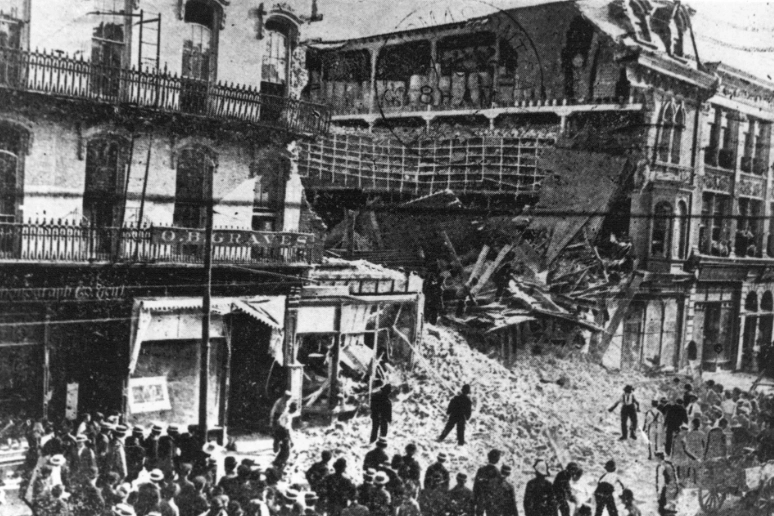
    The east wall, already weakened by a fire back in 1882, gave way. Tons of brick and timber crashed onto the sidewalk, the street, and the building next door.

    Reid's Crystal Hall Collapse, showing the building in ruins, spilling bricks onto the street, in front of throngs of curious onlookers.
    Reid’s Crystal Hall Collapse.
    (Photo credit: LFD Historical Society).

    Eight people died. Forty were injured.

    The tragedy made headlines around the world. And this time, Londoners had had enough. You can only watch your neighbours die under bricks so many times before you demand change.

    The First Building Inspectors

    It wasn’t dramatic. There was no parade, no monument. But in the years immediately following the Crystal Hall collapse, the City of London quietly did something it should have done years earlier: it began hiring dedicated building inspectors with real authority.

    These weren’t part-time politicians or friendly local carpenters. They were the first professional eyes in London whose job was to check floor loads, inspect beam connections, review renovation plans, and, most importantly, say no when something was unsafe.

    For the first time, London had people in place whose entire mission was to make sure that an election night celebration or a bowling alley conversion wouldn’t turn into a mass casualty event.

    That early patchwork of municipal oversight eventually grew into a formal Building Permits department. And when the Province of Ontario finally introduced the first unified Ontario Building Code on December 31, 1975, London was ready.

    Today, the city’s Building By-law B-7 governs thousands of inspections every year.

    Even Today, The Lessons Aren’t Over

    I don’t want to pretend that tragedy is a thing of the past.

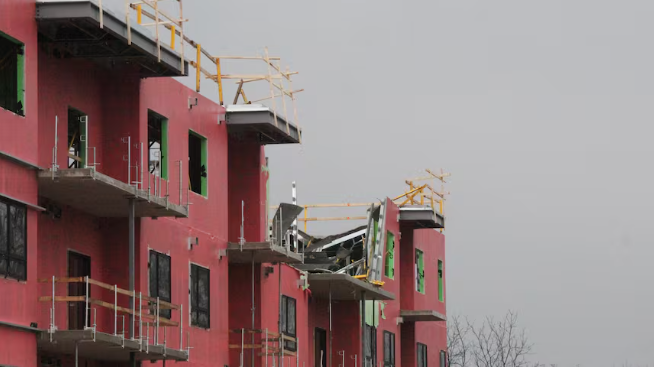
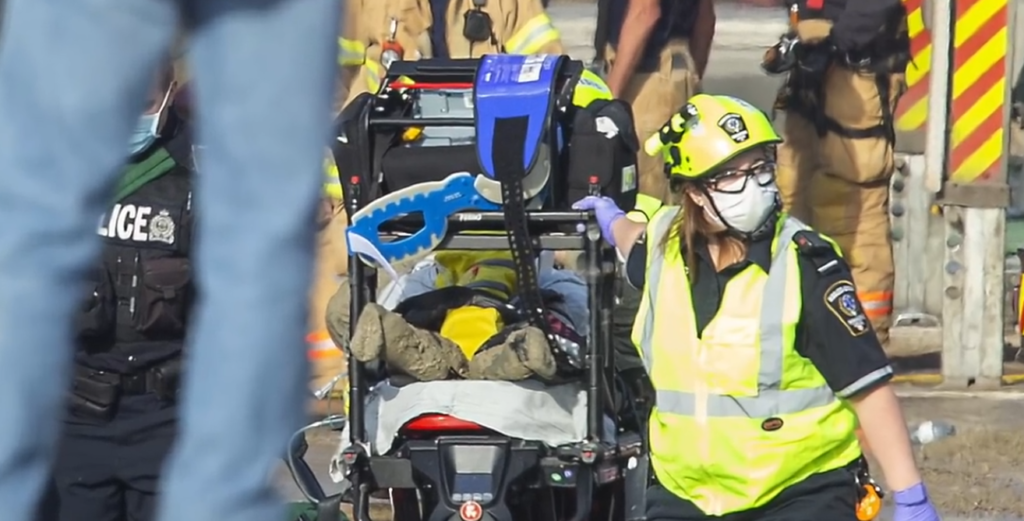
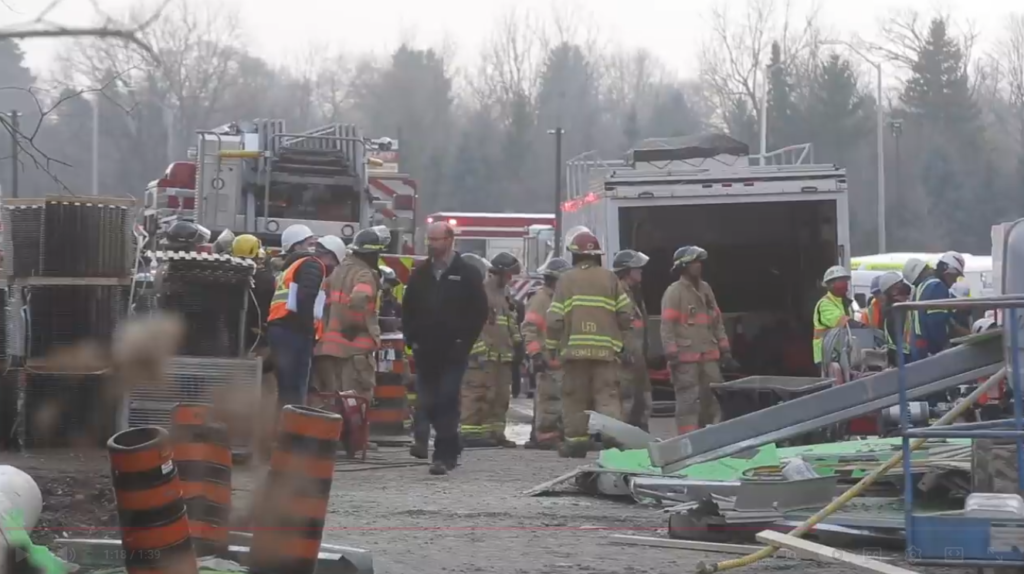
    In December 2020, a partial collapse at a four-storey building on Teeple Terrace killed two construction workers and injured several others. The incident triggered eight charges under the Occupational Health and Safety Act (OHSA) and led to a major review of safety practices in London’s construction industry.

    Top floor of a partially collapsed apartment building.
    Teeple Terrace partial building collapse.
    (Photo credit: Travis Dolynny/CBC).
    Injured worker being transported to the hospital by paramedics from the site of a building collapse.
    Injured worker being transported to the hospital by paramedics.
    (Photo credit: Derek Ruttan/ London Free Press)
    Emergency workers on the scene. of a building collapse.
    Emergency workers on the scene.
    (Photo credit: Mike Henson/ London Free Press)

    Following guilty pleas under the OHSA, the court issued its final penalties in early 2024. The province levied a combined $400,000 in fines against two construction companies.

    This incident proves an important point: building inspection isn’t a history lesson. It’s a living, breathing public service that saves lives every single day, usually invisibly.

    Why This Matters for a Visitor

    So why should you care about a building inspector from a century ago?

    Because when you explore downtown London, you’re not just looking at old bricks. You’re looking at a city that survived its own worst instincts.

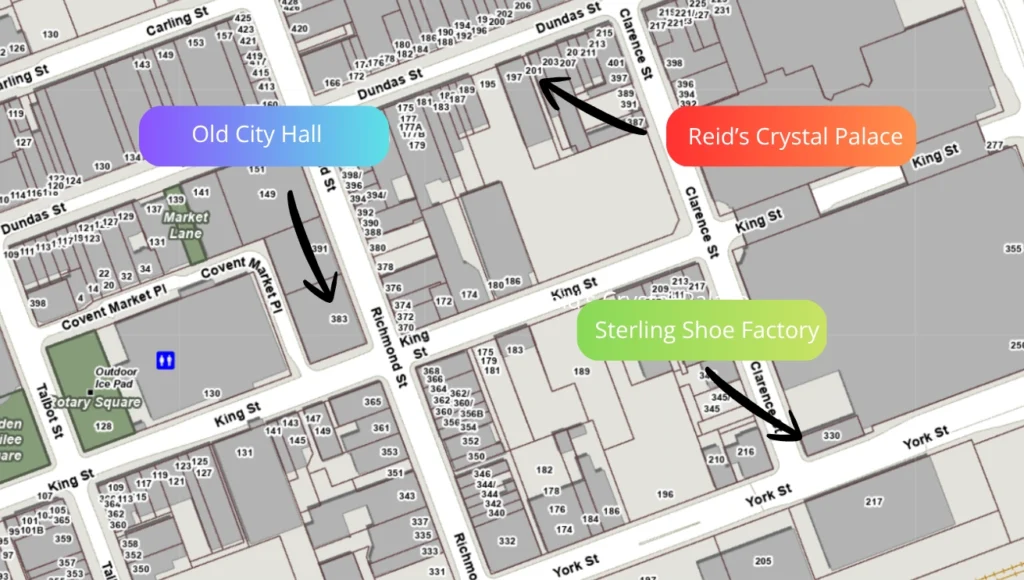
    You can ride past the site of the old City Hall (Richmond Street, just south of Dundas) and know exactly why modern buildings have occupancy limits.

    You can pass the old site of Reid’s Crystal Hall (since rebuilt to proper standards, so no one dies because someone rushed a renovation).

    You can stand at the corner of Clarence and York, where Sterling Place now stands, and remember Fire Chief John A. Roe, who gave his life trying to save a building that should never have been so dangerous.

    Map showing the location of the three building collapses in downtown London.
    Made with London City Map (ArcGIS).

    These aren’t grim stories. They’re resilience stories. They’re about a community that finally said, “Never again.”

    The Joy of a City That Learned to Stand

    Here’s what I love about London: we don’t hide our past. We ride right through it.

    The same downtown that once crumbled is now filled with restored heritage buildings, safe sidewalks, lively patios, and public squares where people gather without fear. That’s not luck. That’s the legacy of an inspector who showed up to work a century ago and did a job nobody wanted, until suddenly, everyone needed it.

    So when you visit, bring your curiosity. Bring your appetite for local history. And bring a quiet thank-you for the forgotten heroes who made sure London’s next chapter was built on something solid.

    The author, standing with his bicycle in front of Sterling Place, at the corner of York and Clarence Streets.
    The author, standing in front of Sterling Place, at the corner of York and Clarence Streets.
    (Photo credit: Lawrence Durham).

    Hi. I’m Lawrence – bicycle tour guide and storyteller. I help curious folks like you discover the best parts of London, from a bicycle seat, of course.

    We don’t just ride past the pretty parts. We tell you the real stories: the collapses, the comebacks, and the quiet heroes who rebuilt this city better than they found it.

    If you want to see London the way it was meant to be seen, slowly, safely, and with a few good laughs along the way, come on a bicycle tour with me.

    👉 Click here to learn more. Now, let’s go find some history.