

London is a city full of stories, and some of the best ones are buried just beneath the surface.
Literally.
The Problem with Downtown Burials
In the early 19th century, London was a growing town with a serious problem. The dead were piling up in churchyards everywhere.
St. Paul’s Anglican Church, at the corner of Queens Avenue and Richmond Street, had one of the original graveyards, as it was the final resting place for many of London’s earliest residents. But by the 1840s, that graveyard was completely packed.
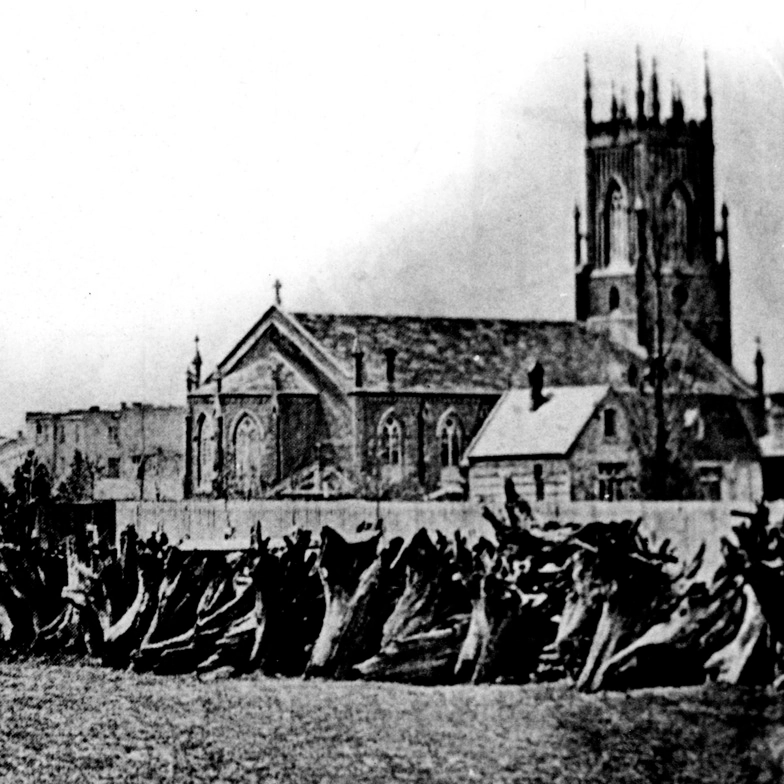
(Photo credit: St Paul’s Cathedral).
Meanwhile, outbreaks of cholera and typhus were terrifying the community. These diseases spread quickly, and decomposing remains in shallow downtown churchyards threatened London’s water supply. The situation was becoming dangerous.
Something had to change.
The 1849 Bylaw That Changed Everything
In 1849, the town of London passed a pivotal bylaw. No more burials would be allowed within town limits. Existing cemeteries needed to relocate outside the growing center. So St. Paul’s purchased land to the east.
Relocation of the graveyard was not a simple task. It would take years, cost a fortune to move the graves, and ultimately be repeated more than once.
Phase One: Moving Bodies From Downtown to the Suburbs (1849 to 1852)
Following the 1849 bylaw, graves from the original downtown churchyard at Queens Avenue and Richmond Street were exhumed. An older plot at Ridout Street was also emptied. The remains and headstones were loaded onto horse-drawn wagons and transported east to a large, newly purchased plot outside the town limits.
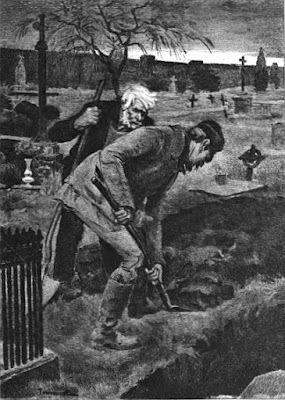
(Photo credit: The London Dead).
The new location sat at the southeast corner of Dundas Street and Rectory Street, near today’s Western Fairgrounds. At the time, this was open land, well away from the city center. It seemed like a permanent solution.
The cemetery continued to function much like other cemeteries of the era. It had family lots available for purchase, and it had a Potter’s Field, a section for those who could not afford to buy a plot. For a few decades, it served the community well.
But London kept growing.
Phase Two: The Six-Year Mass Migration (1880 to 1886)
Within 30 years, the city had expanded eastward and swallowed the Rectory Street site. What was once countryside was now in the path of urban development. The Village of London East passed a bylaw in 1880, forcing the cemetery to close.
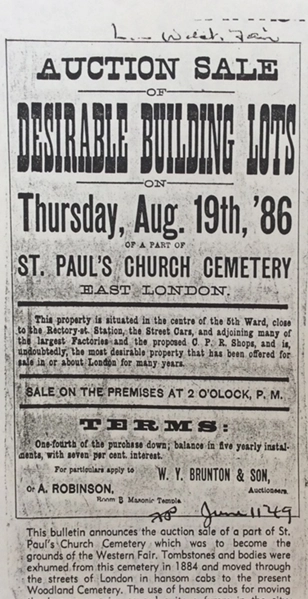
(Source: TMHC).
So, St. Paul’s, needing a new home for its cemetery, looked west this time.
In 1879, the church purchased land along the Thames River in the city’s west end. Here, they would create Woodland Cemetery, a modern Victorian park-style cemetery. This was a new kind of burial ground, carefully landscaped with winding paths, mature trees, and wide open spaces. It was designed to be beautiful, a place where families could visit and reflect in peace.
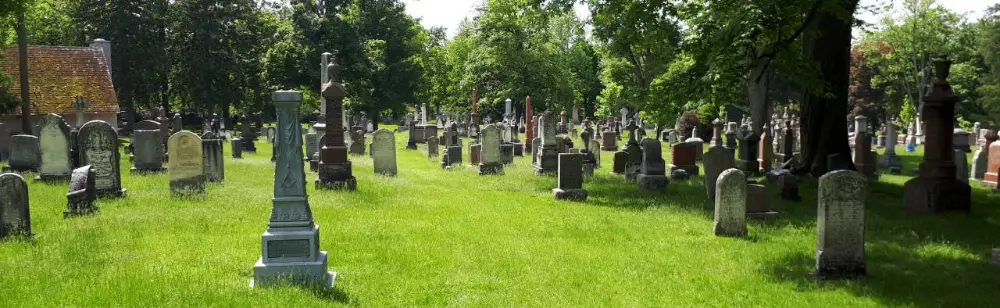
(Photo credit: Spade & The Grave).
Moving the occupants from the Fairgrounds site to Woodland was an epic logistical challenge. It took six years to complete and involved moving over 8,000 individuals. Teams worked methodically, disinterring remains, transporting them by horse-drawn wagon, and re-interring them in the new cemetery. Headstones were carefully removed, loaded, and re-placed.
It was an astonishing feat of organization and endurance, especially considering the technology of the time. No backhoes. No refrigerated trucks. Just shovels, wagons, and a lot of hard work.
How the Relocations Were Handled (and What Went Wrong)
By modern standards, the process was highly selective and heavily reliant on what was visible on the surface.
Not every body made the journey.
Prioritizing Marked Graves
Relocation crews primarily focused on family plots and graves that had durable stone markers. Families who could afford it paid to have their loved ones’ headstones and remains carefully disinterred, transported, and re-placed in the new cemetery. These were the graves that mattered to someone, the ones with names and dates and stories attached.
Abandonment of Potter’s Fields
Early cemeteries contained large, poorly documented sections for the impoverished. These Potter’s Fields also held mass graves for victims of epidemics like the 1832 cholera outbreak. Because these graves lacked headstones, and any wooden markers had long since rotted away, hundreds, if not thousands, of individuals were completely bypassed during the moves.
They were left behind. Forgotten.
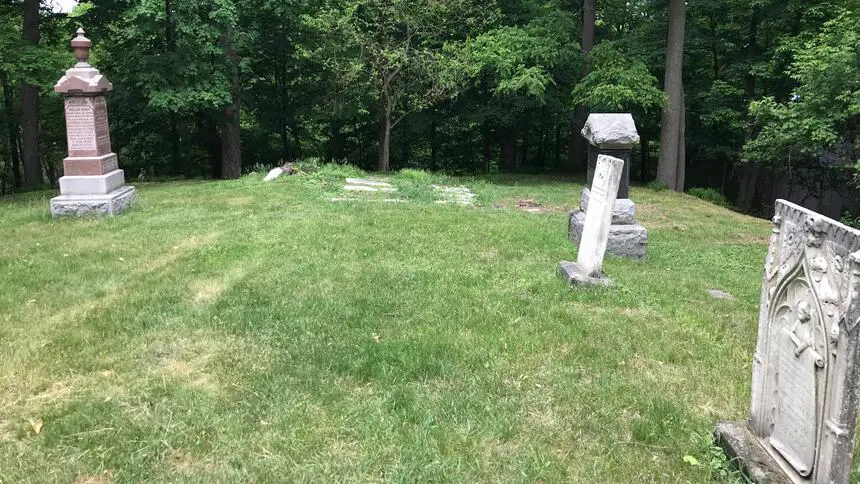
(Photo credit: Levi Hord).
Intentional Left-Behinds
Moving thousands of bodies was expensive. Historical records from Timmins Martelle Heritage Consultants (TMHC) indicate that in some cases, parts of the unmarked cemetery at Dundas and Rectory were intentionally left behind to save time and money, resulting in numerous unmarked graves remaining beneath the modern Western Fairgrounds and the surrounding residential/commercial block.
The Imperfect Journey
Even for those who were moved, the process was far from flawless. Gravestones broke in transit, particularly the tall, flat Victorian markers that were so popular at the time.
Keys, the bottom part of the grave that anchors the stone in the ground, were often taken and repurposed, leaving stones lying flat over the burial site. Bodies were missed. Stones were misplaced.
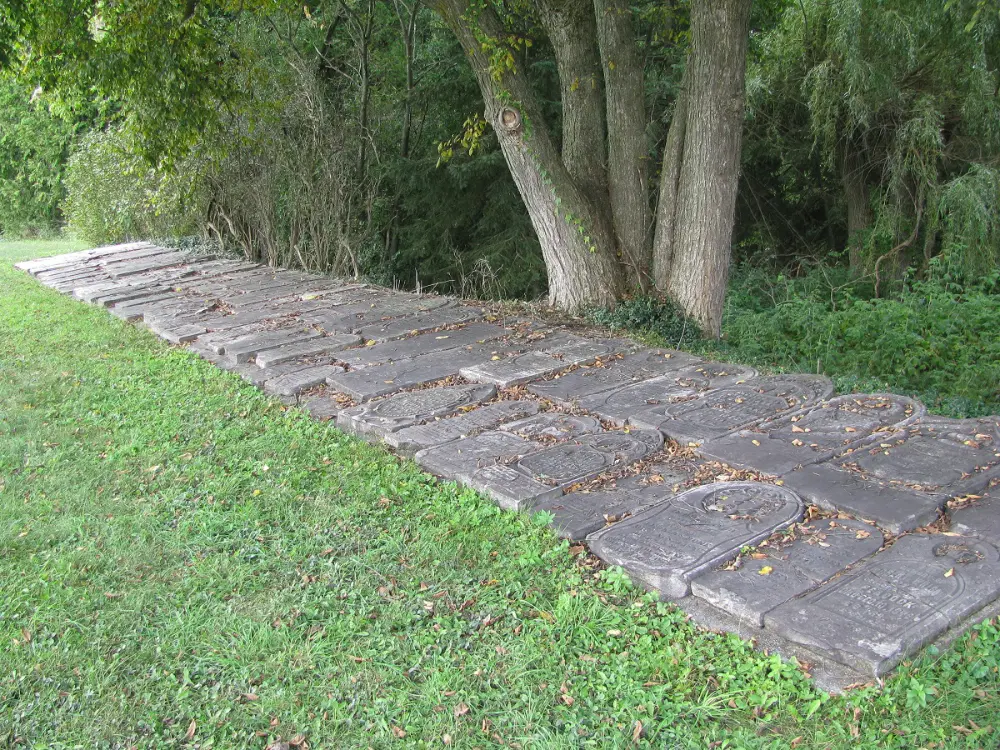
(Photo credit: TMHC).
Drunk Gravediggers
One of the reasons some remains were left behind was because the gravediggers worked in poor conditions at night to avoid offending the townspeople with carts filled with rotting bodies. It didn’t help that the gravediggers believed that drinking large quantities of alcohol would prevent them from catching any disease a corpse might be spreading.
“These guys made sure they were blisteringly drunk all the time they did this work to make sure they didn’t catch any diseases,” [Joseph] O’Neil said. “They had to do the work by torchlight to make sure they didn’t upset people. So there were these diseased bodies in various stages of decomposition going down Dundas Street in the middle of the night. “So can you imagine how many they missed and why?”
How could they move a cemetery filled with hundreds of bodies and gravestones without missing any?
They didn’t.
And yet, it is still quite impressive that they moved so many without the technology and machinery we have today.
The Modern Archaeological Footprint
Because 19th-century relocation practices were so imperfect, early Londoners are still being discovered today during routine downtown construction.
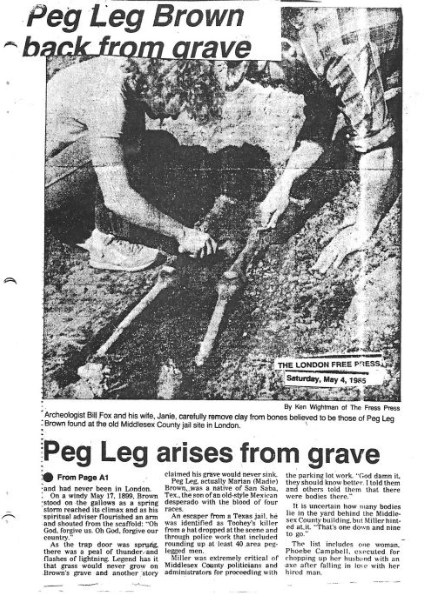
(Source: The London Free Press).
Whenever a major infrastructure project occurs in sensitive historical zones, such as the rapid transit lane upgrades along Queens Avenue or building rehabilitations at the Western Fair District, the city must contract archaeological firms like Timmins Martelle Heritage Consultants to actively monitor the digging.
What Happens When Remains Are Found
In Ontario, the discovery of human remains on a construction site immediately halts all activity. It triggers a rigid, multi-stage legal protocol governed by the Funeral, Burial and Cremation Services Act, 2002, and the Ontario Heritage Act.
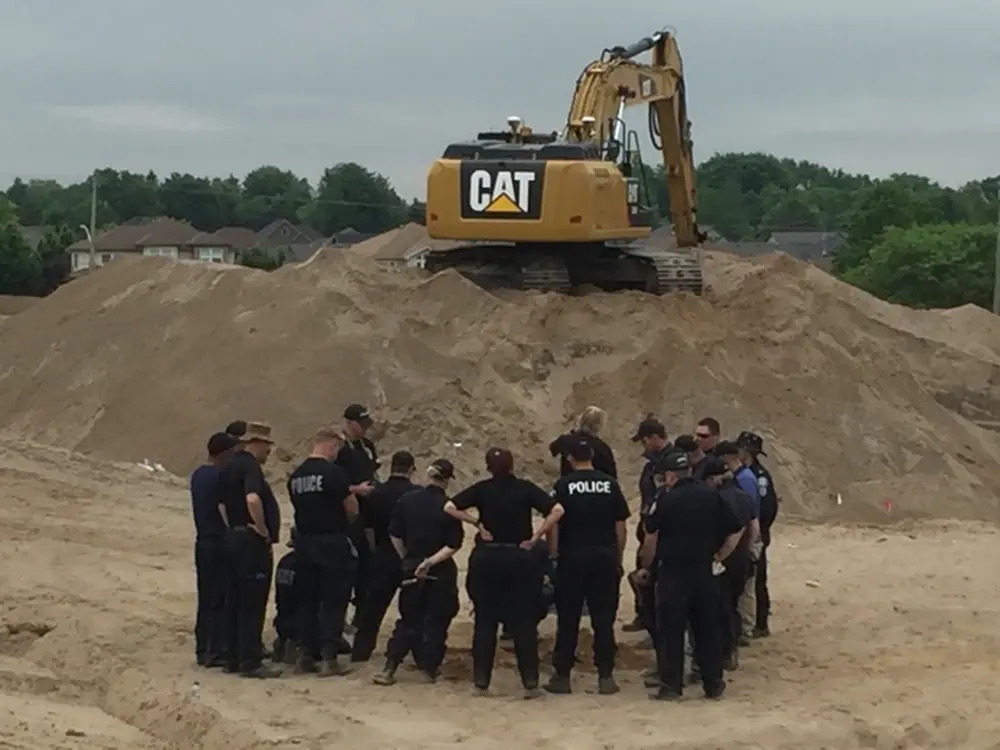
(Photo credit: London Free Press).
The protocol shifts through distinct phases, from forensic investigation to historical and cultural resolution, to ensure remains are treated with dignity and respect. Archaeologists and forensic specialists work together to determine whether the remains are recent or historical. If they are historical, efforts are made to identify descendants or cultural affiliations. If no living relatives can be found, the remains are re-interred in a designated cemetery.
It is a solemn process, but an important one. Even in death, Londoners are treated with care.
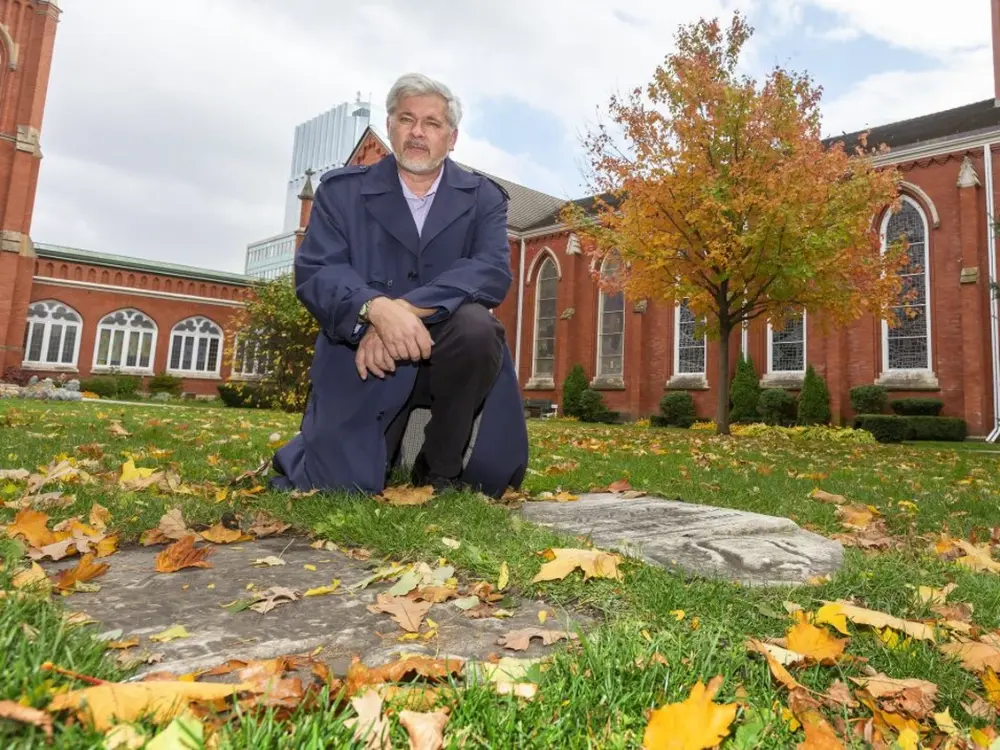
(Photo credit: Mike Hensen/The London Free Press).
So there you have it
In London, we’d like to think we know where all the bodies are buried. And we do. Sort of. At least we know that MOST of the bodies are buried in the 34 cemeteries across the city.
Then there’s the ones we do not know about, the ones still out there, quietly lurking beneath downtown sidewalks, under parking lots, and beside old church walls. They are still being discovered from time to time, whenever a new building goes up, or a road gets widened, and when they are, London treats them with care. Archaeologists are called. Remains are documented, analyzed, and re-interred with dignity. It is a quiet act of respect, a way of saying that even after two centuries, we have not forgotten.
It’s also a reminder that cities are layered places. Every street you walk down, every building you pass, sits on top of something older. London is no different. Our past is quite literally beneath our feet.
And that is what makes this city so fascinating to explore.
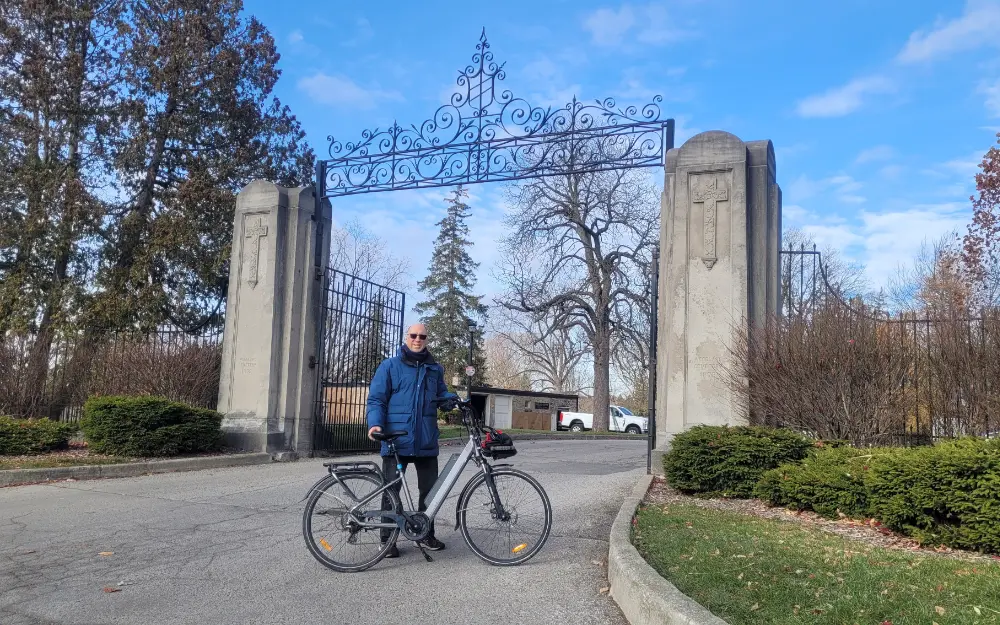
(Photo credit: Lawrence Durham).
Come Ride With Me
Hi. I’m Lawrence – bicycle tour guide, storyteller, and history nerd. I help curious folks like you discover all kinds of interesting parts of London, from a bicycle seat, of course. If you want to experience some of the quirkier sides of our fair city, come join me on a guided bicycle tour.

Credit for featured cover photo: Spade & The Grave.