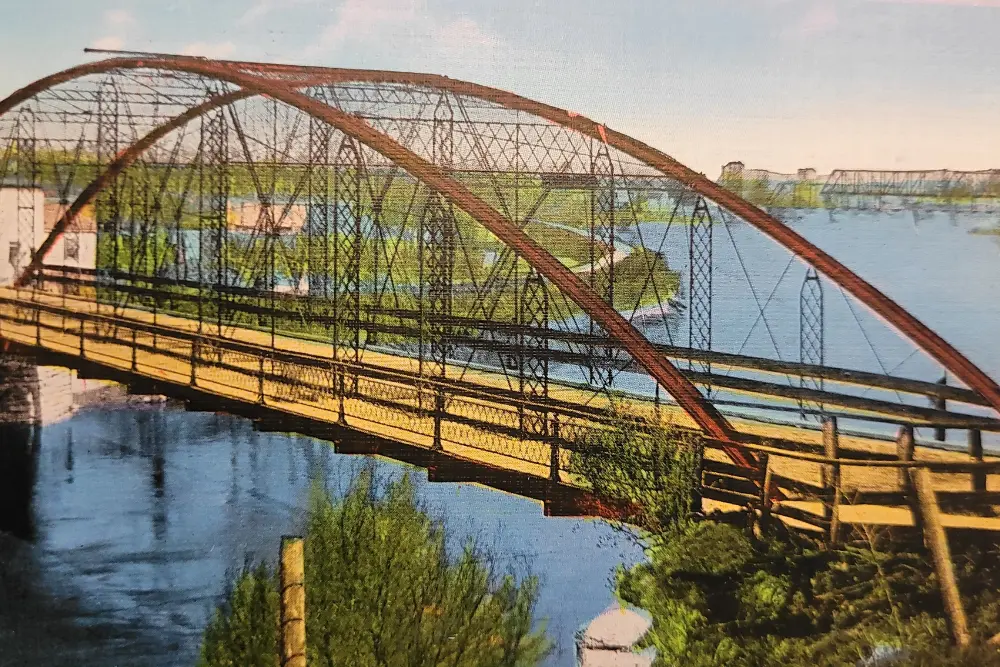
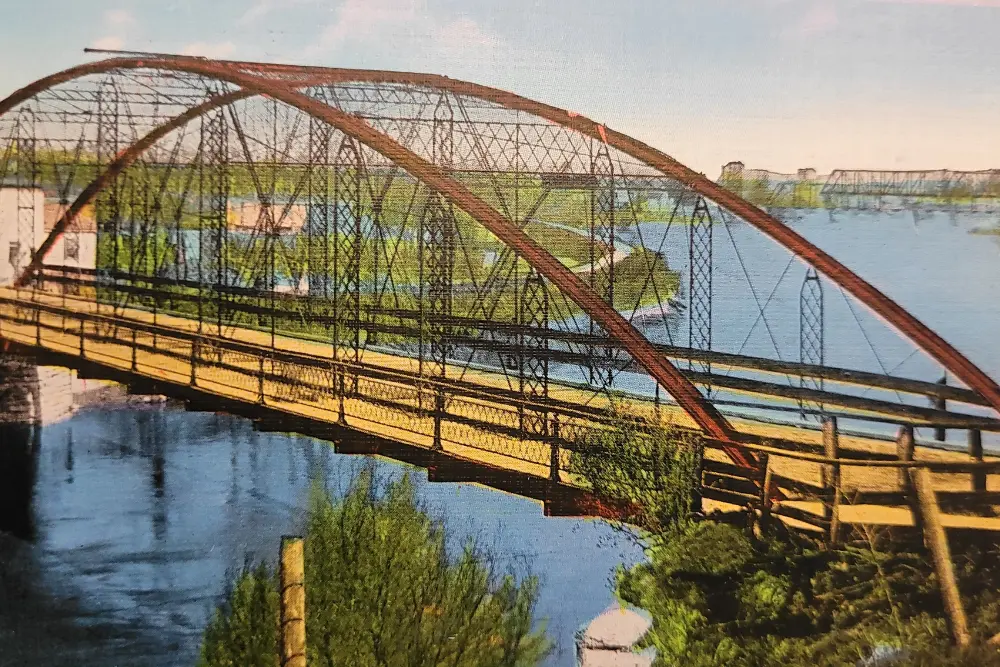
Blackfriars Bridge had stood for almost 150 years. It was beloved by its residents, was a vital transportation link, and was celebrated by generations of artists.
So why did the City of London decide to cut its most famous symbol in half in 2017?
Before we answer that question, let’s examine how Blackfriars Bridge came to be.
The Bridge That Came by Train
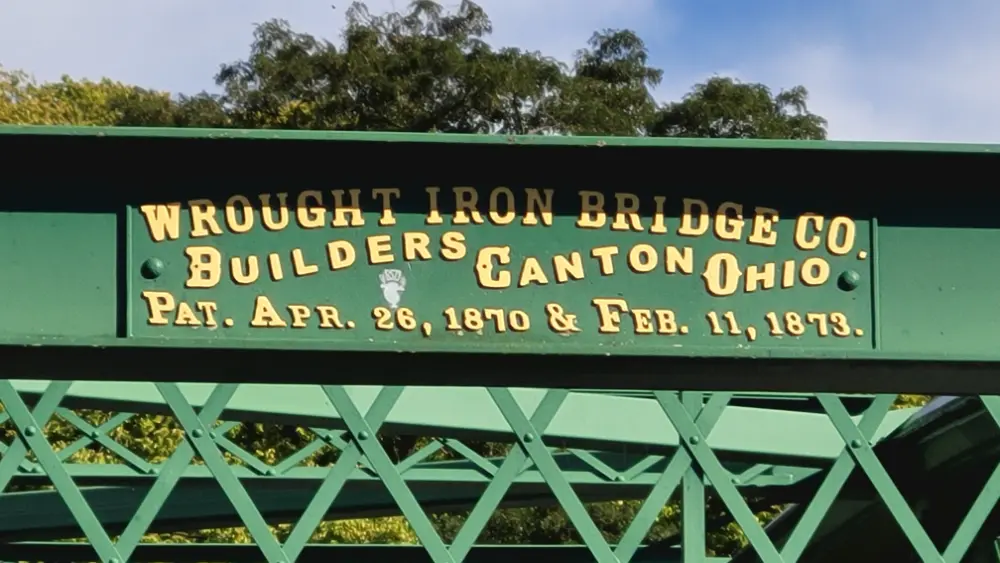
Here is the neat thing. Blackfriars Bridge wasn’t built from scratch on site. It was ordered from a catalogue, specifically, from the Wrought Iron Bridge Company of Canton, Ohio.
In the 1870s, a city like London could send away for a bridge the same way you might order a bookshelf from IKEA today, except this bookshelf weighed over 200 tons and had to survive spring floods.
The company in Ohio prefabricated every single piece: the curved tubular arches, the vertical struts, the diagonal tie‑rods, and hundreds of metal pins. They packed it all into crates, shipped it north by railway across the U.S. border, and dumped it on the banks of the North Thames River.
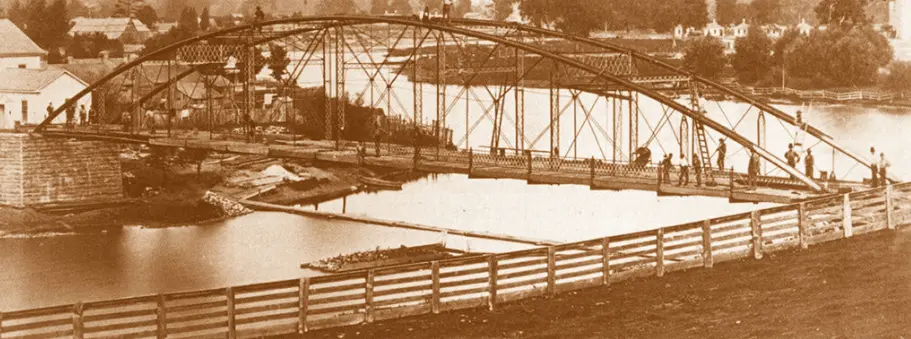
Blackfriars Bridge under construction in 1875. (Photo credit: Dillon Consulting).
Total cost for this massive metal puzzle? $14,711. That’s roughly $1.8 million today, a bargain for a bridge that would last a century and a half.
Why London Needed a Bridge That Wouldn’t Wash Away
To understand Blackfriars Bridge, you have to understand the problem it solved.
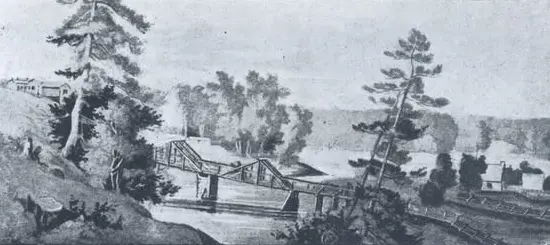
Before 1875, the only way to cross the Thames between central London and the nearby community of Petersville, now known as the Blackfriars/Petersville neighbourhood, was via wooden bridges. And those wooden bridges had a nasty habit of disappearing every spring.
Severe freshets, the old‑timey word for dramatic snowmelt floods, would routinely lift those wooden spans off their foundations and send them tumbling downstream like kindling.
London needed something tougher. Something flood‑resistant. Something made of iron.
A 1943 painting by James Hamilton, showing an early Blackfriars Bridge made of wood. (Photo credit: Fred Weyerman).
Enter the bowstring arch‑truss: a single‑span design that needed no central pillars. It was a prototype, the Victorian equivalent of building for climate resilience, and it worked.
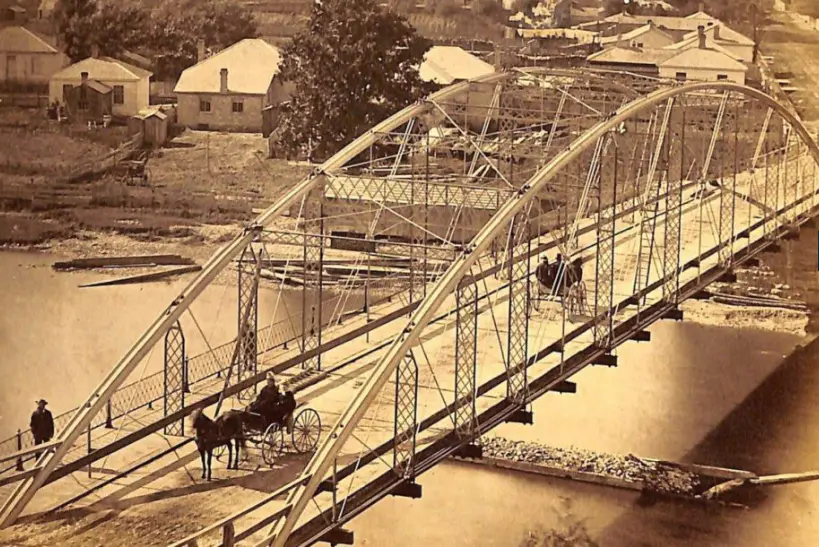
In the horse-and-buggy age, Blackfriars Bridge provided the first permanent link between the Blackfriars/Petersville neighbourhood and downtown London. (Photo credit: Dillon Consulting).
A Rare, Single‑Span Wonder
What makes Blackfriars so special, and why it draws engineering nerds from across the continent, is its design. It is a wrought‑iron, bowstring‑arch truss bridge with a single span.
Translation: the curved top acts like an archer’s bow, absorbing all the tension and compression so that the deck below doesn’t need any annoying central pillars. That means when you stand underneath it, you see one clean, graceful arc leaping from bank to bank.
View of Blackfriars Bridge, as seen from the riverbed. (Photo credit: Lawrence Durham).
And here’s the kicker: Blackfriars Bridge isn’t just the city’s oldest iron bridge. It is the longest and oldest surviving wrought‑iron bowstring truss bridge in all of North America that is still able to accommodate vehicular traffic.
Today, it is recognized as a historic site under the Ontario Heritage Act. But really, its truest monument is the fact that you can still walk, cycle, or drive across it, more than 151 years later.
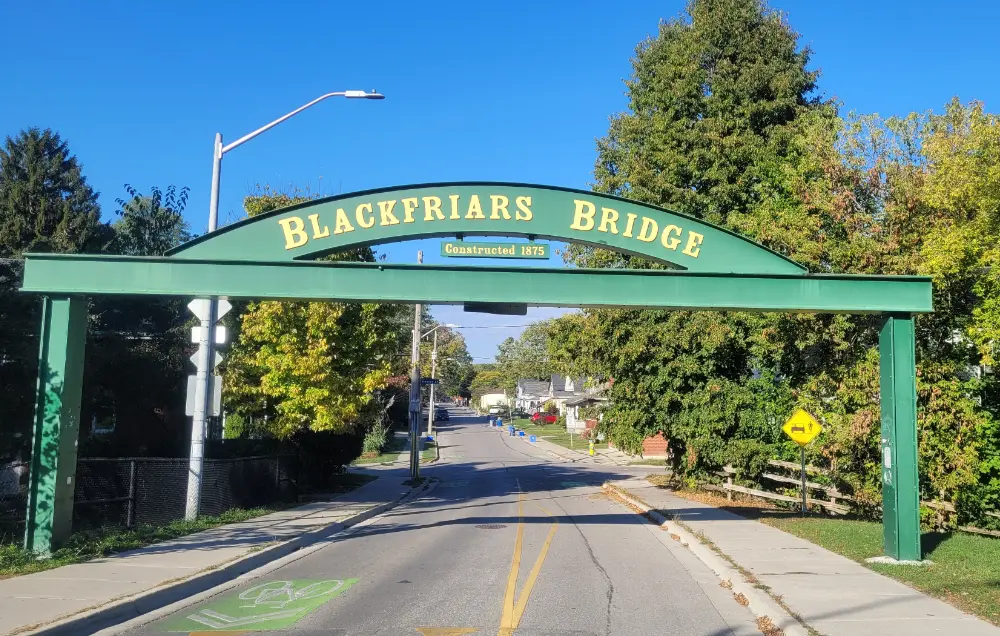
A plaque mounted at the top of the bridge highlights two patents that made the Blackfriars Bridge prototype one of North America’s most innovative wrought-iron bridges at the time. (Photo credit: Lawrence Durham).Looking west, you head under this archway on your way into the Blackfriars/ Petersville Heritage Neighbourhood. (Photo credit: Lawrence Durham).
The Assembly: No Welding, Just Pins and Nuts
In 1875, there were no welding torches. There weren’t even power tools. So how did Isaac Crouse, a local London contractor, and his crew put this thing together?
They used pins. Big, thick metal pins that slotted through the eyes of the iron struts, exactly like the plastic connectors in a child’s building set. Once the pins were in place, workers tightened threaded tie‑rods with nuts to pull everything into perfect alignment.
Close-up view showing the pins that were slotted through the metal struts in the bridge. (Photo credit: Mike Hensen).
Think of it as Victorian Lego, but every piece weighed a hundred pounds, and one wrong move meant a trip to the river.
The vertical posts. The diagonal rods. The curved top chords. All of it clicked together on‑site, piece by piece, until, just like that, London had a bridge that looked like it had a future.
The 2017-2018 “Do‑Over”: Cutting the Bridge in Half
Bridges don’t last nearly a century and a half without a little help. By 2017, after 142 years of spring floods, freezing winters, and relentless traffic, Blackfriars was showing its age. The wrought iron had decayed. The pins were tired.
So the City of London embarked on an $8.6‑million rehabilitation, a nine‑month labour of love that would make history all over again.
Here’s how they did it:
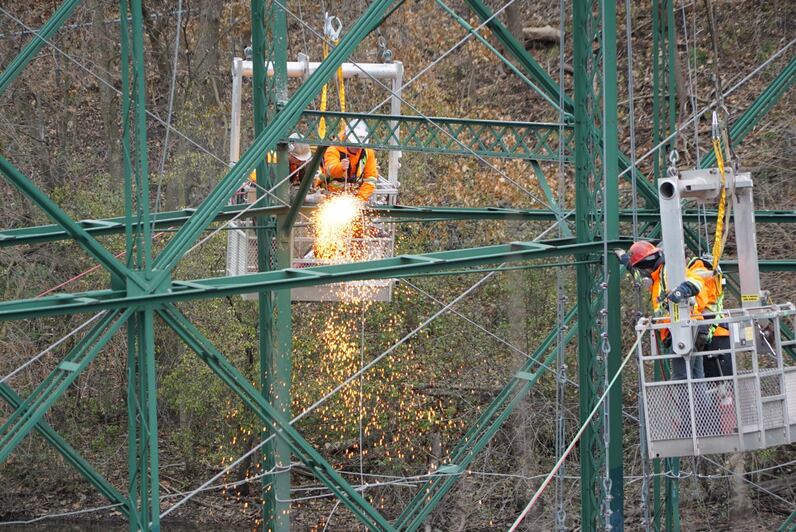
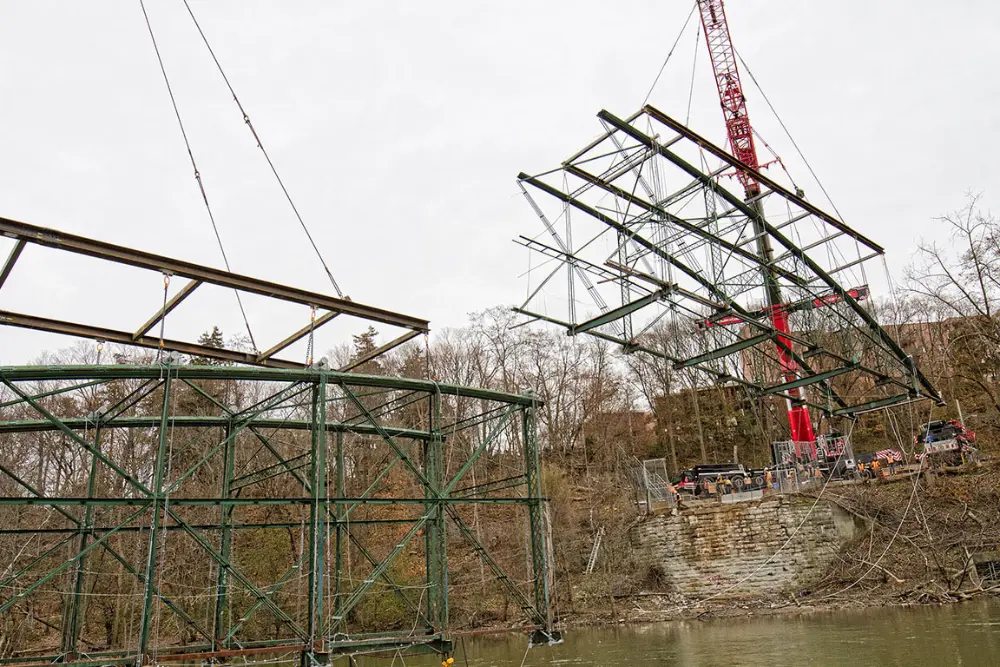
Step 1: Lift and Cut. In late 2017, a massive crane carefully lifted the entire 1875‑built wrought‑iron structure off its stone abutments. Then came the dramatic moment: crews cut the bridge in half so they could move it to the riverbank.
Sparks fly as workers cut through the historic bridge to split the structure in half. (Photo credit: Colin Butler/CBC News).Half of the Blackfriars Bridge sails above the urban canopy while suspended by chains. (Photo credit: McLean Taylor Stone Town).
Step 2: Crane to Shore. Each half was then lifted by crane and gently carried to the riverbank. From there, the disassembled sections were transported indoors, where the real magic happened.
Step 3: Sandblasting and Hot Rivets. Over the winter months, specialized crews sandblasted away 140 years of rust and decay. They repaired the curved top chords, strengthened the vertical posts, and used historic hot‑riveting techniques to put it back together, the same way Isaac Crouse’s men would have done in 1875. No shortcuts. Just authentic, glowing‑hot rivets hammered into place.
Step 4: The Big Swing. On August 15, 2018, a clear summer day, an 800‑tonne crane, the largest crane in Ontario at the time, arrived on the riverbank. The fully restored bridge, now reassembled into a single piece, was hooked to the crane’s cables and slowly, majestically, swung across the Thames River back onto its brand‑new concrete bearings and stone abutments.
Blackfriars Bridge being slowly lowered into place. (Photo credit: Mike Henson)
The bridge had come home.
Step 5: Reopening Day. After months of final touches, Blackfriars Bridge officially reopened to both vehicle and pedestrian traffic on December 1, 2018. The little neighbourhood of Blackfriars had its lifeline back.
Hundreds of Londoners turned up to witness the reopening of the Blackfriars Bridge. (Photo credit: Christian D’Avino).
Blackfriars Bridge Today
Blackfriars Bridge serves many purposes. Not only is it a vital multimodal connector and transit link between the downtown core and the Blackfriars neighbourhood, but it is also an historic link to a simpler time. Today, it continues to inspire generations of artists and remains the most recognizable symbol of the Forest City.
The author, standing in front of Blackfriars Bridge as the autumn leaves are about to show their colours. (Photo credit: Lawrence Durham).
Hi. I’m Lawrence. Bicycle tour guide and storyteller. And yes, Blackfriars Bridge is one of my absolute favourite stops on our tours
If you want to feel the flex of that wrought‑iron arch for yourself and discover other hidden gems along the Thames, come ride with me. Small groups, big laughs, and the best bridge story on the continent.
Something special is happening in children’s education in London.
The city is home to the only food education centre in all of Ontario designed specifically for children and youth. It’s not just a cooking school, and it’s not just a community kitchen. It’s a dedicated, purpose-built space where young people learn where their food comes from, how to prepare it, and why it matters.
Aspiring chefs sit down to enjoy the very meals they prepared. (Photo credit: Growing Chefs!)
For more than 18 years, Growing Chefs! Ontario, an award-winning local charity, has been quietly changing how young people in London think about food.
The Origin Story
The Growing Chefs! concept did not begin here. It started in Vancouver, where chefs and educators saw a gap in how children understood food. So when Andrew Fleet brought the idea to London, something remarkable happened. The concept took root in a community already rich with agricultural heritage and food traditions.
Executive Director Andrew Fleet in his element, teaching children about food preparation. (Photo credit: Growing Chefs!)
Since 2008, Growing Chefs! has reached over 120,000 children and youth across the city of London. That is not a small number. That is an entire generation learning to see food differently. What started as an innovative idea has become the province’s leading organization for children’s food education.
What Makes The Growing Chefs! Approach Different
The reason the Growing Chefs! concept works is surprisingly simple. It helps children get excited about learning to enjoy food that is good for them.
For kids, hands-on instruction and getting to eat what they just made is a winning combination. (Photo credit: Growing Chefs!)
That might sound obvious. But anyone who has tried to convince a child to eat a vegetable knows it’s anything but simple. The Growing Chefs! team has cracked the code. They use hands-on learning. They bring chefs, growers, and educators together. They make cooking fun.
Executive Chef Katherine Jones, teaching a student how to plan a meal using a recipe. (Photo credit: Growing Chefs!)
Three Locations in London
The headquarters for Growing Chefs! sit at 460 King Street in downtown London.
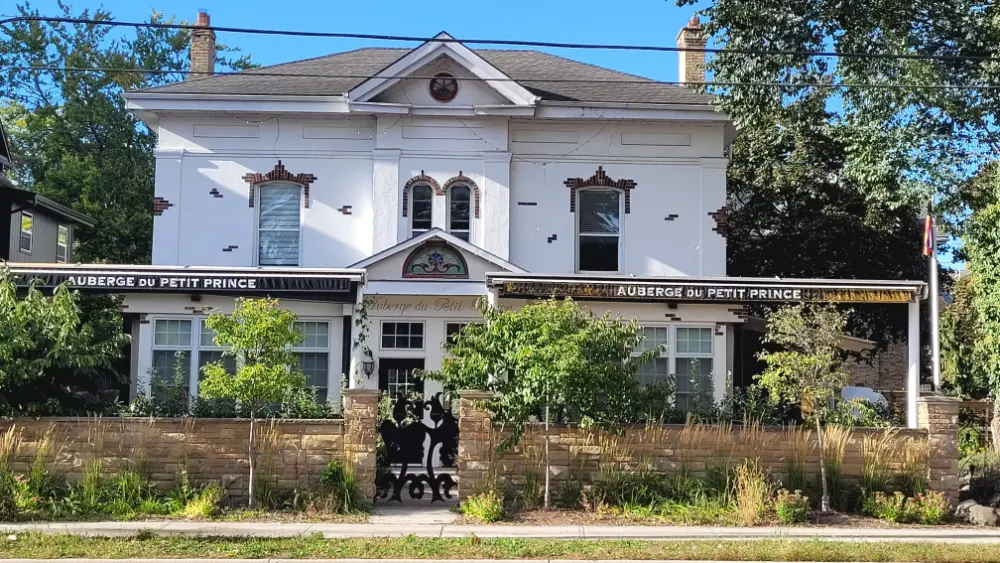
460 King Street is an officially designated heritage building, a designation that protects both its architectural character and its historic role in the community (including its decades as Auberge du Petit Prince, where it had the reputation as one of London’s premier fine-dining destinations). (Photo credit: Lawrence Durham).
The teaching kitchen at The Grove at Western Fair District, at 900 King Street, provides additional space for programming, along with raised beds for growing plants and all-season greenhouses.
Children and teens feel valued when they are taught by professional chefs in commercial-grade kitchens. (Photo credit: Growing Chefs!)
Recently, Growing Chefs! added a third location, an urban farm in the city’s east end with one acre under cultivation.
At the urban farm, children from city schools participate in hands-on, age-appropriate activities. (Photo credit: Growing Chefs!)
Together, these three facilities host Ontario’s only dedicated children’s food education centre.
A Tour Through Growing Chefs! Programs
School And Classroom Programs
By now you realize that the goal of Growing Chefs! is to develop food literacy among children, and that is why their school programming is so important. Volunteers and educators deliver hands-on cooking lessons and classroom gardening initiatives in partnership with local schools. Children learn to grow food, prepare it, and understand its journey from farm to table. Thanks to local sponsors like the Western Fair Association, their core in-school programs are offered at zero cost to participating elementary schools, ensuring equal access for all students.
Kindergarten children receiving age-appropriate instruction on fruits and vegetables. (Photo credit: Growing Chefs!)
For many children, this is the first time they have planted a seed. The first time they have tasted something they grew themselves. The first time they have realized that food does not simply appear on supermarket shelves.
Even little ones love to water plants. (Photo credit: Growing Chefs!)
Public Culinary Classes
The learning does not stop with school programming. Growing Chefs! offers multi-week youth and beginner cooking programs. Teen classes teach older children more advanced skills. Family classes bring generations together around the stove.
To support its main focus on food education, Growing Chefs! runs a Social Enterprise, comprised of two parts:
1) The Beet Café
The Beet Café is a scratch kitchen run by Growing Chefs! that supplies healthy, nut-free meals to children across London. This is where Growing Chefs! moves beyond education and into direct action. By providing sustainable, waste-free hot lunches, it not only feeds children, but it also models what a sustainable food system looks like. Each year, The Beet Café prepares and delivers over 125,000 hot, healthy lunches through its school and camp lunch program.
Nutritious hot meals feed children at participating schools throughout London, with the proceeds funding its food education programs. (Photo credit: Growing Chefs!)
2) Its Events & Catering Portfolio
Growing Chefs! provides a full suite of opportunities for food-related activities:
Weddings & Receptions
Team Building & Holiday Parties
Social & Corporate Gatherings
Boardroom Meetings & Conferences
Private Pizza Parties
Monthly Adult Cooking Classes
These events give the broader community access to the venues and the expertise of Growing Chefs!, with all proceeds being used to support the school and classroom programs.
Adult cooking classes like this one help support the children’s program. (Photo credit: Growing Chefs!)
Londonlicious Project
Twice a year, Growing Chefs! proudly presents a culinary festival. Londonlicious celebrates local restaurants, “prix-fixe” menus (French for “fixed price”), and regional farm-to-table storytelling. It is a reminder that good food is not just about nutrition. It’s about community. It’s about celebration. It’s about place.
In addition to providing delicious meals for patrons, Londonlicious events help build the food economy and support the local community. (Photo credit: Growing Chefs!)
The Bigger Picture
Every young person deserves to learn about food. That is the guiding principle behind Growing Chefs! And it is a principle that matters more with each passing year.
Think about what children today are up against. Processed foods are cheaper and more available than ever. Food marketing targets children relentlessly, making it harder and harder for them to connect what they eat every day with where it comes from.
Boxes of cereal on display on a grocery store shelf. Some data shows that Canadians reach for ultra-processed options, like cereals, in the morning, when they’re short on time. (Photo credit: Justin Sullivan).
Growing Chefs! exists to restore that connection. It’s important to help children understand that food is not just fuel. It’s culture. It’s history. It’s community. It’s health. And It’s something they can participate in, not just consume.
Keeping it Local
Growing Chefs! is “FeastON” certified, recognized for an outstanding commitment to sourcing Ontario-grown ingredients and promoting local food systems. This certification is not just a badge; it’s a commitment. When children learn about food at Growing Chefs!, they learn about food that is grown locally, about sustainability, and about the farmers and producers who make our region special.
FeastOn is North America’s largest and longest-running local food certification program. (Photo credit: Culinary Tourism Alliance).
London’s Food History
London’s role as the home of Ontario’s only children’s food education centre makes historical sense. This region has always been defined by its relationship with food.
The lands around London were once home to Indigenous peoples who practiced sophisticated agriculture. The forests provided game. The rivers provided fish. The soil provided crops. When European settlers arrived, they found some of North America’s most fertile land.
Growing Chefs’ urban farm carries on the tradition of farming in southwestern Ontario, where young people come to learn how food is grown. And in the spirit of “Learning to Grow, and Growing to Give,” every month the produce grown on the farm is donated to families in London facing food insecurity. (Photo credit: Growing Chefs!)
By the 19th century, London was a regional hub for agricultural commerce. The Western Fair, established in 1867, celebrated the bounty of the surrounding countryside. That tradition continues today, and it is fitting that Growing Chefs! operates its teaching kitchen at The Grove at Western Fair District.
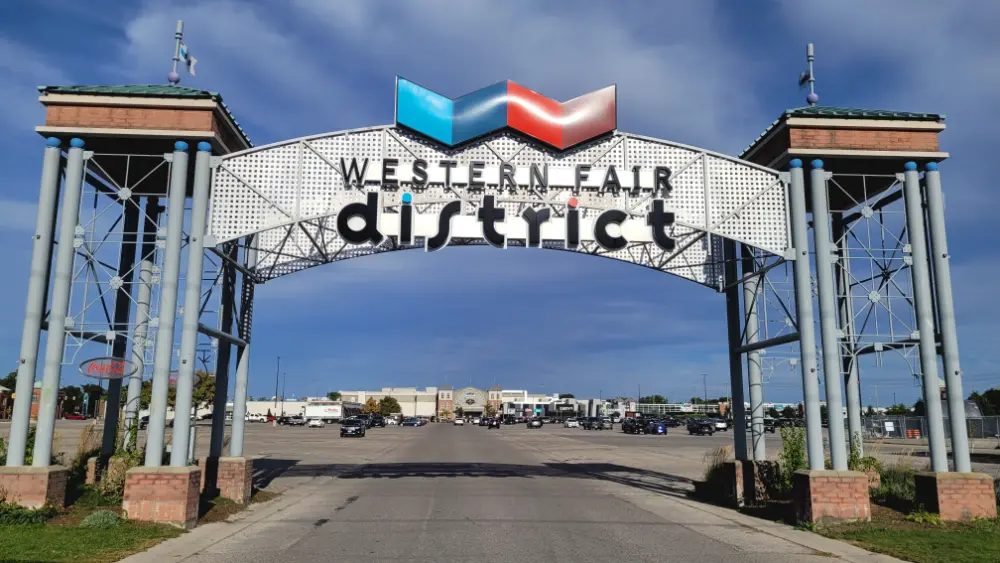
In 2019, the Western Fair District repurposed the historic Progress Building at 900 King Street and turned it into a modern business incubator. The Grove is now a leading agri-food and ag-technology innovation hub. (Photo credit: Lawrence Durham).The gateway to the Western Fair District, a sprawling 85-acre property in London’s Old East Village that generates a total economic footprint of $114.2 million each year within the City of London. (Photo credit: Lawrence Durham).
The City That Values Food
London’s food scene is vibrant. Local restaurants source from regional producers. Farmers’ markets flourish throughout the warmer months. And at the centre of it all is Growing Chefs! commitment to food education that is unmatched anywhere else in the province.
The indoor farmers’ market at Western Fair District. (Photo credit: London Tourism).Vegetable on display at Covent Garden Market. (Photo credit: Destination Ontario).Veggies on display at the Masonville Farmers’ Market on a late September day. (Photo credit: Lawrence Durham).
This tells us something important about London. This is a city that invests in the next generation; a city that understands that a healthy community starts with healthy children.
Come And See For Yourself
London is a city that rewards curiosity. The people who built Growing Chefs! did not wait for someone else to solve the problem of food education. They got to work. They built something remarkable. And they have created a legacy that will last for years to come.
Author in front of the Growing Chefs! Education Centre in the Grove. (Photo credit: Lawrence Durham).
Hi. I’m Lawrence – bicycle guide, storyteller, and history nerd. I believe the best way to see a city is from a bicycle seat, of course. At London Bicycle Tours, we help curious folks like you discover the hidden gems of our remarkable city. So please join us for your own guided tour. Click here to learn more! Your next adventure awaits.
Before London had its modern transit system, before buses and bike lanes, there were streetcars. For sixty-five years, these iron-wheeled vehicles clattered along London’s streets, carrying workers to factories, families to parks, and dreams to new neighborhoods. They didn’t just move people; they built the very fabric of our city.
Today, we’ll journey back in time to explore the rise and fall of London’s streetcar system. Whether you’re a curious visitor planning your first trip to the Forest City or a longtime resident wanting to understand how your neighborhood came to be, this story reveals how transit shaped London’s downtown core into the welcoming, walkable community it is today.
The Beginning: The Age of Horse Power (1875-1895)
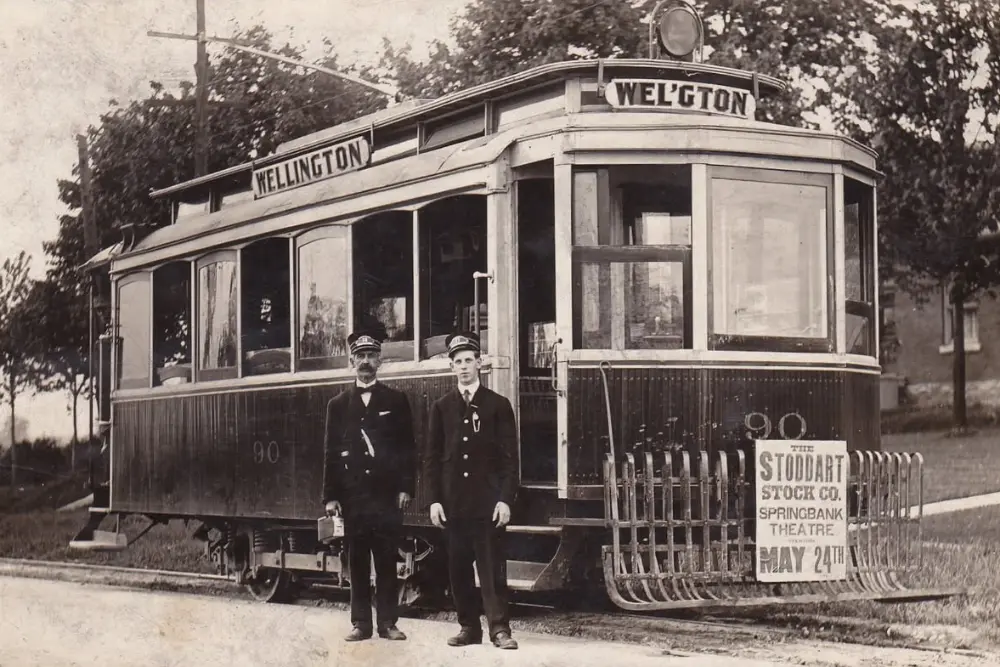
Picture this: It’s May 24, 1875, Victoria Day. Londoners gather with excitement along Dundas Street, waiting to board something completely new. Not a train bound for Toronto, but a small wooden passenger car pulled by horses, ready to transport locals between Richmond and Adelaide Streets.
The London Street Railway Company (LSR) had just laid three miles of track, at a cost of $5,000 per mile, and the city would never be the same.
This wasn’t glamorous travel. The cars were simple, the horses were hardworking, and the ride could be bumpy. Later, on snowy winter days, passengers might even need to step out and give the carriage a push to get it moving again. But for Londoners of the 1870s, this was revolutionary.
The population of London at the time was 18,413.
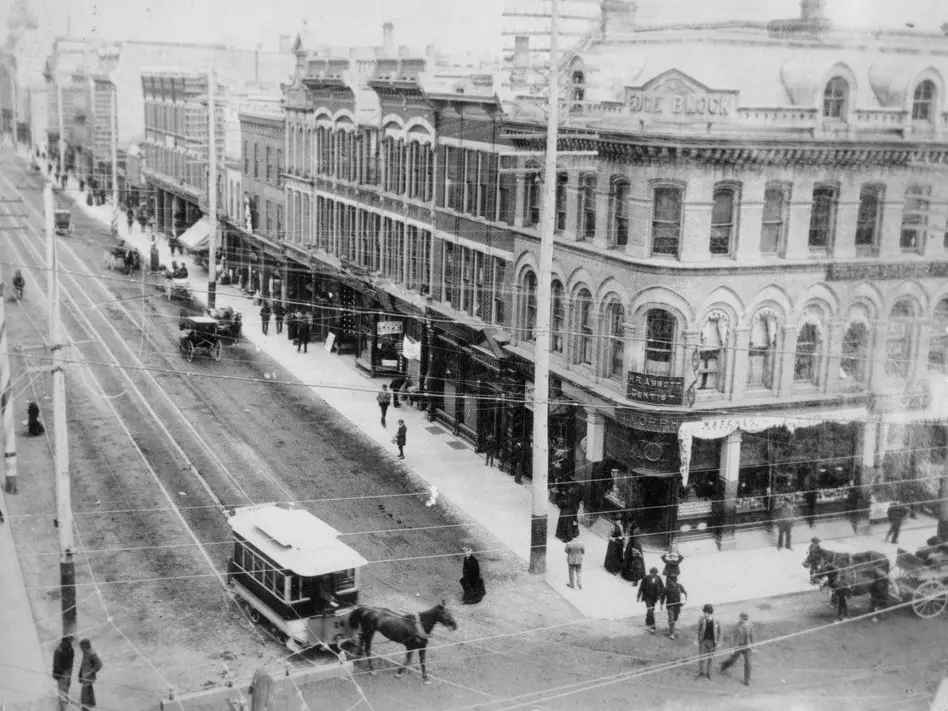
Looking down on a horse-drawn streetcar at Dundas and Richmond Streets in 1883. (Photo credit: Wikimedia Commons).
The Depot at Dundas and Lyle
The LSR quickly established its main operations facility at the corner of Dundas and Lyle Streets, creating a hub that would anchor the city’s east end. From this modest depot, horse-drawn cars began connecting London’s scattered settlements, giving early residents a reliable way to reach the bustling downtown core.
For working-class families in the eastern suburbs, the streetcar wasn’t just convenient; it was essential. It provided a scheduled, affordable link to jobs, shops, and community life downtown. This early transit system began the process of weaving London’s distinct neighborhoods into a single urban fabric.
The Rise of the Electric Streetcar (1895-1940)
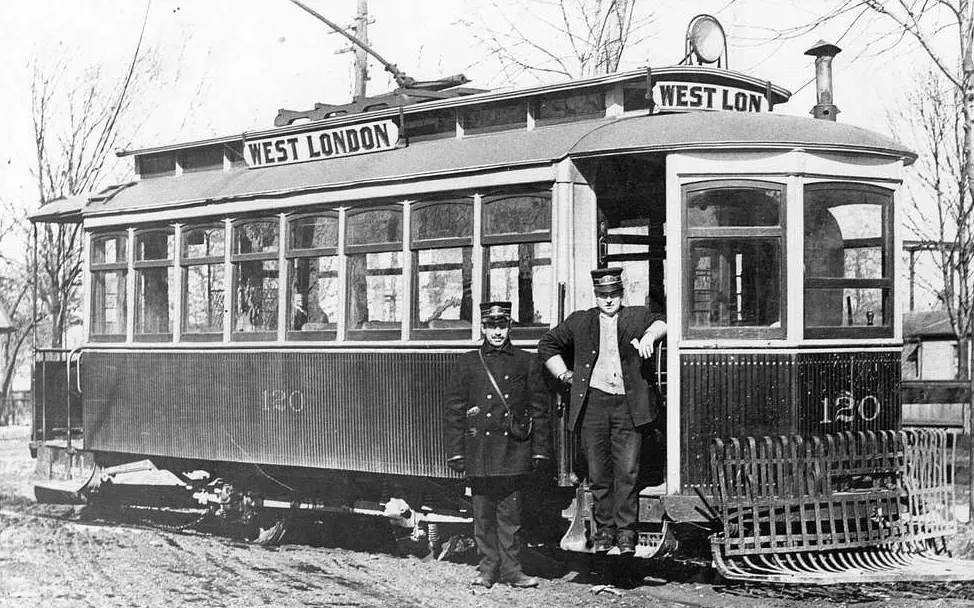
By 1895, London was ready for an upgrade. The city retired its horse-drawn carriages and embraced the future with overhead wires and shiny new electric trolleys. This electrification transformed everything.
Suddenly, streetcars could travel faster, carry more passengers, and climb hills that would exhaust any horse. More importantly, they could reach farther. The LSR expanded aggressively, laying tracks into previously isolated areas and opening up new lands for residential development.
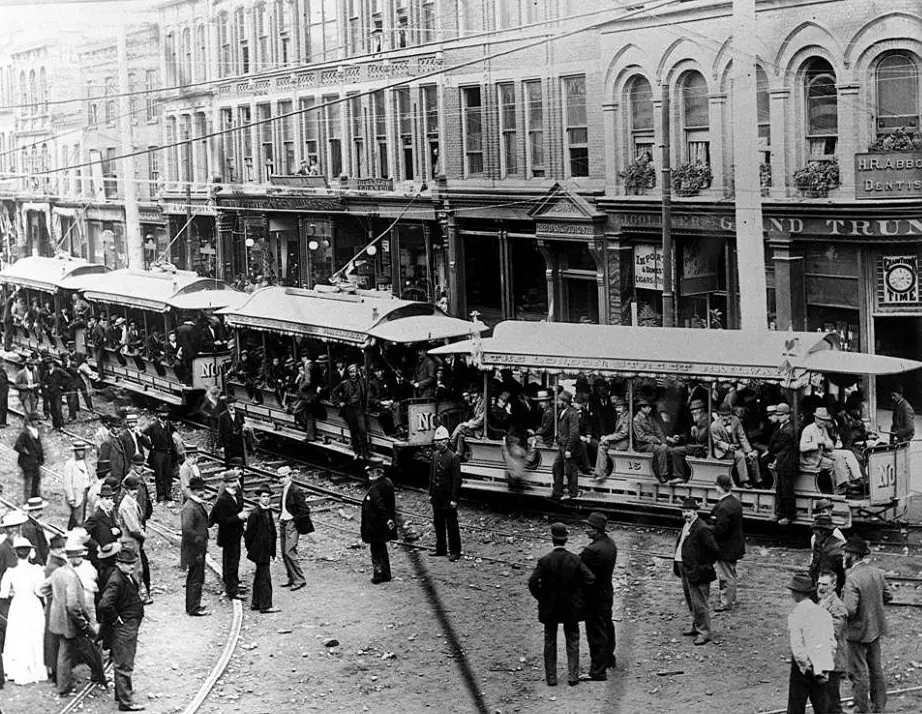
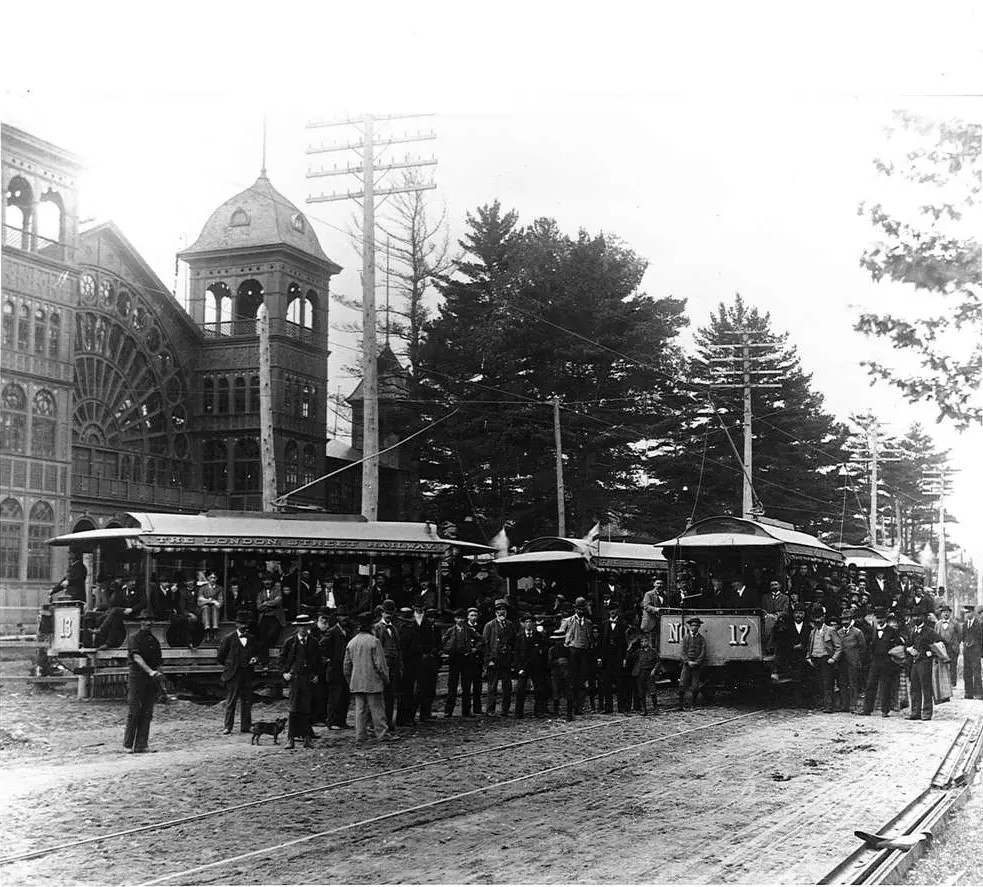
Inaugural run of electric streetcar service in 1895. Because the first order of electric cars was delayed, the trolleys pictured here on Dundas and Richmond were the old horse cars converted to electricity. (Photo credit: Archives and Special Collections, Western University).Crowds clamber aboard this streetcar at Western Fair, 1895. (Photo credit: London Public Library, Museum London).
Branching Out in Every Direction
At its greatest extent, the streetcar rail system extended 24 miles through the city, spreading like tree roots to connect to London’s growing suburbs:
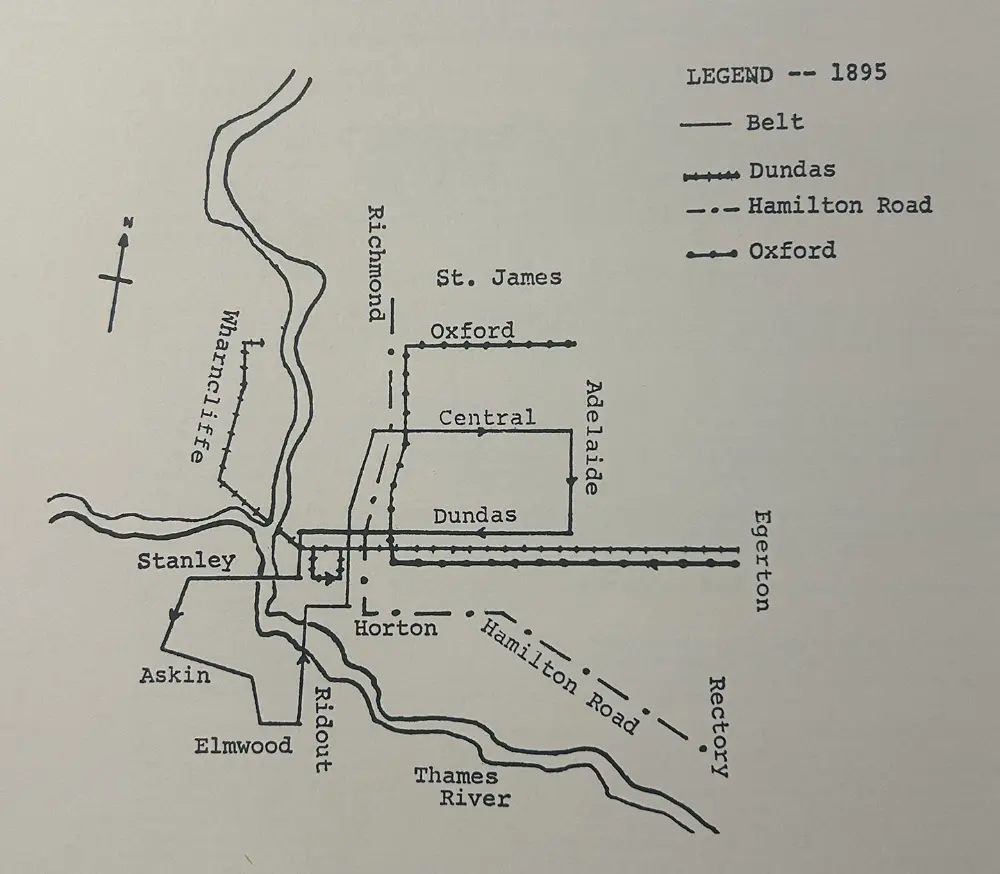
Heading East Along Hamilton Road
The tracks pushed deep into the Hamilton Road district, connecting industrial workers to factories and providing a vital link between peripheral residential neighborhoods and the city’s manufacturing heart. This corridor became a bustling artery of working-class life.
Crossing the Thames
Bridges over the river at Wharncliffe Road and Ridout Street carried streetcars into the southern and western sectors of the city. Communities that had once felt isolated were suddenly absorbed into London’s economic and social life. Residents could easily reach downtown markets, shops, and services.
Marching North Up Richmond Street
The northern trunk line along Richmond Street accelerated development in the city’s northern quarters. New subdivisions sprang up along the route, confident that residents would have reliable transportation to the downtown core.
1895 map of the early LSR transit system. (Source: London Transit).
The Crown Jewel: Springbank Park
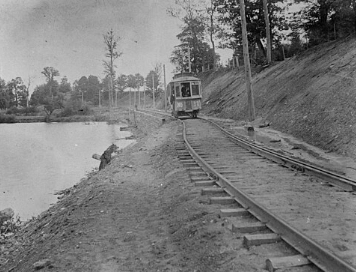
Perhaps the most beloved streetcar line was the one that terminated at the gates of Springbank Park, then known simply as the Waterworks. On hot summer weekends, Londoners would pile into open-air cars, escaping the city’s heat for a day of leisure by the river.
To illustrate that point, on May 24, 1896, the first day the new branch line opened, over 10,000 excursionists made the trip to Springbank Park, almost a third of the population of London at the time.
This line demonstrated something profound about transit. By making a distant park accessible to everyone, the streetcar transformed a peripheral rural area into London’s shared backyard. It brought communities together, created shared experiences, and enhanced the city’s quality of life in ways that still echo today.
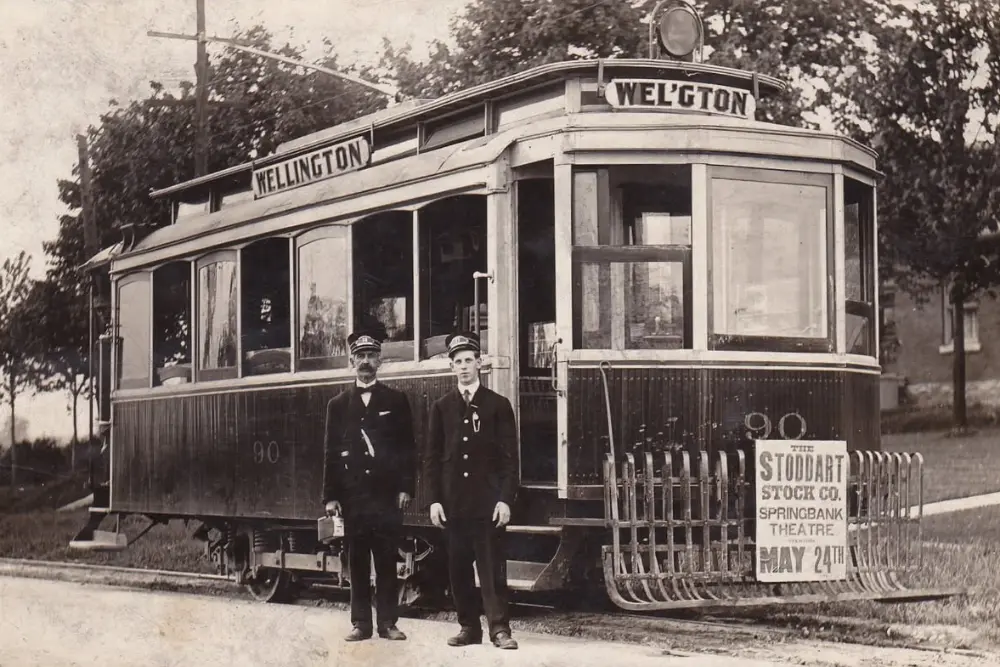
A streetcar on the Springbank line, passing by Woodland Cemetery on the right and the Thames River on the left. The entire Springbank line was completed by May 24, 1896 and double-tracked by May 21, 1897. (Photo credit: Ivey Family London Room, London Public Library, London, Ontario, Canada).
Connecting Neighborhoods, Building Community
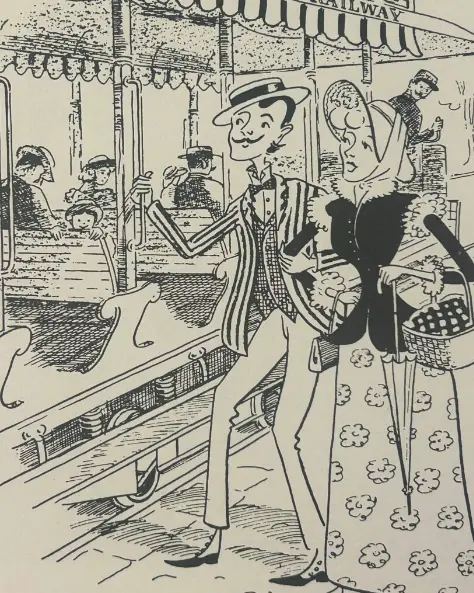
By the early 1900s, London’s streetcar network had become the social fabric of the city. It wasn’t just about getting from point A to point B. It was about connecting people. Neighbors met on trolleys. Families made weekend excursions. Workers shared commutes. The streetcar was, in many ways, the original social network, bringing Londoners together one block at a time.
During this period, the LSR introduced special cars that could be rented for theatre parties, dances, or other special events. They were referred to as “Moonlight Excursion Cars”, and were adorned with clusters of electric lights to enhance the atmosphere, c. 1905. (Photo credit: London Transit).Motorman and conductor, c 1915. Wages for them at that time were $0.23 per hour. (Photo credit: Ivey Family London Room, London Public Library, London, Ontario, Canada).
The End of an Era: The Trolleys Go Silent
Winter’s Wrath
As much as Londoners loved their streetcars, the relationship with Canadian winters was always complicated. Heavy snowstorms regularly brought the iron trolleys to a grinding halt. Ice accumulation on overhead wires and frozen switches caused frequent service interruptions.
In a city where winter can arrive with vengeance, the fixed-rail system’s vulnerabilities became increasingly apparent. When snow buried the tracks, streetcars simply couldn’t operate. Passengers were stranded, businesses lost customers, and the city’s mobility ground to a halt.
The Rise of the Bus
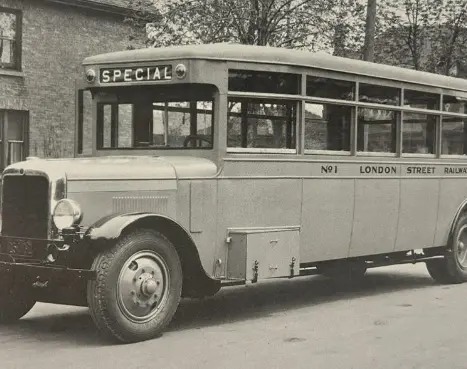
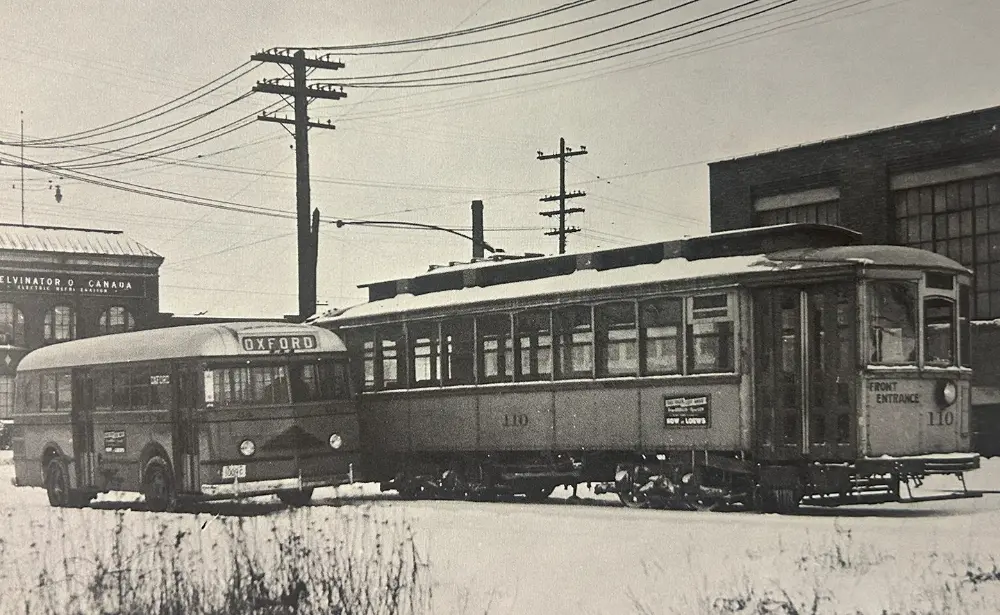
By the 1920s, a new competitor appeared on London’s streets: the gasoline bus. These rubber-tired vehicles didn’t require expensive tracks or overhead wires. They could navigate around obstacles, adjust routes to meet changing demand, and most importantly, they could operate in snow.
The flexibility and lower maintenance costs of buses made them increasingly attractive to transit operators. The writing was on the wall for the old streetcar system.
In 1929, LSR purchased five gasoline-powered buses at a cost of $7,700 each to be used to service North London and make connections to the streetcar lines. (Photo credit: London Transit).By 1940, it was inevitable that streetcars would soon be replaced by buses. (Photo credit: London Transit).
The Final Stop
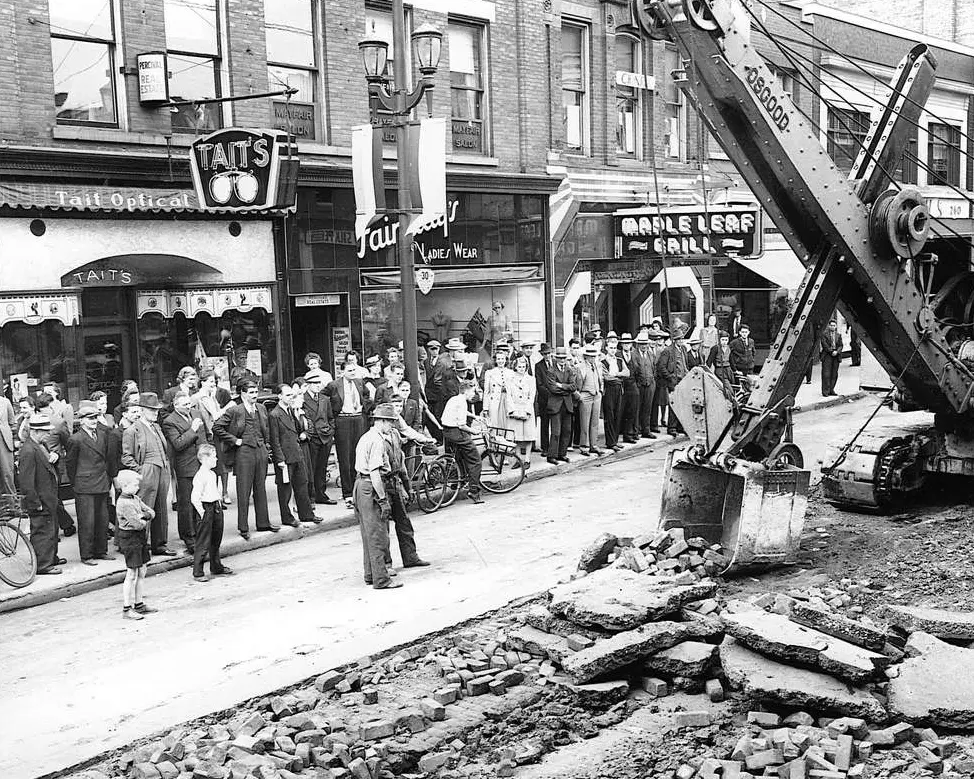
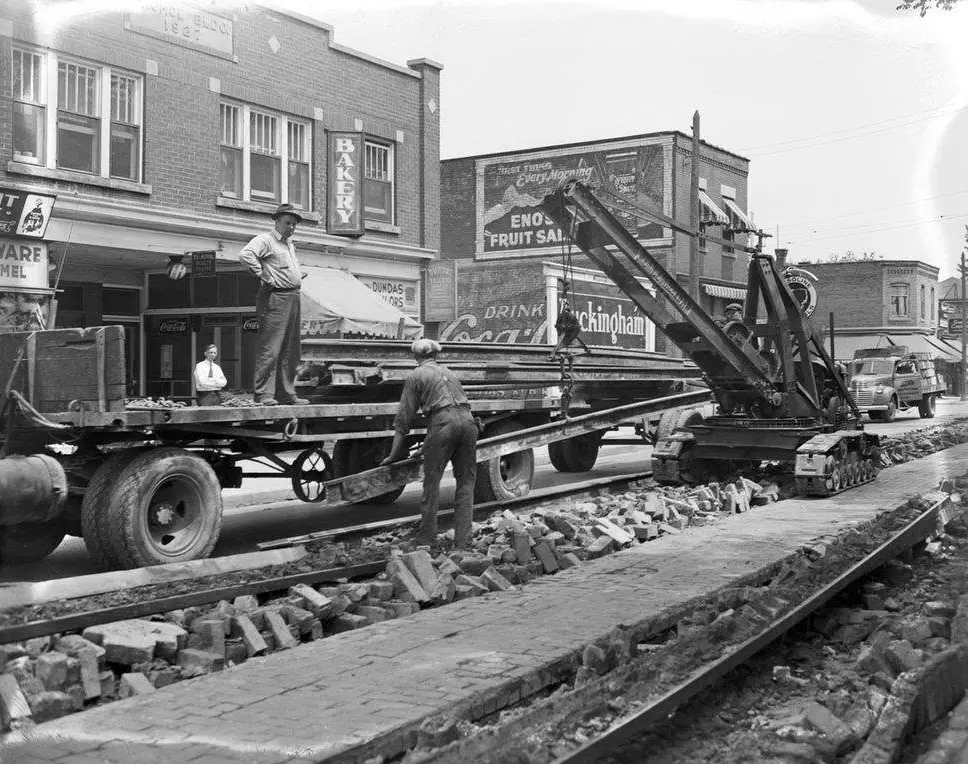
On November 29, 1940, Londoners bid a fond farewell to their last streetcar line. After 65 years of service, the network that had shaped the city’s growth fell silent. In 1941, the tracks were paved over or ripped up, the overhead wires removed, and the trolleys sent to storage or scrap.
Ripping up streetcar tracks on Dundas St in 1941. (Photo credit: Archives and Special Collections, Western University).More streetcar tracks being ripped up on Dundas, east of Quebec Street in 1941. (Photo credit: Archives and Special Collections, Western University).
It was the end of an era. But it wasn’t the end of the story.
Echoes of the Rails: London’s Hidden History
Buried Treasure Under the Asphalt
If you walk down certain streets in downtown London today, you might be walking on history. City construction crews occasionally unearth buried wooden ties and steel rails during utility digs beneath downtown asphalt. These ghostly remnants remind us of the network that once connected our city.
Larry Davidson, who oversees several construction sites in London, said the latest discovery of a few pieces of wood and concrete about a metre deep during recent road work on York Street is likely the last of the city’s old streetcar system. (Photo credit: Julianne Hazlewood/CBC).
London Street Railway Car #23: A Survivor’s Tale
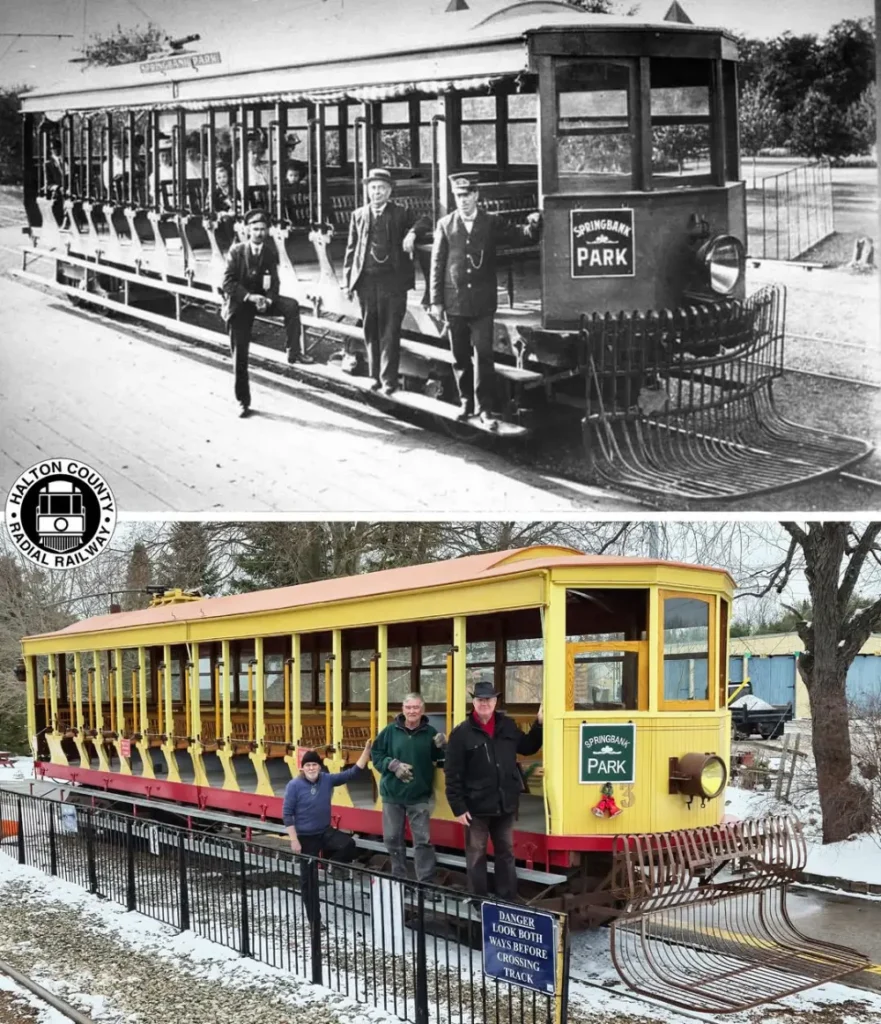
Not everything from the streetcar era was lost. London Street Railway Car #23, built in 1901, has a remarkable survival story. After retiring from active service in 1935, it found a second life as the men’s changing room at Wonderland Gardens, serving swimmers and park visitors for decades.
Eventually it was rescued, and between 1983 and 2000, it was lovingly restored. Car #23 now lives at the Halton County Radial Railway museum in Milton, Ontario, where visitors can step aboard and imagine what it was like to ride through historic downtown London.
LSR Car #23. The first photo above was taken in Springbank Park circa the 1920s. The second photo was taken in 2025 at the Halton County Radial Railway in Milton. Notice the near-identical poses of the three people in both photos. (Photo credit: Halton County Radial Railway).An enthusiastic volunteer demonstrating how the “people-catcher” worked. (Photo credit: Halton County Radial Railway).
Why This History Matters for Visitors Today
A Walkable, Bikeable City
The legacy of streetcars is visible in London’s compact downtown core. Because the trolley system encouraged development along transit corridors, many areas of the city remain pedestrian-friendly and accessible today. This makes London an excellent city for exploring on foot or by bicycle.
The author standing on the old trolley line leading to Springbank Park. It is now the Thames Valley Parkway, a 43 km multi-use pathway that runs alongside the scenic Thames River. (Photo credit: Lawrence Durham).
Hi, I’m Lawrence. I’m a bicycle tour guide, storyteller, and proud Londoner who loves showing off this city’s hidden gems. My passion is helping curious visitors like you discover the fascinating history, vibrant neighborhoods, and beautiful spaces that make London special.
If you’d like to experience some of these stories up close and personal, join me for a guided bicycle tour. Small groups, big laughs, and plenty of local flavor.
Imagine a time when a simple drink of water could be a death sentence.
In 1832, that was the grim reality for the settlers of Upper Canada. Cholera was entirely new to North America, a mysterious and brutal killer that originated in India and tore across Europe before being carried across the Atlantic in the crowded, unsanitary holds of immigrant ships. When it made landfall in Quebec City in June, it began a relentless journey along the St. Lawrence River and the Great Lakes, carried inadvertently by panicked people fleeing the cities. It was only a matter of time before it reached the small but growing settlement of London, with a population of just 400 souls.
Immigrants on ships from Europe helped spread the cholera pandemic to North America. (Image credit: NorthNomics).
The Cholera Outbreak of 1832
A Perfect Environment
Nineteenth-century London was a frontier town with a fatal flaw. The community relied on shallow, hand-dug wells for drinking water and shared outdoor privies for waste. With no public waste management or sewer systems, human waste seeped directly into the local water table. This turned the town’s very source of life, its drinking water, into a massive delivery system for the Vibrio cholerae bacteria. The stage was set for a catastrophe.
The “Blue Death”: A Swift and Terrible Killer
What terrified Londoners most was the horrifying speed of the disease. A person could wake up feeling perfectly healthy, contract cholera in the morning, and be dead by nightfall. The symptoms were agonizing and unmistakable. The bacteria caused sudden, severe, and uncontrollable watery diarrhea and vomiting, leading to extreme and rapid dehydration (up to 25 liters of fluid in a single day). As victims lost fluid volume, their blood thickened, their eyes sank into their skulls, and their skin lost all elasticity. Most distinctively, the intense lack of oxygen turned their skin a ghostly, bruised shade of slate-grey or blue, earning cholera its grim and unforgettable nickname: “The Blue Death.”
People died of cholera quickly, sometimes within hours of ingesting the bacteria. (Image credit: NorthNomics).
Medical Ignorance at the Time
The medical community of the time was utterly helpless. They had no idea how cholera spread. The prevailing theory was “miasma,” which held that diseases were caused by poisonous vapors or foul odors rising from rotting matter in the air. Because doctors were targeting the air instead of the water supply, their containment strategies and medical treatments were often more dangerous than the disease itself.
Modern historians have even referred to the standard treatments as a form of “benevolent murder.” That is, despite the physicians’ well-meaning intention to cure their patients, their highly extreme methods often directly caused or accelerated the patient’s death.
For example, physicians routinely practiced bloodletting, draining a half-litre to a full litre of blood from patients who were already dying of severe fluid loss. They administered heavy doses of calomel, a toxic mercury compound, to “purge” the bowels, often until patients’ gums bled from acute mercury poisoning. And in a final, tragic twist, they frequently denied water to patients who were literally crying out from dehydration, believing that drinking liquids would worsen internal cramping.
Bloodletting in the 1800s. (Image credit: James Gillray, 1804).
Those who survived cholera at this time usually did so because they had a milder version of the infection or, perhaps, because they ignored medical advice and drank water anyway.
The Deaths Kept Coming
In London, the earliest churchyards were instantly overwhelmed. To minimize the spread of the “miasma,” the dead were quickly wrapped, sometimes covered in quicklime to accelerate decomposition, and buried in mass graves or closely packed plots known as “Potter’s Fields.”
To clear the “poisonous air,” local authorities set up large smudge pots of burning tar. Obviously, in retrospect, these measures were not successful, and so people continued to die. (Image credit: NorthNomics).
Because these victims were hastily buried without proper monuments, their exact resting places were largely lost to time, which explains why so many remains were missed when the city later attempted to move the bodies out of the city limits.
In all, the 1832 wave killed an estimated 8,000 to 12,000 people across Upper and Lower Canada.
The Return of Cholera: Outbreaks in 1849 and 1854
Cholera was not finished with London. The disease returned with a vengeance in 1849 and again in 1854, but this time the community was better prepared. The city had learned that passivity meant mass casualties, and local authorities shifted their strategy from chaotic panic to structured civic intervention.
The Creation of a Board of Health
The most significant change was the formation of a dedicated municipal Board of Health. This civic body was granted emergency powers to bypass standard bureaucracy. Health inspectors systematically patrolled the town’s wards, monitored overcrowding, and issued fines for unsanitary properties. By 1854, the board had become an information and enforcement hub, tracking cases, distributing warning fliers, and taking over local resources to streamline emergency medical care.
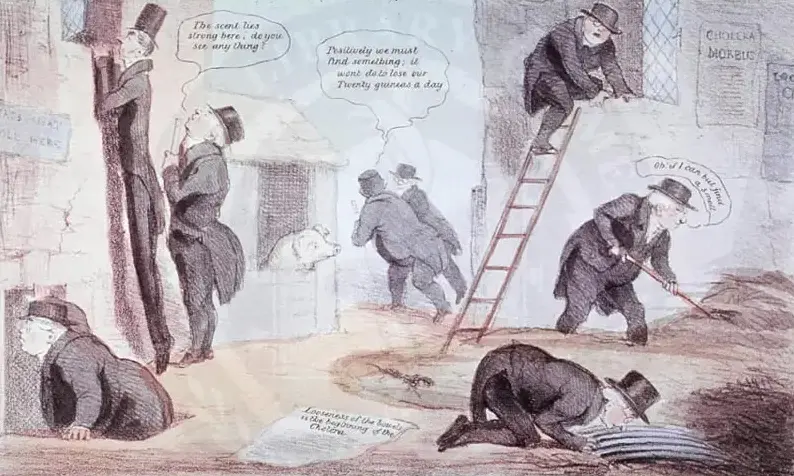
People everywhere were mystified as to the source of the disease. This cartoon depicts the London Board of Health in the United Kingdom looking everywhere, with no success (Image credit: Broadview Press).
The Creation of Cholera Sheds
During the 1832 crisis, the sick had mostly been left to die in their homes.
In the subsequent outbreaks, London turned to institutional segregation. The city erected temporary wooden structures, grimly known as “cholera sheds,” well away from the downtown core. Health inspectors removed cholera victims from overcrowded boarding houses and placed them into these isolated facilities. While this succeeded in separating the sick from the general population, the conditions inside the sheds were stark, and they primarily functioned as places for the destitute to die in isolation.
The Irony of the Clean-Up Efforts
Despite the increased organization, London’s efforts suffered from a tragic flaw. By aggressively flushing the streets and digging deeper drainage ditches to wash away “miasma-causing” waste, the city unintentionally accelerated the flow of human and animal filth directly into the local water table and the Thames River. Because residents still drew their drinking water from shallow wells right next to these drainage areas, the municipal cleaning campaigns inadvertently helped the waterborne bacteria spread even faster.
The Real Solution: Clean Water and Proper Sewers
It would take decades more before London finally conquered cholera, but the solution, when it came, was transformative. The establishment of a permanent full-time Provincial Board of Health in 1882 marked a turning point in public health administration. But the true victory came with the development of a centralized municipal water system and proper sewage treatment infrastructure in the later part of the century.
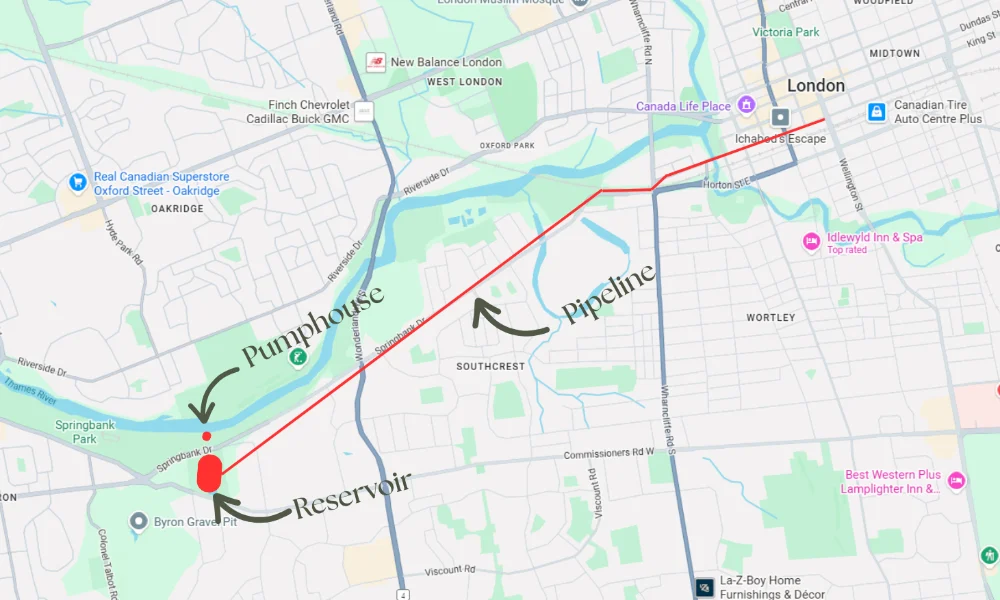
Map showing the 1878 Waterworks Plan to get water from the reservoir to London via a pipeline.
With clean, piped drinking water from the Springbank Reservoir, the city eliminated the shallow wells that had served as delivery systems for the bacteria. Adding proper sewers removed human waste from the immediate environment, preventing contamination of the water supply. These engineering marvels, combined with a growing understanding of disease transmission, finally broke the cycle of cholera outbreaks that had plagued London for decades.
A Legacy of Resilience
The story of London’s cholera outbreaks is a powerful reminder of how far we have come. It is a tale of a community that faced unimaginable tragedy and, through hard-won experience and civic determination, laid the groundwork for the modern, safe, and vibrant city we enjoy today. The next time you turn on your water faucet or stroll through Covent Garden Market, take a moment to remember the cholera outbreaks of 1832, 1849, and 1854. They are a part of our story, a testament to the resilience of Londoners, and a hidden layer of history waiting to be discovered.
The author, atop Reservoir Hill at the entrance to Reservoir Park, where millions of gallons of safe drinking water are stored. In 1878, this was the place where the city took its first steps to finally conquer the scourge of the Blue Death. (Photo credit: Lawrence Durham).
Hi there. I’m Lawrence, a bicycle tour guide, storyteller, and history nerd. I help curious folks like you discover the best parts of London, from a bicycle seat, of course. Stories like this one, of tragedy and triumph, are woven into the very streets we ride. If you want to experience some of these hidden gems, come on a bicycle tour with me. Click here to learn more! Your next adventure awaits.
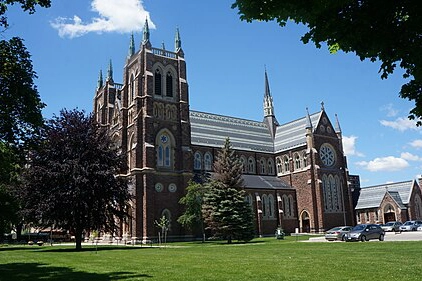
When you pass through downtown London, Ontario, one structure commands your attention the moment you turn onto Richmond Street. Rising high above the surrounding rooftops, the majestic twin towers of St. Peter’s Cathedral Basilica pierce the sky with an elegance that feels transported directly from medieval France. This isn’t just a church. It’s a centuries-old story carved in stone, glass, and faith.
For culture seekers visiting Southwestern Ontario, St. Peter’s stands as one of Canada’s most remarkable architectural treasures. Its 13th-century French Gothic Revival design, breathtaking stained glass, and fascinating history make it an absolute must-see destination. Let me take you on a journey through this extraordinary landmark.
A Cathedral Born from Ashes and Ambition
The story of St. Peter’s begins long before the soaring towers. In 1834, a small log church dedicated to St. Lawrence stood on the southwest corner of Dufferin and Richmond. It was humble, practical, and completely unassuming. But London had other plans.
Two devastating fires in 1845 and 1850 swept through the young settlement, claiming both the original log structure and its replacement. Undeterred, the Catholic community built a brick church in 1851. When the Diocese of London was established in 1856, this resilient parish was renamed St. Peter’s and elevated to cathedral status.
Later, in 1880, Bishop John Walsh commissioned Irish-born architect Joseph Connolly to design a structure befitting the growing diocese. Connolly, trained in Dublin’s architectural tradition and deeply committed to Gothic Revival purity, envisioned a building that would rival Europe’s great cathedrals. Construction began in July 1880, and on June 28, 1885, the magnificent stone cathedral was dedicated.
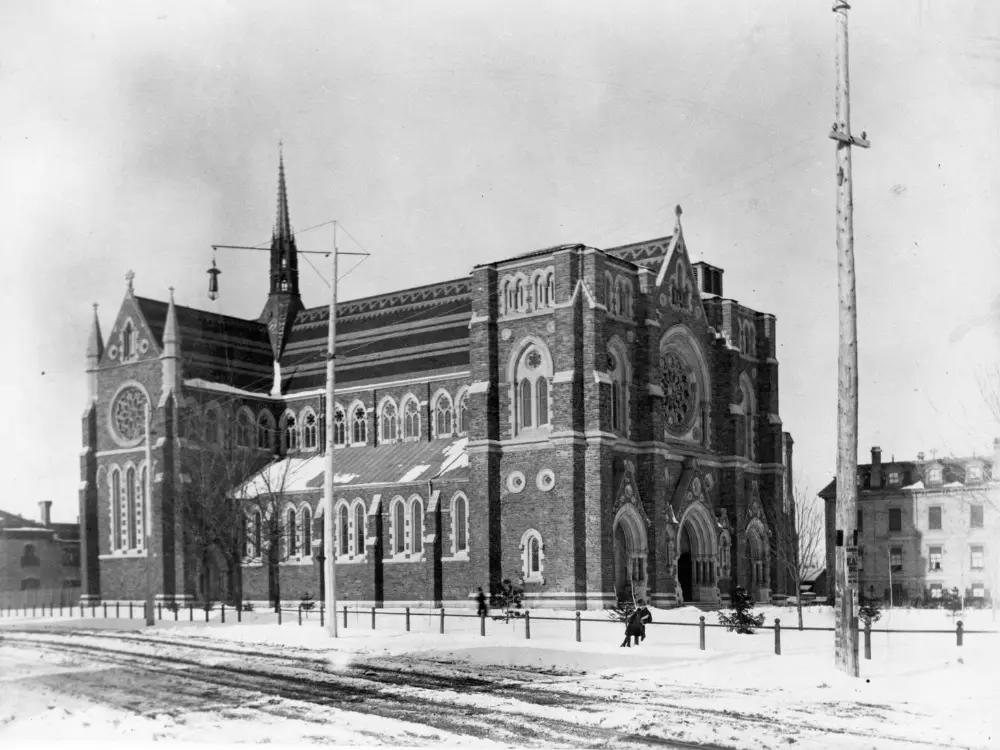
Notice the small brick church, built in 1851 (in the lower right side of the photo). To the left, the new, larger St Peter’s Cathedral was built, starting in 1880, behind the smaller building. (Source: Floyd B. Scott).
Pope John XXIII recognized the significance of the new, larger cathedral a century later, raising it to the status of a minor basilica in 1961.
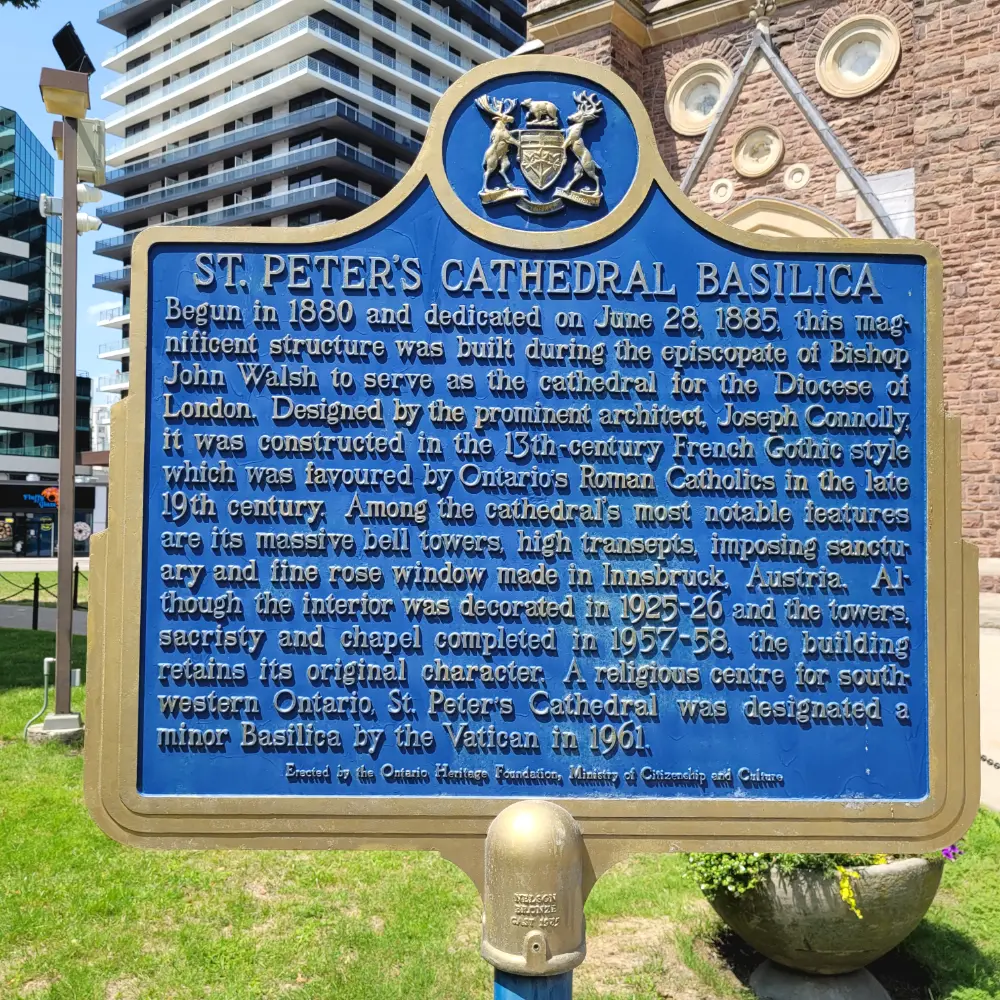
Historical Plaque. (Photo credit: Lawrence Durham).
Understanding The Terminology
For visitors unfamiliar with Catholic church terminology, it helps to understand the distinctions between churches, cathedrals, and basilicas.
A church is the base level. It is any official building where a Christian congregation gathers for public worship. Hundreds of thousands of churches exist worldwide.
A cathedral is the principal church of a diocese, serving as the official seat of the local bishop. The name comes from the cathedra, the bishop’s physical chair. There is generally only one cathedral per diocese, making St. Peter’s the sole cathedral of the Diocese of London.
A basilica is a church granted special ceremonial privileges by the Pope because of its historical, architectural, or spiritual importance. This is an honorary title rather than an administrative distinction. St. Peter’s holds the title of minor basilica. There are four “Major Basilicas” (all in Rome) and thousands of “Minor Basilicas” across the world (like St. Peter’s in London).
Thus, every cathedral and basilica is a church, but not every church is a cathedral or basilica. St. Peter’s is both, holding the bishop’s seat and the Pope’s honorary designation.
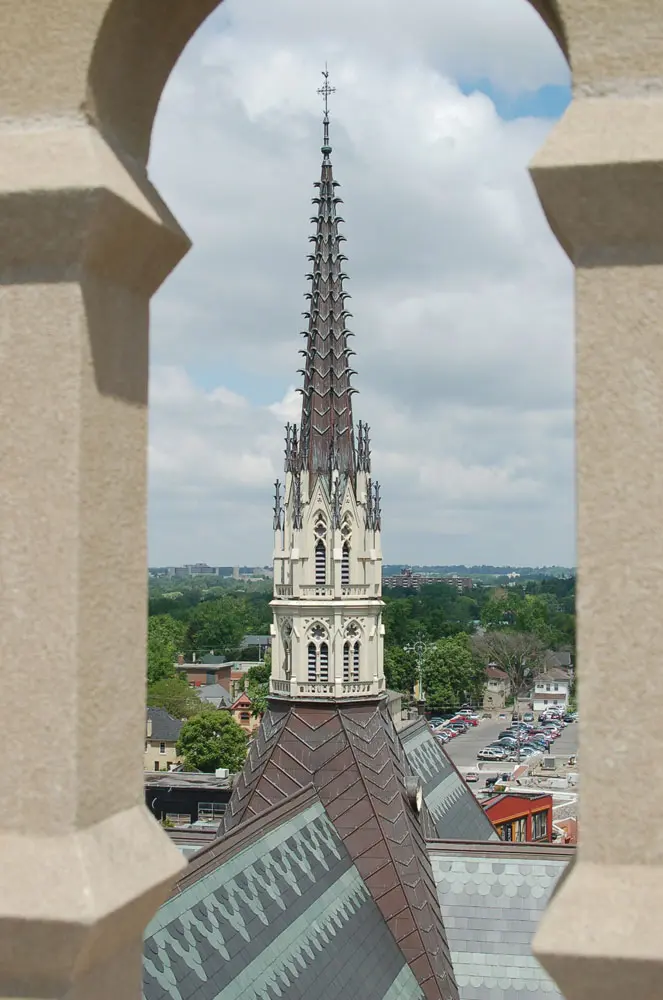
Looking northward, a stunning rooftop shot of the highly decorative spire. (Photo credit: JPM Architecture).
The Architecture: Europe in the Heart of London
Joseph Connolly designed St. Peter’s as an authentic interpretation of 13th-century French Gothic architecture. This was no mere imitation. Connolly studied the great cathedrals of Europe and incorporated their defining characteristics into every aspect of his design. In all, Connolly designed or remodelled upwards of 25 Roman Catholic churches and chapels in the French Gothic style in Ontario alone.
The Front Facade and Its Storytelling Stone
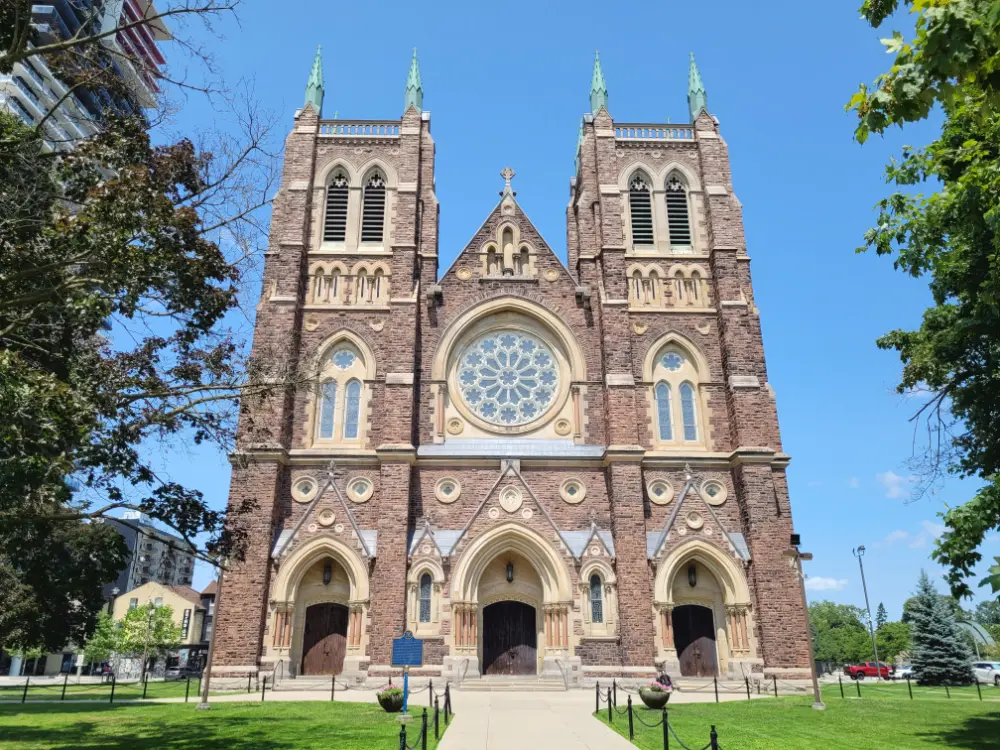
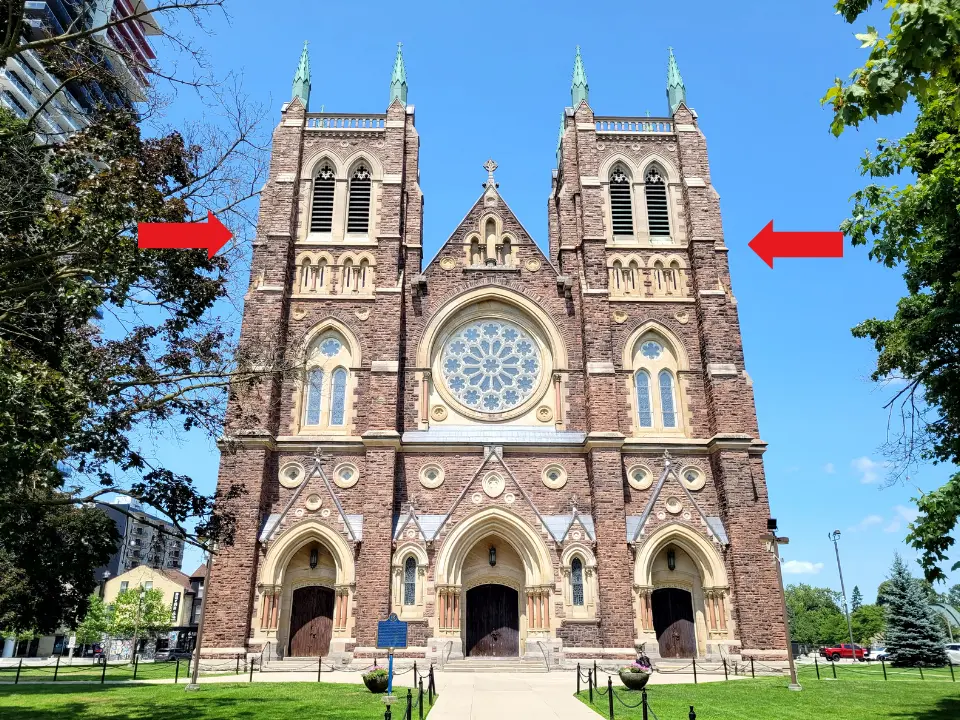
Approaching the cathedral from Dufferin Avenue, your eyes immediately travel upward. The massive front facade features a breathtaking rose window inspired by the French Rayonnant style, with radiating stone tracery that creates a stunning geometric pattern. Below, three arched entry doors mimic the pilgrimage cathedrals of Europe, where thousands of travellers once required separate entrances.
Three entrances, two towers, one impressive building. (Photo credit: Lawrence Durham).A closer look at the rose window. (Photo credit: Lawrence Durham)
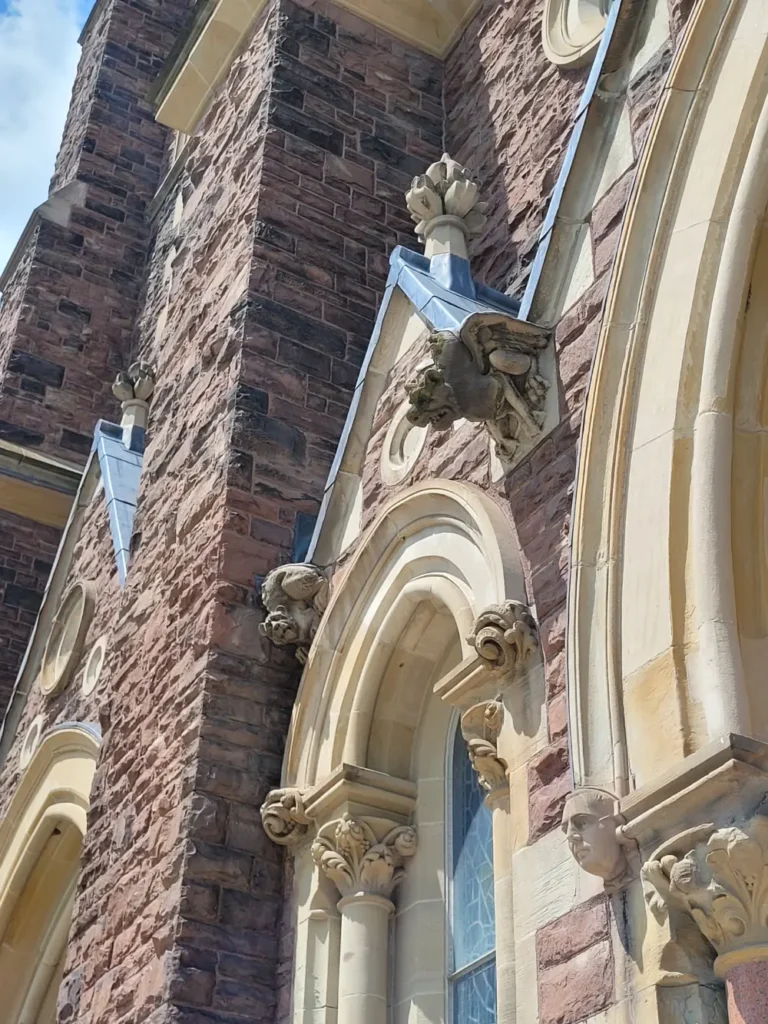
Now look closely at the stonework surrounding the doors. Grotesques and mythical beasts preside over them. These carvings serve a symbolic purpose rooted in medieval theology. They represent the evils of the outside world, demonstrating that chaos and darkness are banned from entering the sacred space within. For the largely illiterate congregations of medieval Europe, these figures acted as visual sermons. In London, they connect us directly to that ancient tradition.
There is a common misconception that these figures are gargoyles. They are technically grotesques. Gargoyles serve a functional purpose with open mouths that channel rainwater away from building foundations. The carvings at St. Peter’s are purely decorative or symbolic, making them grotesques in the architectural tradition.
Notice the two grotesques over the arch. (Photo credit: Lawrence Durham).
Engineering for Canadian Soil
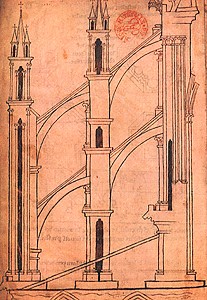
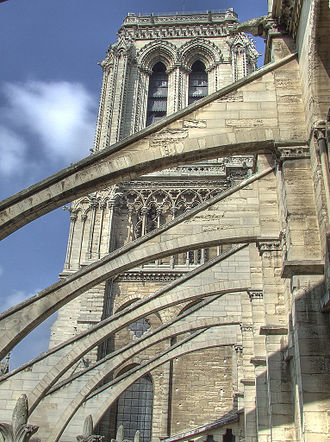
Connolly faced unique challenges adapting his European vision to Canadian conditions. In traditional French cathedrals, flying buttresses provide essential structural support.
Above left: Flying buttress of Reims Cathedral, France, construction started in 1211.
Above right: Flying buttress of Notre-Dame de Paris, construction started in 1163.
Understanding that London’s soil and construction budgets could not accommodate these elaborate exterior supports, Connolly made a pragmatic decision. He significantly thickened the structural exterior stone walls to redistribute the roof weight. This adaptation allowed the cathedral to stand firm without sacrificing its Gothic character.
The Bishops Who Guard the Door
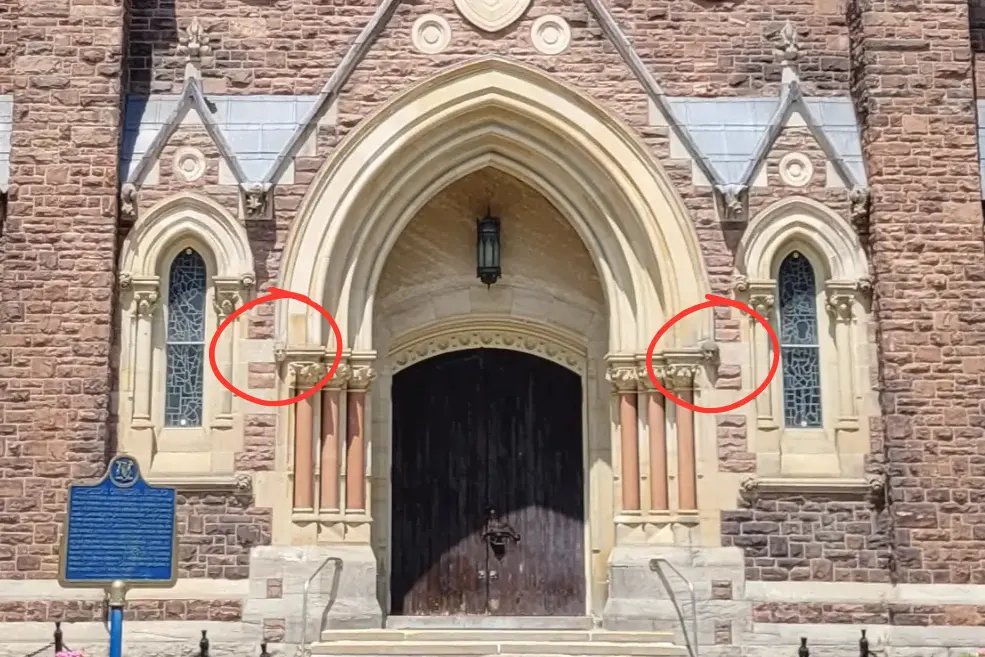
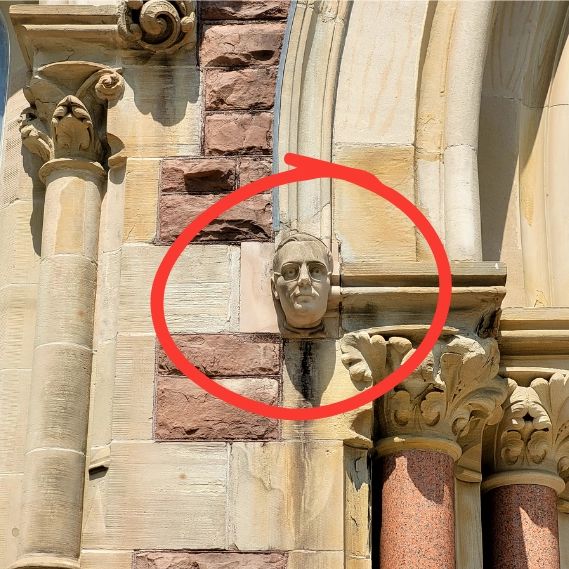
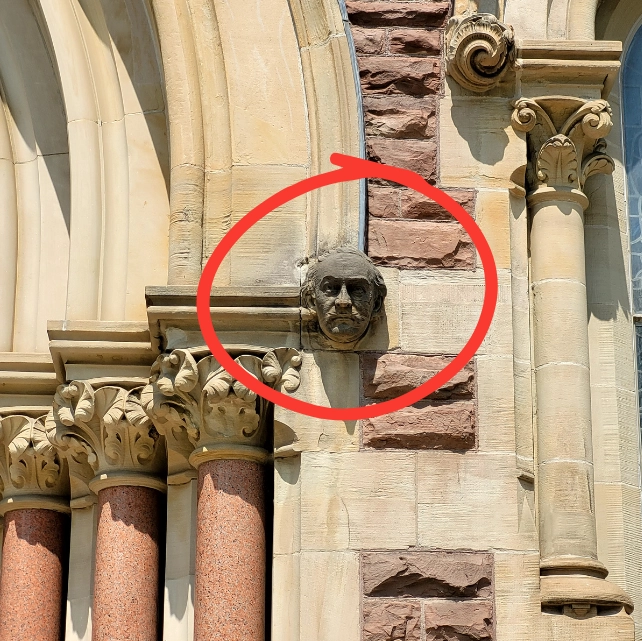
Flanking the main entrance are stone images honouring the two bishops who contributed so much to the building of this cathedral. On the right is Bishop John Walsh, who commissioned architect Joseph Connolly to design the cathedral and raised the funds necessary to construct the original cathedral in 1880. On the left is Bishop John Cody, under whose leadership the cathedral was completed in 1957.
These two figures are carved from the same regional limestone as the cathedral itself. Skilled artisans placed them in protective Gothic stone niches, ensuring that the guardians of the diocese greet every visitor who crosses the threshold.
Above: two bishops, circled in red, guard the front doorway. For close-up photos, see below. (Photo credit: Lawrence Durham).
Close-up photos: Bishop John Cody on the left, Bishop John Walsh on the right. (Photo credit: Lawrence Durham).
The 72-Year Wait for the Towers
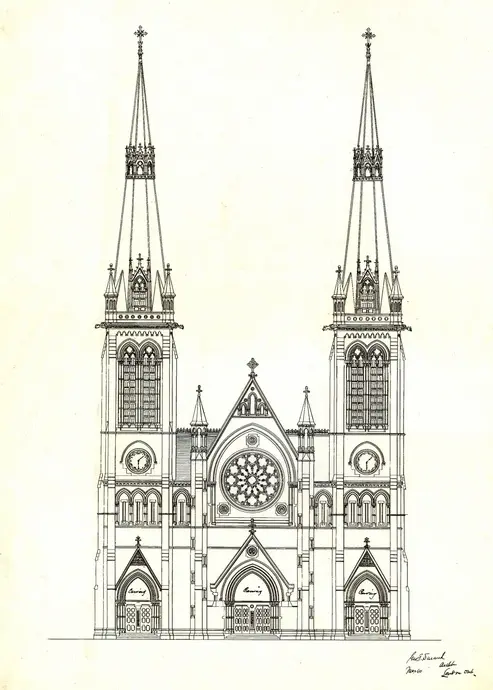
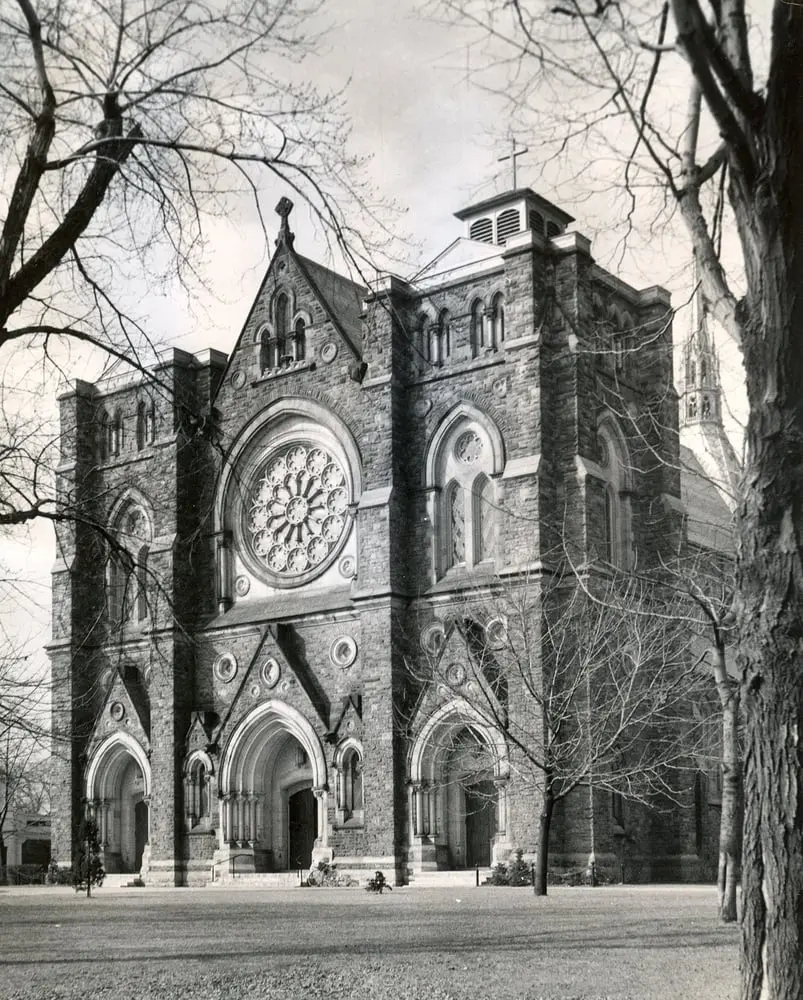
One of the most remarkable stories in the basilica’s history explains why the cathedral lacked its iconic towers for 72 years. When Connolly designed St. Peter’s in 1880, he included towering stone spires that would rival those of European cathedrals. However, the original construction stopped at the roofline, leaving the towers unfinished until 1957, seven decades later.
Illustration top left: Proposed architectural drawings for St Peter’s Cathedral in 1880 included two tall spires. (Source: Diocese of London).
Photo top right: The Cathedral Basilica without towers, 1956. (Photo credit: Diocese of London).
The primary obstacle was geological. Downtown London’s high water table made the soil unstable. Builders quickly realized that the immense, concentrated weight of stone towers on the existing foundation would cause the front of the cathedral to sink or crack. Without modern engineering capabilities, the diocese had no choice but to halt construction.
Economic factors further delayed completion. World War I, the Great Depression, and World War II made major construction projects entirely unfeasible. When the diocese did have capital to spend, leadership prioritized education. In 1912, Bishop Michael Francis Fallon founded St. Peter’s Seminary, and financing its grand campus in 1926, north of London, consumed building funds for over a decade.
Finally, in the mid-1950s, Bishop John Cody possessed both the modern engineering capabilities and the financial backing to resolve the unfinished facade.
1957 Construction Techniques
To safely accommodate the downtown water table, the final 1957 spires were modified from Connolly’s original plan. They were built significantly shorter and lighter, ensuring the building’s structural integrity while preserving its visual impact.
Engineers used innovative techniques to anchor the towers. Rather than relying on the original brick-and-stone foundation, they excavated deeply around the front facade and poured a massive, steel-reinforced concrete footing system designed to distribute weight outward. Hidden inside the masonry, a rigid skeleton of structural steel beams bears the load of the twelve Dutch-cast bells now in the belfries and channels their vibrations directly into the concrete foundation.
This project remains a masterclass in mid-century heritage engineering, balancing modern structural mechanics with strict historical preservation.
The St. Thomas Post Office Connection
In a unique historical twist, the diocese acquired hand-cut limestone from the recently demolished historic post office in St. Thomas, Ontario, in April 1957. This salvaged stone proved invaluable.
The primary reason for the flawless match was geological. Both the 1880s cathedral stone and the St. Thomas stone were quarried from the exact same regional formations of Ohio and Canadian limestone. The base density, grain structure, and mineral composition were identical.
To ensure the salvaged stone blended with the 19th-century facade, stonemasons set up a dedicated workshop beside the basilica. Every block was individually hand-dressed using traditional chisels and hammers. They carefully sorted the salvaged blocks by tone and coloration, using the most weathered pieces at the seams where the new construction met the original 1885 roofline. This meticulous craftsmanship hid the transition seamlessly.
The red arrows on either side of the cathedral point to where the original stones (below the arrows) blend seamlessly with the stone from the St Thomas Post Office (above the arrows). (Photo credit: Lawrence Durham).
The Bells That Ring Through Time
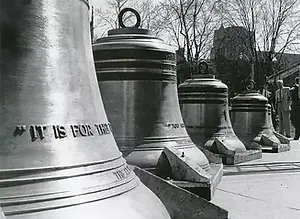
The towers now house an extraordinary set of twelve musical bells, each dedicated to one of the twelve apostles. Cast in Aarle-Rixtel, Netherlands, by the historic Petit & Fritsen Bell Foundry, these bells were officially dedicated on May 15, 1958.
Although the weight of each bell at St Peter’s is not specified, in a multi-bell tower the smallest “treble” bells typically weigh 150 to 500 lbs, while the largest “tenor” bells frequently weigh 2,000 to 4,000 lbs. (Photo credit: London North Central Catholic Family of Parishes).
The bells chime automatically on the quarter-hour and peal continuously for weddings and major liturgies. The rhythmic ringing that fills downtown London connects the modern city to centuries of European cathedral tradition.
The tolling of the bells at 3 pm.
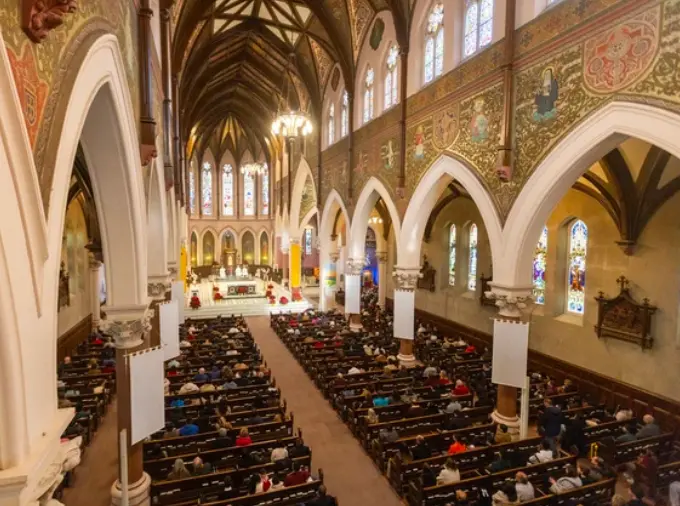
The Interior: A Gallery of Sacred Art
Step inside the cathedral, and you enter a world of breathtaking beauty. The interior rivals the exterior in its artistic and architectural significance.
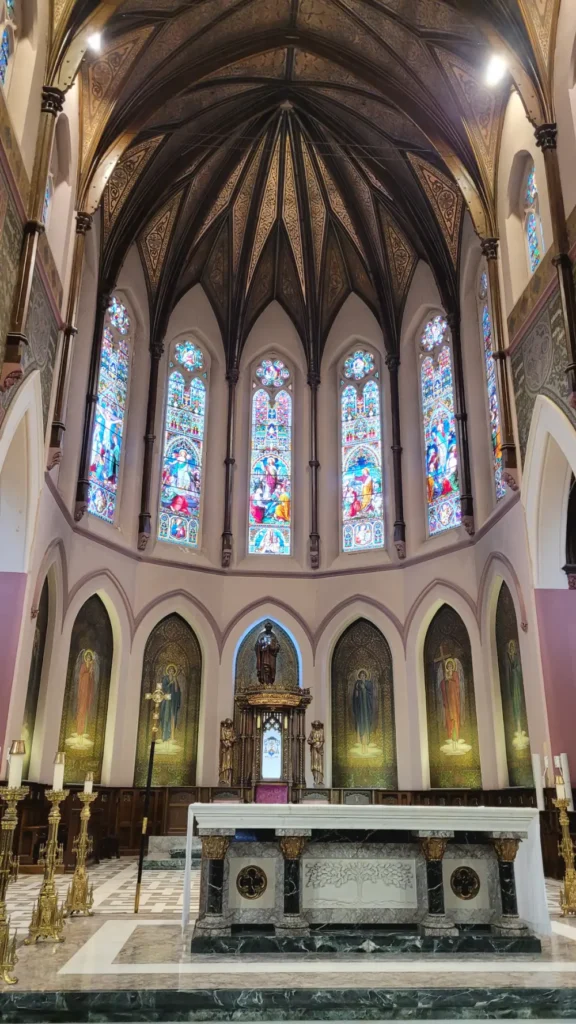
The spectacular stained-glass windows lining the nave, sanctuary, and the massive front rose window were manufactured in Innsbruck, Austria, by the famous Tyrol Art Glass Company. Installed in 1889, four years after the cathedral’s dedication, these windows represent some of the finest ecclesiastical glass in Canada.
The Tyrol studio specialized in a distinct late-19th-century European style characterized by vivid, highly saturated colors and lifelike religious figures. The lancet windows depict biblical narratives, Catholic dogmas such as the Immaculate Conception, and detailed portraits of saints.
When you visit on a sunny afternoon, these windows cast ethereal colored beams across the central aisle, creating the classic “Gothic glow” that medieval architects intended.
The altar, beneath stained glass windows designed by artisans from Austria. (Photo credit: Lawrence Durham)
The Casavant Pipe Organ
The powerful music filling the vaulted nave comes from a custom-built instrument crafted by Casavant Frères of Saint-Hyacinthe, Quebec. Casavant is universally recognized among the world’s finest organ builders.
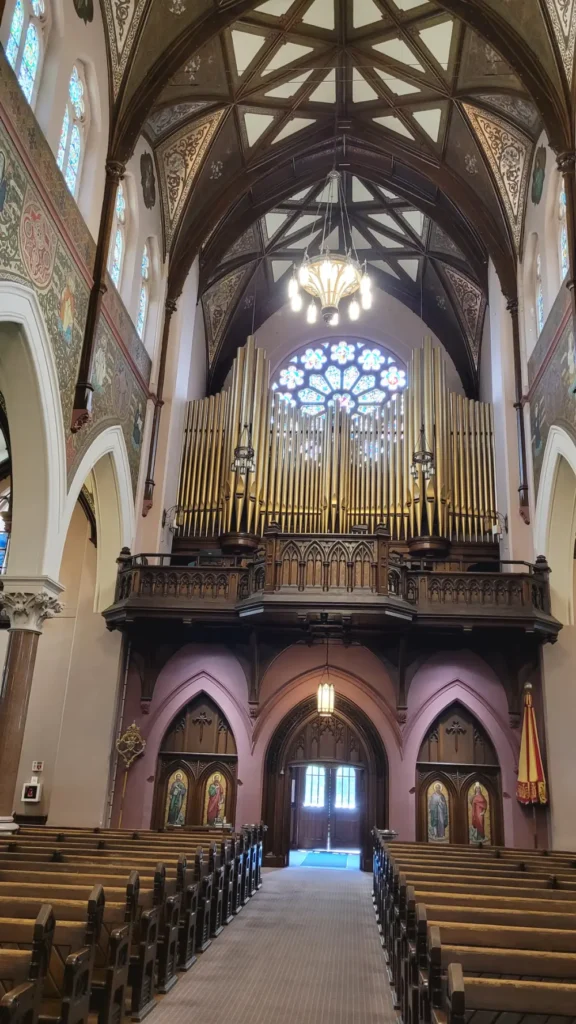
The cathedral houses two interconnected organs built under Opus 1135 in 1926. The main Gallery Organ sits in the rear choir loft, while a smaller Chancel Organ is located near the altar. Both can be played simultaneously from a massive, four-manual main console in the gallery, or from a smaller two-manual console in the sanctuary.
With over 3,000 individual pipes (3,869 to be exact) ranging from tiny metal tubes to massive wooden pipes creating deep, floor-shaking bass tones, this instrument is a marvel of craftsmanship. When the twin towers were completed in 1958, the organ console was uniquely wired to the bells, allowing the organist to play the tower bells directly from the keyboard.
The magnificent Casavant Pipe Organ with almost 4,000 individual pipes. (Photo credit: Lawrence Durham)
The Hand-Carved Stations of the Cross
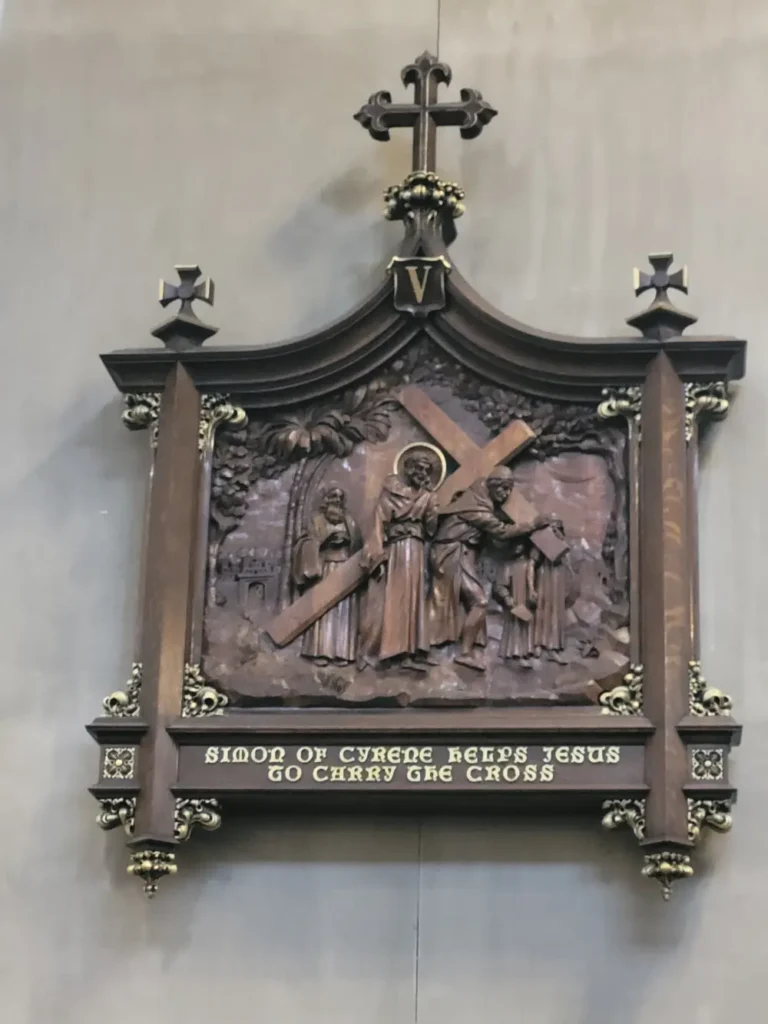
Hanging along the east and west walls of the nave are fourteen deeply detailed, three-dimensional reliefs depicting the trial and crucifixion of Jesus. These stations were hand-carved in Oberammergau, Germany, a Bavarian alpine village renowned since the Middle Ages for its master woodcarvers and historic Passion Play.
The carvers used high-grade Bavarian Lindenwood, prized for its fine, tight grain that allows for incredibly sharp detailing without splitting. The figures are sculpted in high relief, almost completely detaching from the background to create lifelike shadows and detailed folds in the carved clothing.
Installed during a major interior beautification campaign in the 1920s, these wooden masterpieces replaced the church’s original flat plaster stations, better matching Connolly’s grand Gothic design.
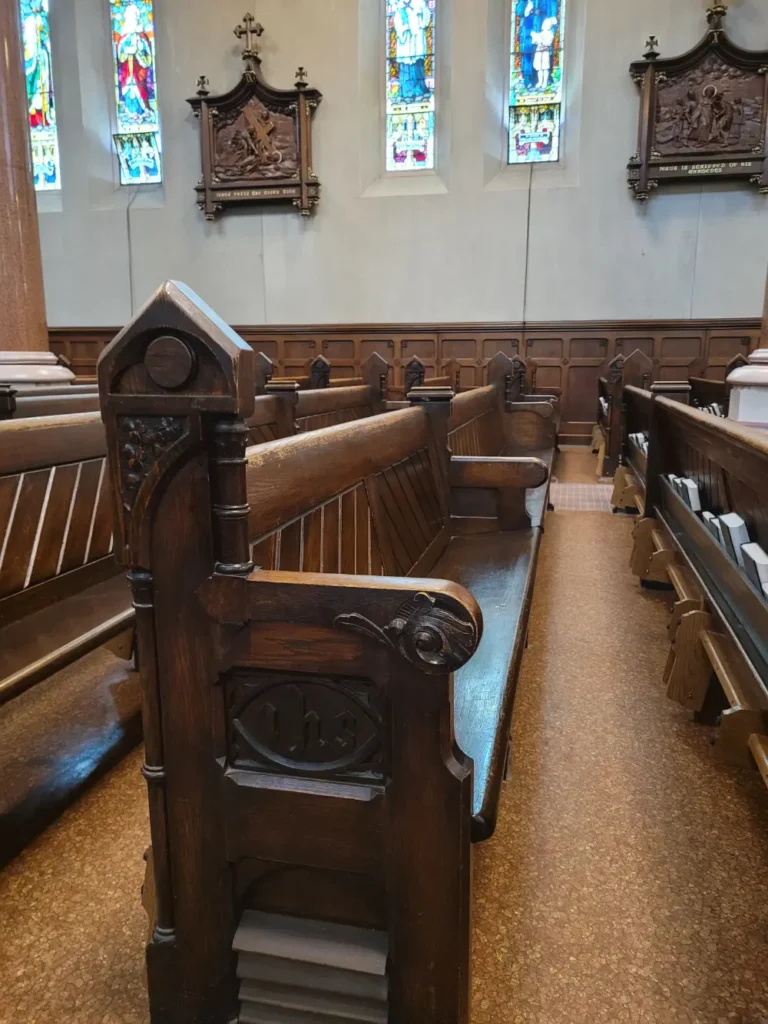
Bavarian hand-carved Stations of the Cross. (Photo credit: Lawrence Durham)Hand-carved oak pews complement the hand-carved Stations of the Cross. (Photo credit: Lawrence Durham)
The Current Restoration: Preserving History
In June 2026, an ambitious multi-year interior restoration project officially launched. Led by local heritage specialists a+LiNK Architecture Inc., this floor-to-ceiling overhaul will address decades of wear and aging structural materials.
The estimated budget is $750,000. The complete interior restoration is expected to span three to five years.
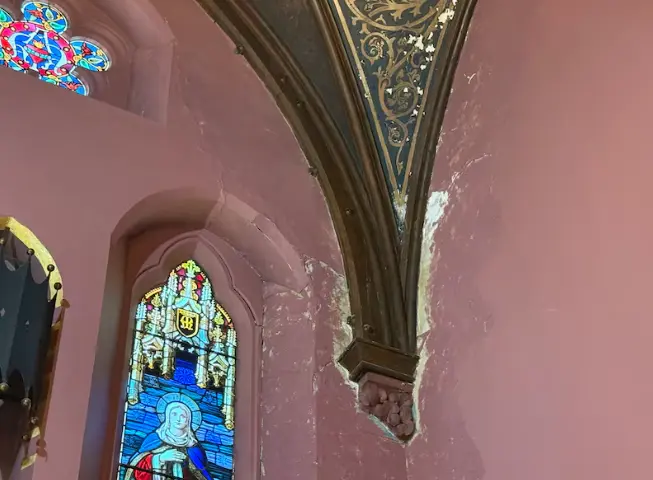
Significant water damage is visible on the ceilings and columns. (Photo credit: Jack Sutton/CBC).Looking up, some of the wall fractures are visible. (Photo credit: Jack Sutton/CBC).
What the Restoration Entails
Among the work being done
Structural Repairs: Investigators are stabilizing significant wall fractures and reversing severe water damage found on upper ceilings and columns.
Aesthetic Transformations: The 1980s-era rose pink walls are being replaced with a historic, neutral cream color that will dramatically alter the interior atmosphere.
Stone and Wood Uncovering: Restorers are carefully removing layers of old paint from columns to expose the original natural stone underneath.
Fine Art Conservation: Century-old frescoes and delicate murals installed in the 1920s are being cleaned and preserved. Specialized art restorers work atop massive rolling scaffolding directly under the vault, methodically testing chemical solutions to strip away yellowed soot and grime while preserving the original paint.
Infrastructure Upgrades: Electrical systems are being updated, window frames refinished, historical pews restored, and interior lighting renewed.
Because of the rare architectural features, specialized heritage craftspeople, plaster restorers, and fresco conservators are being brought in from across the country.
Put St. Peter’s On Your “Must-See” List
Whether you come to admire the architecture, appreciate the art, or simply experience a moment of peace, St. Peter’s is a place where medieval Europe meets modern Canada, where stone and glass tell stories of faith, and where visitors can connect with something both ancient and enduring. This is a place you won’t want to miss.
The author, standing in front of St Peter’s. (Photo credit: Lawrence Durham)
Hi. I’m Lawrence, a bicycle tour guide, storyteller, and proud Londoner. I help curious folks discover the best parts of our city, from the seat of a bicycle, of course. If you’d like to experience these hidden gems up close and personal, join me for a tour. Small groups, local stories, and plenty of laughs. Click here to learn more!
If you only know London by its quiet tree-lined streets and thriving food scene, you might never guess that this city once thundered with the boots of British regulars, the rumble of tank training, and the tearful goodbyes of tens of thousands of soldiers heading off to war.
For nearly 200 years, London was one of Canada’s most important military centres, not because of battles fought here, but because of battles launched from here.
Today, the military presence is quieter. But if you know where to look, from a bicycle saddle, no less, the evidence of London’s martial past is carved into its parks, barracks, and boulevards.
So let’s take a ride through time. Here’s how London grew from a British militia outpost into a national military heavyweight, and why that legacy is still worth celebrating today.
The Seed (1826–1837): A Town Built for Defence
Before London was a city, it was a strategic bet.
When London was founded in 1826, it was chosen for a reason. It wasn’t just picturesque; it was defensible. Situated inland, far from the threat of an American invasion, the original town plan featured unusually wide streets so that troops and artillery could manoeuvre. The Crown also set aside “King’s Reserves” – military land that would prove crucial later.
At this point, defence was strictly a British affair. There was no “Canadian military” yet. But London’s bones were already being built for one.
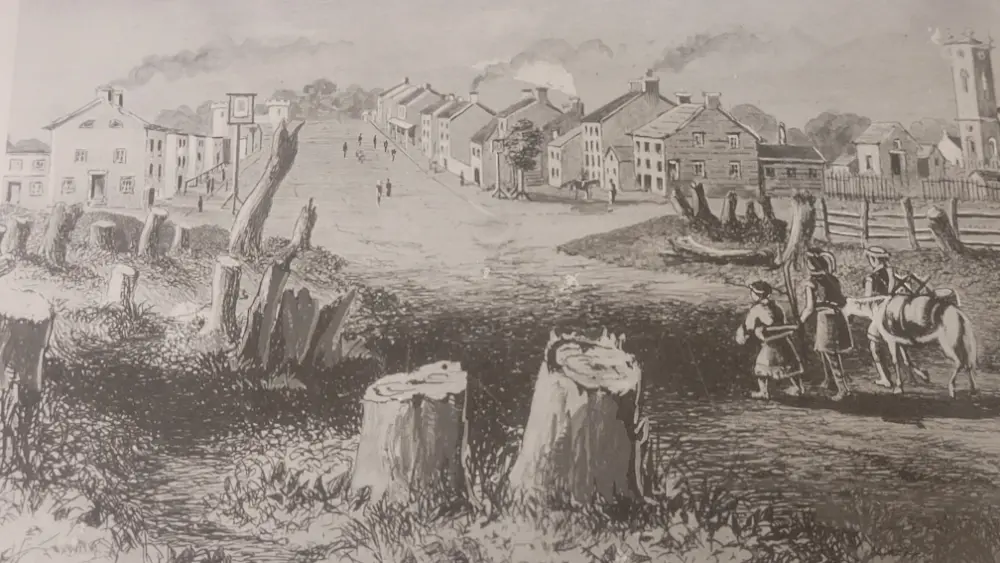
Looking west along Dundas Street from Wellington Street in 1842. At the time, London was a frontier community of tree stumps and mainly wooden buildings. (From a painting by Lady Eveline-Marie Mitchell Alexander, courtesy of the 1999 Orr Collection at Museum London).
The Wake-Up Call (1837–1838)
London’s first real military test didn’t come from a foreign country. Instead, discontent was more local.
In December 1837, just outside London, a local reformer named Dr. Charles Duncombe gathered nearly 400 armed farmers. Their goal: march on the capital of Upper Canada, in support of William Lyon Mackenzie’s rebellion in Toronto.
The Battle of Montgomery’s Tavern was fought in Toronto on Dec 7, 1837. (Illustration by an Unknown artist, Canadian Military Heritage, Department of Defence. via Wikipedia).
However, enthusiasm for the uprising fizzled after Duncombe heard of Mackenzie’s defeat in the capital. When government forces approached Duncombe and his group near Hamilton, the rebels scattered without a single shot being fired. Duncombe and others fled to the USA.
But the aftermath for London was profound. The British Army decided it needed a permanent garrison in the frontier town.
“London was so thickly beset with disaffected Americans during the rebellion, that it was deemed necessary…to station this force in the heart of the district…”
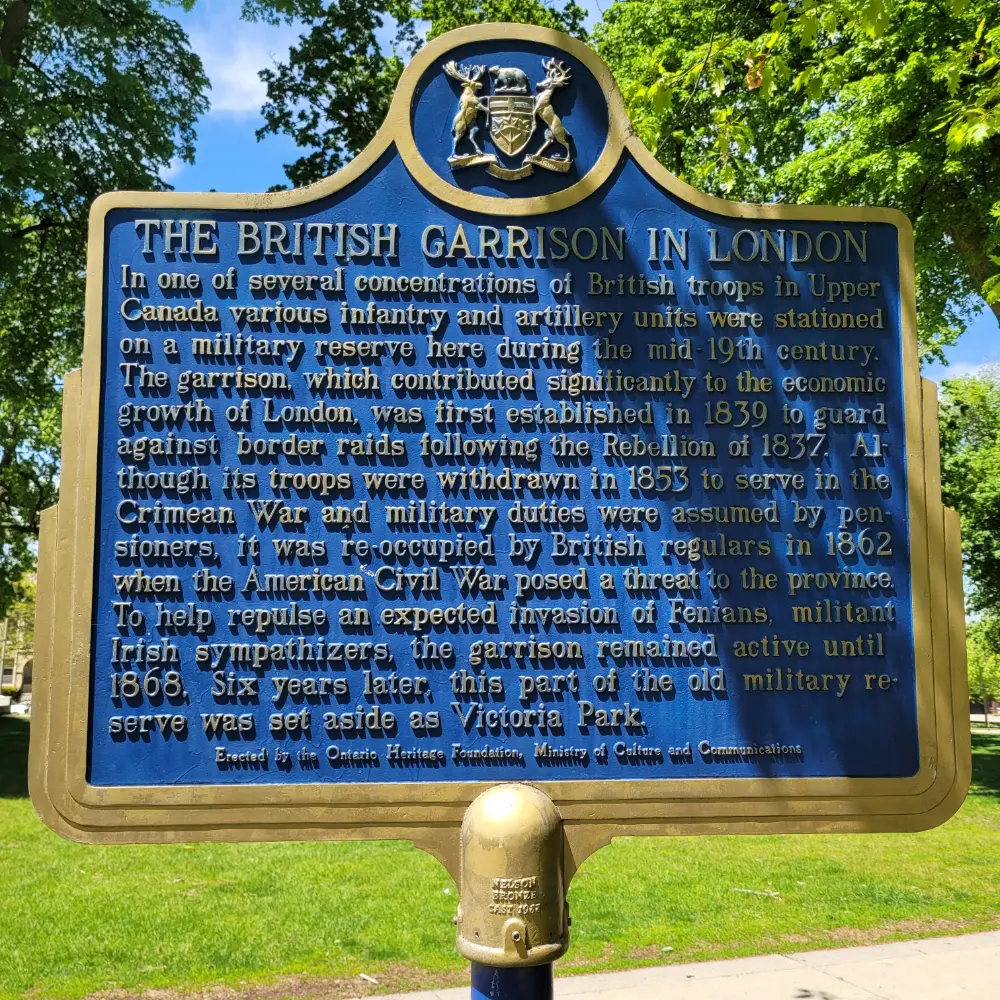
For the next 15 years (1838–1853), British regulars were stationed where Victoria Park now stands.
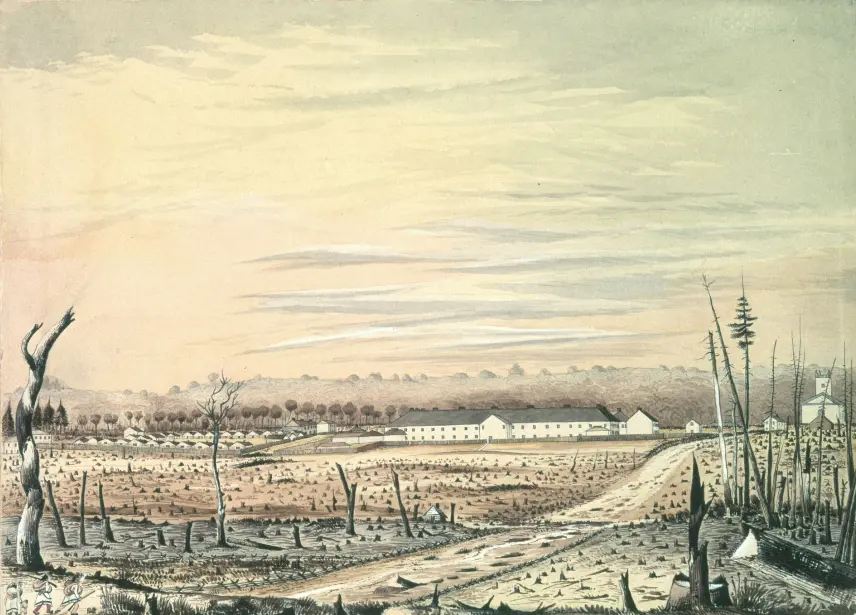
Barracks at London, Canada West, May 1842. The infusion of so many soldiers into the town gave London an economic boost and provided peace and security to the entire region. (Painting by Henry Ainslie, Library and Archives Canada).
The Birth of Canada’s Own Military (1855)
When the Crimean War pulled British troops to Europe from 1853 until 1861, London’s garrison of soldiers disappeared. Rather than leaving Canada defenceless, the Province of Canada passed the Militia Act of 1855, the true birth certificate of the Canadian Army.
Local volunteers stepped up. By 1866, London had formed the 7th Battalion Infantry, the direct ancestor of today’s famed Royal Canadian Regiment (The RCR). For the first time, Londoners were defending Canadian soil under a Canadian command.
Between 1866 and 1871, the American-based Fenian Brotherhood hoped to secure Ireland’s independence from Britain by capturing Canada.
British and Canadian officials, monitoring Fenian activity, deployed military forces to Sarnia, Windsor, and the Niagara Peninsula to engage the Fenians.
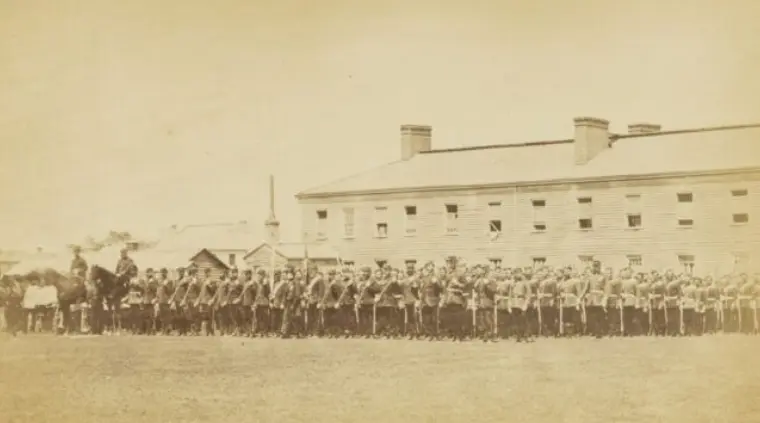
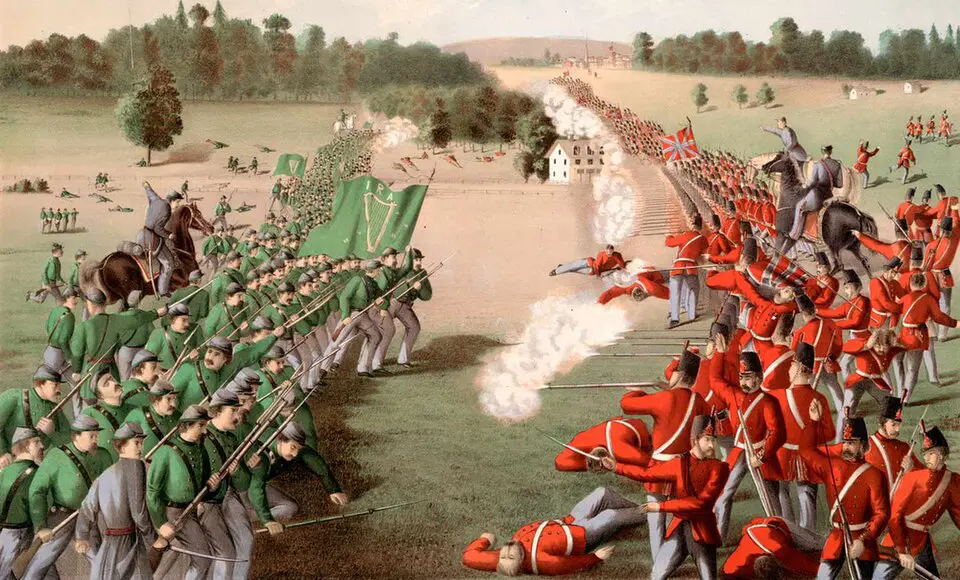
Members of the 7th Battalion Infantry, 1866. (Photo credit: H.J. Cleeve/ Museum London).The Fenians defeated a small Canadian force at the Battle of Ridgeway (near Fort Erie across the Niagara River from Buffalo, New York) in June 1866. However, all subsequent Fenian raids failed. (Source: Library and Archives Canada).
London Becomes a Military Hub (1886–1918)
After Canada became a separate Dominion in 1867 and the Fenian threat was eliminated in 1871, the British military left Canada for good.
This is where London’s military reputation exploded.
Wolseley Barracks (1886) – Canada’s First Permanent Base
In 1886, the federal government built Wolseley Barracks on Oxford Street – one of Canada’s first permanent military installations. It was a game-changer. London was no longer just a militia town; it was a garrison town with full-time professional soldiers.
The RCR was born here in all but name, and Wolseley Barracks became the heartbeat of military life in Southwestern Ontario.
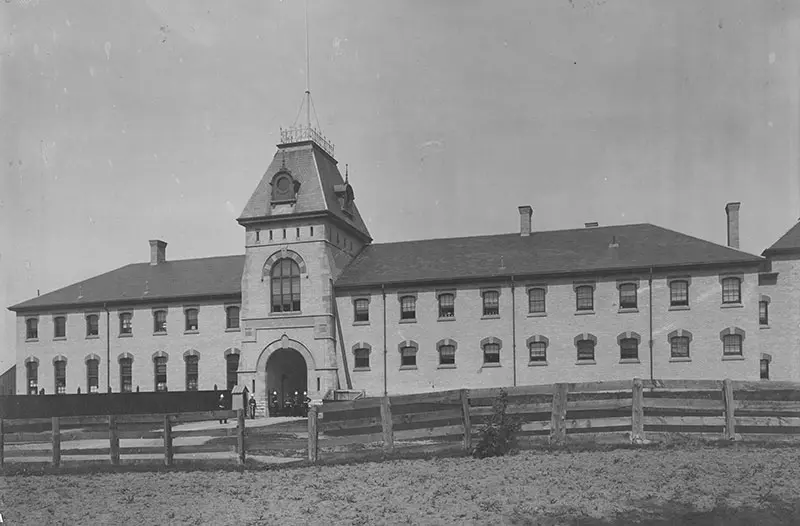
Wolseley Barracks (built in 1886) was home to Canada’s first infantry regiment within the nation’s permanent forces. (Photo credit: National Historic Sites of Canada).
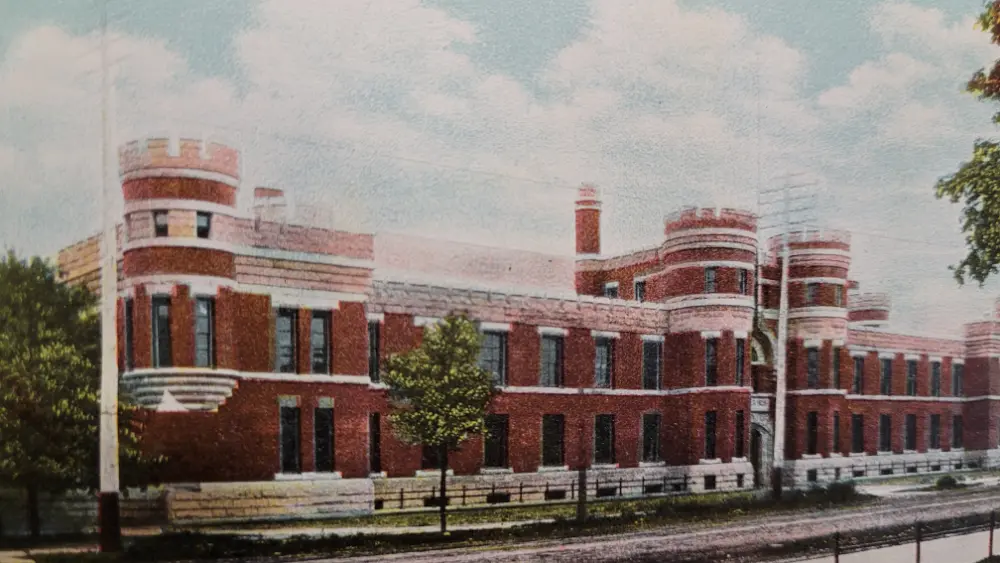
In addition to the regular forces at the Wolseley Barracks, a healthy reserve force was also built up at the London Armoury on Dundas Street.
The London Armoury on Dundas Street (built in 1905) served as the training centre for reservists. (Photo credit: London Post Card Collection, Box #97, Album #1, p. 3, pocket 2, Ivey Family London Room, London Public Library, London, Ontario, Canada).
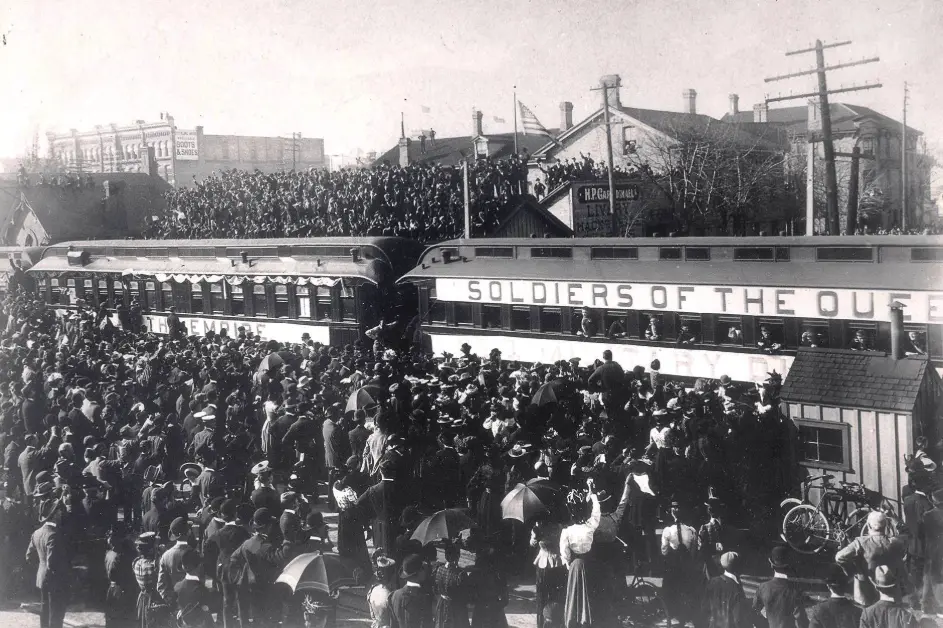
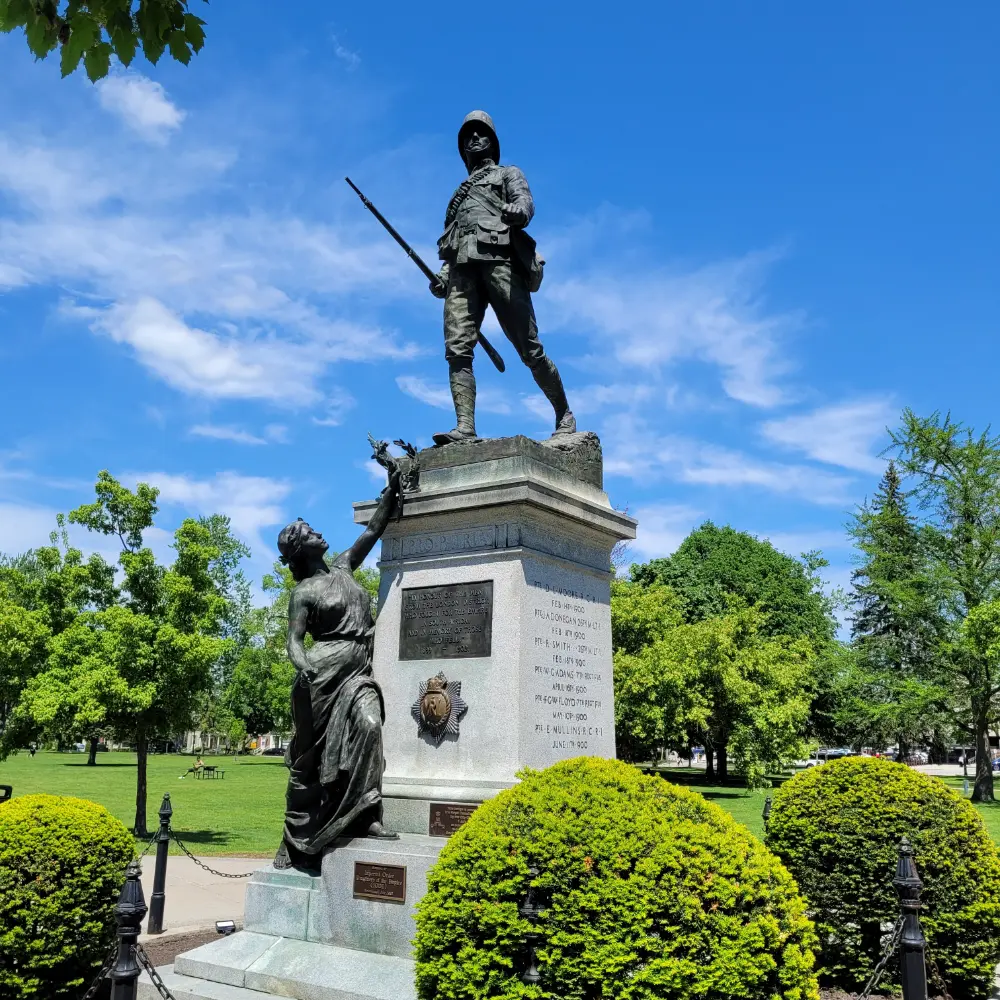
When Great Britain went to war with the Boer Republic in South Africa, many English Canadians enlisted in the army, believing it was their duty to support the Mother Country. Many also hoped for adventure and an escape from humdrum lives.
On the home front, Londoners supported the troops, harnessed economic opportunities the war presented, and mourned their dead.
On Oct 25, 1899, the train platform in London was packed from end to end as Canadian Prime Minister Wilfrid Laurier addressed volunteer soldiers leaving to fight in Great Britain’s South African Boer War. (Photo credit: Museum London).
World War I – Carling Heights Camp
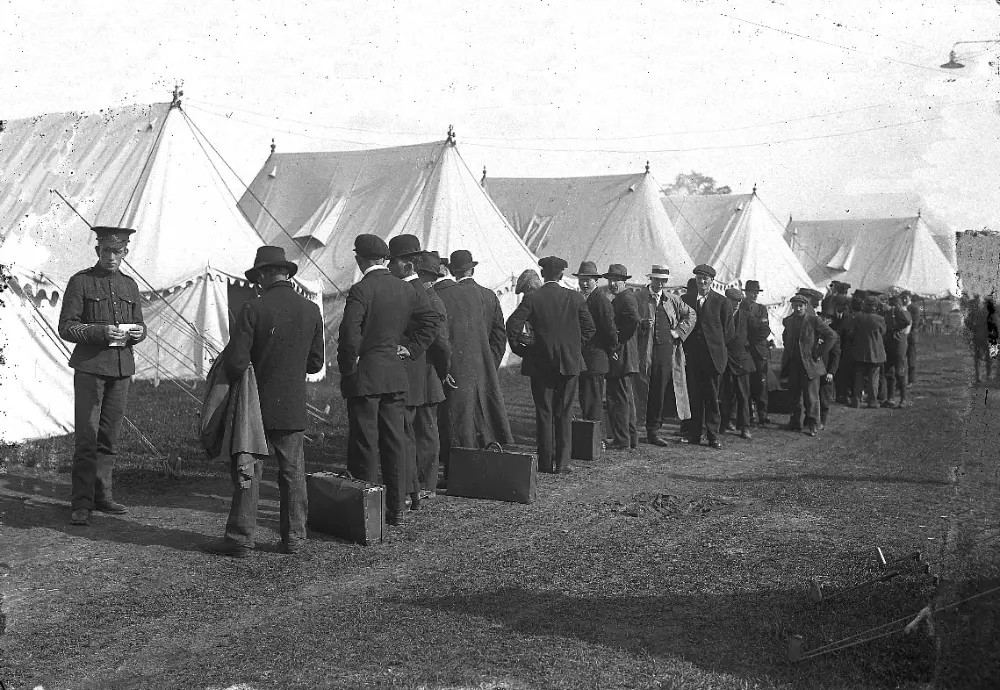
During the Great War of 1914 to 1918, London was transformed into a giant training camp. Fields near the Western Fairgrounds and along Oxford Street became tent cities, where over 30,000 soldiers trained before shipping overseas. It’s hard to imagine today, but the area once echoed with drill sergeants and marching battalions.
London’s hospitals, Victoria and St. Joseph’s, became military wards. Local factories switched to war production. The entire city mobilized.
Recruits line up at the training camp at the Carling Heights Camp on Oxford Street, c. 1915. (Photo credit: Hines Studio Collection, Archives and Special Collections, Western University, London, Ontario).
London Military at Its Peak (1939–1945)
World War II was London’s finest military hour, and its heaviest lift.
Over 100,000 soldiers were processed through No. 1 District Depot at Wolseley Barracks.
1st Hussars (London’s own armoured regiment) landed in Normandy just after D-Day. A London tank named the Holy Roller was the first Allied tank to enter Brussels.
The Royal Canadian Regiment fought through Sicily, Italy, and the Netherlands, earning 26 battle honours.
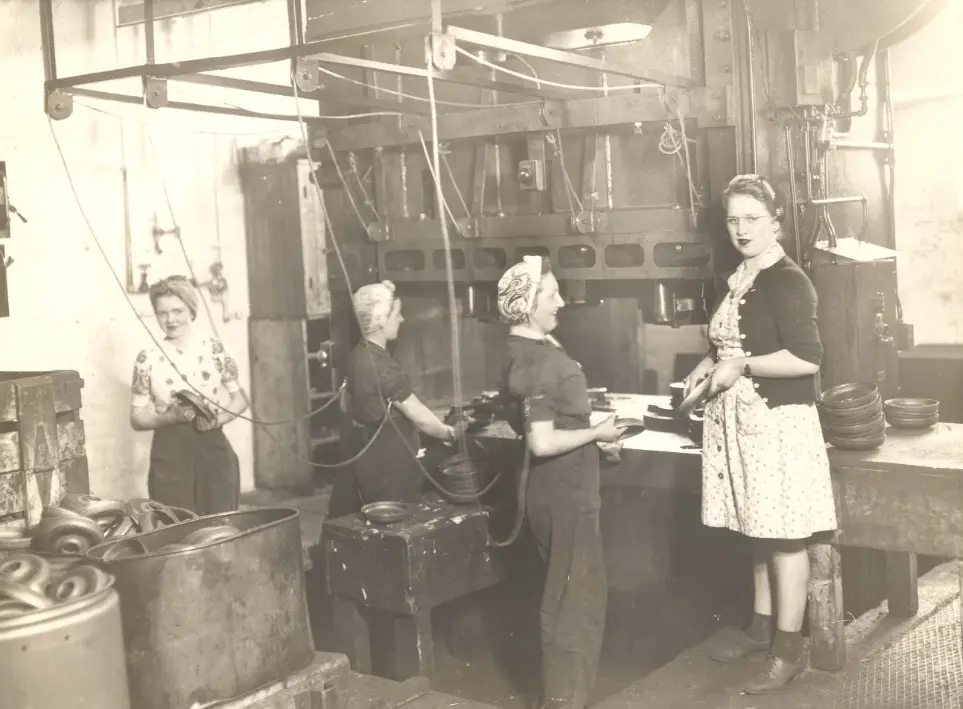
London’s factories were retooled for war. The city didn’t just support the war effort. It was the war effort in miniature.
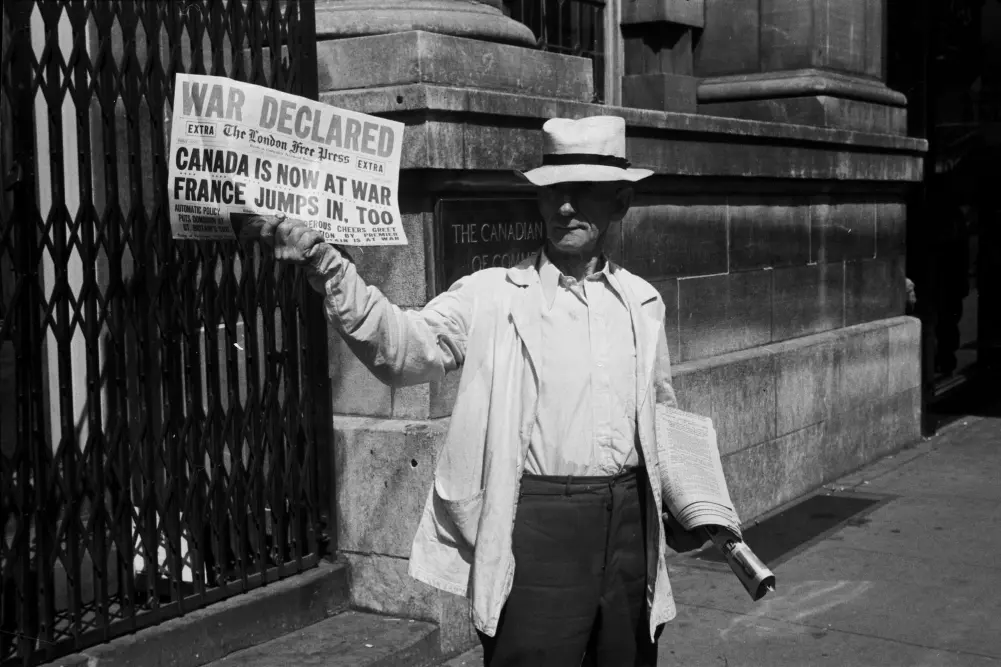
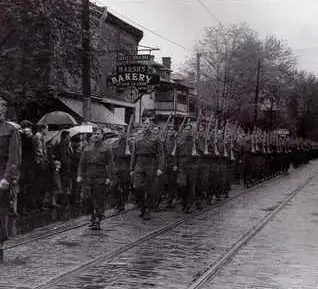
Canada declares war on Germany, Sept 10, 1939. (Photo credit: Archives and Special Collections, Western University).Soldiers marching down Dundas Street in Old East Village in 1940. (Photo credit: Archives and Special Collections, Western University).In the 1940s, women flocked to London’s factories to produce war materials the Allies needed to fight. Like other factories in the city, McClary Manufacturing Company adapted their product lines to serve the war effort, in their case, switching from producing cast iron cooking stoves to stamping plates for depth charges. (Photo credit: Gift of Helen Cox/ Museum London).
The Human Side
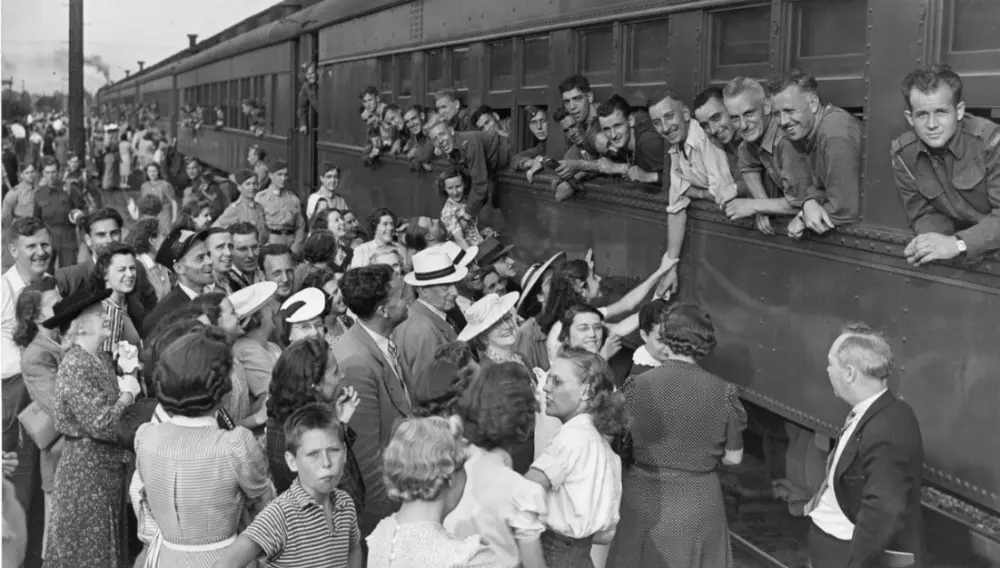
Nearly every family in London had someone in uniform. The city’s armouries and fairgrounds were packed with fresh recruits. And at the train stations, crowds gathered to wave goodbye, often for the last time.
Soldiers, families, and well-wishers saying their final goodbyes at a London train station. (Photo credit: Ivey Family London Room, London Public Library, London, Ontario, Canada).
The Long Plateau (1945–1994)
After WWII, most Canadian cities saw their military presence shrink. In contrast, London’s military presence stayed big.
CFB London
Wolseley Barracks was upgraded into Canadian Forces Base (CFB) London, a major training centre for infantry, small arms, and logistics. The 1st Battalion of The RCR was based here. Soldiers from across Canada came to London to learn how to fight.
For decades, London was one of the most important military towns in the country, second only to places like Petawawa or Halifax.
Peacekeeping and the Korean War
London soldiers served in Korea, Cyprus, the Golan Heights, and the former Yugoslavia. The city’s military wasn’t just training – it was actively keeping peace around the world.
The Slow Shift (1994–Present)
In 1994, defence cuts closed CFB London. The 1st Battalion, RCR moved to Petawawa. For the first time in over a century, London no longer had full-time regular force soldiers.
But that’s not the end of the story. It’s just a new chapter.
Today’s Military in London
London remains a proud reserve force hub:
4th Battalion, The Royal Canadian Regiment (reserve infantry)
1st Hussars (reserve armoured reconnaissance)
31 Service Battalion (logistics and support)
These aren’t weekend hobbyists. London reservists have served in Afghanistan and Bosnia. They’ve also responded to the COVID-19 pandemic and domestic disasters like floods and forest fires.
The military presence is quieter, but it’s still deeply professional, and deeply London.
Here’s the thing about London’s military story: it’s not about glorifying war. It’s about understanding how a quiet Canadian city became a quiet hero.
London has sent its sons and daughters to help others, over and over. The barracks, armouries, and parks aren’t battle monuments. They’re monuments to service.
And today, that service continues quietly. Reservists train on weekends. Cadet corps meet in the same drill halls their great-grandfathers did. The uniforms have changed, but the spirit hasn’t.
See It for Yourself – From a Bicycle Seat
You could read about London’s military history in a book. You could Google photos of Wolseley Barracks.
Or you could pedal it.
Here’s the best part for a curious traveller: almost all of London’s military history is visible from a bicycle seat. These sites are within easy cycling distance of each other. You don’t need a tank. All you need is a bicycle helmet and a little curiosity.
Site
What You’ll See
Era
Victoria Park
Former British garrison site; with monuments to London’s fallen soldiers
1838–1868
Wolseley Barracks
Historic stone buildings, still an active reserve base
1886–present
London Armouries
Former drill hall, now a 4-star hotel
1905–1976
Western Fair District
Grounds of “Camp London” (WWI & WWII training)
1914–1945
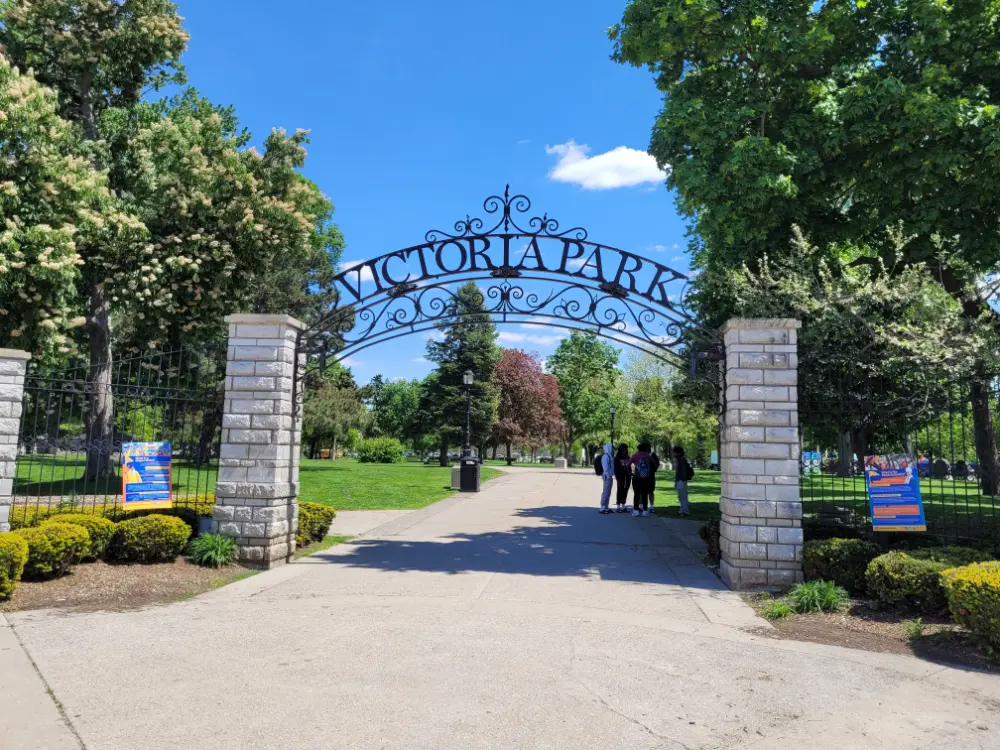
Victoria Park today, the original site of the British Garrison in London. (Photo credit: Lawrence Durham).Heritage plaque at the north end of Victoria Park. (Photo credit: Lawrence Durham).The Boer War Soldiers’ Monument commemorates the local men from the London district who fought and died in the Second Boer War in South Africa between 1899 and 1902. (Photo credit: Lawrence Durham).The Holy Roller is one of only two Canadian Military Sherman tanks to have crossed the beaches in Normandy, France on D-Day (June 6, 1944) and survived until Victory in Europe Day, VE-Day (May 8, 1945). (Photo credit: Lawrence Durham).
There’s something magical about riding past an 1880s stone barracks, feeling the breeze off the Thames, and realizing you’re in a place where Redcoats once marched, tank crews once trained, and a city once gave everything it had.
That’s the London I want to show you.
I’m Lawrence, and I run London Bicycle Tours. I’m a storyteller with a bicycle, a love for this city, and a deep respect for the people who shaped it. If you’d like to see London’s military landmarks up close, plus London’s other hidden gems, come join me for a guided tour. Small groups, easy pace, and plenty of stories you won’t find on Wikipedia.
When you think of London, Ontario, you might picture the meandering Thames River, the historic Blackfriars Bridge, or perhaps the Victorian architecture that lines our downtown streets. But here’s something that might surprise you: London is home to the best air show in North America.
Not “one of the best.” THE BEST!
For four consecutive years, Airshow London has been voted the #1 air show in North America by the USA Today 10Best Readers’ Choice Awards. And it all happens here every August at the London International Airport.
So how did a mid-sized Canadian city, known more for its universities and forested parks than its aviation pedigree, end up hosting the continent’s most beloved air show?
The answer involves a global pandemic, a stroke of creative genius, and a community that refused to let the skies go quiet.
Precision flying and blue skies: a recipe for success. (Photo credit: Mosaic Mind Pictures).The view from inside the cockpit of an inverted jet aircraft. (Photo credit: Mosaic Mind Pictures).
A Brief History of Flight in London
London’s connection to aviation runs deeper than many realize.
During the First World War, the area around what is now the London International Airport served as a training ground for pilots. The Royal Flying Corps operated training squadrons from nearby fields, preparing young men for the skies over Europe. After the war, the site continued to evolve, eventually becoming a municipal airport in 1941.
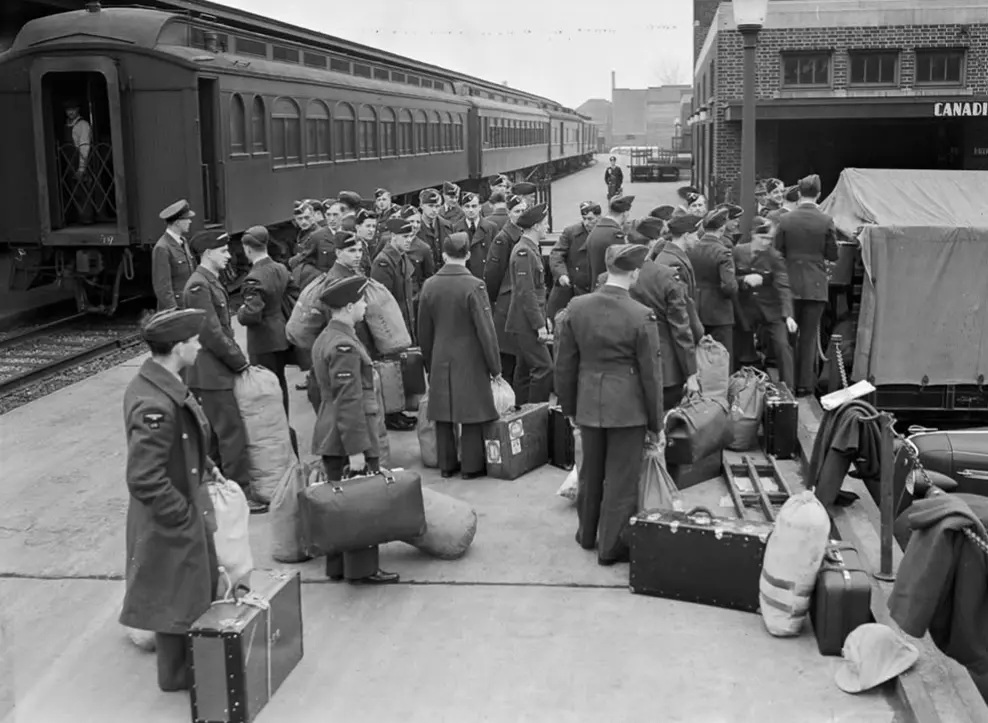
During the Second World War, the airport was expanded and used by the Royal Canadian Air Force (RCAF) as a training base. Thousands of pilots, navigators, and aircrew passed through London, learning their craft before heading overseas.
RCAF airmen arrive by train for training in London, 1941. (Courtesy: Tom Walsh).
That military aviation heritage set the stage for something extraordinary. By the 1980s, London had become a regular stop on the Canadian air show circuit, but it wasn’t until 2020 that the city truly made aviation history.
The Pandemic That Changed Everything
In the spring of 2020, the world ground to a halt. Large gatherings were cancelled across the globe, and the air show industry, which relies on tens of thousands of people gathering to watch aircraft perform, seemed doomed. Show after show was cancelled.
But a small team of aviation enthusiasts in London refused to give up.
They asked a bold question: what if people could watch the show from the safety of their own vehicles? What if the air show became a drive-in experience, much like the old drive-in movie theatres of the 1950s and 60s?
People enjoyed family-friendly tailgate parties while watching the air show. (Photo credit: Mosaic Mind Pictures).
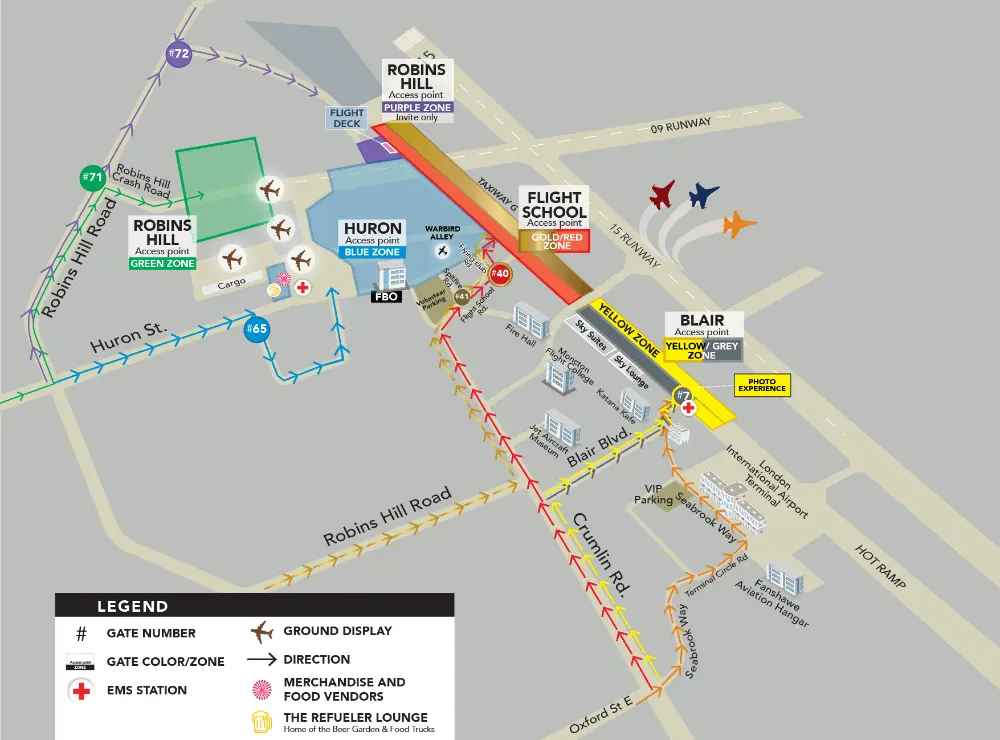
The concept was a logistical nightmare. Coordinating hundreds of vehicles on an active airport tarmac, ensuring safety protocols, broadcasting audio directly to car radios, and maintaining social distancing while still delivering a world-class aviation spectacle? It had never been done before.
But on August 25, 2020, Airshow London’s drive-in format, now known as SkyDrive, debuted.
The response was overwhelming. Thousands of vehicles filled the tarmac at London International Airport, spaced safely apart in designated parking spaces. Families set up lawn chairs beside their cars, unpacked picnic baskets, and tuned their radios to the dedicated broadcast frequency.
And then the skies came alive.
The roar of CF-18 Hornets, the graceful ballet of the Snowbirds, the thunderous power of vintage warbirds, all performed against the backdrop of a perfect Southwestern Ontario summer sky.
What emerged from the pandemic wasn’t just a temporary solution. It was a fundamentally better way to experience an air show.
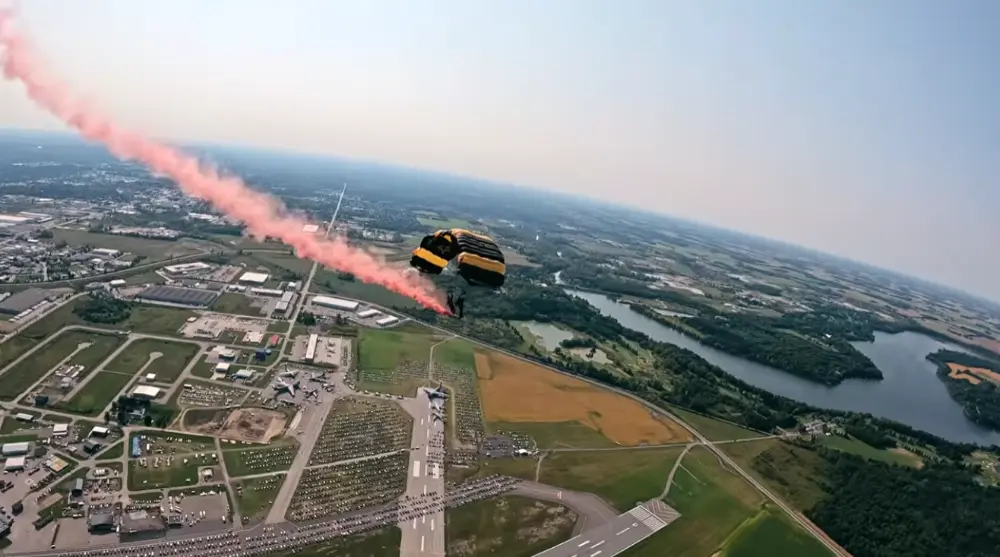
The US Army Golden Knights put on parachute displays. (Photo credit: Mosaic Mind Pictures).View over the London airfield with Fanshawe Lake visible in the distance. (Photo credit: Mosaic Mind Pictures).
Why the Drive-In Format Works So Well
If you’ve ever been to a traditional air show, you know the drill: arrive hours early to find parking, hike across a massive field to find a decent viewing spot, fight for space among the crowd, and hope the person next to you doesn’t stand up at the wrong moment.
Airshow London’s drive-in format eliminates all of that.
Personal Tailgating Spaces:
Guests park in designated 20×25-foot personal spaces. There’s room for your vehicle, lawn chairs, coolers, and even a small picnic setup.
Crystal-Clear Audio:
No straining to hear announcements over the wind. Everything is broadcast directly to your car’s FM radio, so you hear every word of commentary and every engine roar in pristine clarity.
Unobstructed Views:
Because vehicles are spaced out in designated zones, every space offers a clear line of sight to the action overhead.
Comfort and Flexibility:
Rain? No problem. Stay in your vehicle. Need a break? The free hop-on, hop-off trolley system connects the main viewing area with static aircraft displays and food vendors. There’s even a dedicated food truck alley featuring some of London’s best mobile cuisine.
The Static Display: Up Close with Aviation History
Between aerial performances, visitors are encouraged to explore the tarmac. The static aircraft display is a highlight for aviation enthusiasts of all ages.
You’ll find everything from modern military jets to vintage warbirds, civilian aircraft to helicopters. Military pilots and crew members are on hand to answer questions, share stories, and give visitors a glimpse into the world of professional aviation.
For kids and adults alike, there’s something magical about standing beside a machine capable of supersonic flight, touching the metal, and imagining the journeys it has taken.
Crowds on the tarmac walking towards static airplane displays. (Photo credit: Mosaic Mind Pictures).School buses shuttle people to the tarmac to see static aircraft displays. (Photo credit: Mosaic Mind Pictures).Families exploring planes up close. (Photo credit: Mosaic Mind Pictures).Pilots are on hand to talk to the crowds and sign autographs. (Photo credit: Mosaic Mind Pictures).
World-Class Performers
Airshow London attracts some of the most talented aviation performers on the planet. In recent years, audiences have been treated to:
The Canadian Forces Snowbirds, the iconic nine-jet formation team that has been thrilling audiences since 1971
The CF-18 Hornet Demo Team, showcasing Canada’s frontline fighter jet
The United States Air Force F-35A Lightning II Demo Team, one of the most advanced fighter jets ever built
The RCAF CH-146 Griffon Search and Rescue demonstrations
Vintage warbirds including the CF-18, Spitfires, and more
The E-4B Nightwatch, famously known as the “Doomsday Plane,” serves as a survivable mobile command post for the US President, Secretary of Defense, and top military leaders during national emergencies or nuclear war (Photo credit: Mosaic Mind Pictures).Jet taking off in Friday Night’s “Hour of Power”. (Photo credit: Mosaic Mind Pictures).Vintage aircraft flying overhead. (Photo credit: Mosaic Mind Pictures).The UK’s Royal Air Force Red Arrows trailing red, white, and blue smoke. (Photo credit: Mosaic Mind Pictures).
Each year brings new surprises, and the 2026 edition promises to be the most spectacular yet.
An Award-Winning Reputation
When USA Today’s 10Best Readers’ Choice Awards named Airshow London the best air show in North America in 2022, the aviation world took notice. Then the show won again in 2023, 2024, and 2025.
Four consecutive years as the continent’s best.
It’s not just the aerial performances that earned this recognition. It’s the entire experience: the thoughtful logistics, the family-friendly atmosphere, the accessibility, and the sheer joy of watching the world’s most impressive flying machines from the comfort of your own space.
Why This Matters for Visitors
Airshow London is more than just an annual event. It’s proof that London is a city that thinks differently, that finds creative solutions to challenges, and that delivers world-class experiences without the big-city crowds or prices.
For culture seekers, it’s a perfect example of the kind of authentic, unexpected experiences that make travel memorable. You’re not just watching planes fly. You’re participating in a community tradition born out of pandemic-era innovation, sustained by passionate volunteers, and celebrated with good food, great company, and breathtaking skies.
A City Worth Exploring
Airshow London brings tens of thousands of visitors to our city each August.
People come for the planes, but after the excitement at the air show, many are ready for a change of pace. Our tree-lined streets, friendly neighbourhoods, rich history, and vibrant arts and culinary scene provide exactly the change they’re looking for.
The author, standing in front of the main terminal building at London International Airport. (Photo credit: Lawrence Durham).
Hi, I’m Lawrence, bicycle tour guide, storyteller, and proud Londoner who believes the best way to discover a city is at a gentle pace, with the wind in your hair and plenty of good stories along the way.
I’d love to show you the rest of our city: the hidden alleyways, the historic landmarks, the surprising stories that don’t show up in guidebooks.
If you’re visiting London for the air show or any other reason, consider adding a guided bicycle tour to your itinerary. Small groups, big laughs, and a city full of surprises await. Click here to learn more!
Just a short pedal north of London, Ontario, time slows down. Nestled on the banks of Medway Creek in the village of Arva, a five-story wooden giant has been humming, almost nonstop, since 1819. That’s 207 years of continuous operation, making Arva Flour Mills not just Canada’s oldest continuously operating commercial flour mill, but the fifth oldest continuously operating business in the entire country. To put that in perspective, this mill was grinding flour 48 years before Canada even became a nation.
It’s a living piece of history. But what truly captivates visitors, and keeps customers coming back decade after decade, is that the mill stubbornly refuses to modernize in the ways that matter most. It still uses antique equipment, century-old leather belts, and traditional cold-roller methods to produce flour that people swear tastes more “alive” than anything from a massive industrial processor.
Here’s why this heritage landmark endures, and why it’s a must-visit destination for anyone seeking authentic experiences near London.
A view of the mill from the roadway above.
A Foundation Built by Hand
In 1819, there were no sawmills or heavy equipment to move the massive logs needed to construct the mill. Everything was built by hand. The logs came from the immediate area and were shaped to size with axes and adzes, a testament to the grit and craftsmanship of early settlers in what was then Upper Canada (modern-day Ontario).
The original power source was the water from nearby Medway Creek. A dam was built, and a mill race directed a stream of water to the mill, where it fell 15 feet onto turbines in the basement. That falling water turned a series of pulleys and leather belts, powering all the grinding and milling machines on the upper floors. Today, the water still runs through the original water power generating station in the second basement.
For 100 years, falling water was the mill’s only power source. Then, part of the mill was converted to electricity. Another hundred years passed before the rest was fully electrified. It’s a slow, deliberate approach to change, and that philosophy extends to everything they do.
The dam across Medway Creek. The flour mill (and mill race) are hidden behind the trees to the right.The mill race, leading to a 15-foot drop to the turbines below. You can see metal screens (indicated by the green arrow) that were designed to protect the turbine blades from any branches or river debris floating downriver.
The Antique Equipment: Deliberately Old-School
Walk inside the mill today, and you’re stepping into a machine shop from another era. The top three floors process the wheat, starting at the top and using gravity to feed the grain through multiple machines at various levels. In the two basements, the power-generating equipment operates, with long leather belts driving pulleys throughout the building.
Many of those leather belts you see are original equipment. They don’t make replacement parts for these machines anymore. In fact, some of the spare belts and parts stored in the basement are 150 years old. Nothing gets thrown away because when something breaks (and things this old do break), they have to hope something is in the spare parts bin, or make it themselves. That’s why the mill maintains its own woodworking and metalworking shops.
The core of the operation is the antique Goldie & McCullough cold roller mills, installed in 1901. These machines replaced the original stone grist millstones but preserved the artisanal spirit of the mill. Today, you would be hard-pressed to find some of their working flour milling machines anywhere else (except perhaps in museums).
In this close-up photo, you can see the original axe or adze marks on the supporting post (behind the belt). In the foreground is one of the extremely long leather belts that travels between floors and wraps around large pulleys.Exterior shot of an antique milling machine, with safety cages (added later) to protect mill workers from moving belts.Interior shot of the 1901 cold roller milling machine, where the grain is progressively reduced to a fine powder.The first floor operation still looks largely as it has for 200 years.Bran, a byproduct of white flour production, is sold to a local farmer for feed.
Safety in a Living Museum
With so many exposed leather belts and antique machinery, one might wonder about safety. Even though the equipment was built in an era before modern safety processes came into play, remarkably, there have been no major accidents in the mill’s 207-year history.
Flour mills elsewhere have often burned down because the fine flour dust creates a significant fire hazard. To combat these risks, Arva Mills has dust mitigation procedures, fire suppression equipment, and strict safety protocols in place. It’s a careful balance, preserving the past while protecting the people who keep it running.
The mill is operated by an operations manager and head miller with decades of experience operating this heritage mill, as well as experience working in more modern facilities. It takes that kind of deep knowledge to keep these antique machines running smoothly.
Left photo above: An ancient fire suppression flask. If a fire broke out, the worker would hurl the flask at the fire and run rapidly in the opposite direction. The resulting exploding chemical reaction would suppress the fire.
Right photo above: A modern fire extinguisher.
Why Old Ways Make Better Flour
So why continue using such ancient, temperamental equipment when newer technology is more efficient?
The answer lies in the flour itself. Modern high-speed milling generates significant heat, which can destroy beneficial bacteria, enzymes, and nutrients. Arva’s antique cold roller mills grind the grain at lower temperatures, preserving the natural goodness that makes their flour so unique.
Customers often describe the flour as more “lively” in taste, a difference you can actually feel when you bake with it. And because the mill adheres to traditional methods, their flours contain no preservatives, no bleach, and no chemicals. The wheat is non-GMO, sourced exclusively from nearby local farmers, and grown without glyphosate treatment.
The result is a truly authentic, wholesome product. Arva’s Daisy Unbleached Hard Flour, a brand name that has symbolized quality for over 150 years, is a versatile workhorse for everything from artisan breads to everyday recipes. Their whole wheat flour retains the entire kernel, including the bran and germ, making it rich in calcium, iron, and dietary fibre. And their specialty flours, like Organic Spelt and Einkorn, offer unique flavours and nutritional profiles that modern commodity flours simply can’t match.
Owner Mark Rinker looks on as bags of bran are about to be loaded onto the truck of a local farmer
More Than Just Flour: A Destination for Culture Seekers
The mill has a capacity to store 160 tons of wheat and can process up to 4 tons of flour per day, or 1,000 pounds per hour. The bran waste is sold locally to farmers, completing a beautiful farm-to-table loop.
But Arva Flour Mills is far more than a production facility. It’s a community hub and a cultural destination.
The Red River Cafe, located on site, showcases the products made from the mill’s flours, with a particular emphasis on their legendary scones. Visitors rave about their fresh, artisanal taste. This overwhelming popularity led to the creation of Scone Fest, an annual event held in late spring that aligns with International Scone Day. In its debut year, the festival sold over 2,500 scones. In 2026, the second annual Scone Fest aimed to sell more than 300 dozen, over 3,600 scones, with flavours like strawberry rhubarb and cheddar and chive. Everything is made with fresh-milled flour from the mill, and the dough for thousands of scones is mixed entirely by hand.
The Heritage Festival, held during the second weekend of October, attracts thousands of visitors with free guided tours of the mill, a local vendor market, family-friendly activities, and a BBQ fundraiser.
For those who want to learn the craft of breadmaking, the mill hosts sourdough classes. These classes are held at the Red River Cafe, fill up quickly, and have a huge waitlist.
The aroma of freshly baked goods from the Red River Cafe wafts across the parking lot, drawing eager customers inside to sample products made at the mill next door.
Rescuing a Canadian Icon: Red River Cereal
In 2022, Arva Flour Mills made a move that endeared them to Canadians from coast to coast. They acquired the beloved Red River Cereal brand from Smucker Foods of Canada Corp. This much-loved Canadian brand had suffered attrition under the previous owners, and since the public had been actively seeking it out, it cemented the decision for Arva Mills to take it on as a new product line.
Now, the cereal is made entirely on site at the historic mill. The original hot cereal blend- cracked wheat, cracked rye, and cracked and whole flax – is crafted the traditional way at Arva Mills. The mill has since expanded the lineup to include a 7 Grain Hot Cereal, Cream of Whole Wheat, and even 100th Anniversary apparel.
Inside the store that has served customers for over 200 years.
Value That Speaks for Itself
For the customer, Arva Flour Mills delivers exceptional value. They produce a natural, artisanal product with a price that is in line with what other national commercial brands sell for in stores. The customer gets superior quality, flour that’s more nutritious, more flavourful, and better for baking, without paying a premium.
A Living Link to Our Past
As operations manager and head miller Dustin Blackhall, who has worked at the mill for about 20 years, put it: “People often tell me they’ve been coming here for 40 or 50 years and buying the flour. It’s the flour their mom used, it’s the flour their grandma used, so it’s really neat to hear those stories, and it gives me a lot of pride in what I get to do here”.
Dustin Blackall, Operations Manager and Head Miller at the Arva Flour Mill. (Photo credit: Andrew Brown/CBC)
Arva Flour Mills has proved to be a cornerstone for the community. It’s a place where history isn’t just preserved behind glass; it’s alive, grinding away, producing flour that connects us to generations past.
The rustic setting, located just north of London on Medway Creek, feels like stepping back into the 19th century.
Whether you’re a baker looking for superior flour, a history enthusiast eager to see living heritage in action, or a food lover chasing the perfect scone, Arva Flour Mills is a destination that delivers.
The creek and small dam next to the Red River Cafe offer serenity in an otherwise busy modern world.The author, standing outside the Arva Mills store.
Hi. I’m Lawrence. Bicycle tour guide, storyteller, and lover of puns. I help curious folks like you discover the best parts of London, from a bicycle seat, of course. Arva Flour Mills is just one of the many hidden gems I’ve discovered while riding around on my bicycle. Let me help you experience the joy of discovering all these incredible places for yourself. Click here to learn more! Your next adventure awaits.
Photo credits: Unless otherwise indicated, all photos above were taken by the author.