
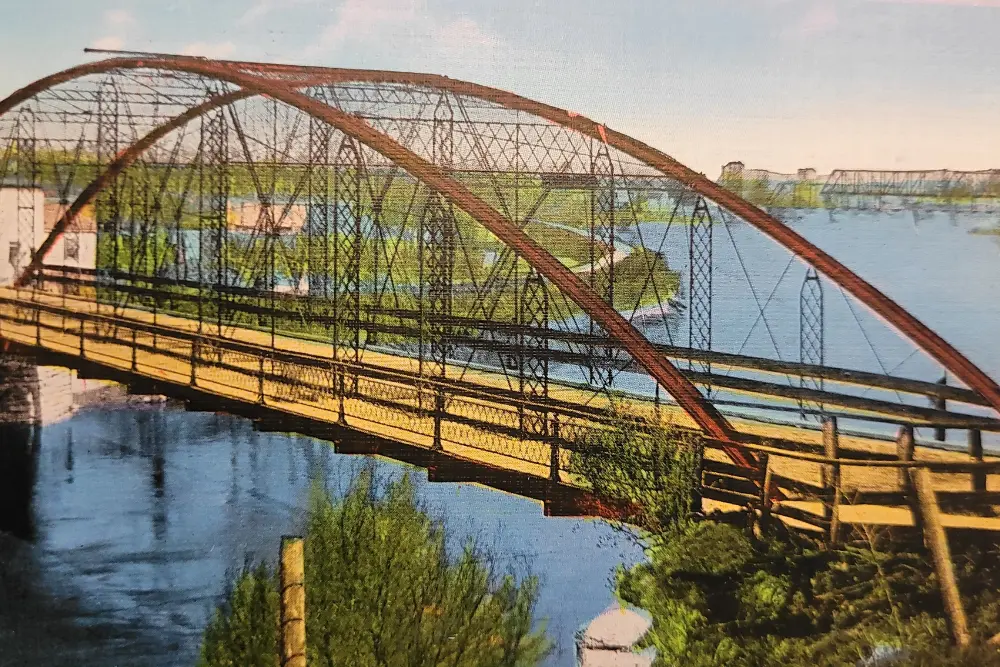
Blackfriars Bridge had stood for almost 150 years. It was beloved by its residents, was a vital transportation link, and was celebrated by generations of artists.
So why did the City of London decide to cut its most famous symbol in half in 2017?
Before we answer that question, let’s examine how Blackfriars Bridge came to be.
The Bridge That Came by Train
Here is the neat thing. Blackfriars Bridge wasn’t built from scratch on site. It was ordered from a catalogue, specifically, from the Wrought Iron Bridge Company of Canton, Ohio.
In the 1870s, a city like London could send away for a bridge the same way you might order a bookshelf from IKEA today, except this bookshelf weighed over 200 tons and had to survive spring floods.
The company in Ohio prefabricated every single piece: the curved tubular arches, the vertical struts, the diagonal tie‑rods, and hundreds of metal pins. They packed it all into crates, shipped it north by railway across the U.S. border, and dumped it on the banks of the North Thames River.
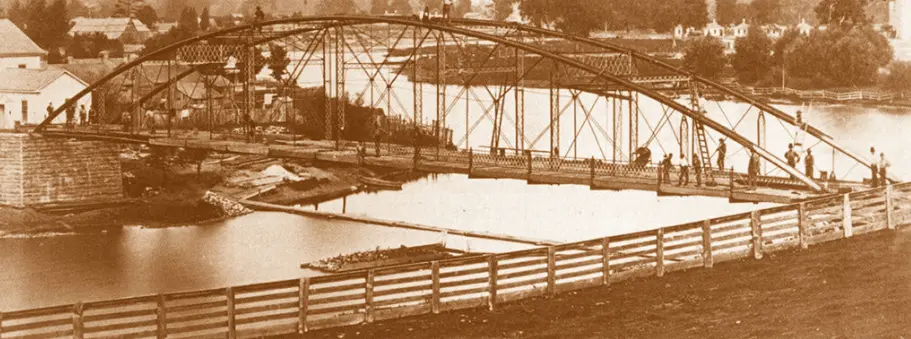
(Photo credit: Dillon Consulting).
Total cost for this massive metal puzzle? $14,711. That’s roughly $1.8 million today, a bargain for a bridge that would last a century and a half.
Why London Needed a Bridge That Wouldn’t Wash Away
To understand Blackfriars Bridge, you have to understand the problem it solved.
Before 1875, the only way to cross the Thames between central London and the nearby community of Petersville, now known as the Blackfriars/Petersville neighbourhood, was via wooden bridges. And those wooden bridges had a nasty habit of disappearing every spring.
Severe freshets, the old‑timey word for dramatic snowmelt floods, would routinely lift those wooden spans off their foundations and send them tumbling downstream like kindling.
London needed something tougher. Something flood‑resistant. Something made of iron.
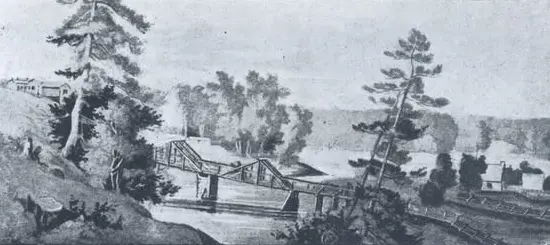
(Photo credit: Fred Weyerman).
Enter the bowstring arch‑truss: a single‑span design that needed no central pillars. It was a prototype, the Victorian equivalent of building for climate resilience, and it worked.
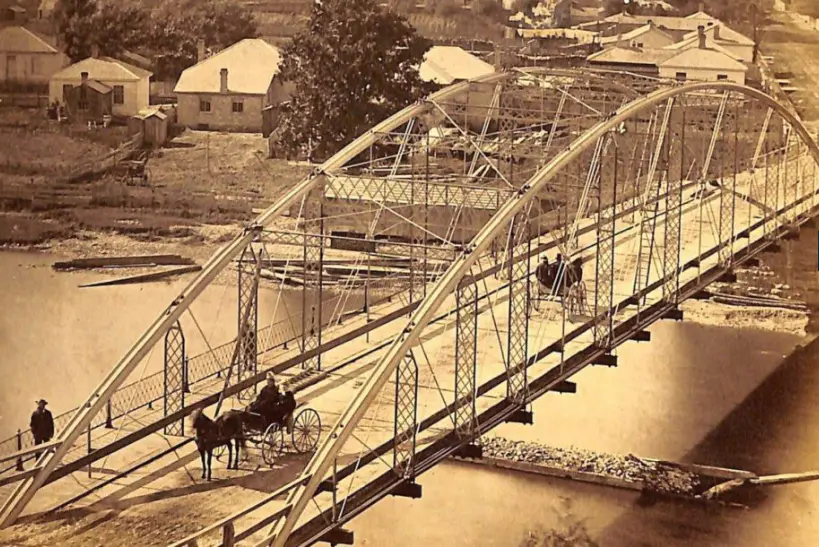
(Photo credit: Dillon Consulting).
A Rare, Single‑Span Wonder
What makes Blackfriars so special, and why it draws engineering nerds from across the continent, is its design. It is a wrought‑iron, bowstring‑arch truss bridge with a single span.
Translation: the curved top acts like an archer’s bow, absorbing all the tension and compression so that the deck below doesn’t need any annoying central pillars. That means when you stand underneath it, you see one clean, graceful arc leaping from bank to bank.
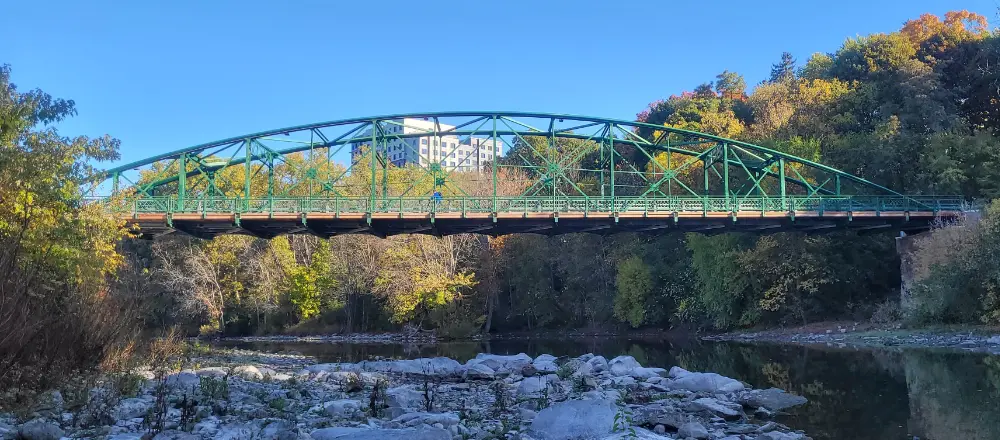
(Photo credit: Lawrence Durham).
And here’s the kicker: Blackfriars Bridge isn’t just the city’s oldest iron bridge. It is the longest and oldest surviving wrought‑iron bowstring truss bridge in all of North America that is still able to accommodate vehicular traffic.
Today, it is recognized as a historic site under the Ontario Heritage Act. But really, its truest monument is the fact that you can still walk, cycle, or drive across it, more than 151 years later.
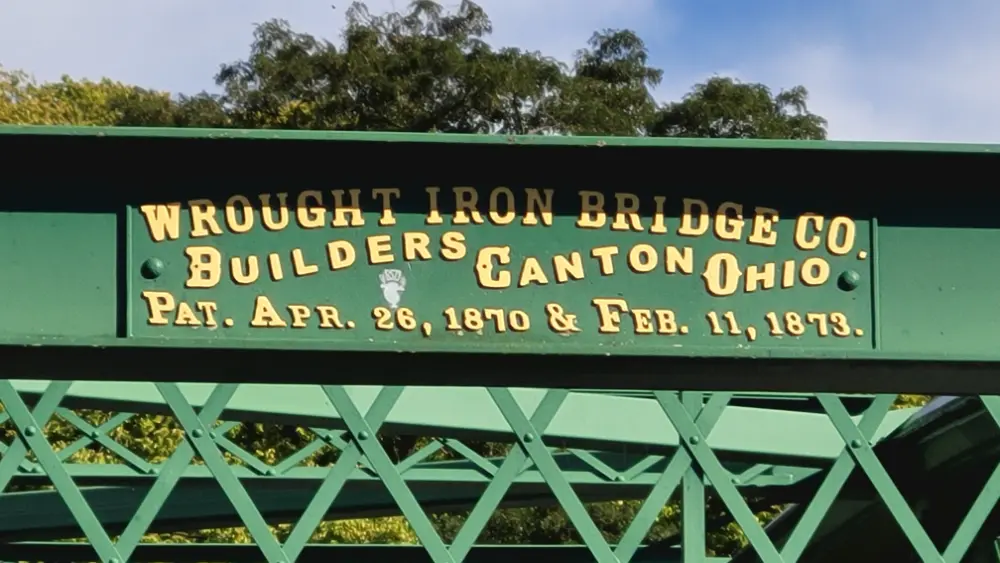
(Photo credit: Lawrence Durham).
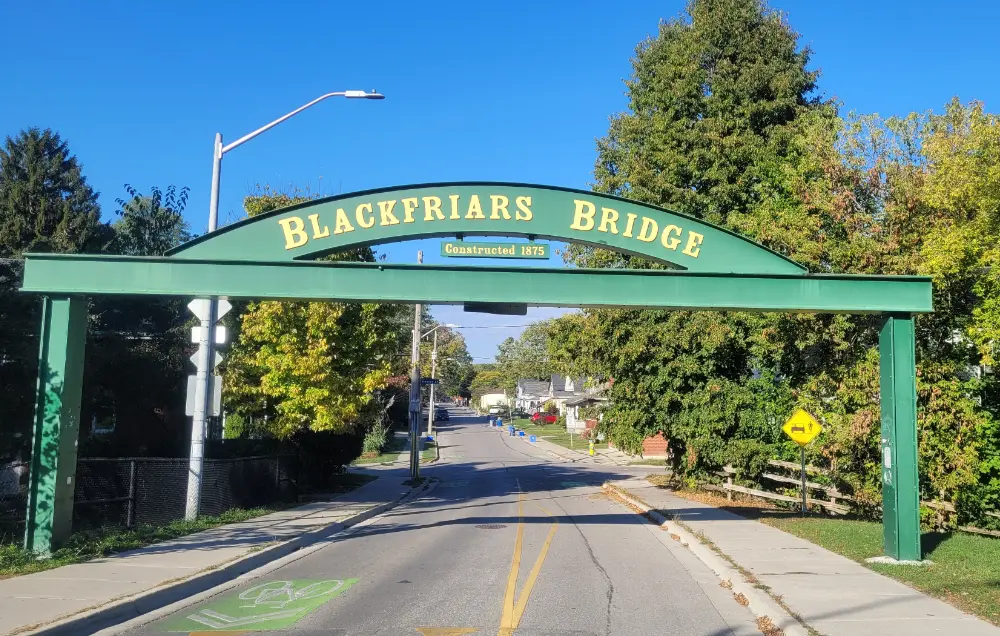
(Photo credit: Lawrence Durham).
The Assembly: No Welding, Just Pins and Nuts
In 1875, there were no welding torches. There weren’t even power tools. So how did Isaac Crouse, a local London contractor, and his crew put this thing together?
They used pins. Big, thick metal pins that slotted through the eyes of the iron struts, exactly like the plastic connectors in a child’s building set. Once the pins were in place, workers tightened threaded tie‑rods with nuts to pull everything into perfect alignment.
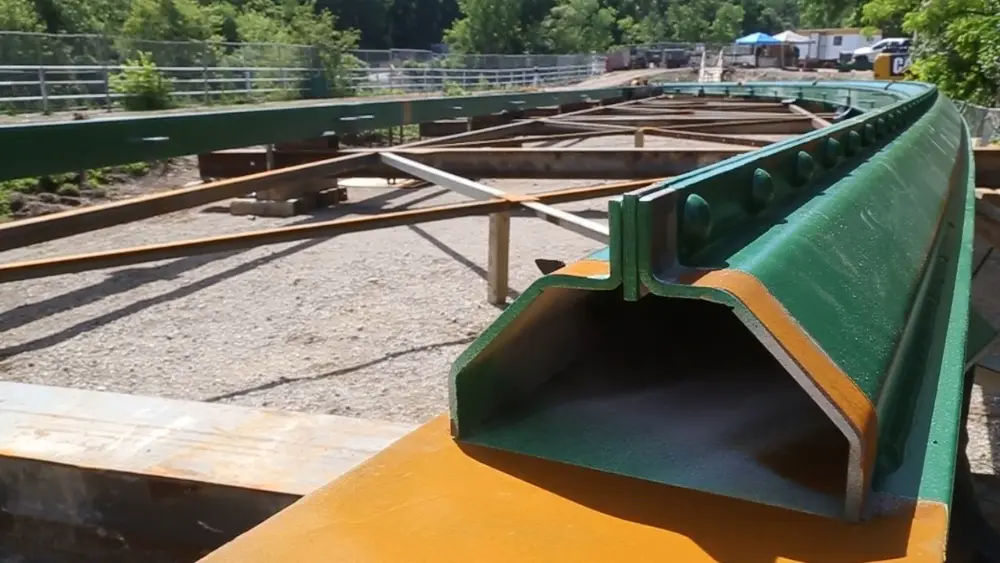
(Photo credit: Mike Hensen).
Think of it as Victorian Lego, but every piece weighed a hundred pounds, and one wrong move meant a trip to the river.
The vertical posts. The diagonal rods. The curved top chords. All of it clicked together on‑site, piece by piece, until, just like that, London had a bridge that looked like it had a future.
The 2017-2018 “Do‑Over”: Cutting the Bridge in Half
Bridges don’t last nearly a century and a half without a little help. By 2017, after 142 years of spring floods, freezing winters, and relentless traffic, Blackfriars was showing its age. The wrought iron had decayed. The pins were tired.
So the City of London embarked on an $8.6‑million rehabilitation, a nine‑month labour of love that would make history all over again.
Here’s how they did it:
Step 1: Lift and Cut. In late 2017, a massive crane carefully lifted the entire 1875‑built wrought‑iron structure off its stone abutments. Then came the dramatic moment: crews cut the bridge in half so they could move it to the riverbank.
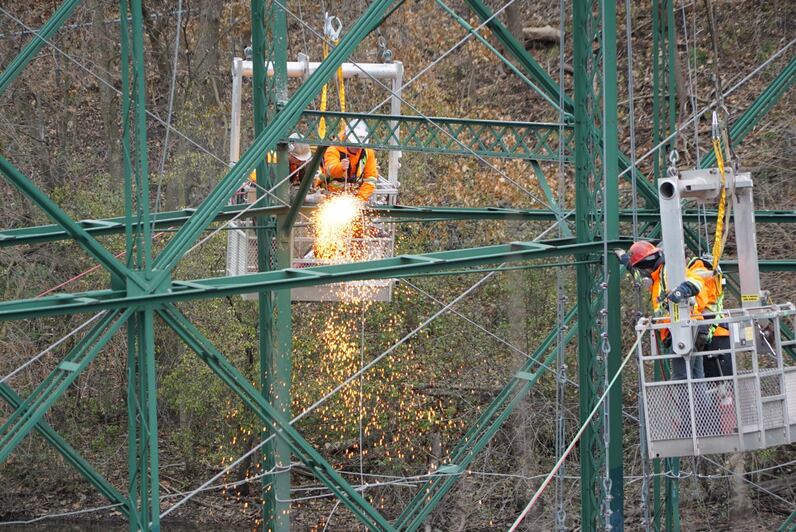
(Photo credit: Colin Butler/CBC News).
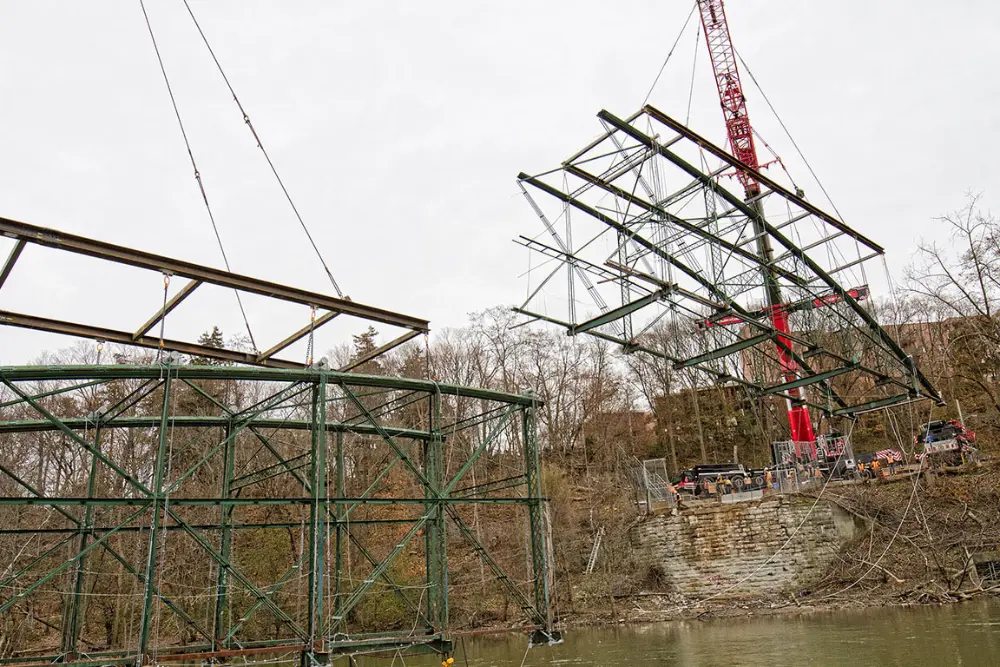
(Photo credit: McLean Taylor Stone Town).
Step 2: Crane to Shore. Each half was then lifted by crane and gently carried to the riverbank. From there, the disassembled sections were transported indoors, where the real magic happened.
Step 3: Sandblasting and Hot Rivets. Over the winter months, specialized crews sandblasted away 140 years of rust and decay. They repaired the curved top chords, strengthened the vertical posts, and used historic hot‑riveting techniques to put it back together, the same way Isaac Crouse’s men would have done in 1875. No shortcuts. Just authentic, glowing‑hot rivets hammered into place.
Step 4: The Big Swing. On August 15, 2018, a clear summer day, an 800‑tonne crane, the largest crane in Ontario at the time, arrived on the riverbank. The fully restored bridge, now reassembled into a single piece, was hooked to the crane’s cables and slowly, majestically, swung across the Thames River back onto its brand‑new concrete bearings and stone abutments.
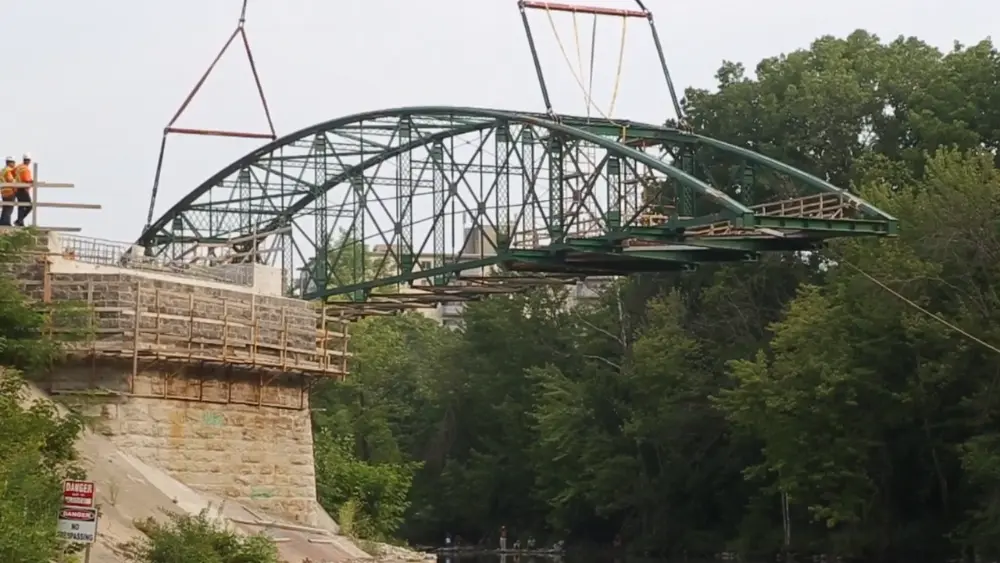
(Photo credit: Mike Henson)
The bridge had come home.
Step 5: Reopening Day. After months of final touches, Blackfriars Bridge officially reopened to both vehicle and pedestrian traffic on December 1, 2018. The little neighbourhood of Blackfriars had its lifeline back.

(Photo credit: Christian D’Avino).
Blackfriars Bridge Today
Blackfriars Bridge serves many purposes. Not only is it a vital multimodal connector and transit link between the downtown core and the Blackfriars neighbourhood, but it is also an historic link to a simpler time. Today, it continues to inspire generations of artists and remains the most recognizable symbol of the Forest City.

(Photo credit: Lawrence Durham).
Hi. I’m Lawrence. Bicycle tour guide and storyteller. And yes, Blackfriars Bridge is one of my absolute favourite stops on our tours
If you want to feel the flex of that wrought‑iron arch for yourself and discover other hidden gems along the Thames, come ride with me. Small groups, big laughs, and the best bridge story on the continent.
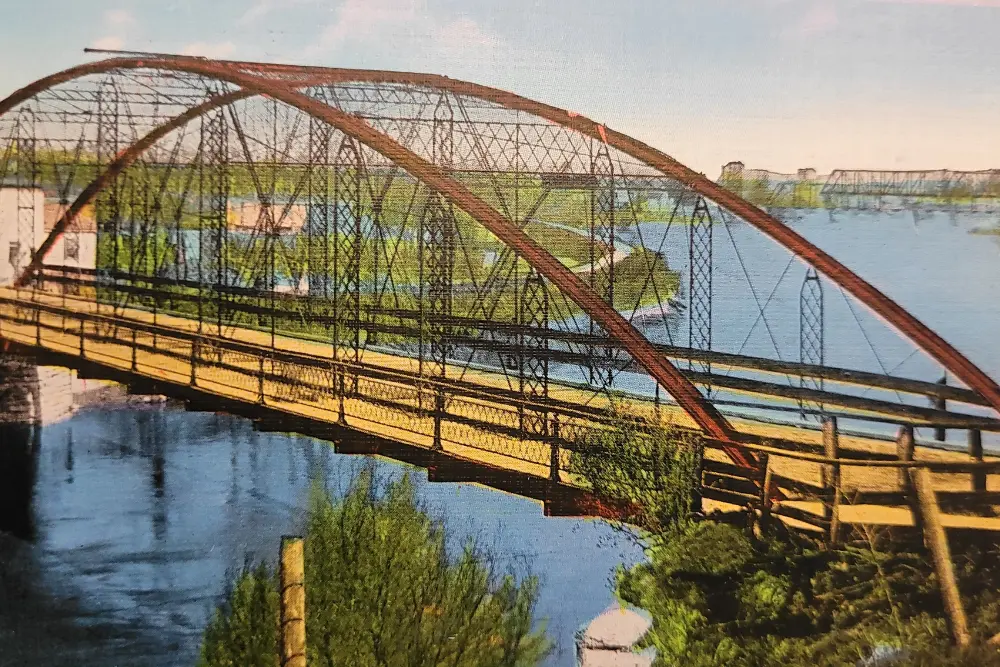
Credit for featured cover Image: London Post Card Collection, Ivey Family London Room, London Public Library.