

[4-minute read]
During the “Dirty Thirties,” many Canadians lost their jobs and couldn’t find work.
People were desperate.
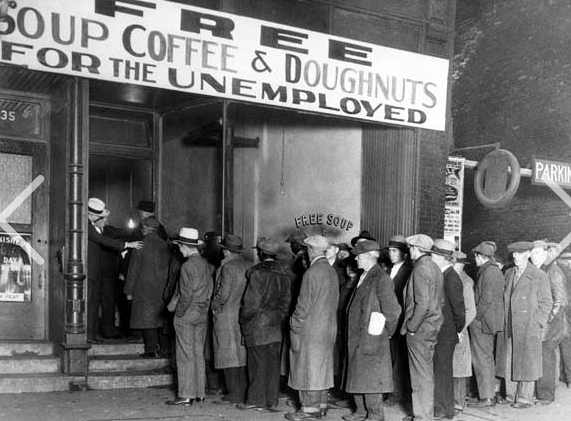
(Photo credit: Newmarket Today)
Fortunately, the Canadian government stepped in to help.
The Public Works Construction Act (PWCA) of 1934
Under the Act, the Canadian government allocated 40 million dollars to cities and towns across the country for public works.
The money was used to construct buildings, highways, and other infrastructure projects and was aimed at boosting employment and reducing the cost of relief efforts.
The Federal Building in London: One of the Largest PWCA Projects in Canada
The Canadian government decided to construct a federal building in downtown London. In just over a year, from April 1935 to September 1936, hundreds of construction workers came together to build the Dominion Public Building at 457 Richmond Street.
(Photo credit for the following 6 photos in the construction series: Arthur Gleason, Murphy Moore Collection of Architectural Records, Western Archives, Western University)
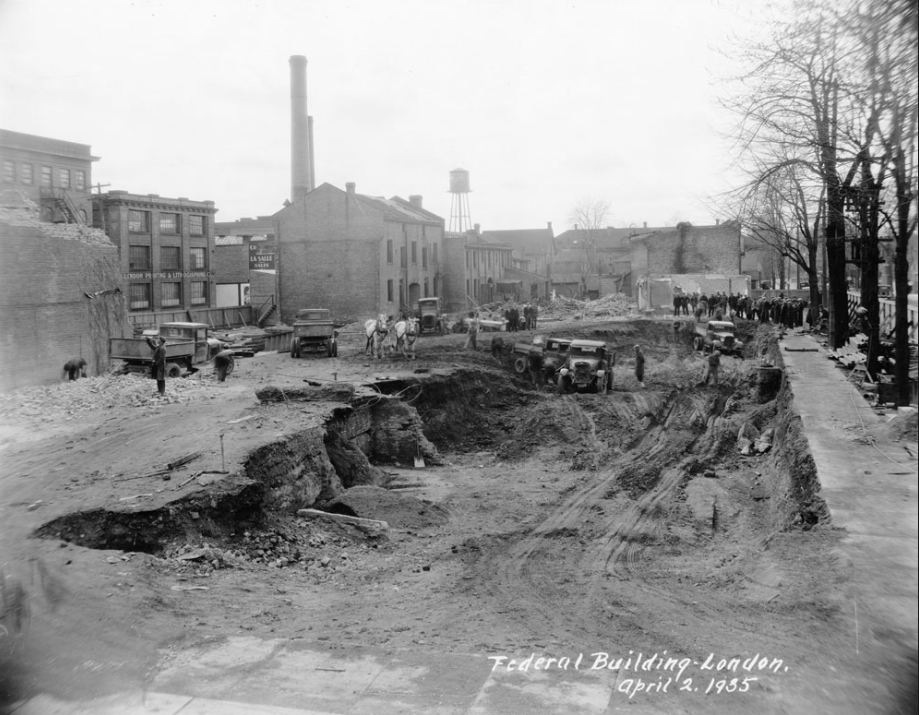
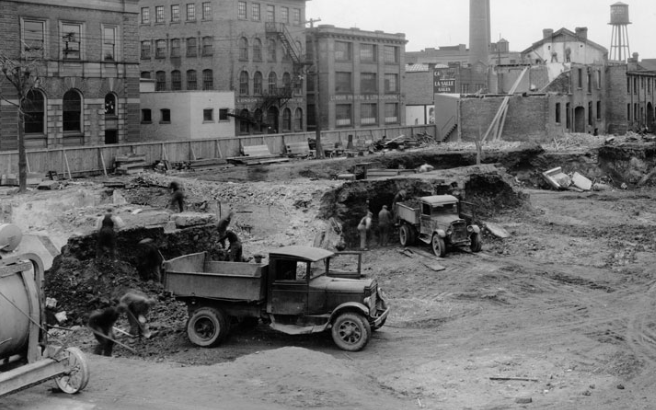
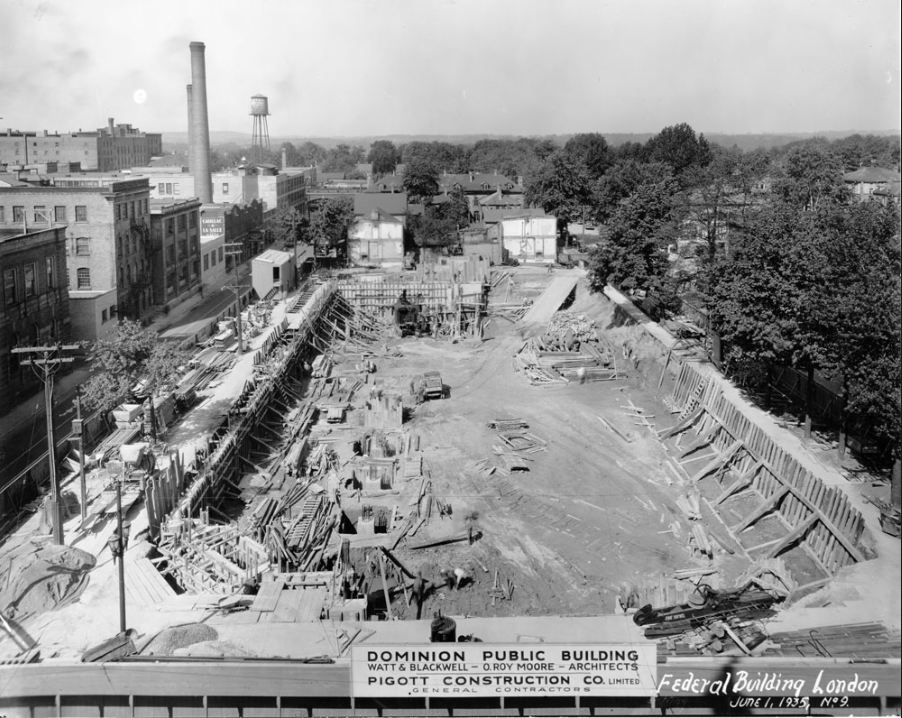
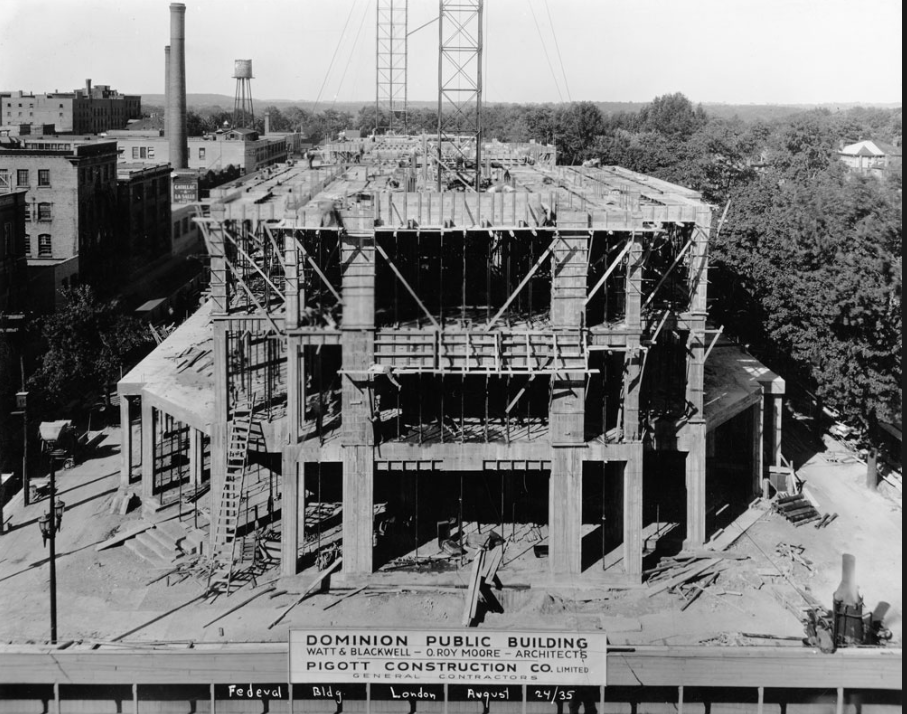
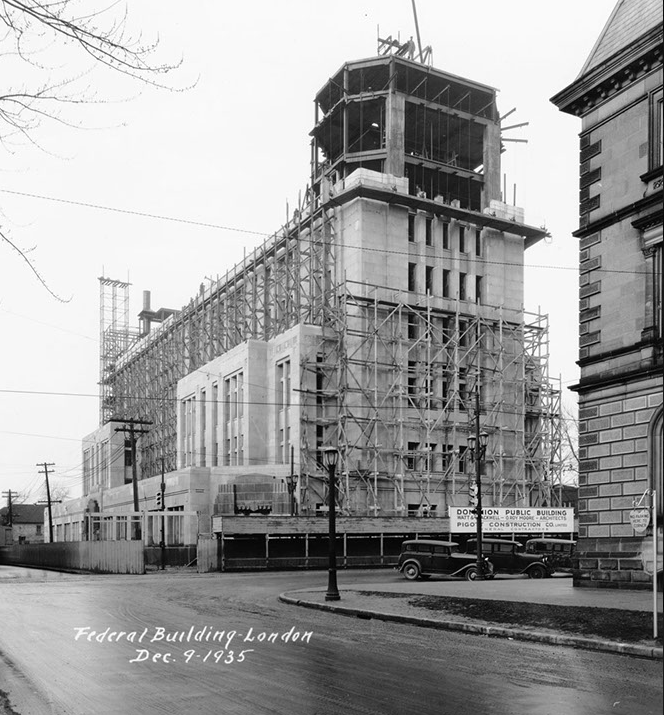
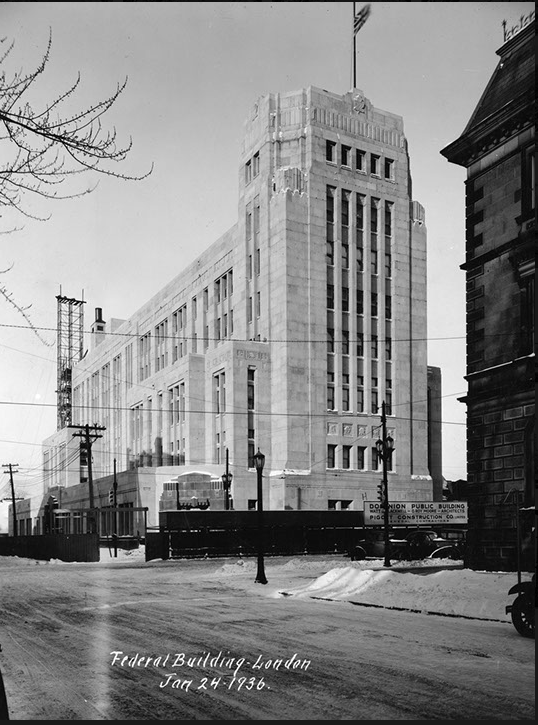
Of the 26 buildings erected across Canada under this Act, London’s was one of the more prominent ones. Local architects followed an offshoot of the neoclassical period called Classical Moderne to produce a design that was a bold departure for public buildings at the time.
The Dominion Public Building was the tallest in the city for 30 years, holding the title from its completion in 1936 until the construction boom of the mid-1960s.
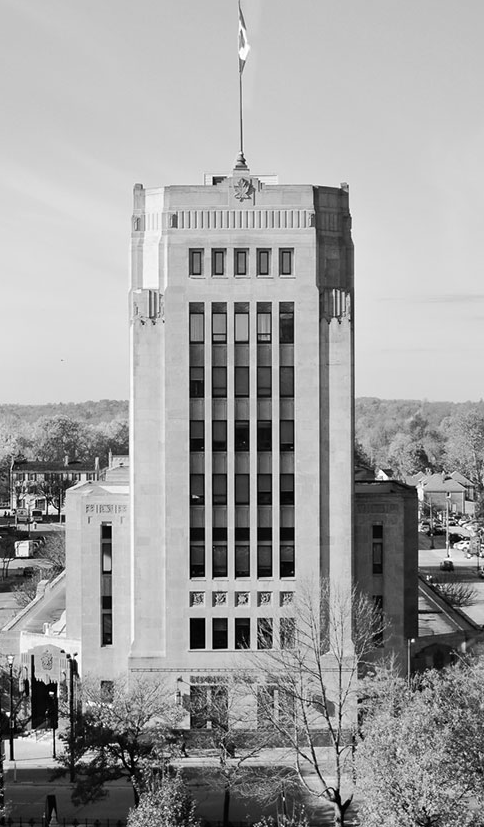
(Photo credit: Diego Hernandez)
Features of the Building
The architects incorporated many Art Deco elements that complemented the smooth exterior shell. Some people consider this building to be one of the finest examples of Art Deco architecture in all of Canada.
(Photo credit for the following 7 photos: Lawrence Durham)

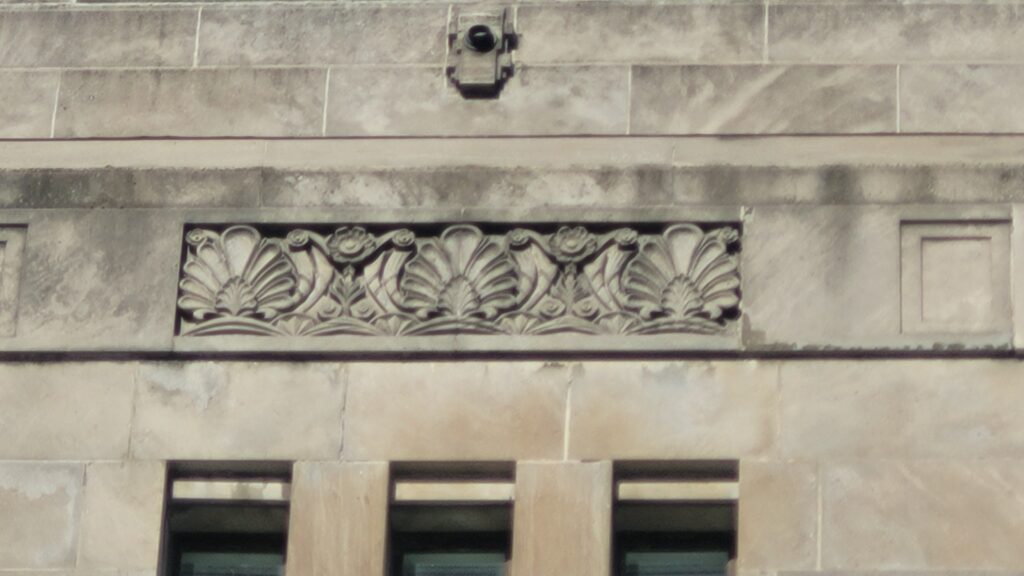
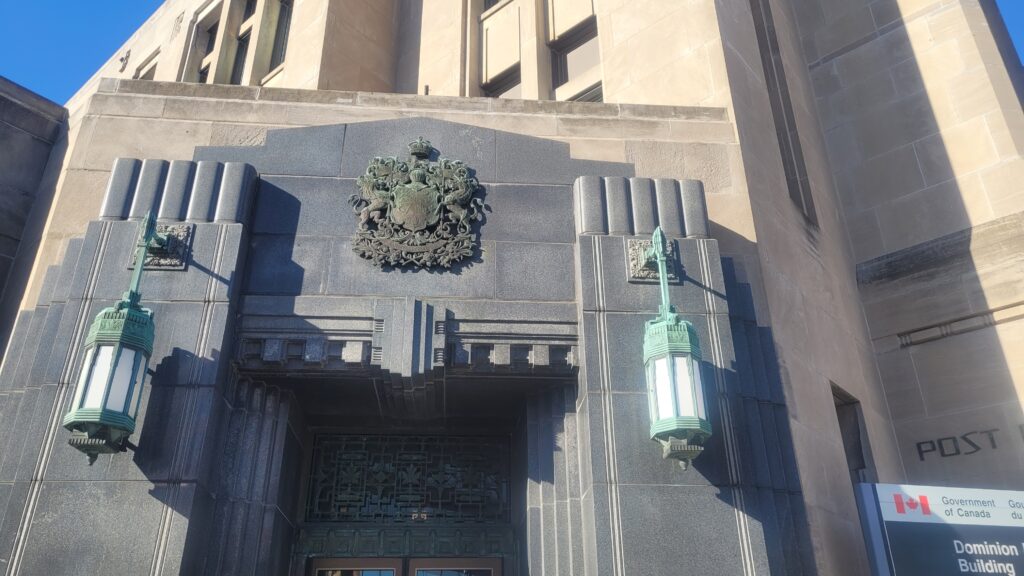
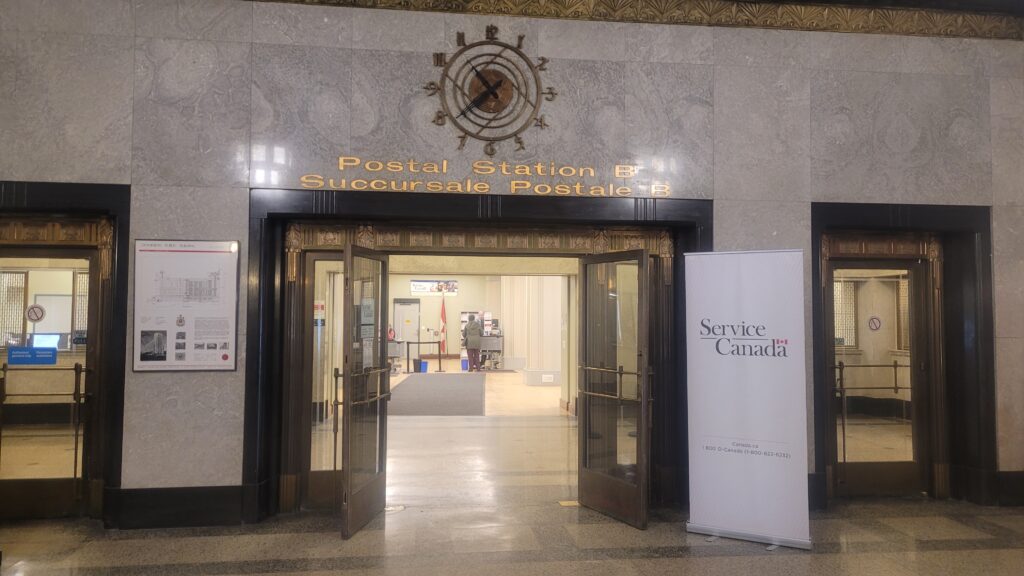
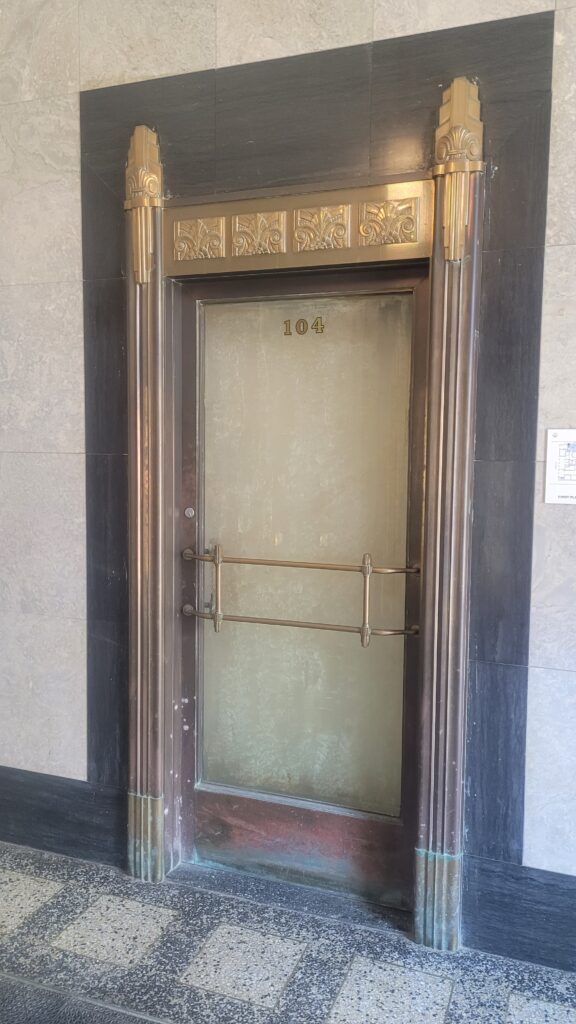
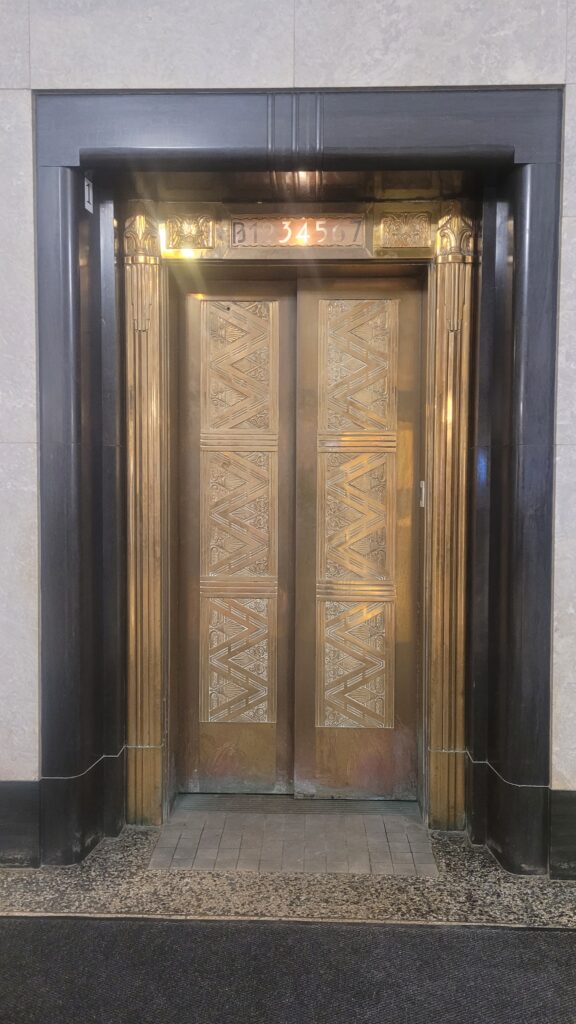
Note the black granite surrounding the doorway (in the photo to the left) and the elevator (on your right). Many bronze and brass fixtures were preserved during extensive renovations in 1983.
Its Role Today
One of the aims of the Act in 1935 was to establish a federal presence in communities across the country. And it has.
In 1990, it was declared a Classified Heritage Property on the registry of Canada’s Historic Places.
While things have obviously changed a lot over the years, and taller buildings now dwarf the six-storey Dominion Public Building, it continues to do today what it was designed to do ninety years ago. It helps people every day with necessary federal services.

Hi. I’m Lawrence – bicycle tour guide, storyteller, and lover of heritage buildings.
This Depression Era federal building is just one of the many things I’ve discovered while exploring London on my bicycle. There’s sooo much more to see. Why not come along on a guided bicycle tour?
Leave a Reply