
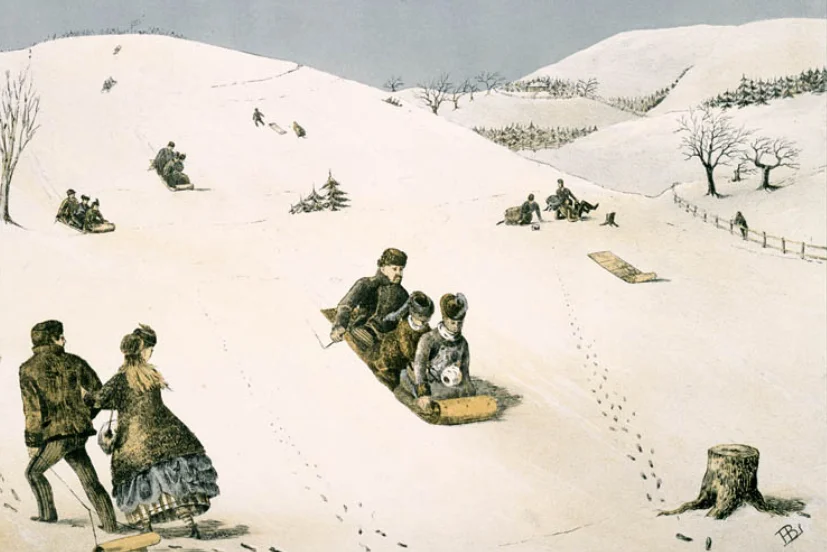
In the late 1800s, a tobogganing craze swept through Canada and the northern United States.
In London, it led to the building of massive, engineered slides that became a central part of the city’s social life.
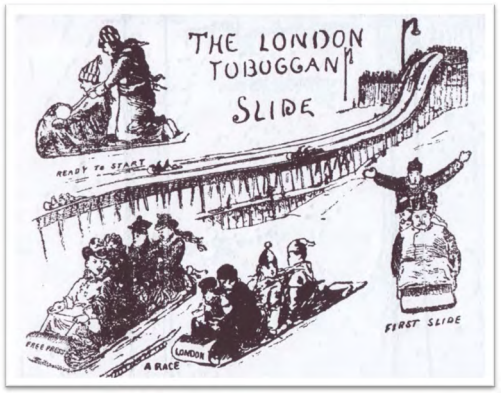
(Source: The London and Middlesex Historian, Vol 22, Autumn 2013)
1885 (Small Beginnings)
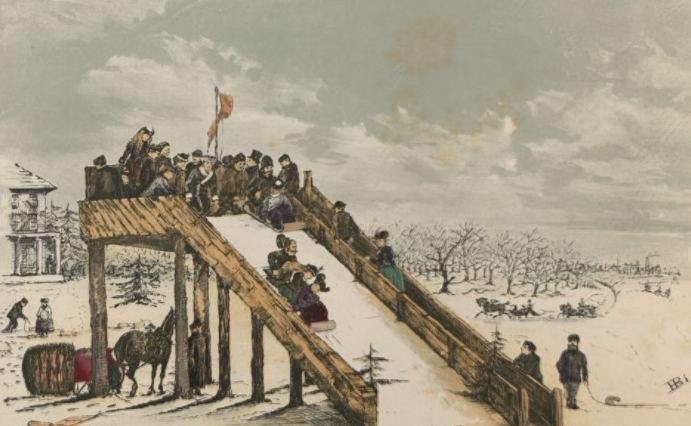
In 1885, an enthusiastic 80-member tobogganing club built the first engineered toboggan slide in London at the Military Grounds at the northeast corner of Wellington Street and Central Avenue.
It was wide enough to allow a couple of four-seater toboggans to descend the 45-degree slope at the same time, with a run of 200 to 250 feet on level ground.
A military band even serenaded the merrymakers who got refreshments at the nearby Gun Shed.
(Source: Canadiana)
1886
The next year, the starting platform was bigger and better, rising to a height of 38 feet. Its double chute was divided by foot-high boards and was 160 feet long. The course, which was lit by two rows of lanterns, went from the top of the ramp down to the end of the 279-foot-long run where a cushioning bank of snow was piled up against the street-side fence.
1887
The next season saw the construction of a 480-foot-long wooden slide starting on a vacant lot on Ridout Street near the west end of Albert Street.
Pairs of riders climbed sturdy wooden steps to the platform 15 feet above the river embankment, then launched themselves down the steep dual chutes, sliding a long distance before ending up down below on the river flats.
Three overhead electric lights, a novelty at the time, attracted crowds of people on a nightly basis.
1888
The next season saw two slides competing for patrons. The 800-member London Toboggan Club opened the new London North Slide further up the eastern bank of the Thames River.
The dual chute was higher and longer than the previous one, being 82 feet high and 780 feet long with a total run of 1,620 feet. It took 21 seconds for the descent, and then the riders faced a long walk back up the path, dragging their toboggans behind them. The contractors used nearly 60,000 feet of lumber in its construction.
Over 2,000 people watched the preliminary heats of the club’s first (and only)
annual races on the evening of Tuesday, January 17th.
Not to be outdone, London South opened its own facility that January on Craig Street. From the brink of the hill overlooking what is now Thames Park, riders accelerated down the icy chutes, then flew through two dips on an open course across the flats, where they were challenged by a few trees for added excitement.
Sometimes toboggans ended their run by careening over the riverbank onto the ice. Since the Thames is quite shallow there, apparently drowning wasn’t a concern at the time.
1889
The next season saw the introduction of the London South Slide that started at the Hunt Dam and went straight down the frozen river, all while being lit by electric lights.
Another slide opened on what eventually became the campus of Western University.
In the rural areas outside London, people started setting up toboggan runs that took advantage of steep hillsides on their farms to get in on the action.
And of course, all of these sites charged admission to cover their costs at the very least, and to make a profit at best.
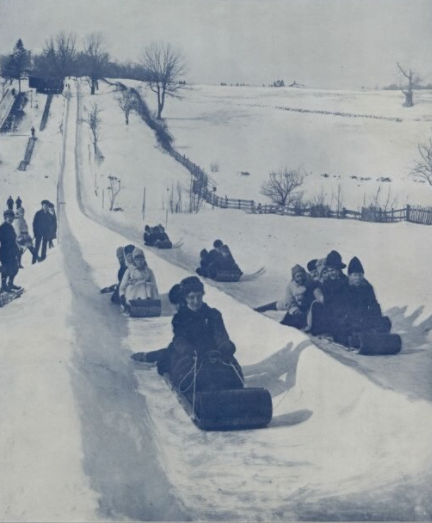
(Photo credit: Canadiana)
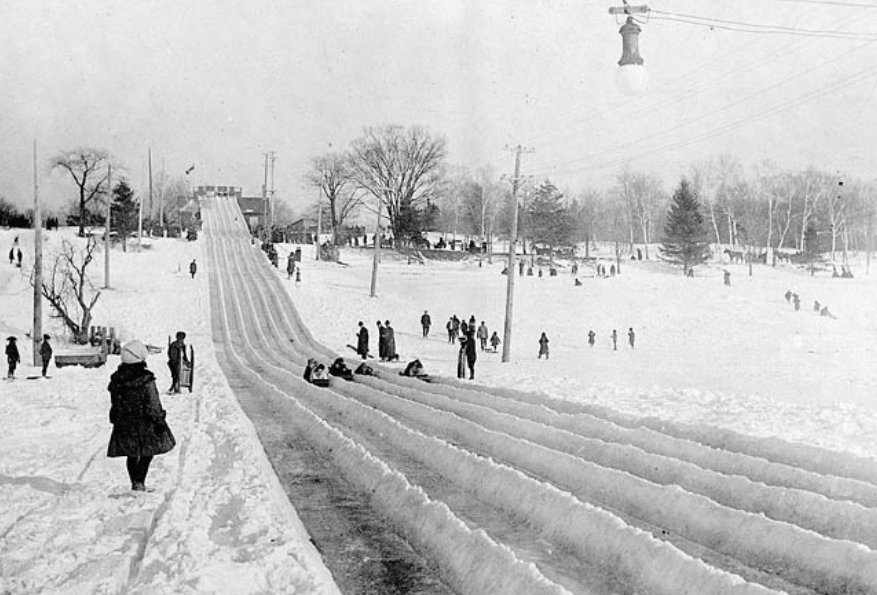
(Photo credit: Libraries and Archives Canada)
1890 & 1891 (Two Years of Bad Weather)
The winter of 1890 was unusually warm in London. No snow fell until the second week of February, making for a very short season.
In 1891, the season started early with lots of snow, but also ended early, closing by the middle of January, when the snow melted.
1892 (The End of an Era)
By 1892, the exciting but brief era of engineered toboggan slides in London was over. Did fickle weather play a role in their demise, or did people simply decide that natural hills provided them with enough excitement?
After all, toboggan runs on natural hills might be shorter and less steep than the engineered slides, but hey, THEY WERE FREE!
Tobogganing In London in Modern Times
With so many hills throughout the city, Londoners of all ages have continued the winter tradition of tobogganing.
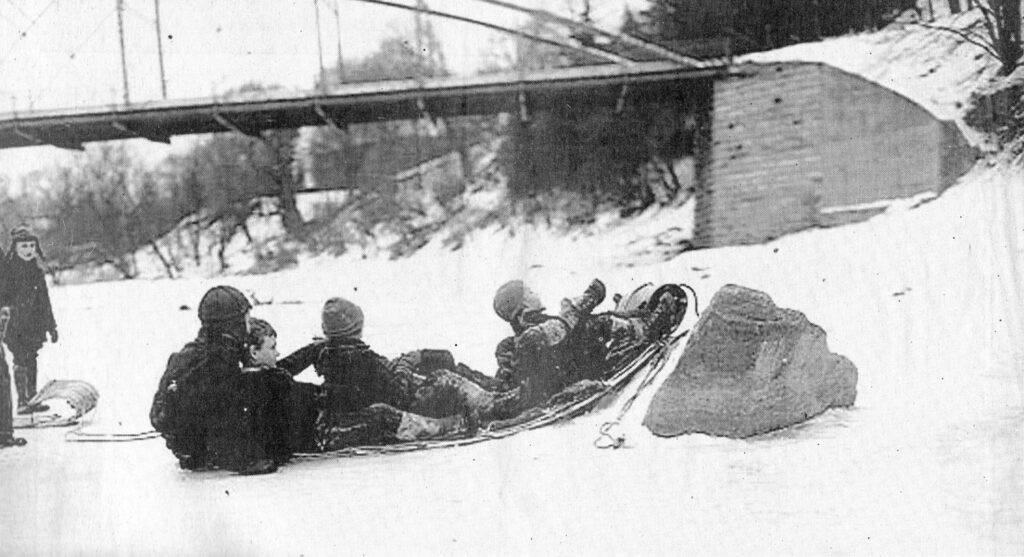
(Photo credit: Western Archives via London Free Press Jan 1st, 2001 edition )
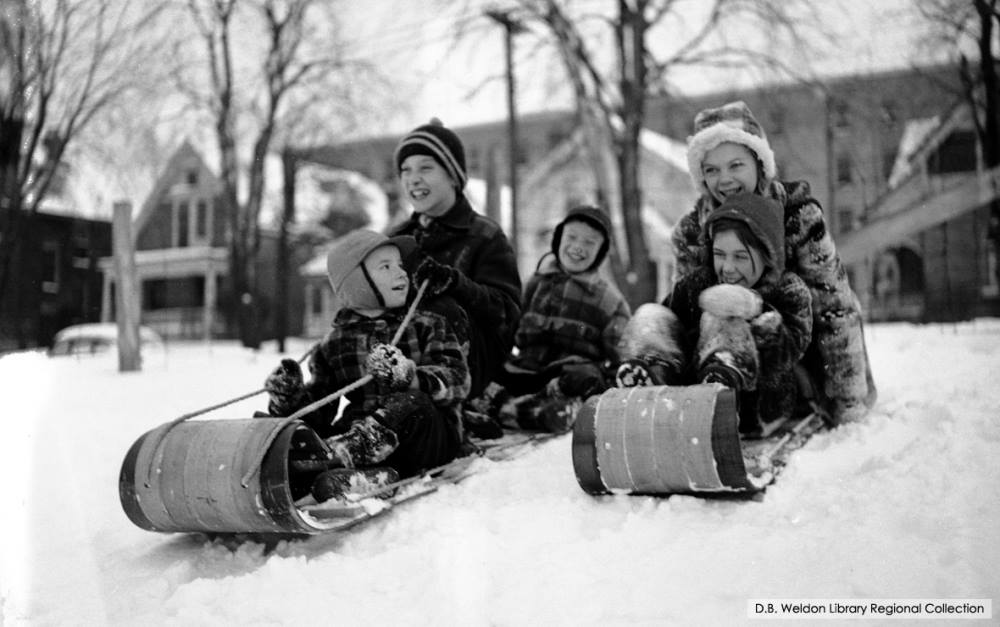
(Photo credit: Archives and Special Collections, London Free Press Collection of Photographic Negatives)
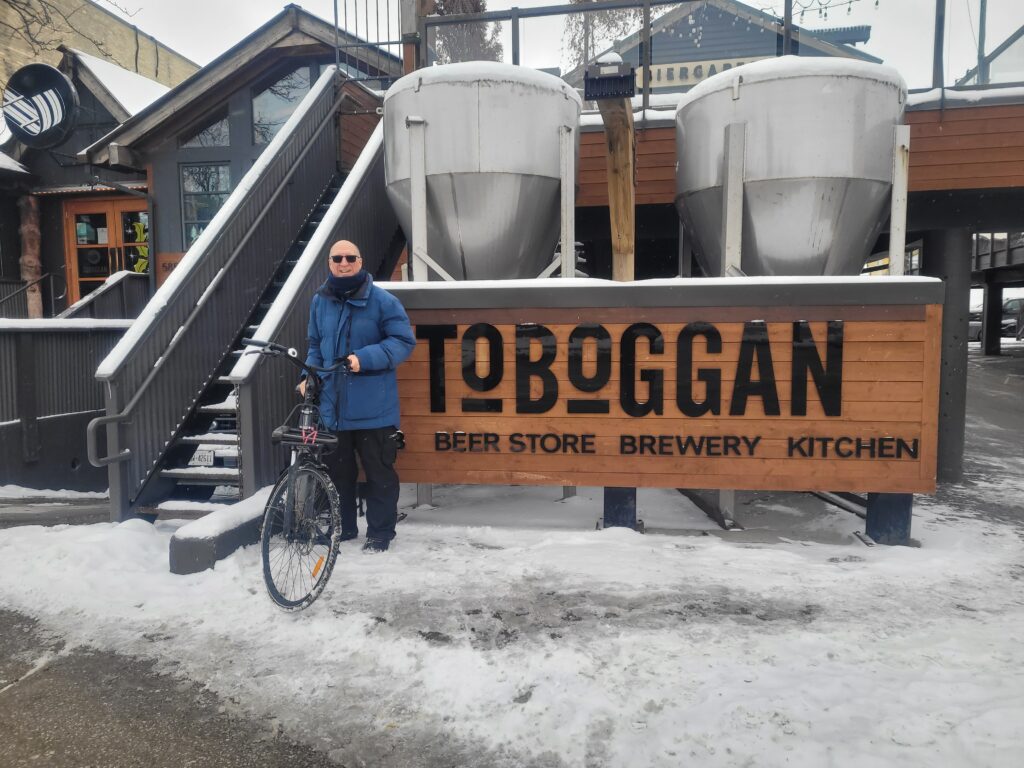
As a tip of the hat to the toboggan craze of the late 1800s, a local craft brewery on Richmond Street opened its doors in 2014.
Called the Toboggan Brewing Co., it is decorated with toboggans hanging from its ceilings and has period photos on its walls.
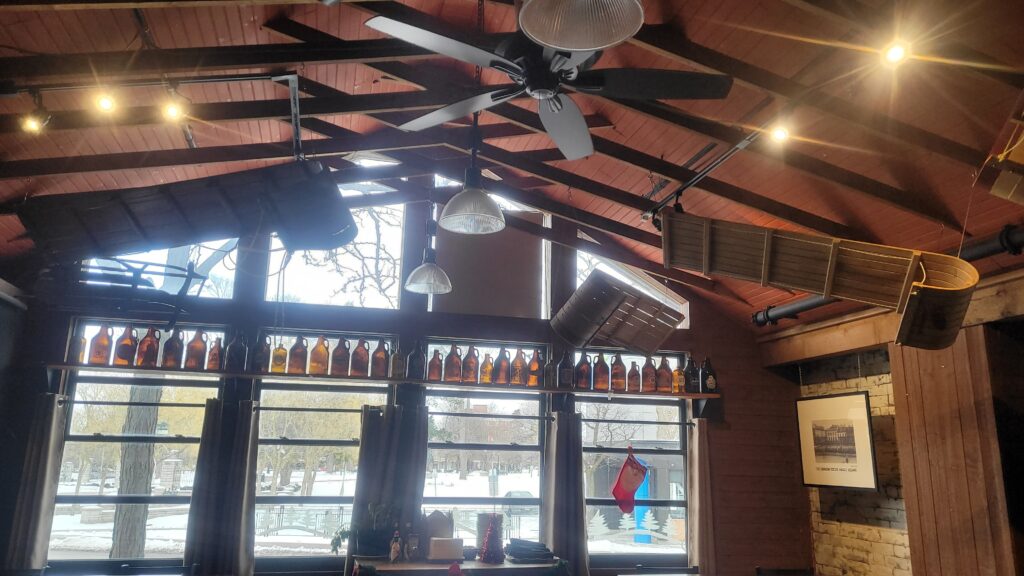
Can you spot the two wooden toboggans hanging from the ceiling?
(Photo credit: Lawrence Durham)
So whether you’re the active type who slides down hills on a toboggan or the type who prefers instead to sip a cold brew with friends in The Toboggan, there is a place for you here in London.
(Photo credit: Lawrence Durham)
Hi, I’m Lawrence – bicycle tour guide, storyteller, and enthusiastic cheerleader of all things London.
I love sharing stories about what makes our city so special (in all four seasons). Perhaps, when the weather turns warmer, I can show you around London… on a bicycle, of course.
Leave a Reply