
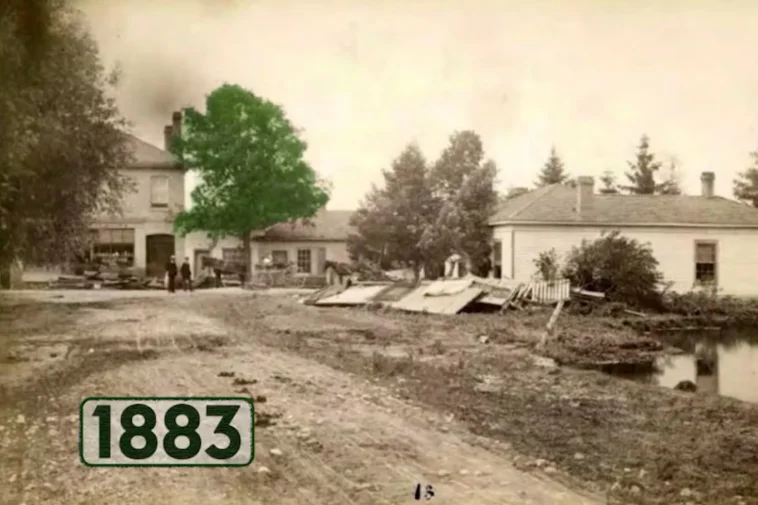
Every city has its monuments. But in London, Canada, one of our most magnificent monuments isn’t made of brick or mortar—it’s a living, breathing giant.
Tucked away in the charming Blackfriars district, a majestic white oak stands as a silent onlooker to two centuries of history.
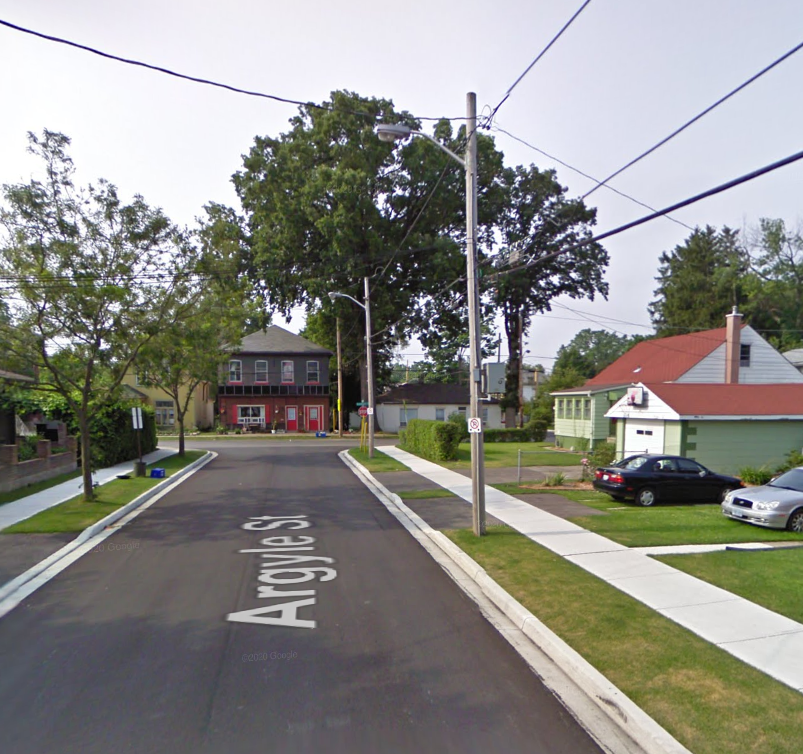
(To view the neighbourhood, click here: Google Street View)
A Witness to London’s Earliest Days
This tree has seen the transformation of the landscape from dense forest to a thriving modern city. It’s a direct, living link to a precolonial London, a remnant of the vast Carolinian forests that once covered southwestern Ontario.
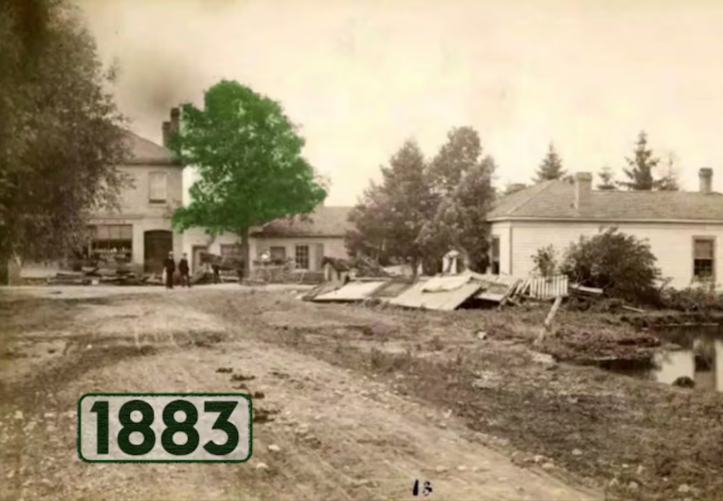
(Photo credit: City of London)
The Dilemma
By 2025, the roots of the massive oak were growing into the foundation of the nearby house, with its five-foot-wide trunk being only inches away from the edge of the roof.
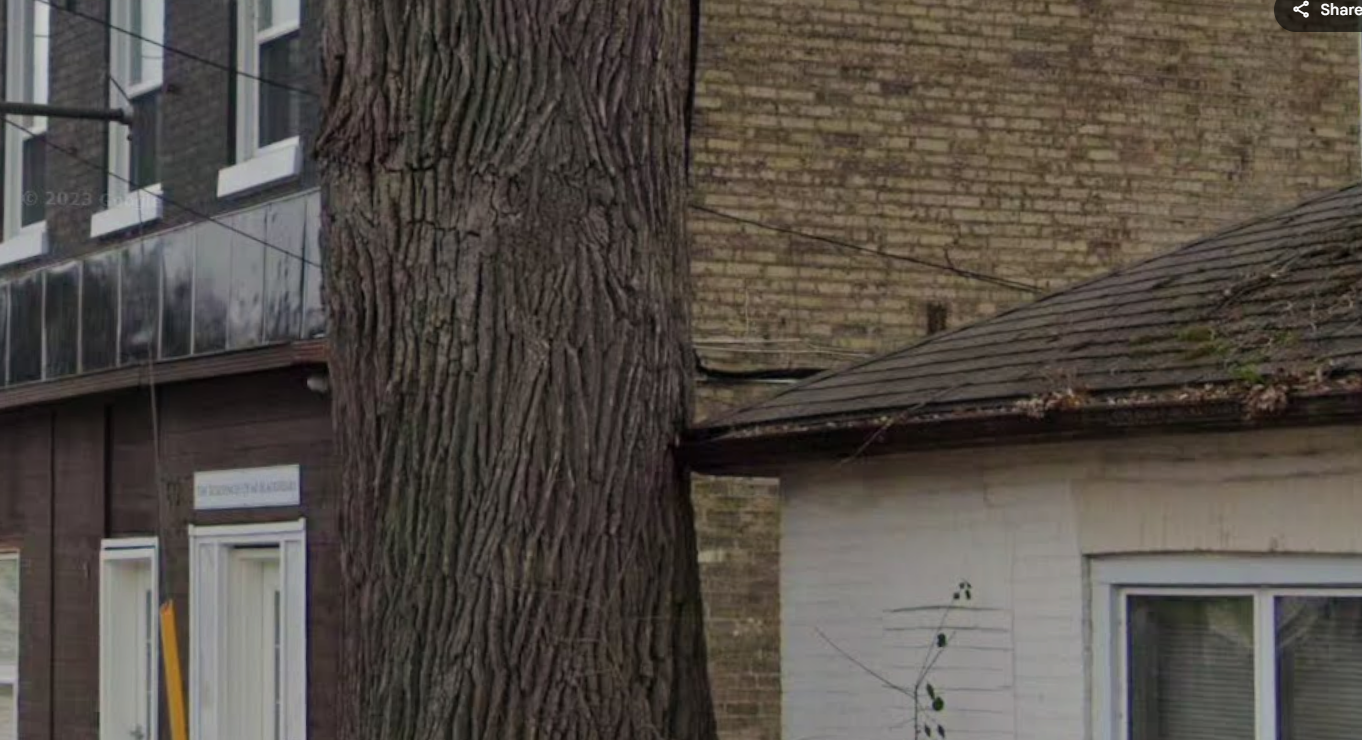
(To view the neighbourhood, click here: Google Street View)
A decision had to be made. Does the city save the building or the tree? One had to go.
The problem was that the heritage house was protected. But so was the tree because the Heritage Act specifically includes landscape features as important elements.
According to one consultant, “We have two heritage attributes [where] one has essentially been destroying the other. The root system of the tree has been growing into the (house) structure for several years.”
The Verdict
A few factors tipped the scales in favour of the tree:
- The interior of the heritage house was destroyed by fire in 2022
- An arborist’s report described the tree as “one of the nicest oak trees in the city,” and that, for “its age and structure, it is in impeccable condition.”
So it’s not surprising that city staff recommended permitting the house to be demolished while protecting the tree.
City Council agreed, so long as the developer followed a set of strict conditions:
- No mechanized equipment would be permitted near the tree during demolition or construction.
- Part of the foundation must remain buried in the ground.
- The new house had to be built near the centre of the property – a substantial distance from the oak tree.
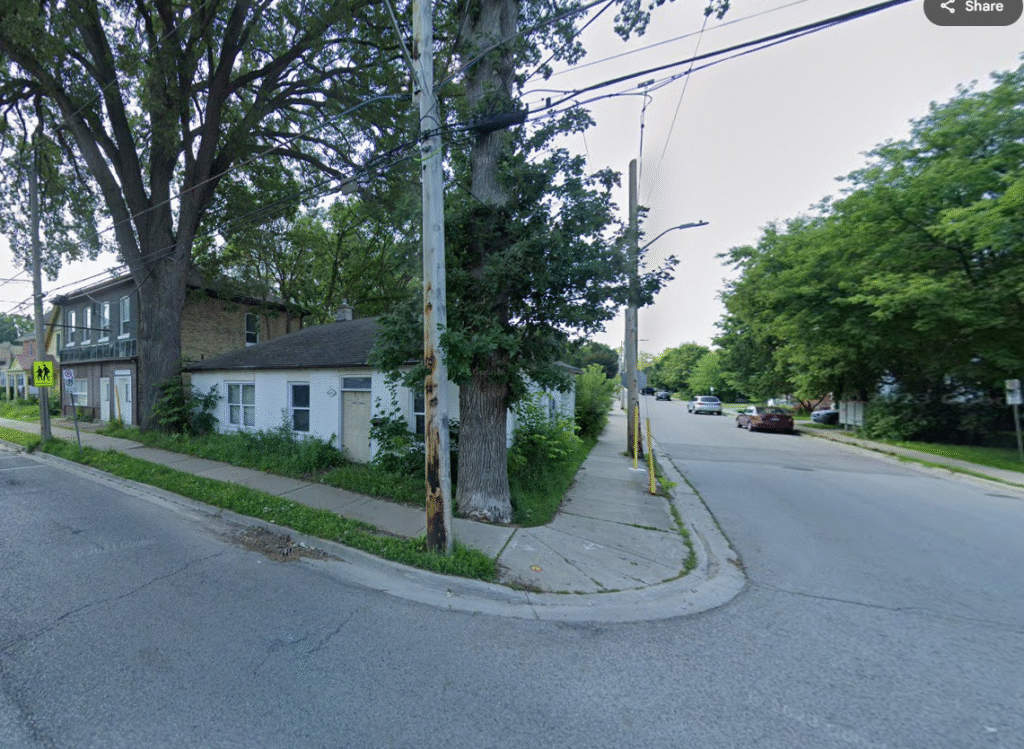
(To view the neighbourhood, click here: Google Street View)
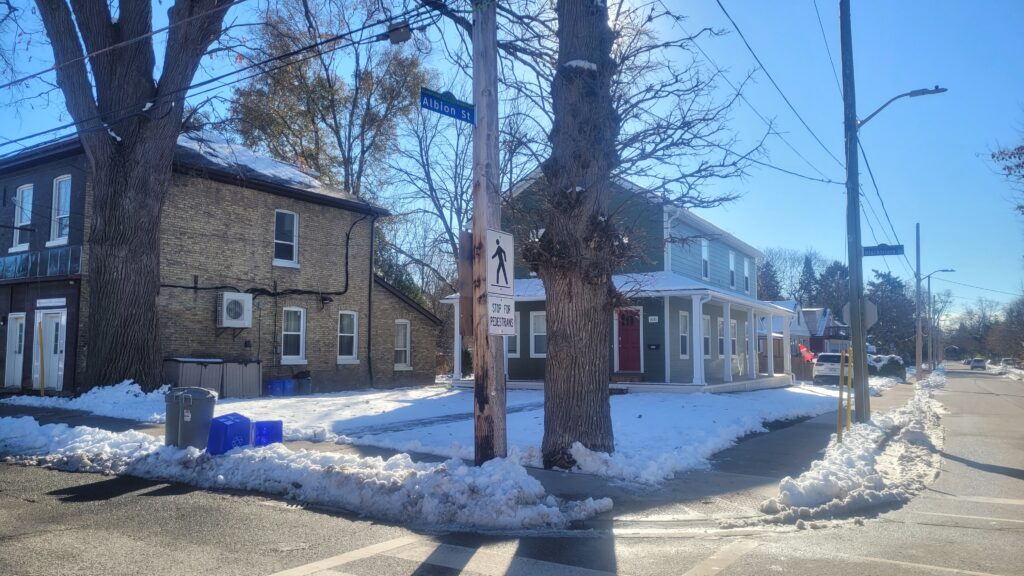
(Photo credit: Lawrence Durham)
The Best Part
So, the next time you’re wandering around London, remember that some of our most fascinating history isn’t confined to plaques and museums—it’s growing right beside us.
And the best part? You can go and see this incredible tree for yourself.
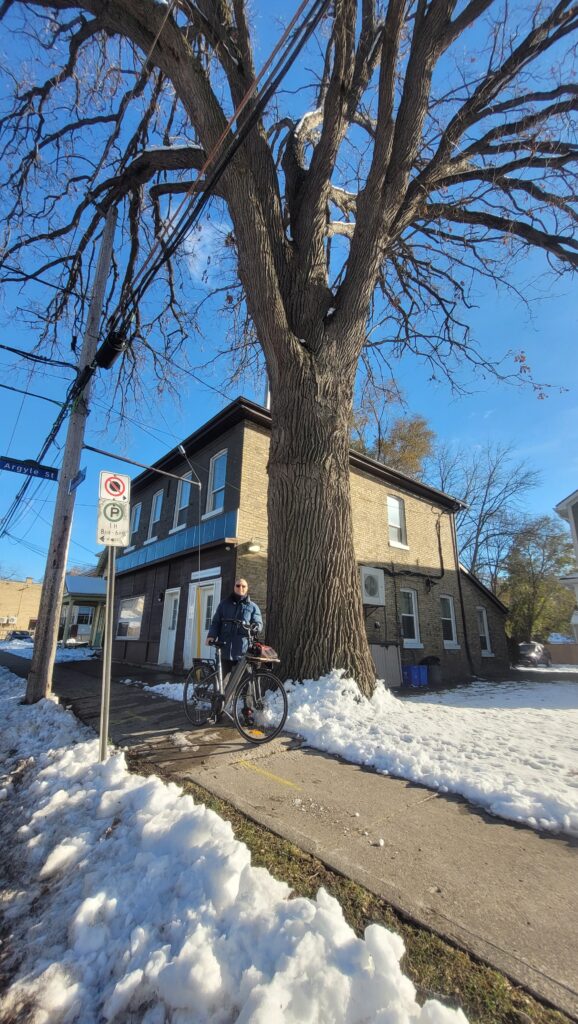
(Photo credit: Lawrence Durham)
Hi. I’m Lawrence – bicycle tour guide, storyteller, and proud Londoner.
I love shining a light on the hidden gems and incredible stories that make our city special, like this heritage oak. If reading this makes you want to experience the charm of Blackfriars and other hidden corners of London up close and personal, why not join me for a guided bicycle tour?
Leave a Reply