
[6-minute read]
Today, London, Ontario, is a vibrant, green city of nearly half a million people, known for its parks, trails, and welcoming neighbourhoods.
But its origins tell a different story, one of astonishing resilience. Before the skyscrapers, the universities, and the cycling paths, this was a place where survival was a daily conquest.
An Unforgiving Landscape: Mud, Stumps, and Quicksand
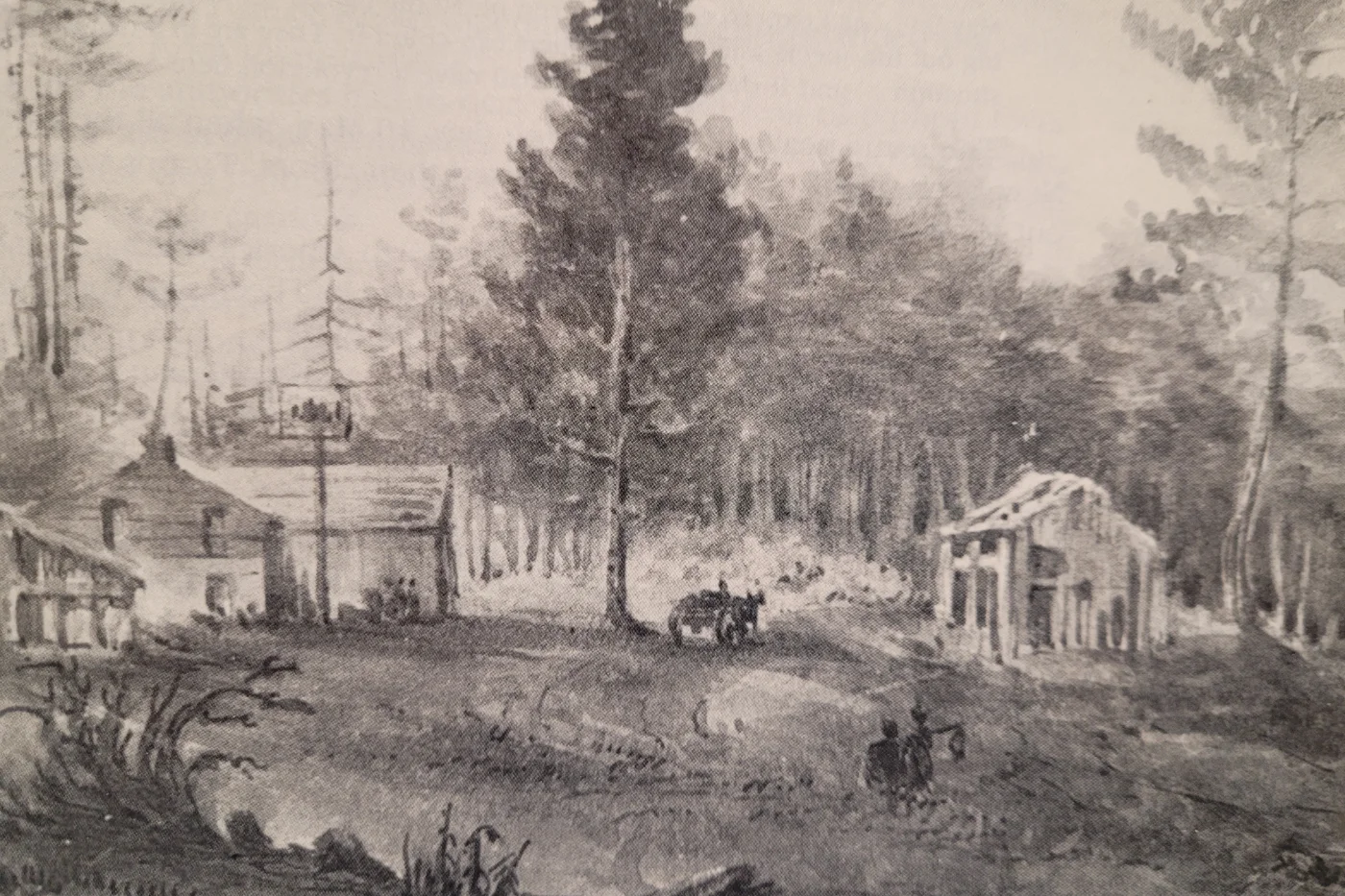
When surveyors arrived in 1826 to plot out the new site for the village of London, they weren’t met with gentle, farm-ready land. They faced an almost impenetrable forest. The nickname “Forest City” wasn’t a marketing slogan; it was a stark reality.
At that time, the downtown core was a challenging terrain of gravelly knolls and hidden quicksand. Streams and ravines cut through the area where buildings and streets now stand.
Stumps from chopped-down trees remained in the streets for years, making pedestrian travel an obstacle course. Directly east of the old courthouse on Ridout Street, where Canada Life Place now sits, lay a swamp so viscous it swallowed ox-carts and wagons whole.
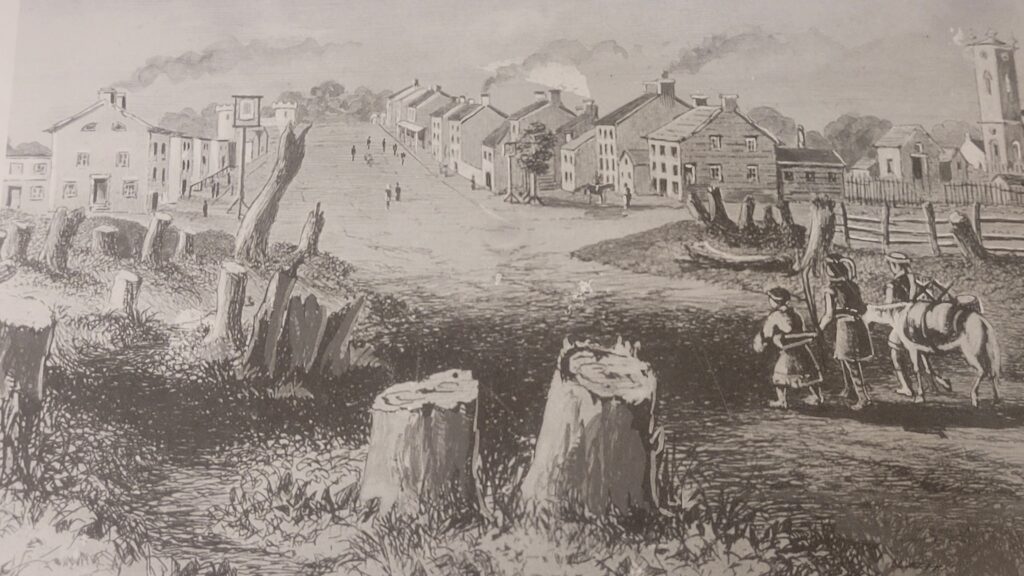
(From a painting by Lady Eveline-Marie Mitchell Alexander, courtesy of the 1999 Orr Collection at Museum London).
Law, Order, and Growing Pains
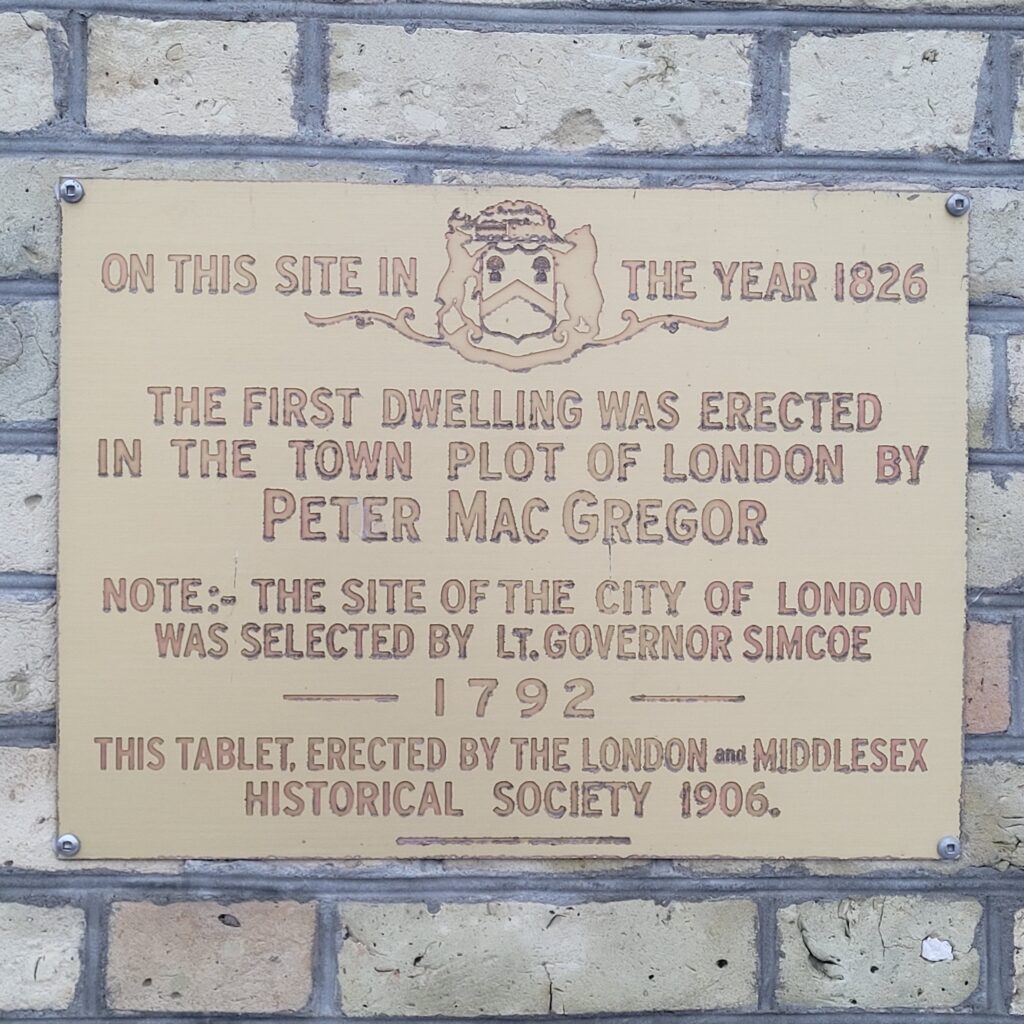
Despite the hardships they all faced, the city’s first resident, Peter MacGregor, typified the entrepreneurial spirit of those early pioneers. He reportedly opened his tavern by simply hanging a tin cup on a nail and placing a jug of whisky on a stump – a charmingly straightforward “open for business” sign.
Charming as MacGregor’s Tavern might have been, at the courthouse just across the road, justice meted out by the judges could be severe. Under the old British criminal code, judges handed down harsh, mandatory punishments where the death penalty applied to hundreds of crimes, often for minor property offenses. Fortunately, the judges regularly commuted such sentences.
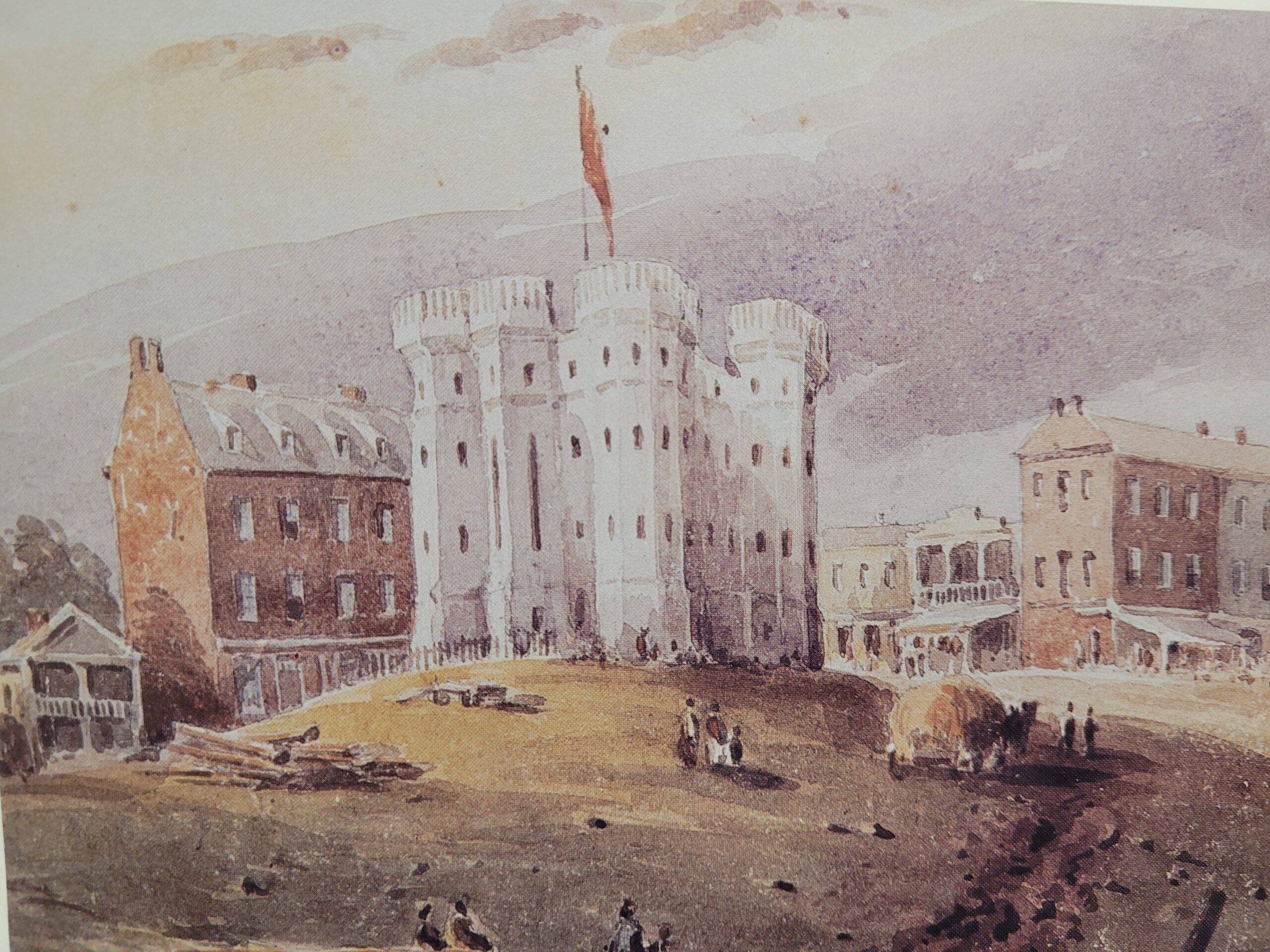
(Painting by: George Russell Dartnell).
Civic life in those days was rowdy; the first municipal elections were public affairs, not secret ballots, leaving room for intimidation and bullying at the polls. Gangs supporting one candidate often congregated outside polling stations, ready to beat up those who voted for their opponent.
The political tensions of the era hit home during the Rebellion of 1837, when groups of discontented citizens from both Toronto and London decided to stage an uprising against the government. Following the Battle of Montgomery’s Tavern in Toronto and a failed attempt at rebellion in London, Britain decided to station a garrison of troops in London to secure the region, shaping the city’s development for decades.
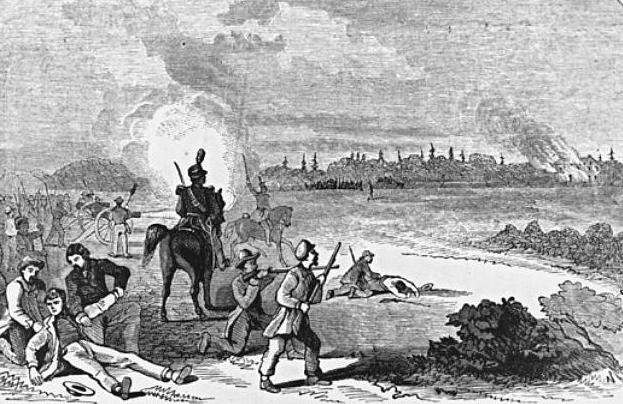

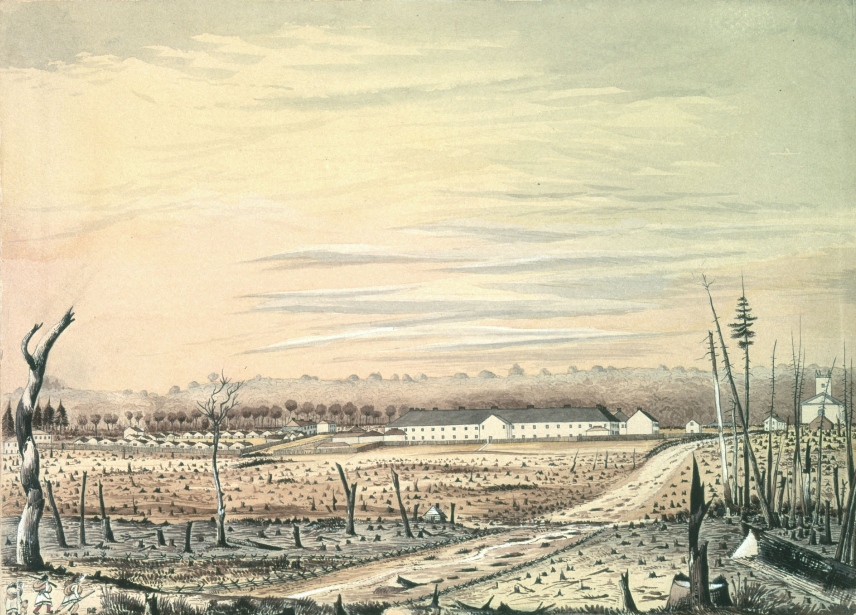
(Painting by Henry Ainslie, Library and Archives Canada)
While the military offered security, it didn’t stop the fires that regularly ravaged the town. With most buildings made of wood and no fire hydrants, fire was a constant threat. Londoners relied solely on bucket brigades, knowing a single spark could erase everything they had built.
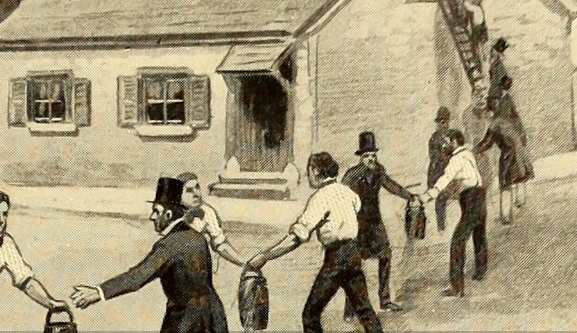
(Photo credit: Wiktionary)
The Constant Shadow: Disease and Health Hazards
In early London, health was precarious for everyone, from the lowest labourer to the highest aristocrat. Consider the fate of Charles Lennox, the 4th Duke of Richmond, for whom Richmond Street is named.
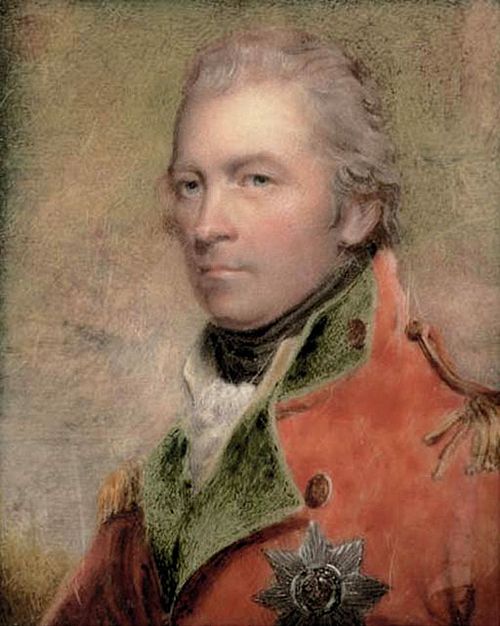
(Painting by Henry Collen)

In 1819, while touring as Governor General in Upper Canada (as Ontario was then known), he was bitten by a fox and died in agony, in what is widely considered a case of rabies – a stark reminder that the wilderness held profound dangers for all, no matter one’s social status.
Then there were the epidemics that swept through London with terrifying regularity.
Asiatic Cholera arrived in 1832 and again in 1849, often brought by immigrants seeking a new life. During the first outbreak, a certain Reverend Boswell famously stood on Blackfriars Bridge warning away travellers from the disease-ridden city.
Ironically, the first victim of the 1832 epidemic was Eliza MacGregor, the sister of Peter MacGregor, the first resident of London. In all, three members of Peter’s family died of cholera. Later in the year, after these sad personal tragedies, he moved to a farm in Westminster Township, where he died at the relatively young age of 52 in 1846.
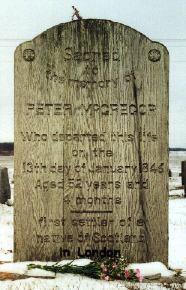
In 1847, typhus ravaged London. The disease was carried by body lice from 100,000 emaciated Irish immigrants fleeing the potato famine in Ireland and arriving in Canada on crowded and unsanitary boats, known as “Coffin Ships.”
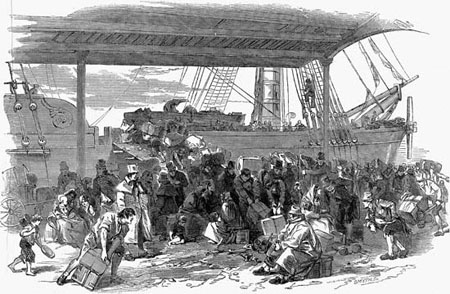
With limited medical knowledge and no modern infrastructure, these events in London were devastating tests of communal endurance.
From Frontier Settlement to Thriving City
Despite the immense challenges, the village of London persevered. By 1855, through sheer determination, these fiesty settlers transformed the village of London into a city with a population of 10,000.
Soon the stumps were cleared, the swamps were filled, and the foundations for the institutions, parks, and neighbourhoods we cherish today were firmly laid.
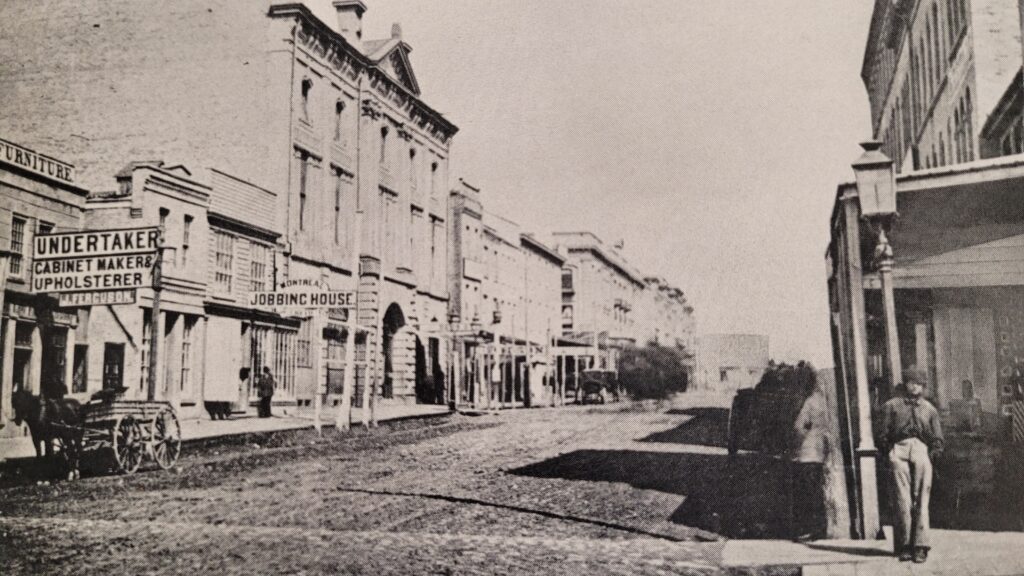
(Photo credit: University of Western Ontario).
Conclusion: Seeing History Through a Modern Lens
The story of pioneer London isn’t just a tale of hardship; it’s a testament to human resilience.
Every time you walk down Richmond Street, cross Blackfriars Bridge, or enjoy a pub in the downtown core, you’re treading on ground made stable by the grit of those first Londoners. Their struggle against the forest, disease, and isolation forged the resilient, community-oriented character of the city we live in today.
To truly feel the depth of this transformation, there’s no better way than to explore it at the gentle pace of a bicycle. You can almost hear the echoes of ox carts on roads once full of stumps and feel the relief of modern, solid ground beneath your wheels.

(Photo credit: Lawrence Durham)
Hi! I’m Lawrence – bicycle tour guide, storyteller, and proud Londoner.
I write these posts to share the incredible, layered history that makes our Forest City so unique. And if reading this makes you want to see these historic spots for yourself, well, I’d love to show you around from the best seat in the house: a bicycle!
Join me for a guided bicycle tour where we connect the dots between London’s tough pioneer past and its vibrant present. Small groups, big stories, and a whole lot of fun. Are you ready to pedal through history?
Leave a Reply