
In early December 2010, a weather event of historic proportions settled over southwestern Ontario, a storm so significant it earned the dramatic name “Snowmageddon.”
For 102 hours between December 4th and 8th, an astonishing 177 centimetres of snow blanketed the region, falling steadily for 98 of those hours.
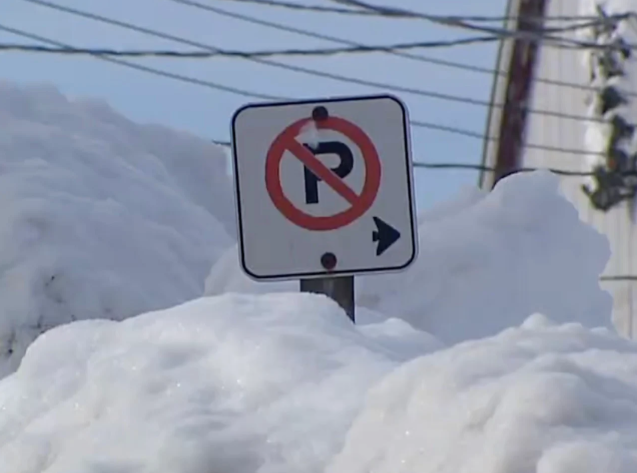
(Photo credit: Yahoo! News)
Snowmageddon was caused by the “lake-effect,” which is a term that describes the streamers that blow in from the open waters of Lake Huron.
This effect is common in winter when winds from the west blow over the still-warm waters of Lake Huron and collide with the cold air over land, dumping all their moisture as snow.
What made “Snowmageddon” unique was its persistence; the winds were “caught in a rut” with no other weather system to push them along, resulting in an unrelenting, multi-day snowfall.
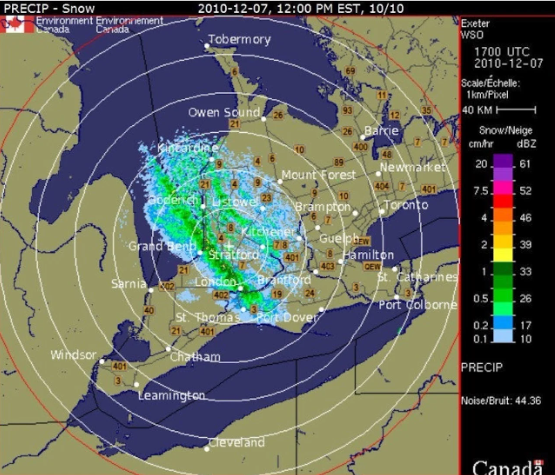
(Source: Environment Canada)
The Day the City Stood Still
Schools closed across the city and throughout surrounding counties on December 6th and 7th.
London’s public transit system halted operations that did not resume until December 9th.
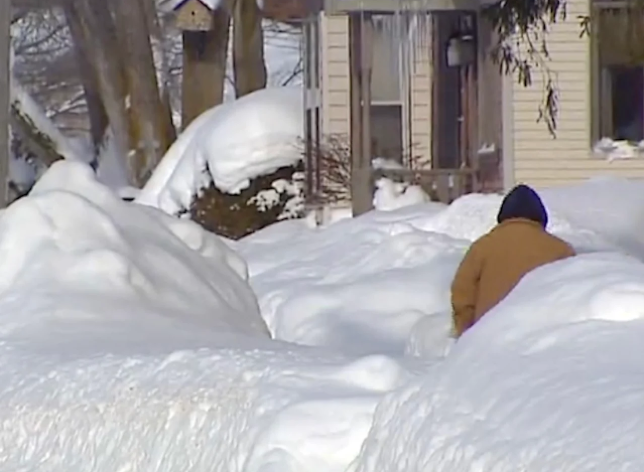
(Photo credit: Yahoo! News)
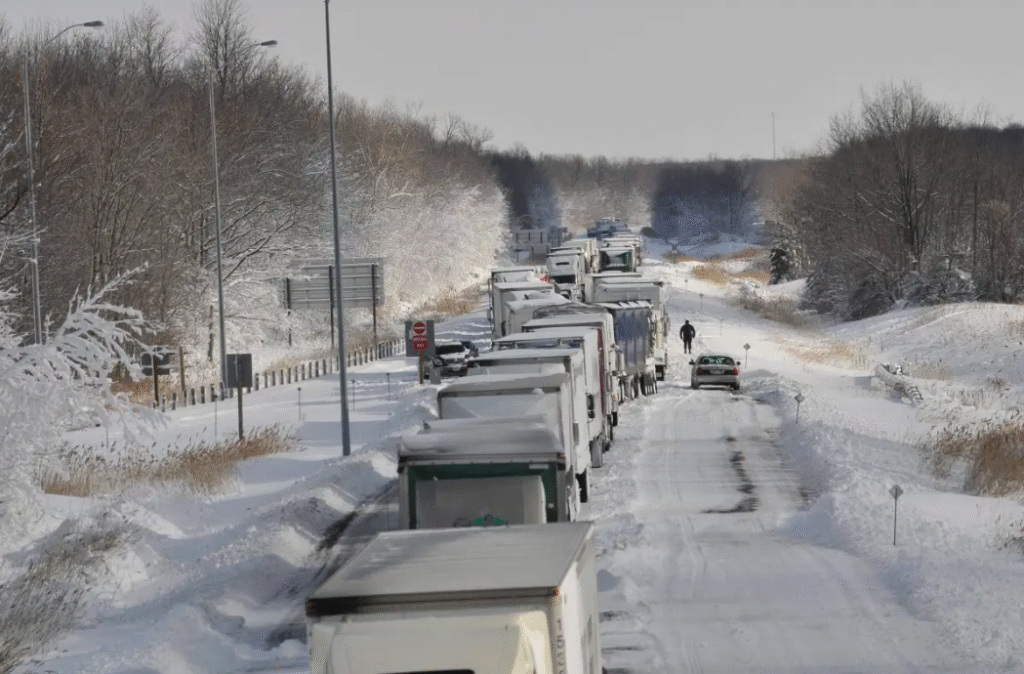
On the treacherous highways to the east of London, high winds created dangerous whiteout conditions and massive drifts. A multi-vehicle accident involving several tractor-trailers closed Highway 401 near Ingersoll.
In Lambton County to the west, a separate but equally intense pulse of the storm on December 12th led to the county declaring a State of Emergency.
Over 1,500 motorists were stranded in deep snow along Highway 402 and other roadways. The situation grew so dire that the county requested the deployment of Canadian military helicopters to undertake rescue flights for those trapped in their vehicles.
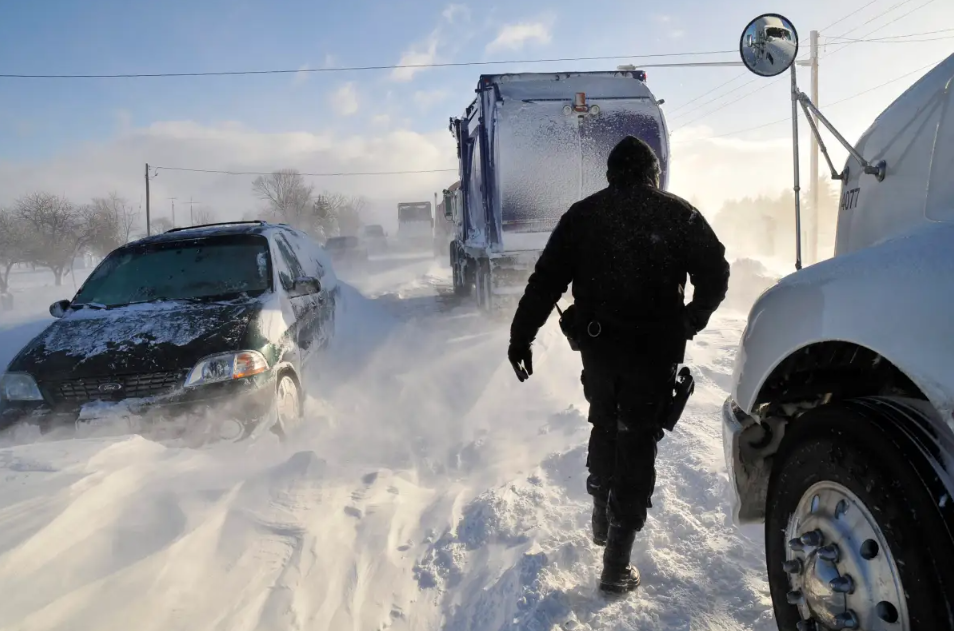
(Photo credit: Glenn Ogilvie / The Canadian Press)
Where History Meets Heart: Stories of Community Resilience
In the midst of the chaos on Highway 402, incredible scenes of generosity unfolded. Individuals opened their homes to complete strangers.
John Prins, a local manufacturer, saw a stranded tanker truck near his driveway and invited the driver in to warm up. He then learned of another stranded driver, and then another. “The next thing you know,” Prins recalled, “we basically pulled that whole group, maybe there was like… 35, 40 people”. His home became an impromptu shelter, with neighbours contributing food and another using farm equipment to dig out vehicles.
(Photo credit: Glenn Ogilvie / The Canadian Press)
Archivist Nicole Aszalos, who was home during the storm, remembers the surreal quiet that followed: “You heard nothing but the howling of the wind and the sound of the snowmobiles very faintly in the distance”. Those snowmobiles became the lifelines of the community, ferrying supplies and helping with rescues where cars could not go.
These stories of neighbours helping neighbours, of communities rallying without a second thought, form the warm, human heart at the centre of this cold historical event.
Discovering London’s True Character
The legacy of Snowmageddon isn’t about preparing for the next great storm. It’s about the character of the people in the area, a character built on resilience, kindness, and a quiet determination to look out for one another.
This is the same welcoming spirit you’ll find all year round in London’s vibrant neighbourhoods, its charming cafés, and along the scenic Thames River pathways.
(Photo credit: Ben Durham)
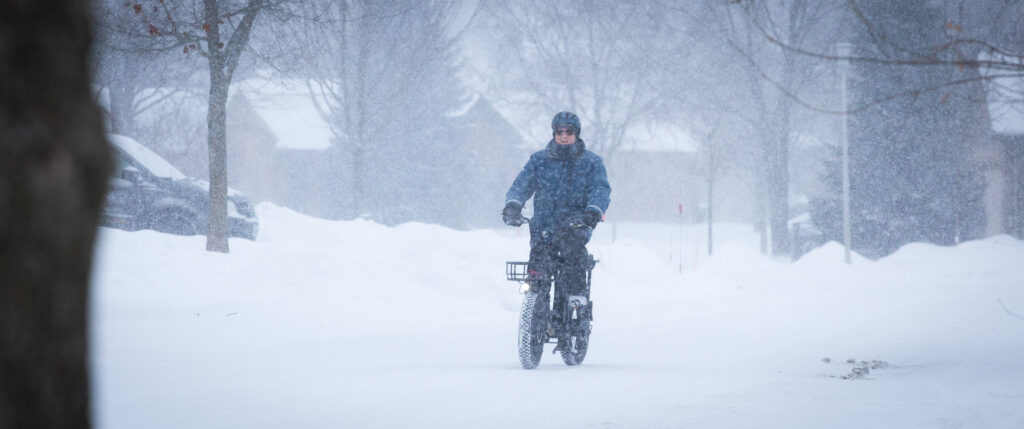
Hi. I’m Lawrence – bicycle tour guide, storyteller, and all-weather cyclist.
I love sharing stories about what makes our city so special, regardless of the season we find ourselves in. As an optimist, I like to say, “There isn’t bad weather, only poor clothing choices.”
But seriously, though, when the weather does turn warmer in the spring, perhaps you’d like to join me as I show you around London… on a bicycle, of course.
Leave a Reply