
or 14 minutes in total (if you also watch the three short videos that are included).
A city’s true spirit is often revealed through its art.
And thanks to the support of community partners and the vision of talented artists, Indigenous art in London is not confined to gallery walls. It’s a living, breathing part of the city you can discover as you explore our streets and byways.
It’s the story of the original inhabitants of this area, the Anishinaabek, Haudenosaunee, and Lünaapéewak peoples, whose vibrant artistic expressions are adding profound depth and voice to the urban landscape.
Below is my 2026 virtual tour of all the Indigenous Art on display throughout London.
Photo credits: All photos in this blog post were taken by the author, unless otherwise indicated.
Western University (North London)
At Western University, three locations display Indigenous design:
- Social Science Centre
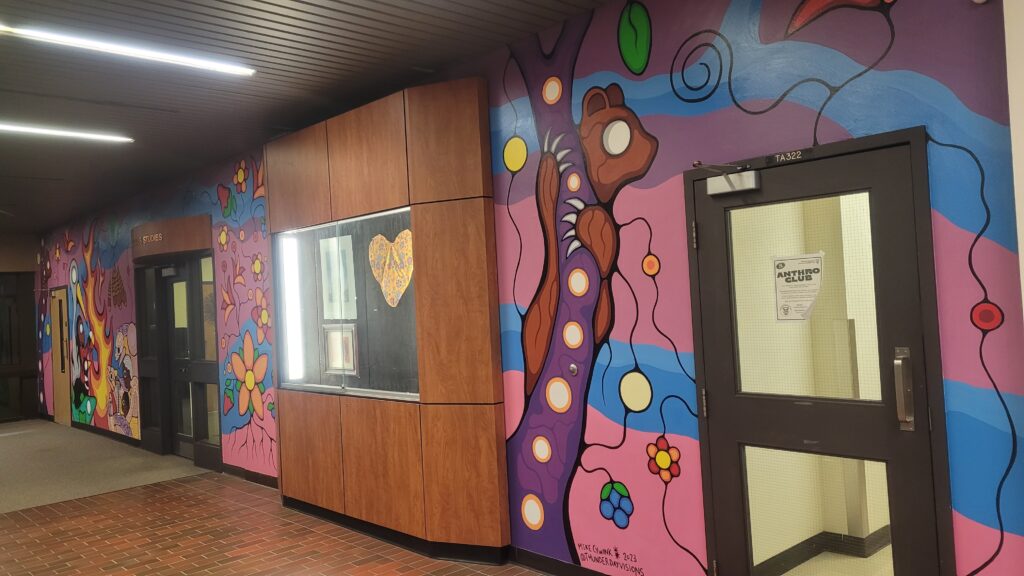
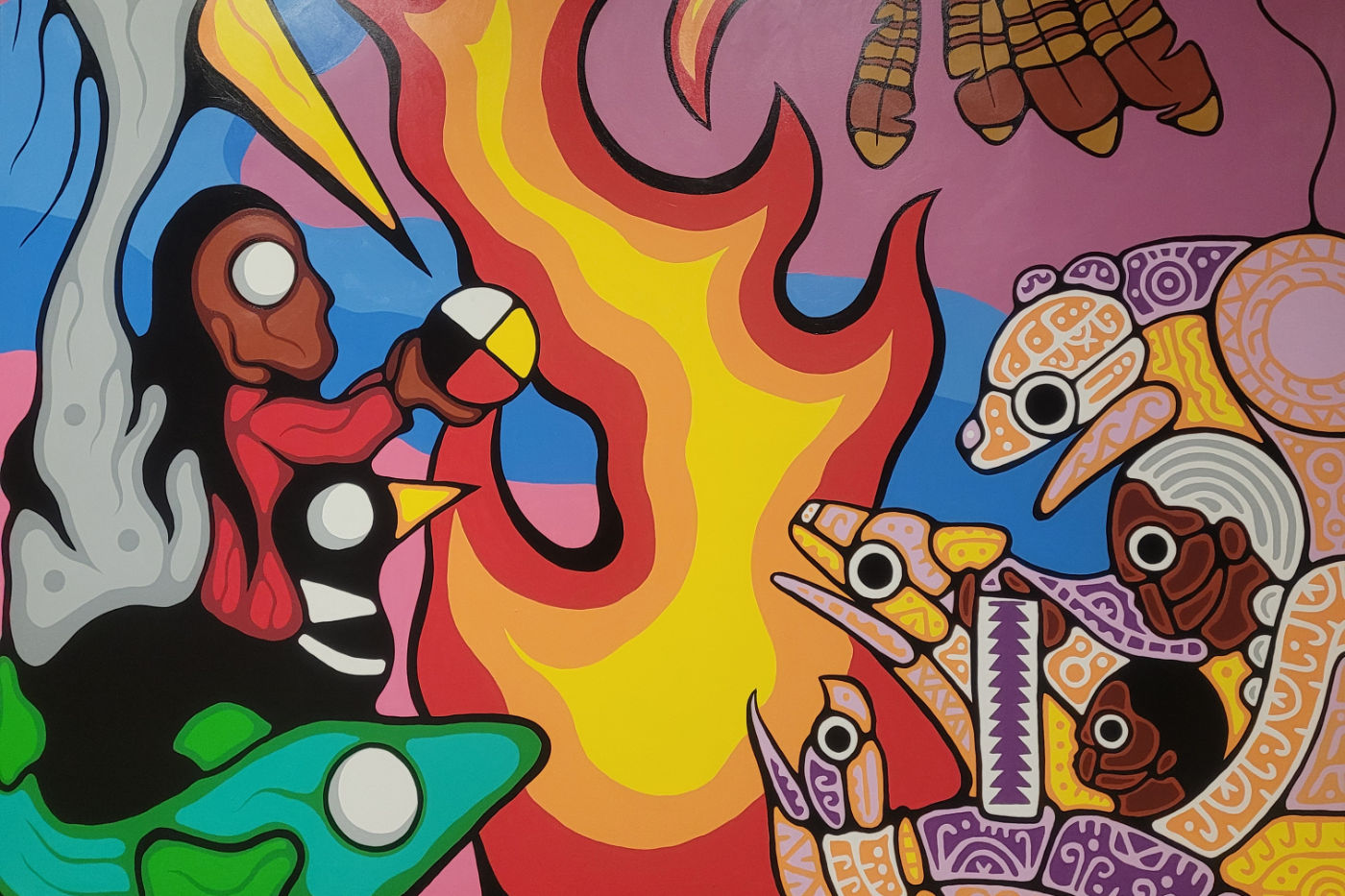
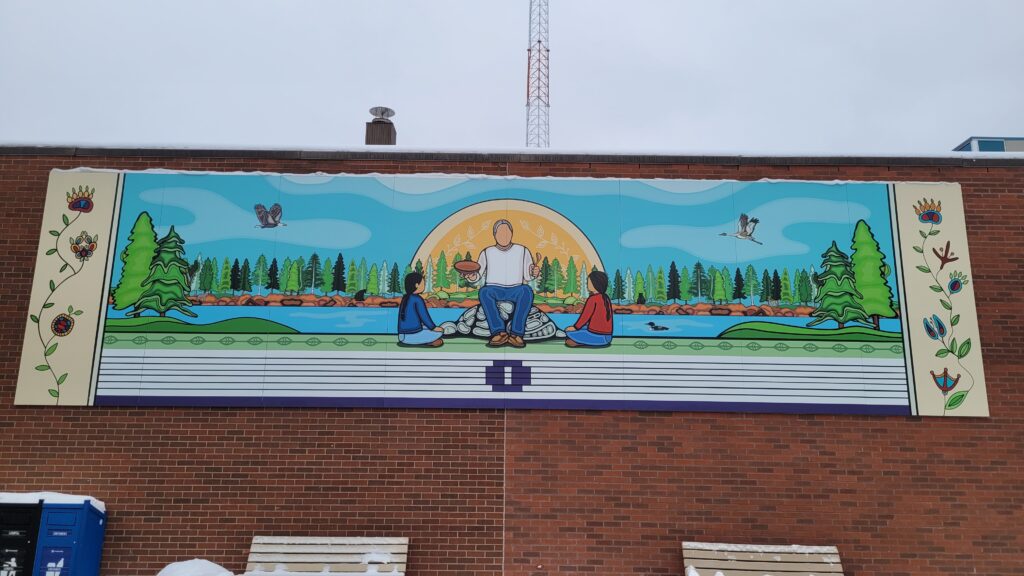
For a close-up shot of this mural, see the photo at the very beginning of this post.
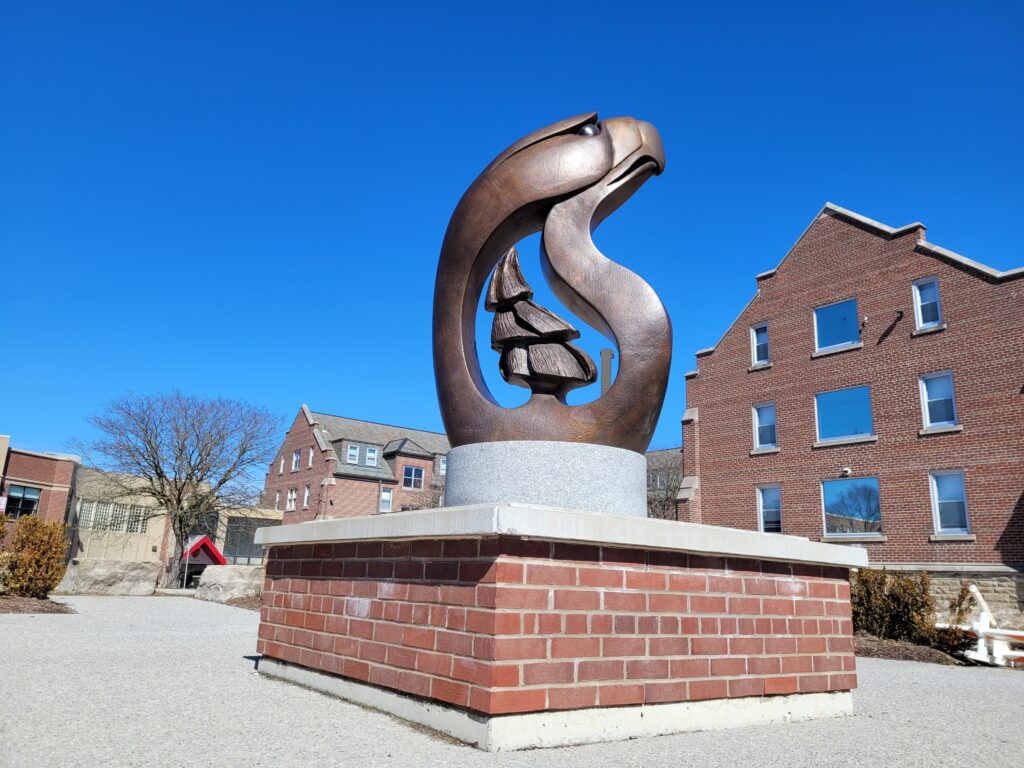
2. Huron University
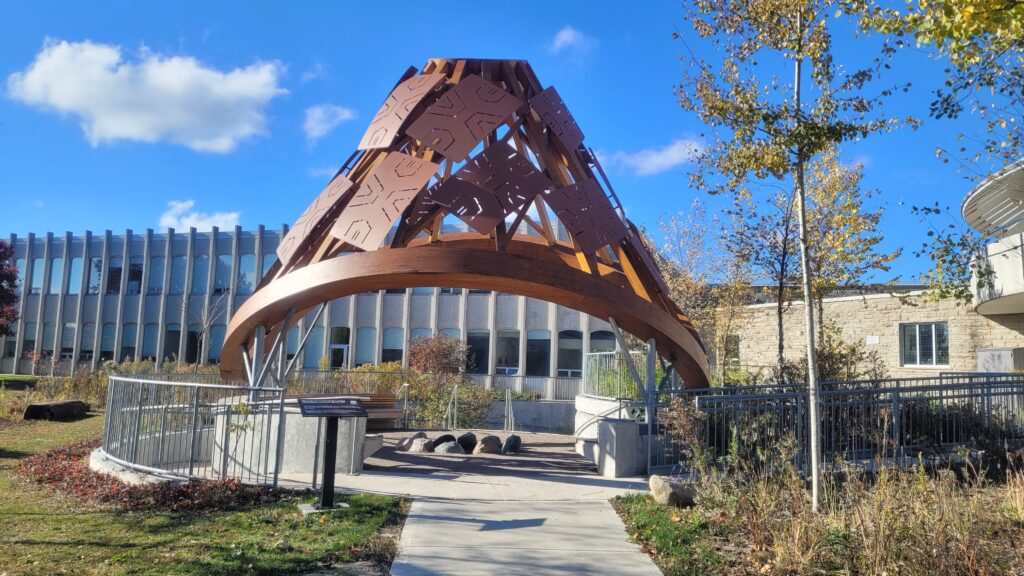
3. Wampum Learning Lodge
Market Lane (Downtown)
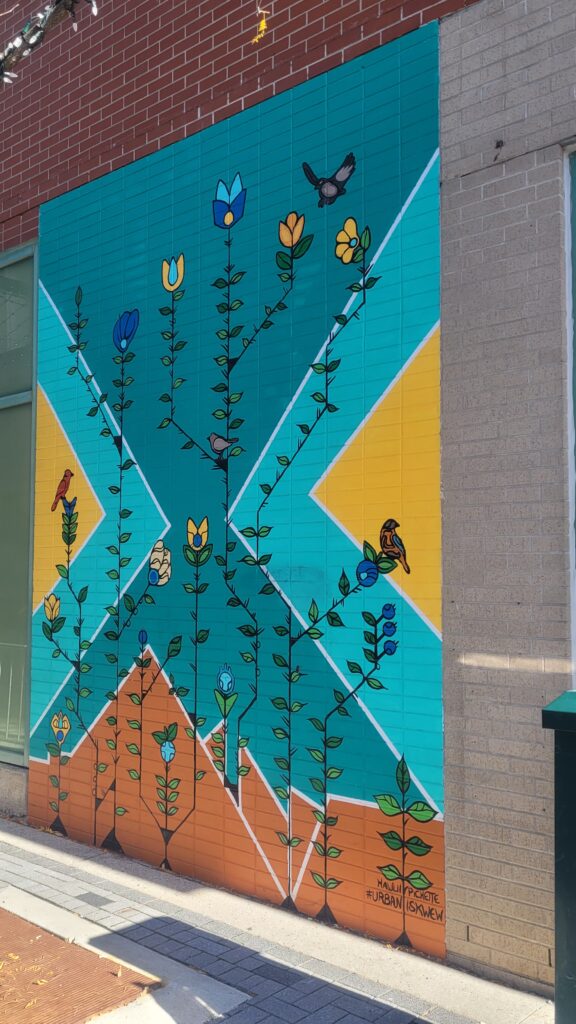
This Market Lane Mural is located in the heart of the city’s historic Covent Garden Market area.
There were many partners involved in bringing this project to life, including Andrew Gunn Consulting, Young & Free Press, Dundas Place, Downtown London, Museum London, WIL Employment Connections, and Tourism London.
Funding for the Market Lane mural project was provided by Tourism London and Downtown London, as well as a contribution from the Estate of Marianne Barrie.
Midtown
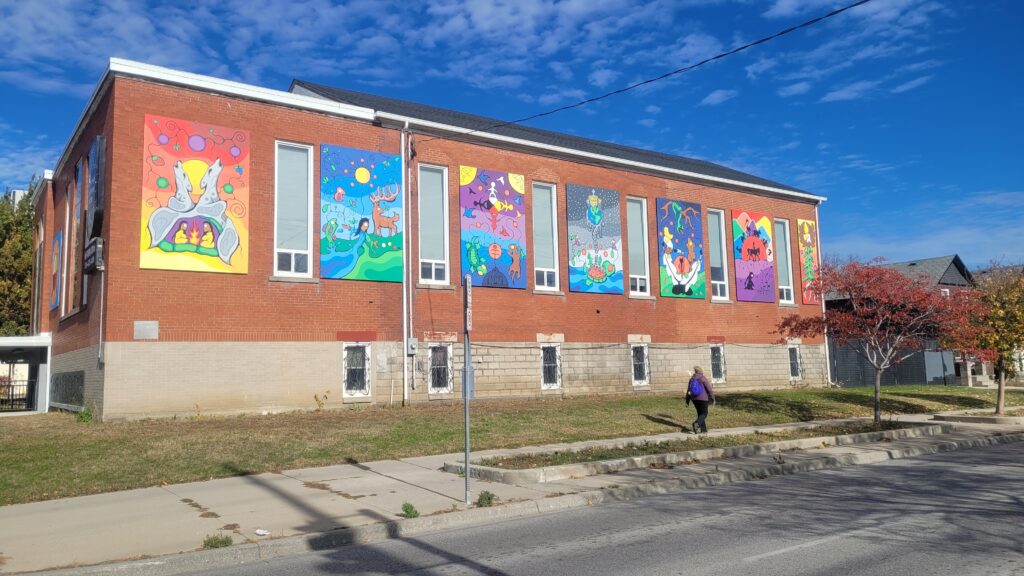
This series of murals is a joint project between the City of London, N’Amerind Friendship Centre, and the London Arts Council. It features many colourful panels on the south wall of the N’Amerind Friendship Centre and is best viewed from Horton Street. The series of panels aims to “honour the legacy of Residential School Survivors and the children who were lost through Canada’s Residential School System.”
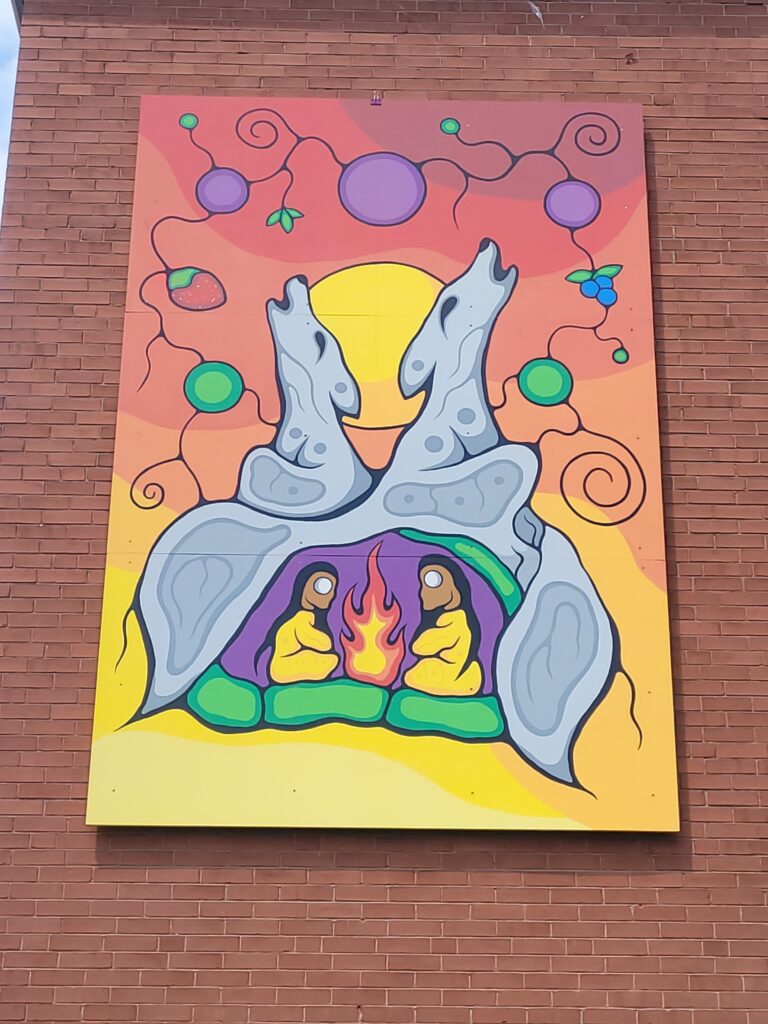
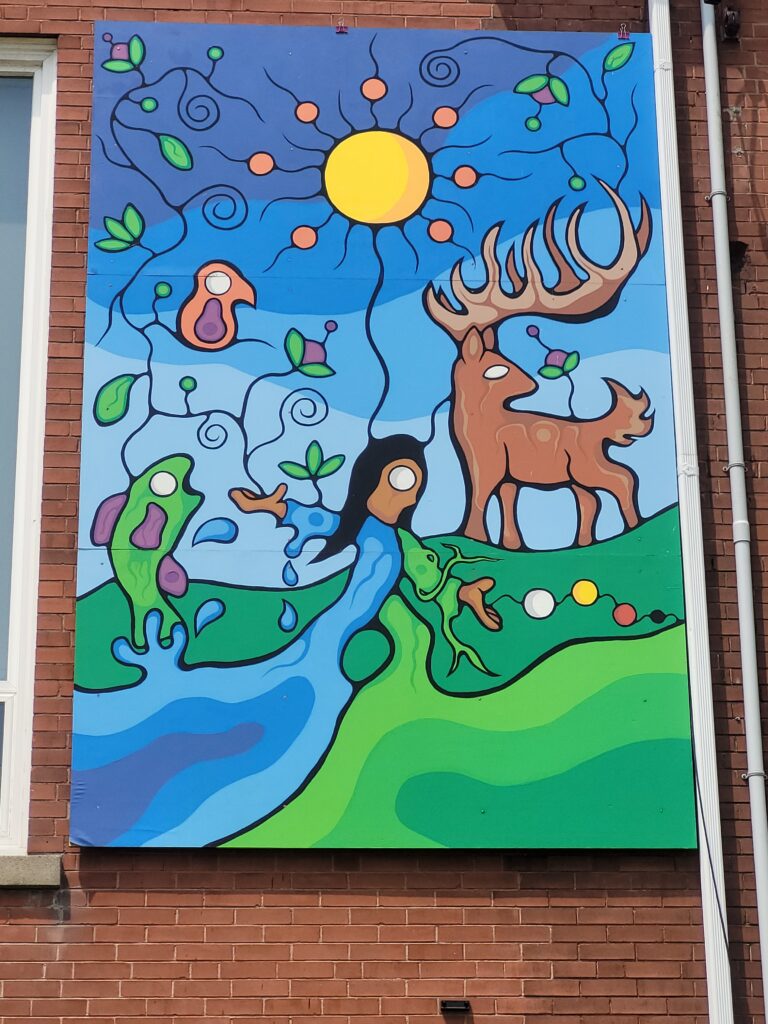
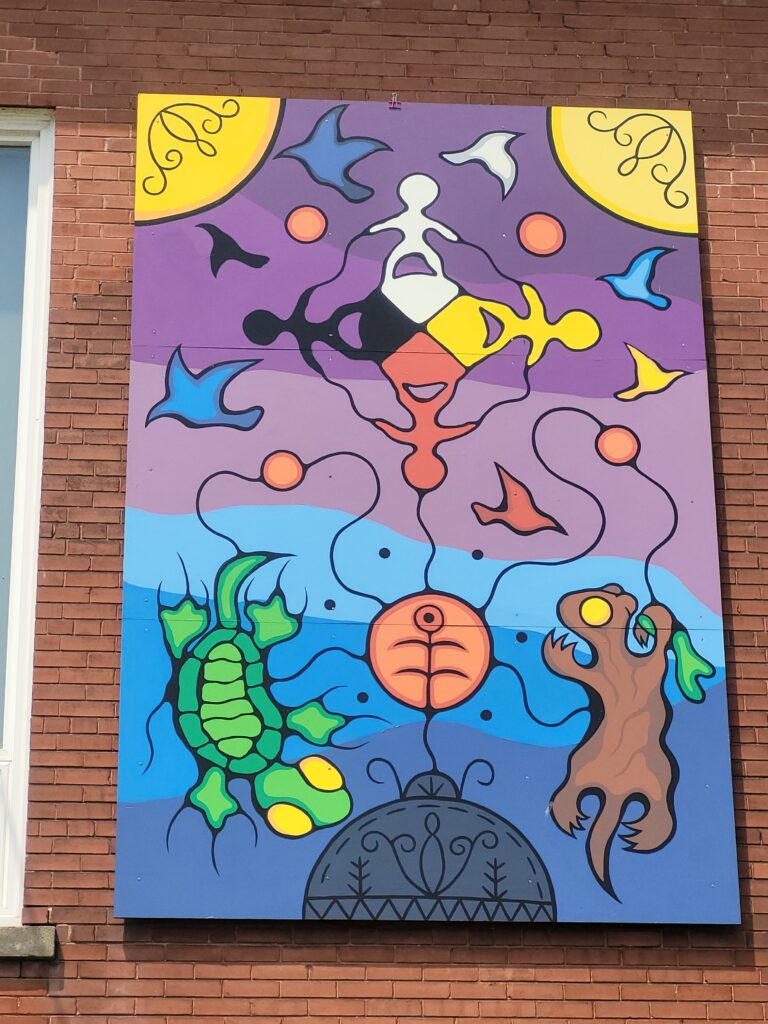
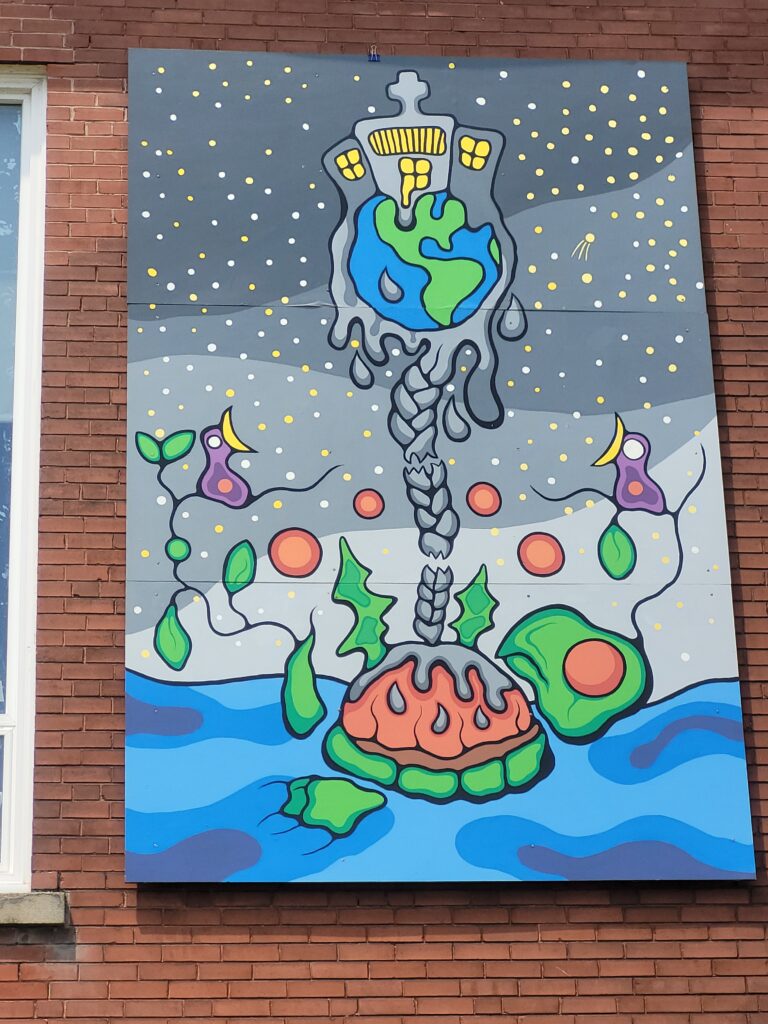
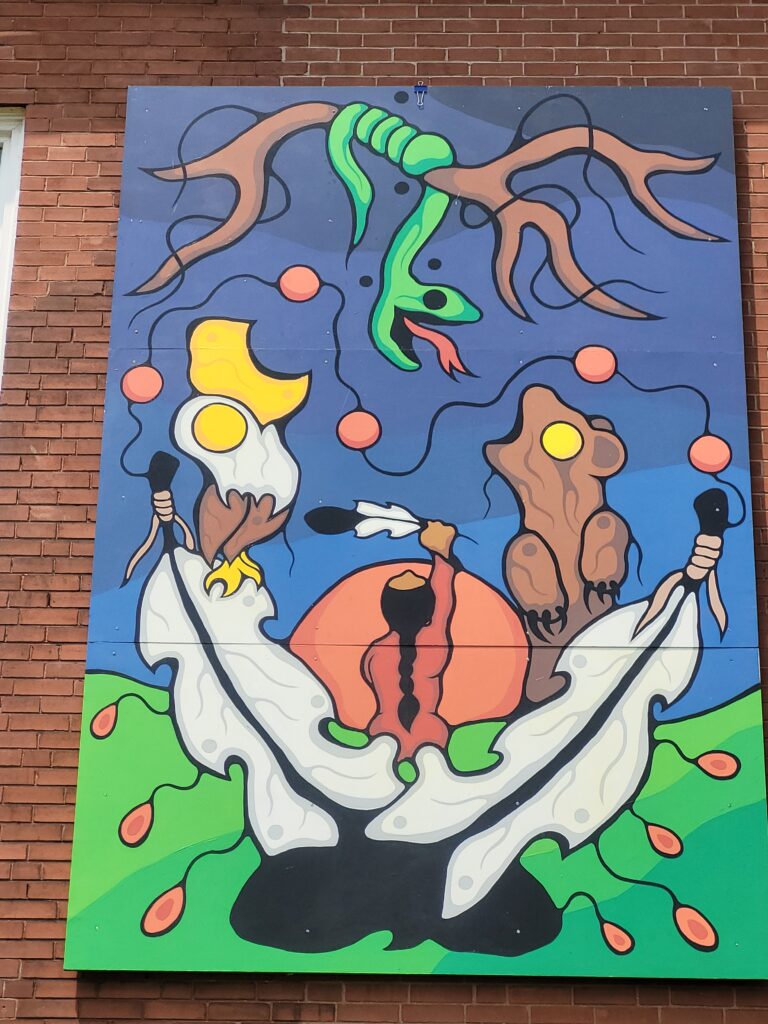
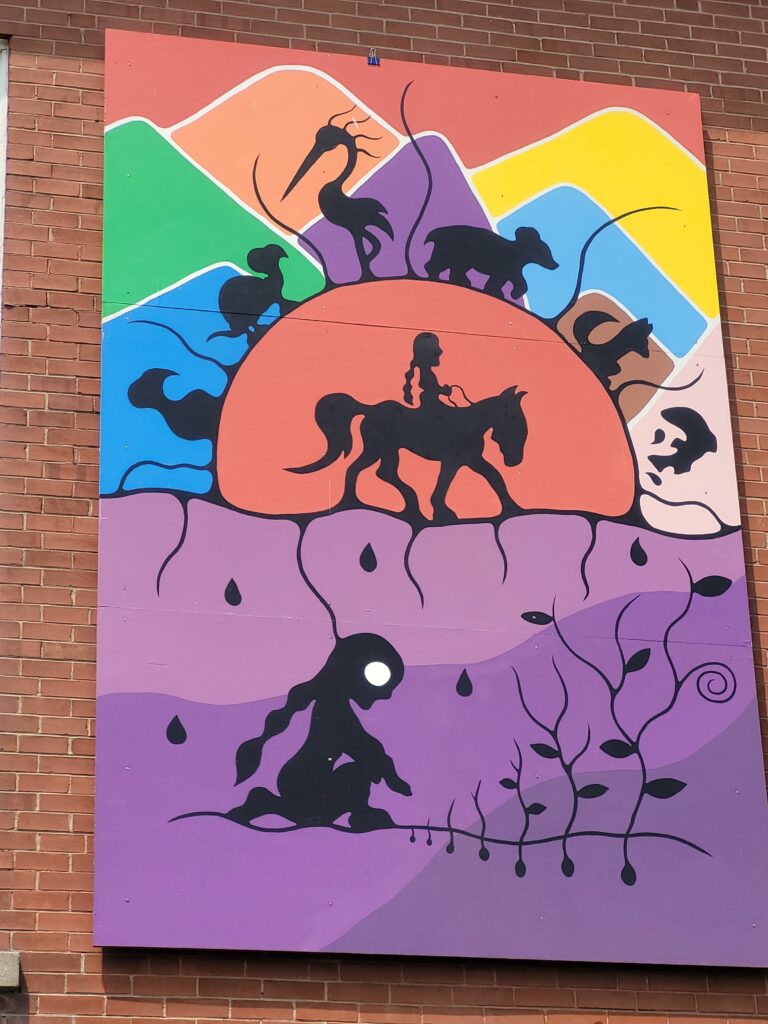
A closer look at six of the woodland-style panels.
Carling Heights Optimist Community Centre (East London)
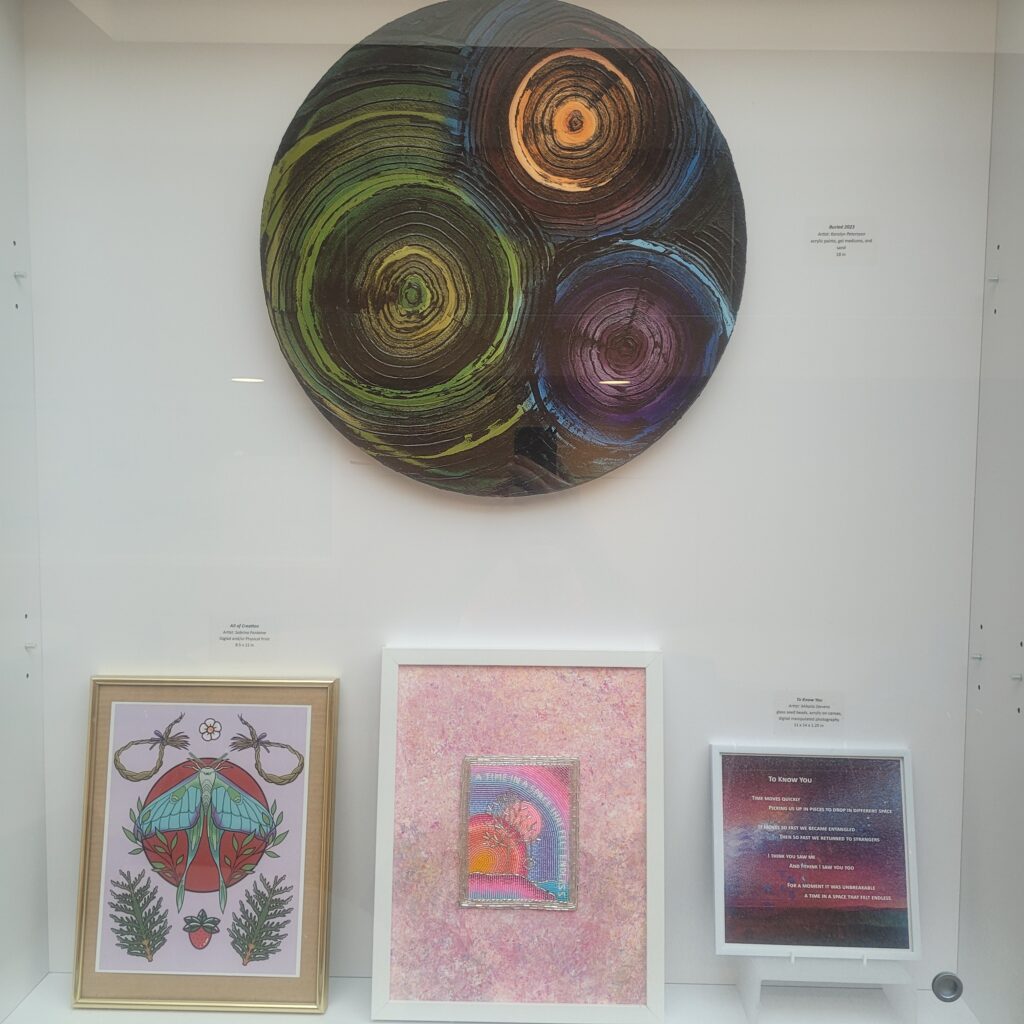
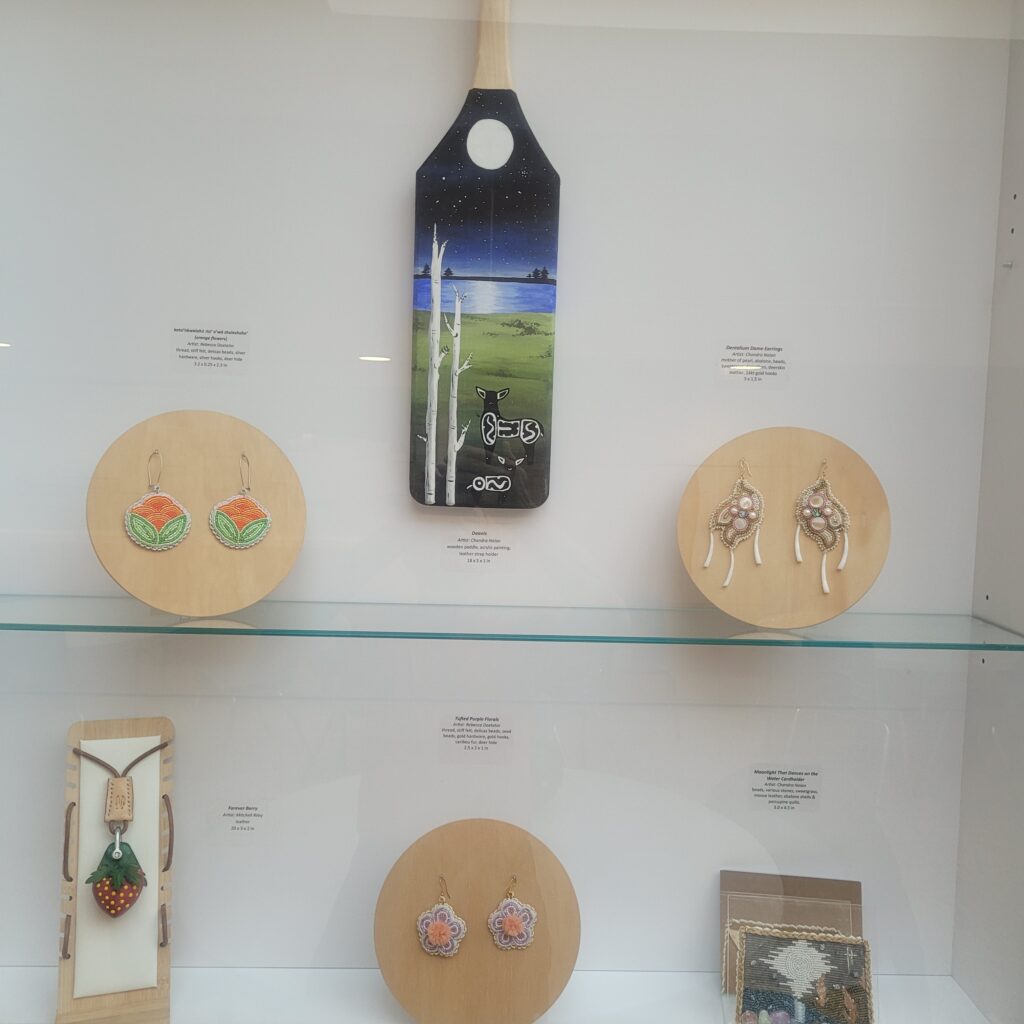
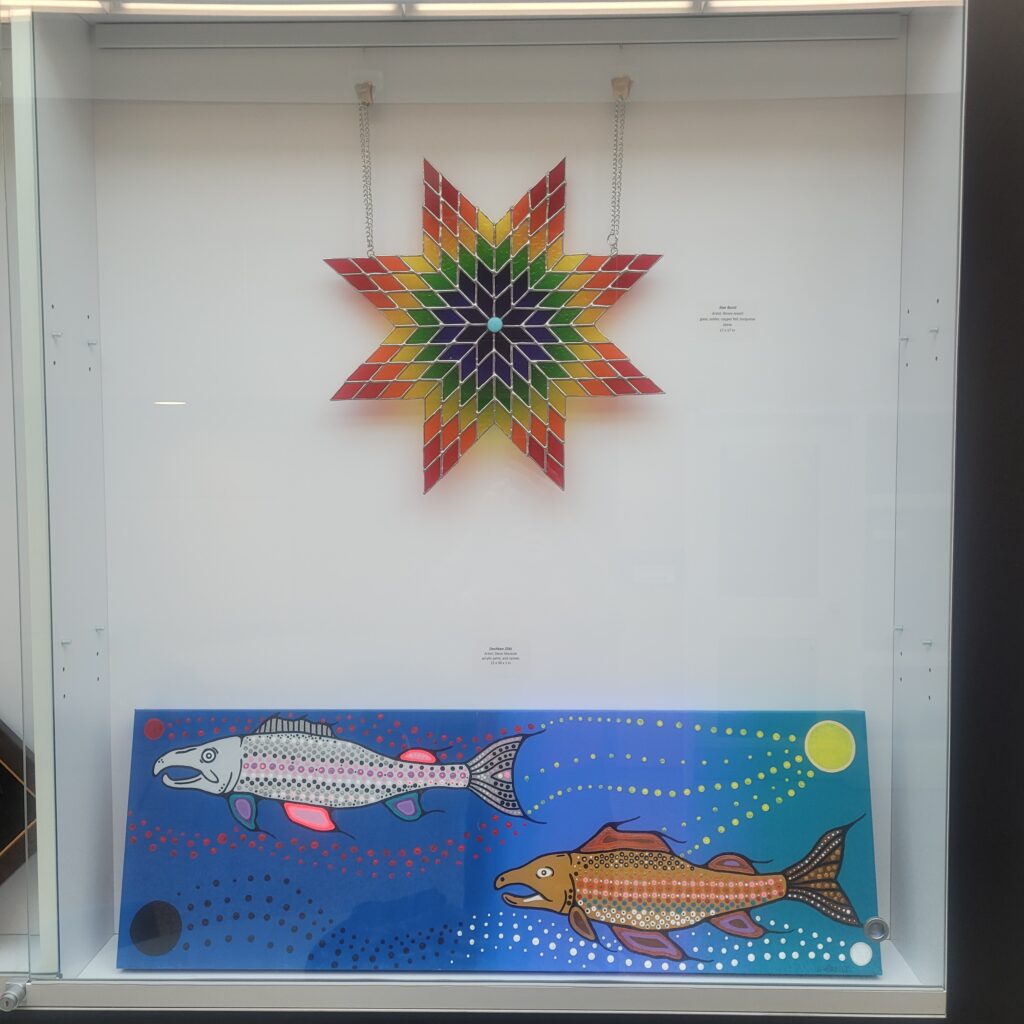
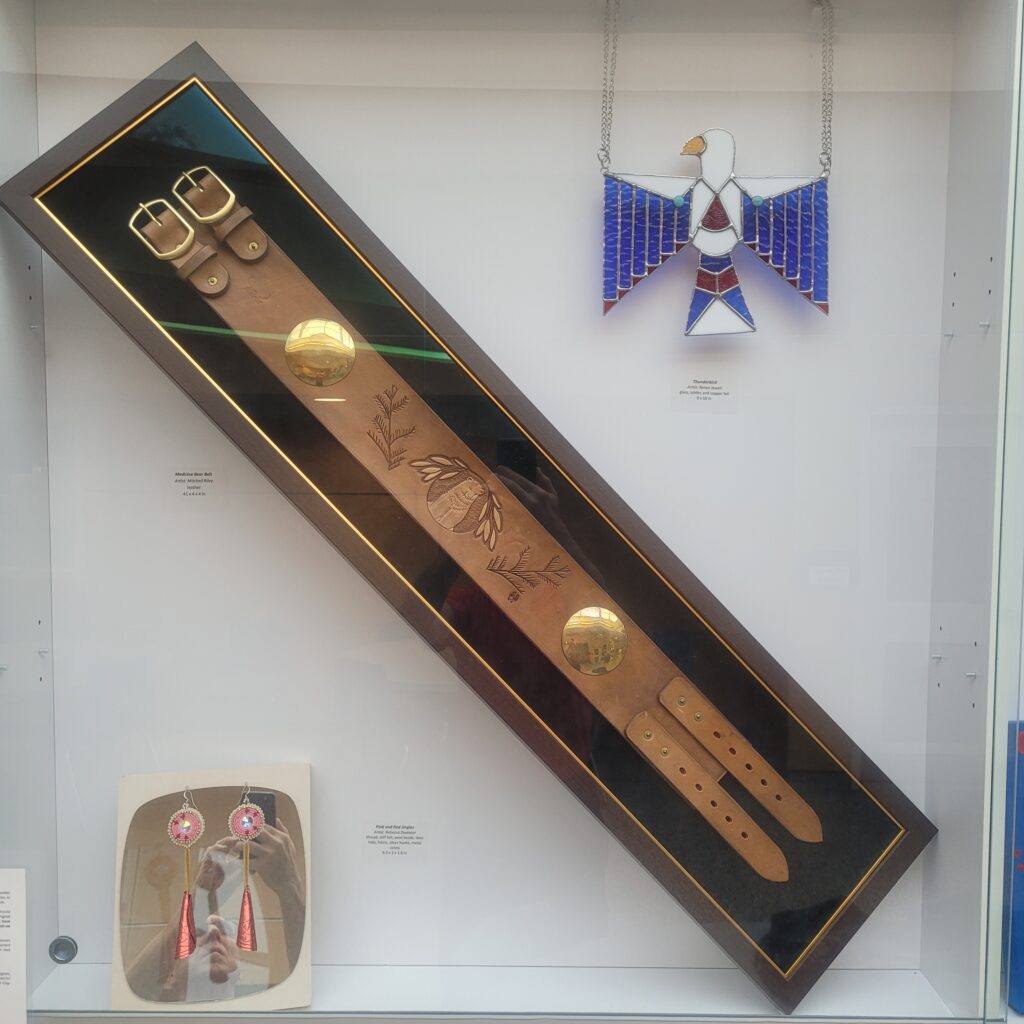
Here, visitors will find 19 works of art by 9 Indigenous artists in a wide variety of mediums, including glass, acrylic paint, canvas, leather, beads, deer, moose, and caribou hide, manipulated photography, wood, sand, clay, abalone shells, porcupine quills, gold, and silver.
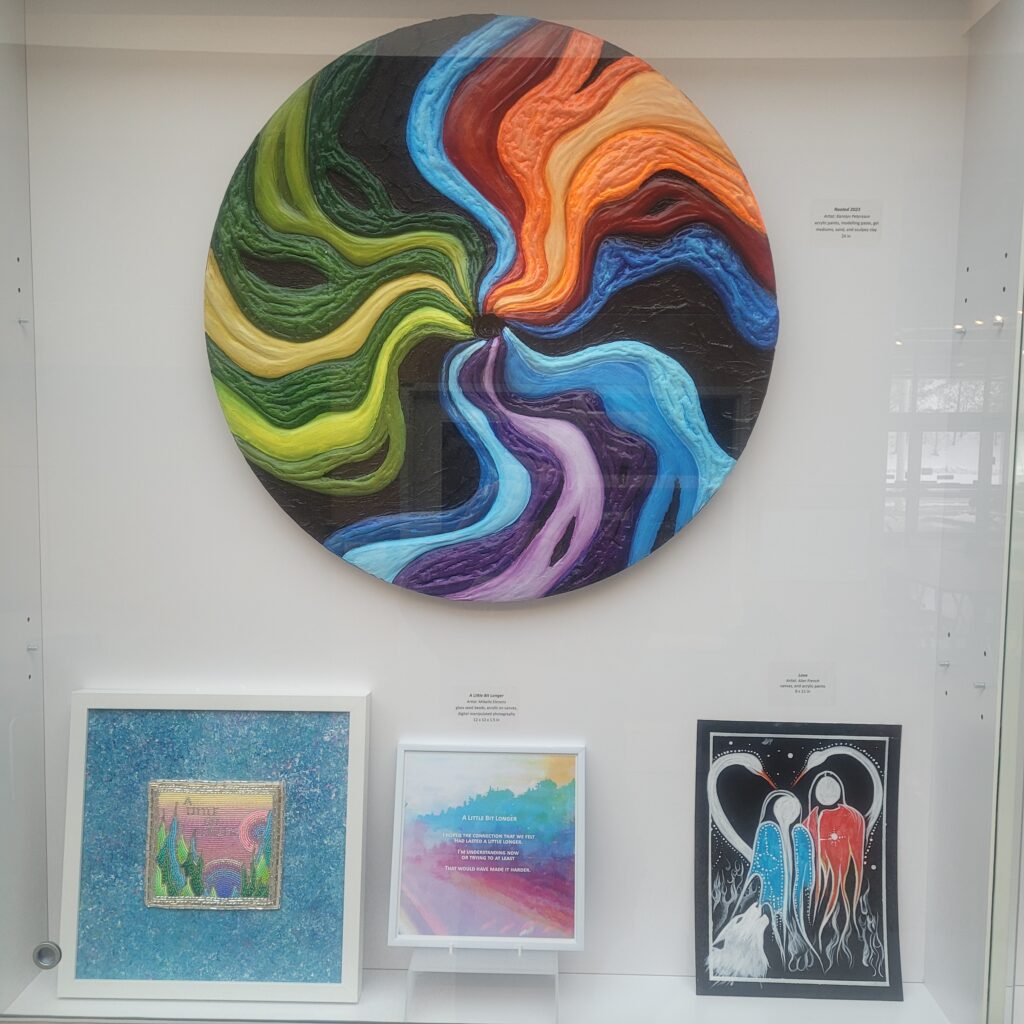
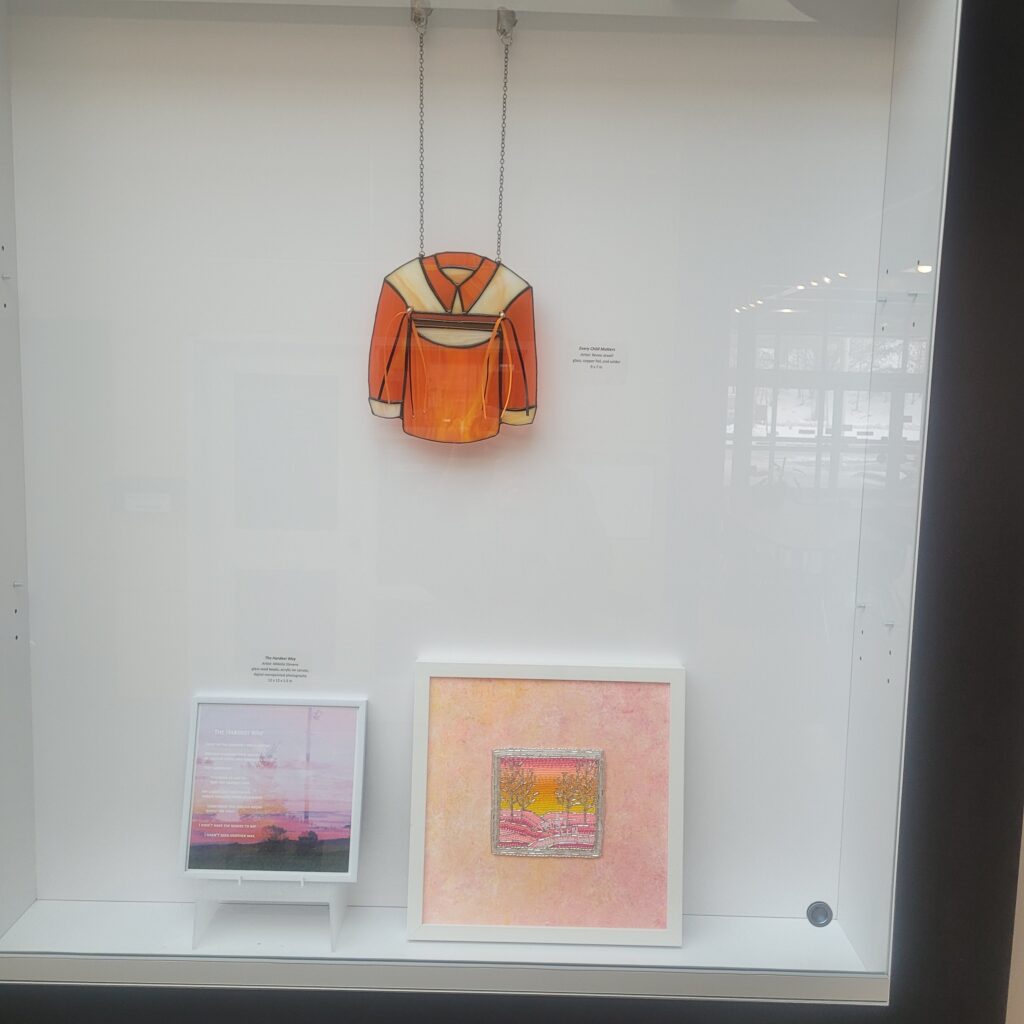
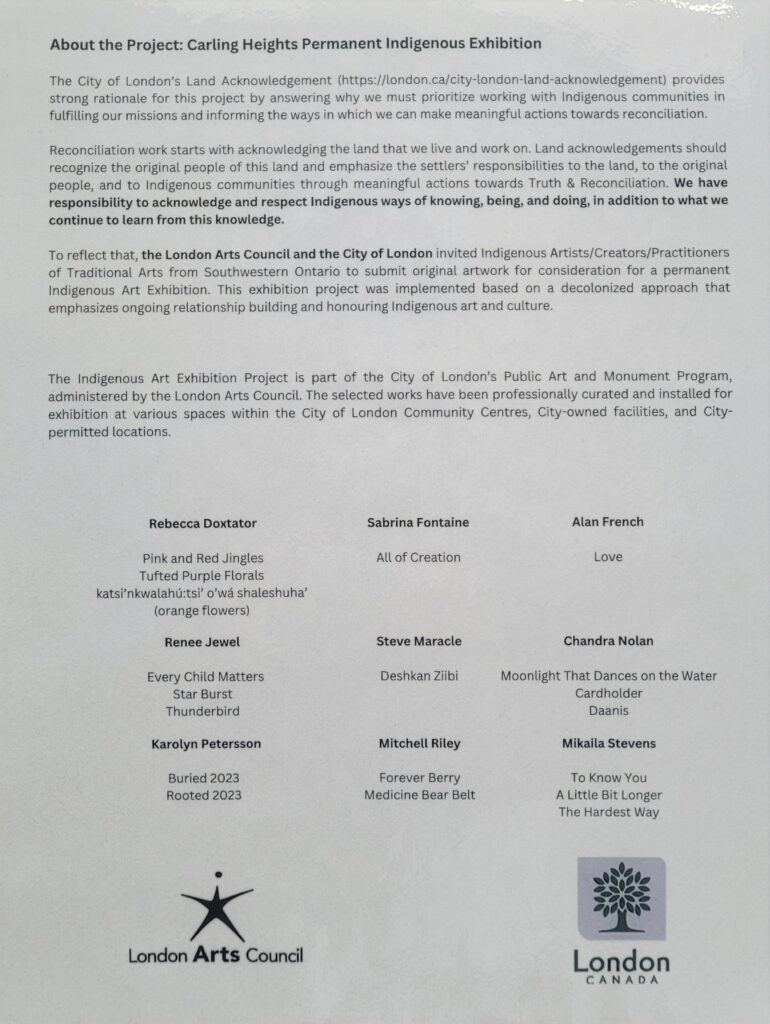
East Lions Community Centre (East London)
Below are two of the first works to make up the City of London’s Permanent Indigenous Artwork Collection.
This was a collaboration between the City of London, in partnership with the London Arts Council, Indigenous London Arts, London Music Office, and the Rotary Club of London.
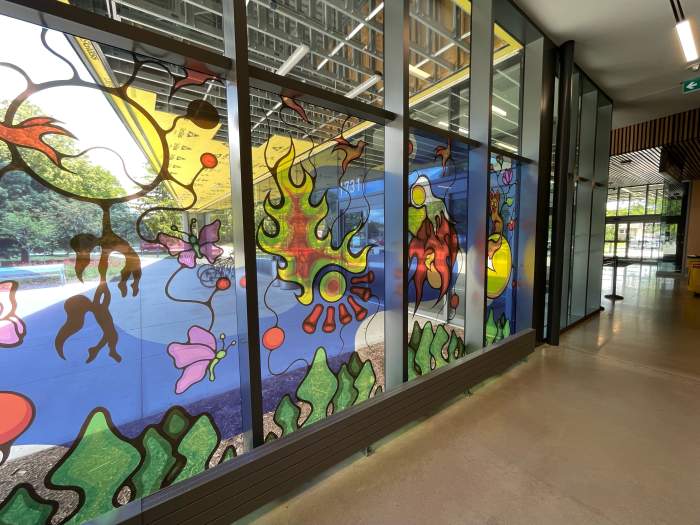
(Photo credit: City of London)
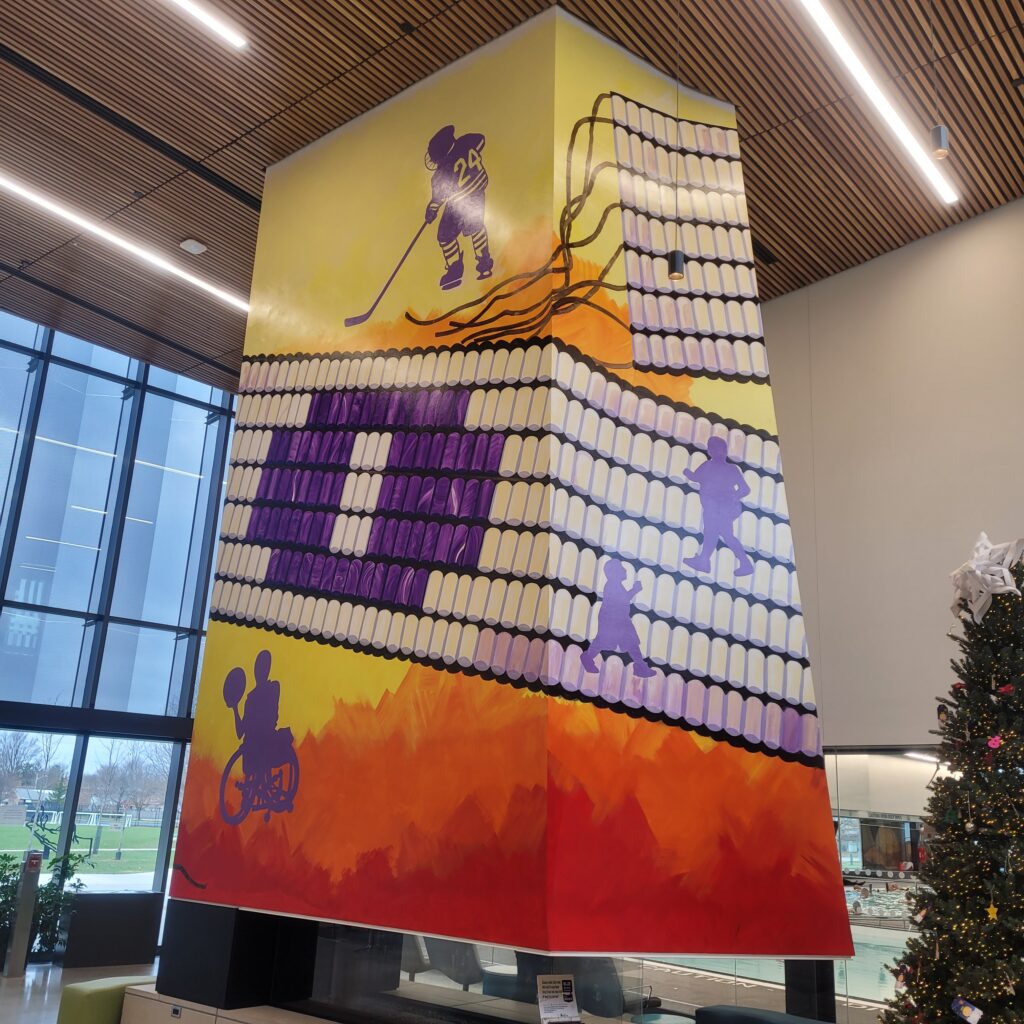
Below is London’s first artistically interpreted Wampum Belt. Installed in 2024, it wraps around the interior fireplace at East Lions Community Centre.
Fanshawe College (East London)
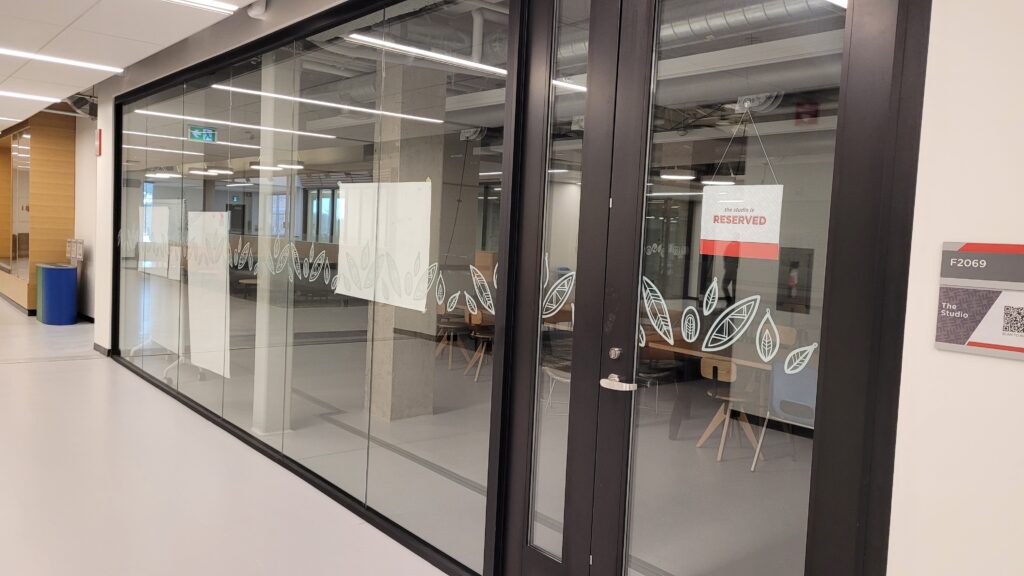
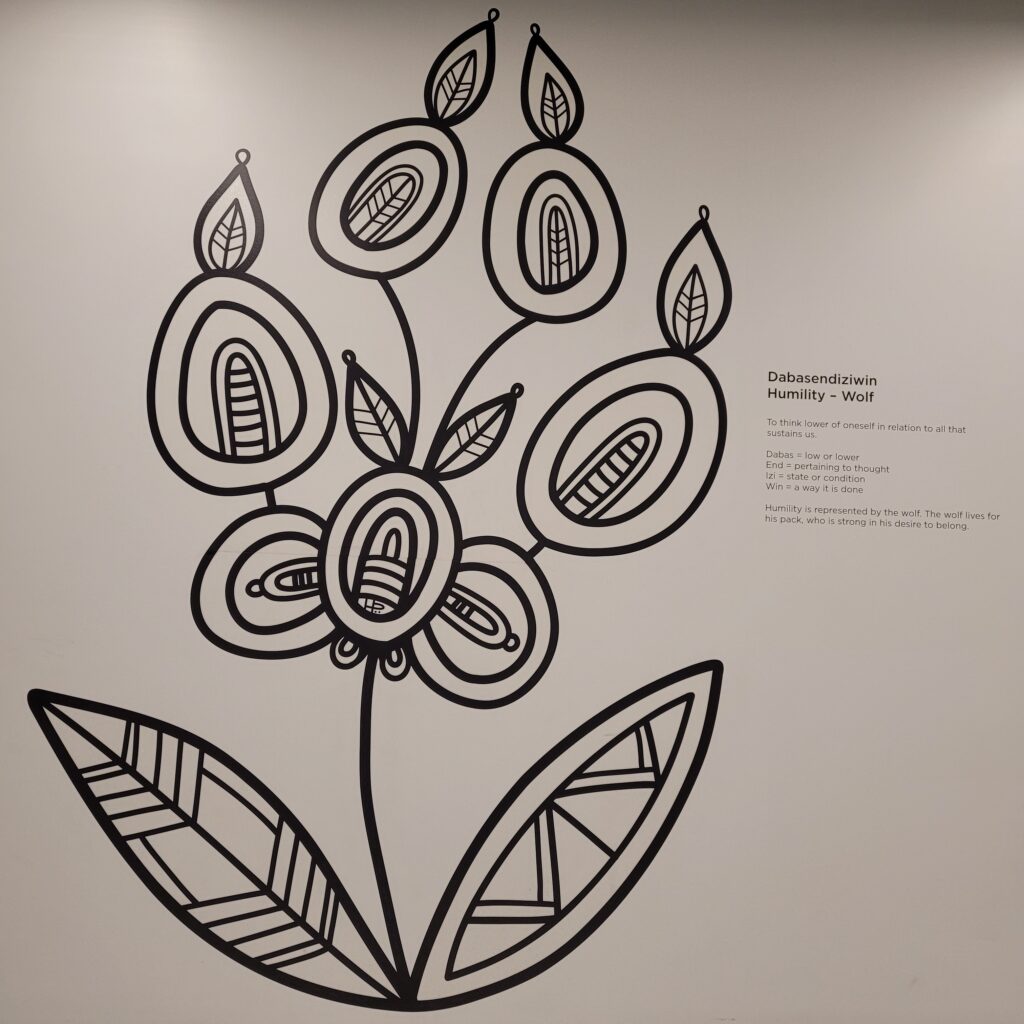
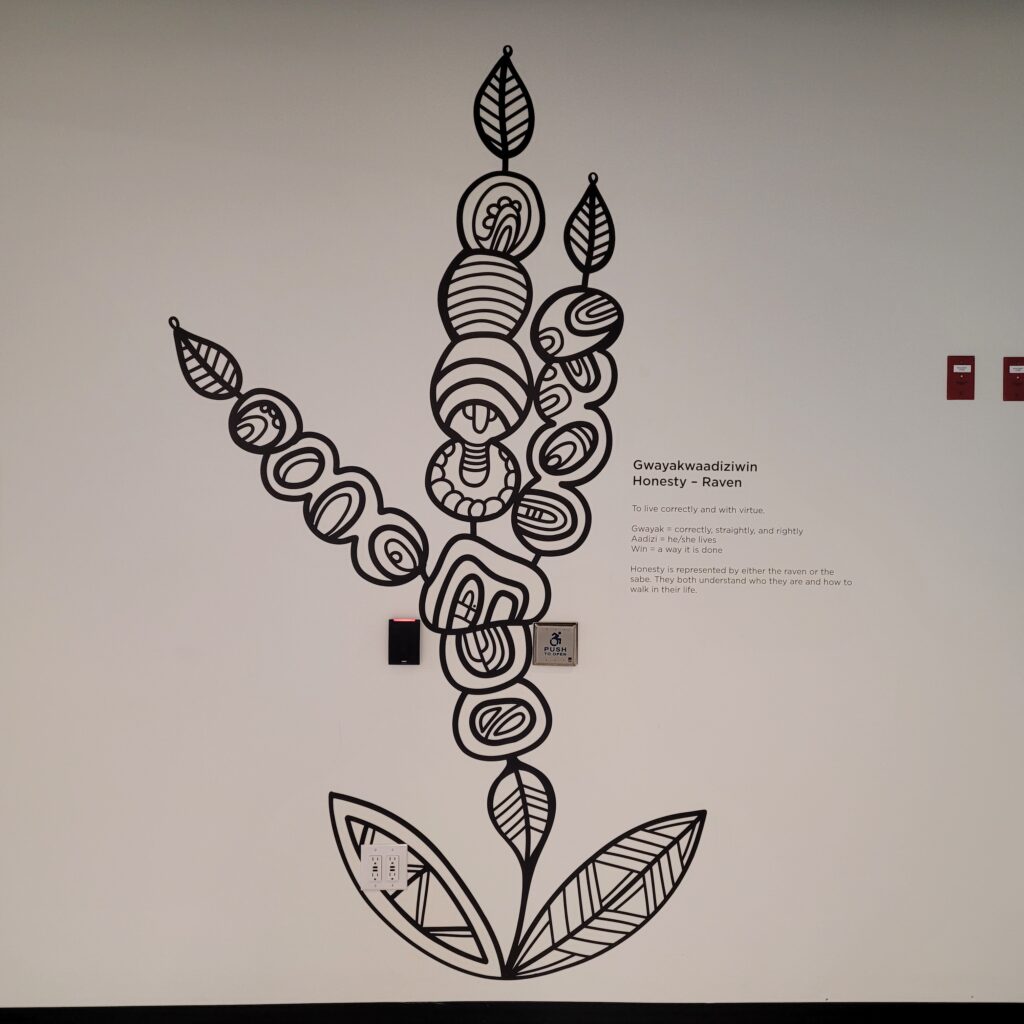
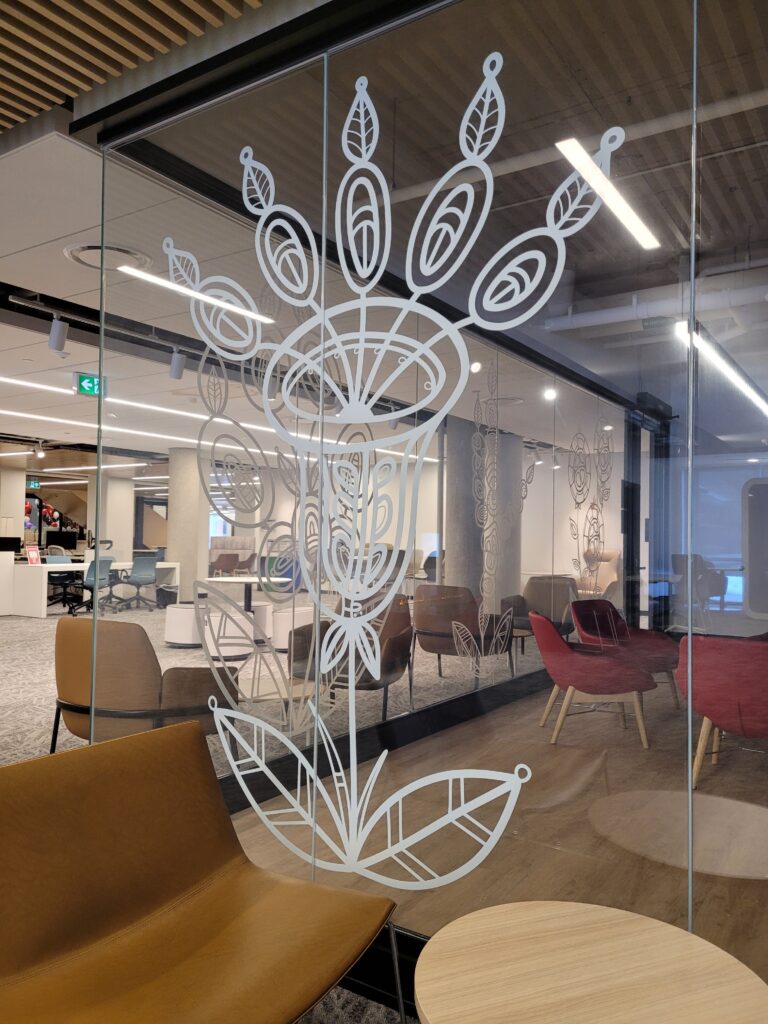
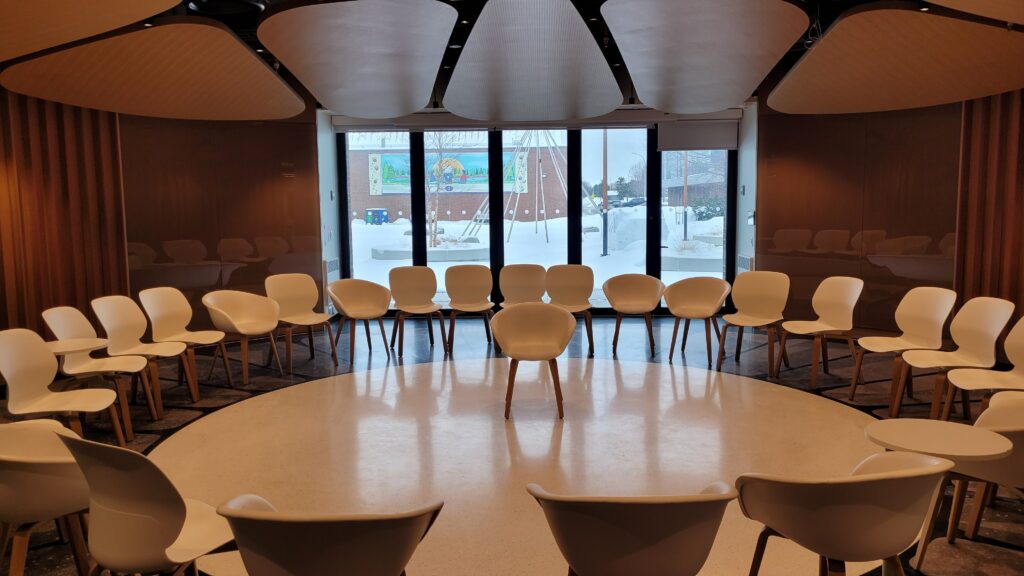
Perhaps the most extensive use of indigenous design elements in a modern building in all of London can be found at the Innovation Village at Fanshawe College. Here, the artwork of Hawlii Pichette, Indigenous artist and Fanshawe College graduate, is featured prominently on the walls and windows throughout the facility.
Author’s Note: For your enjoyment, in the following gallery of photographs, you’ll find two short YouTube videos, one lasting 1:27 minutes and the second one lasting 3:30 minutes.
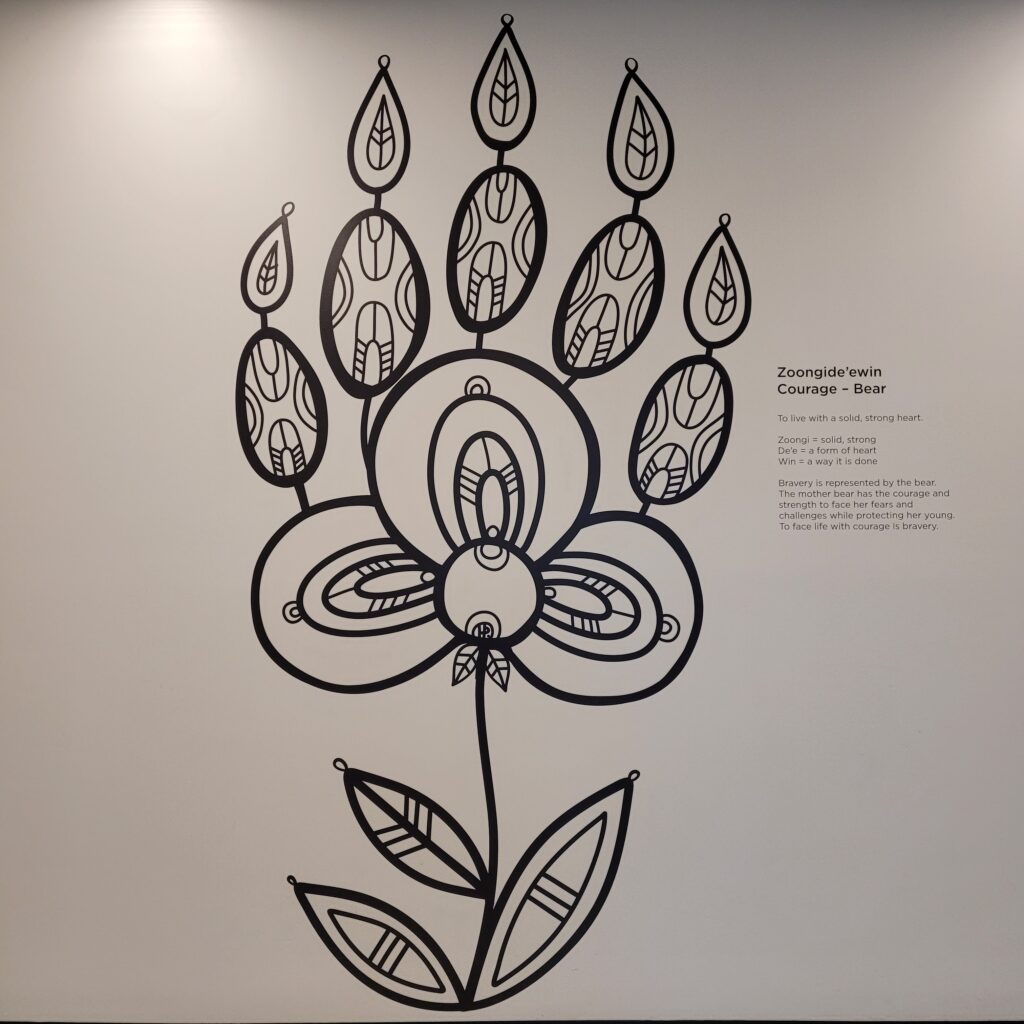
Above left: Bear mural
Above right: Wolf mural
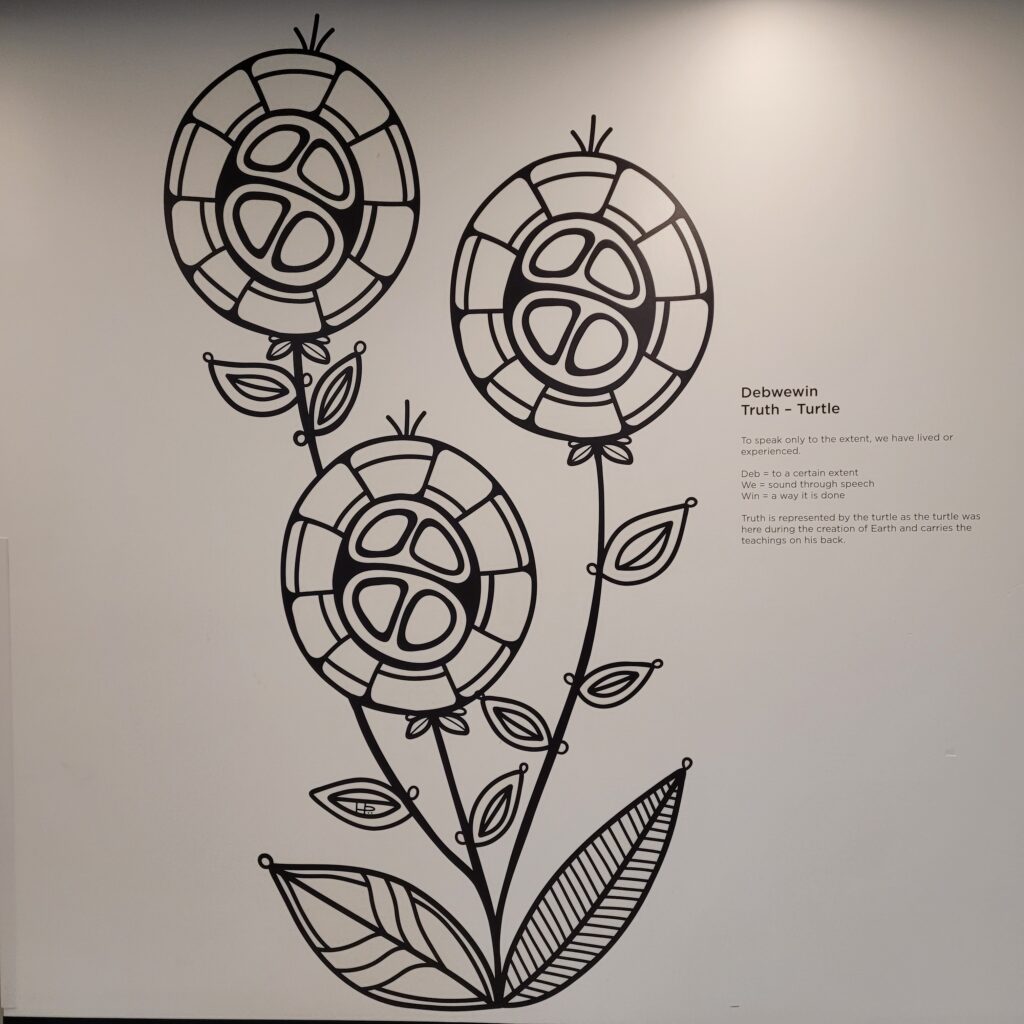
Above left: Turtle mural
Above right: Raven mural
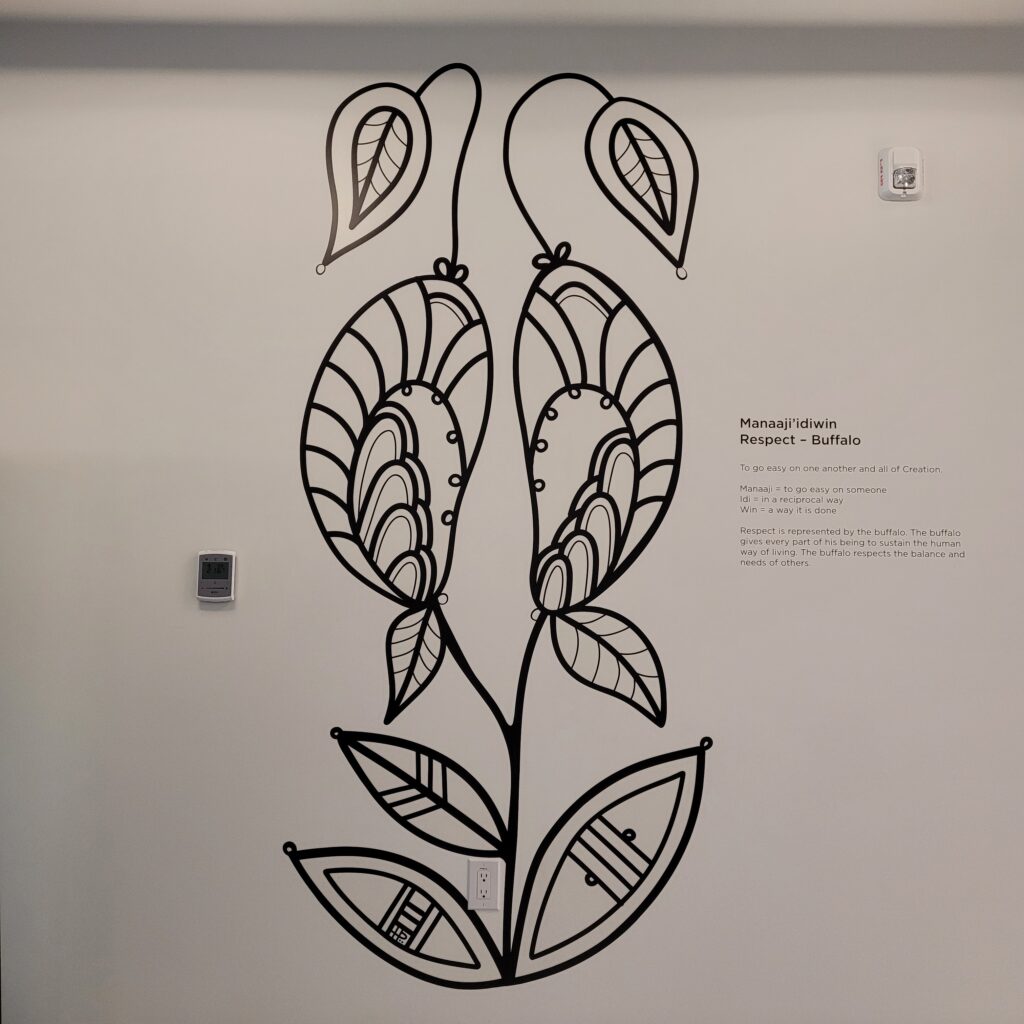
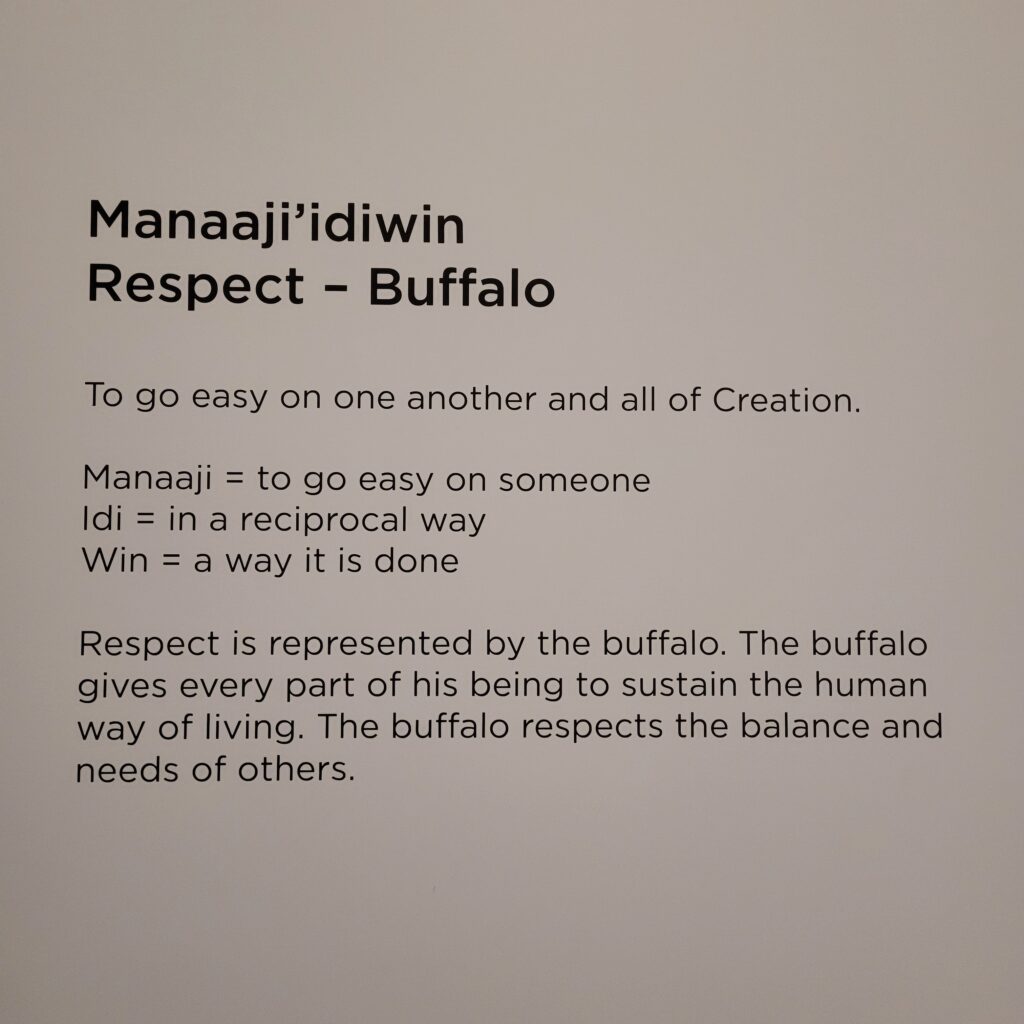
Above left: Buffalo mural
Above right: Ojibwe word, phonetic pronunciation, and mural description.
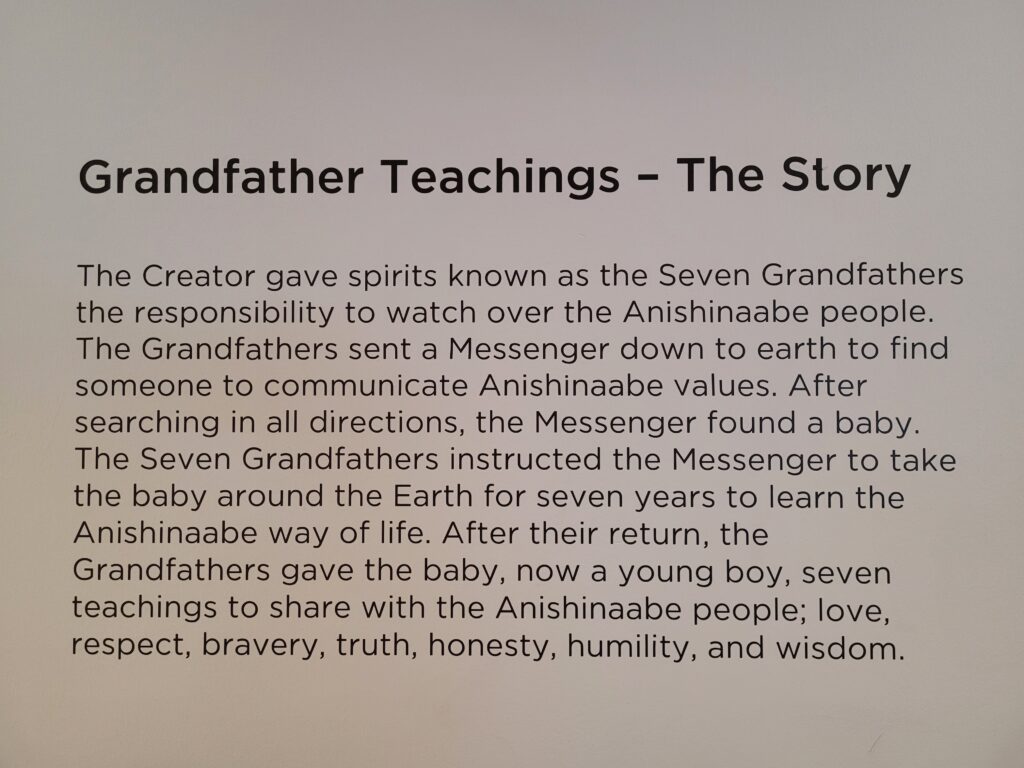
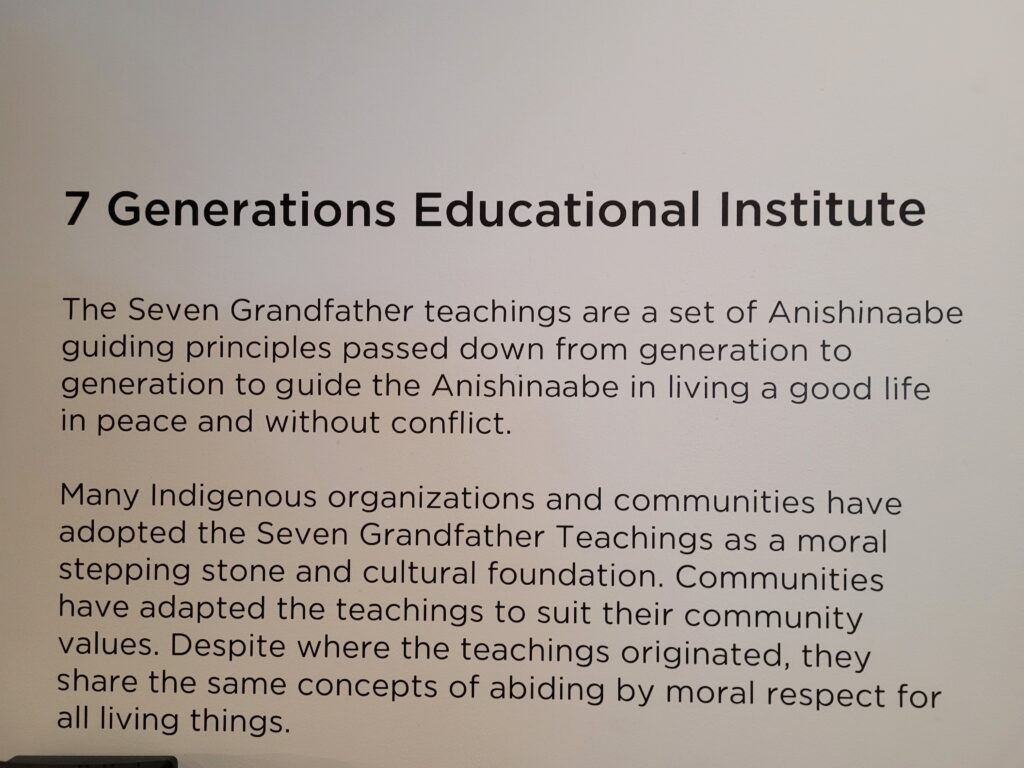
Wellington Road Welcome Centre (South London)
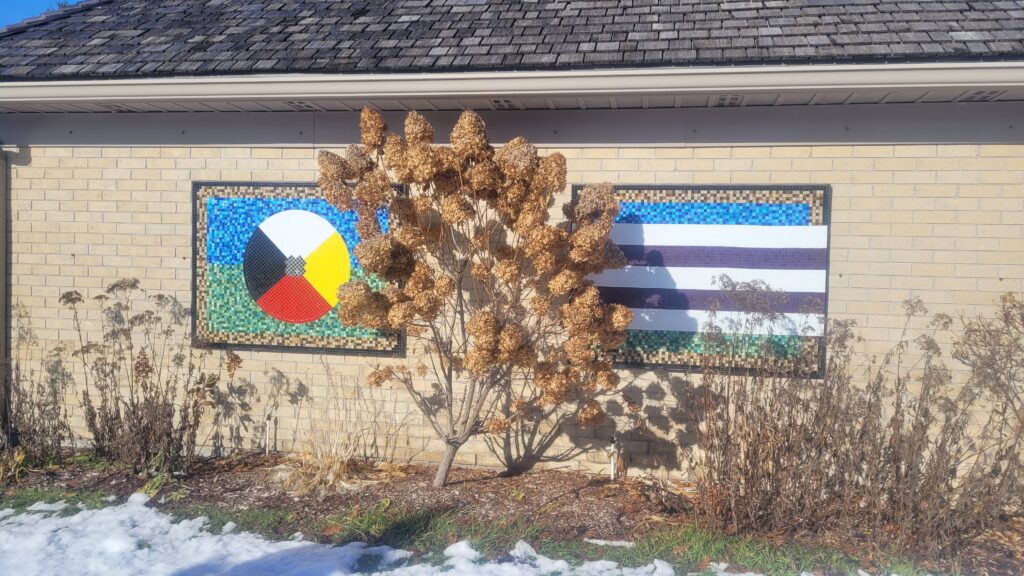
At the Tourism London Welcome Centre at 696 Wellington Road South, visitors will find Indigenous art displayed on both the exterior and interior walls, showcasing a diverse range of Indigenous artists and styles.
[For a 3-minute video on Indigenous Art at the Welcome Centre, click here]
Below are 8 works of art displayed inside the Welcome Centre.
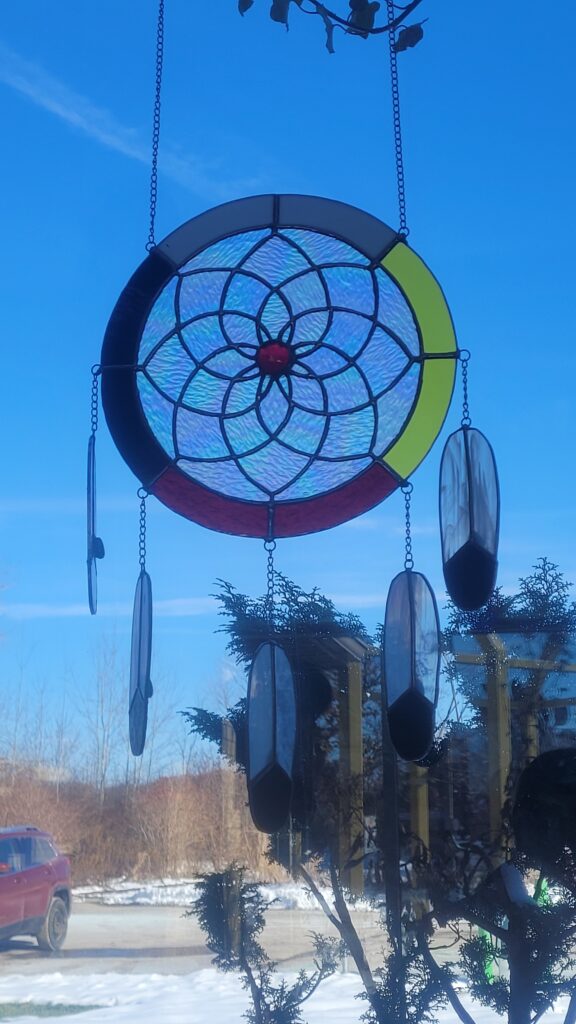
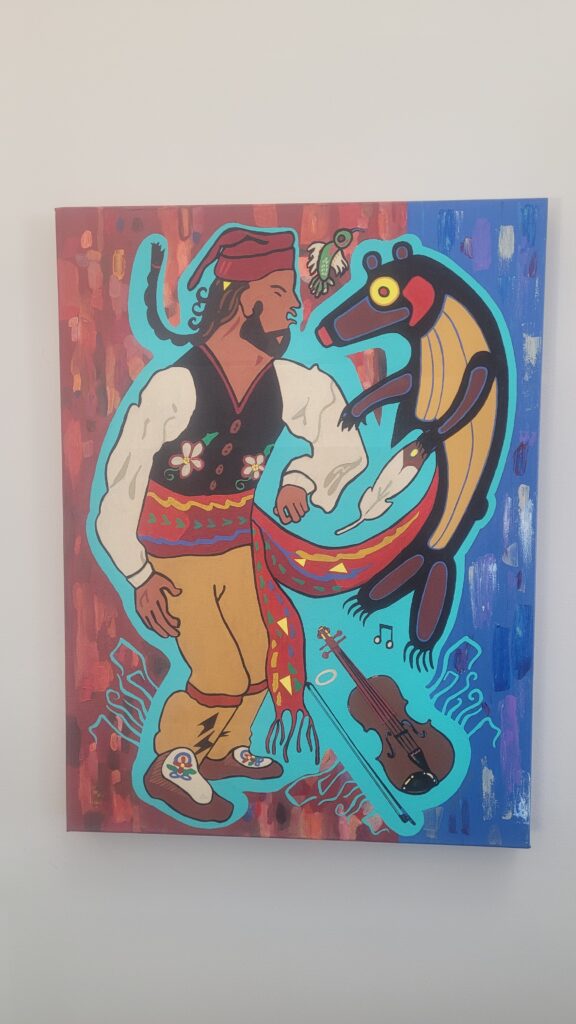
Above Left: Renee Jewell, Stained Glass Dreamcatcher
Above Right: Annette Sullivan, (Maaskowishiiiw Fleur), Trois Jiggers Metis
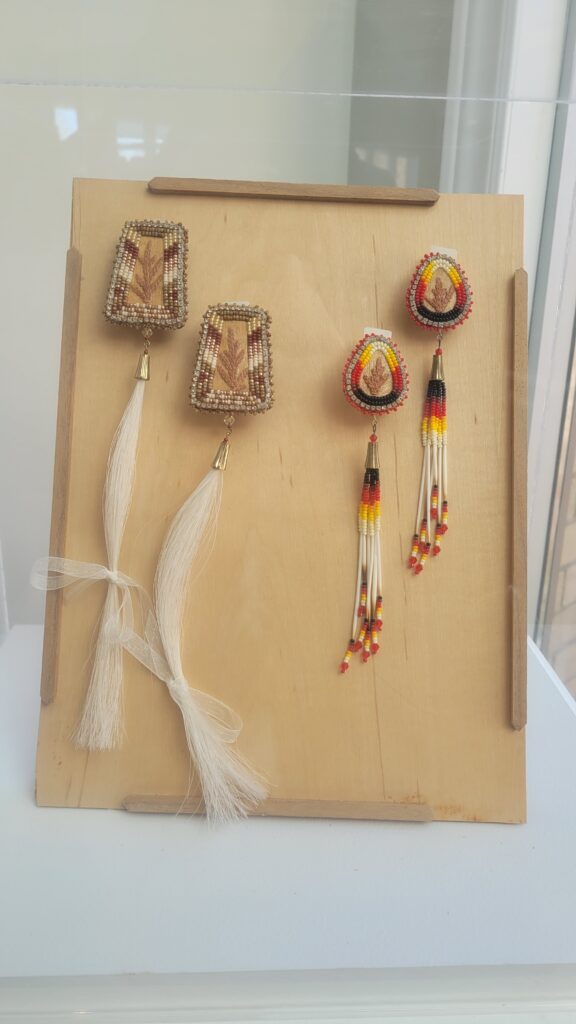
Above Left: Chandra Nolan, Giizhik Medicine Earings No. 1 & 2
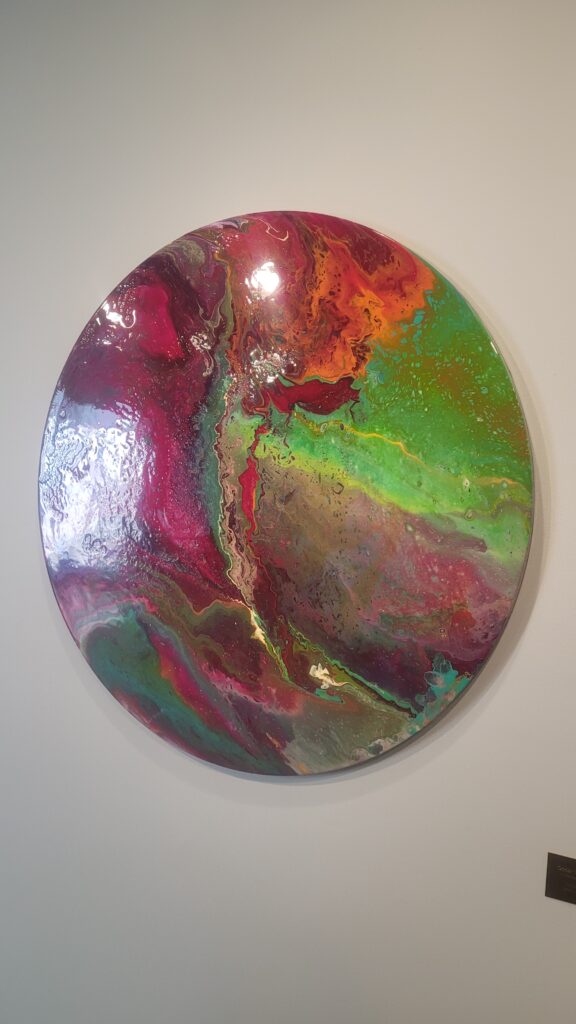
Above Right: Oscar Marroquin-Ponce, Huitzilopochtli (Hummingbird)
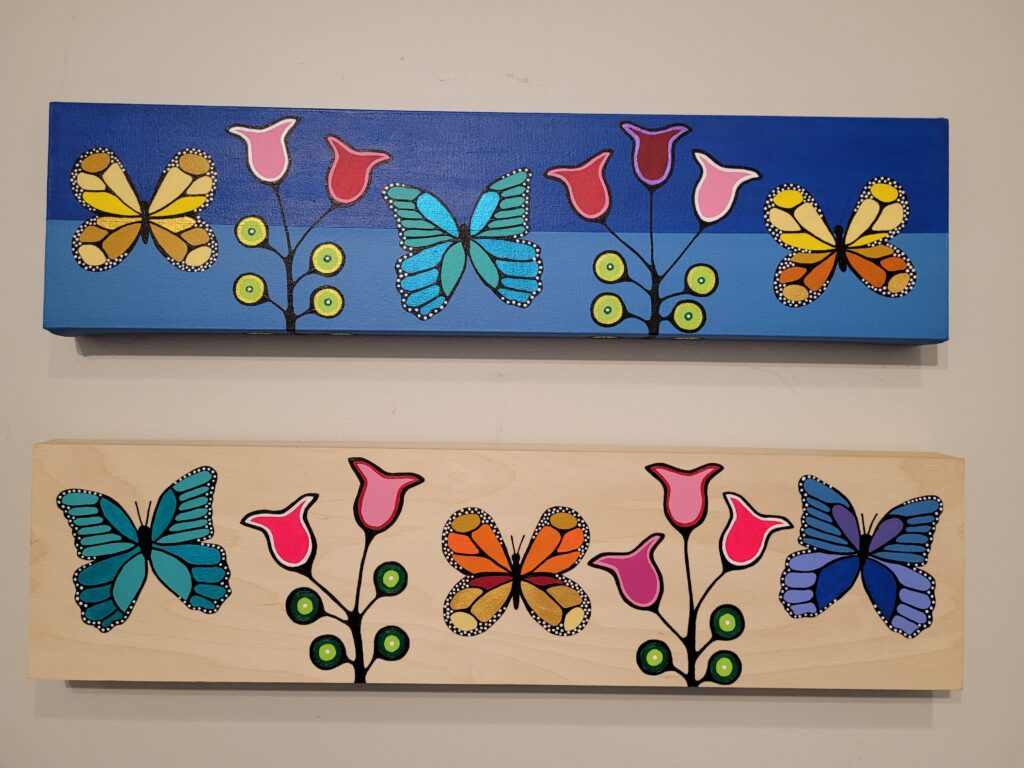
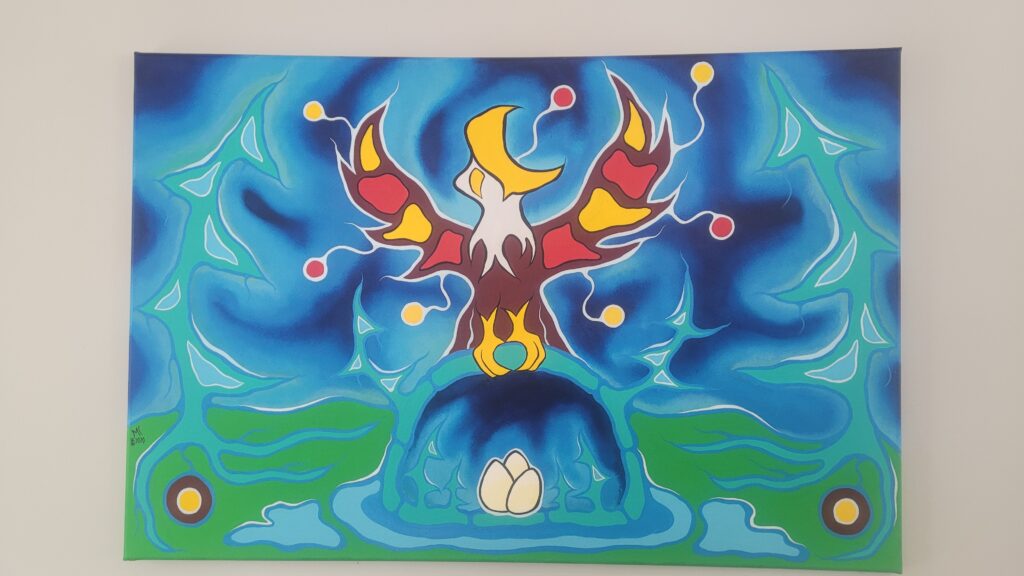
Above Left: Steve Maracle, It’s Summer, Let’s Dream
Above Right: Mike Cywink (Thunder Day), the Provider
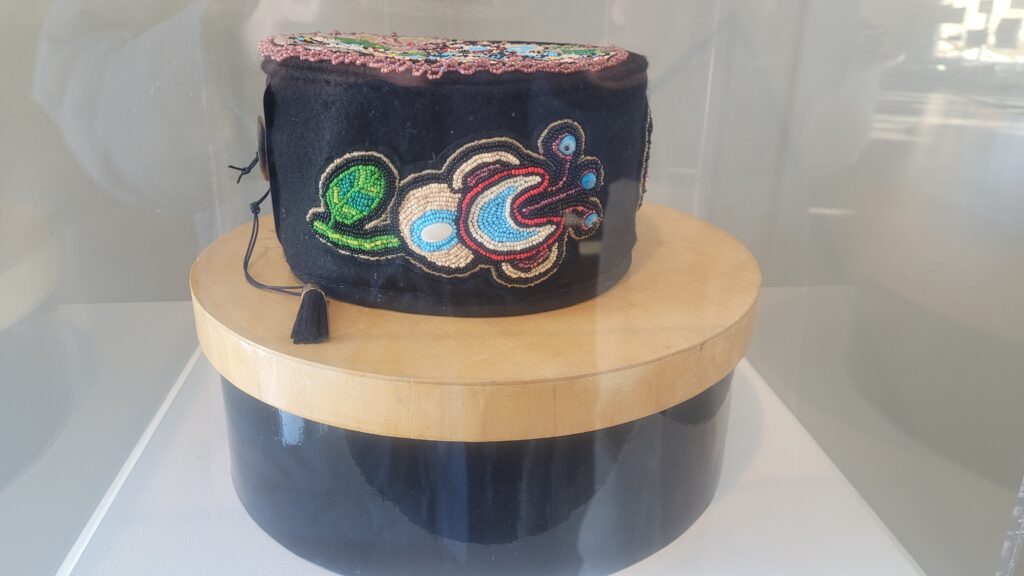
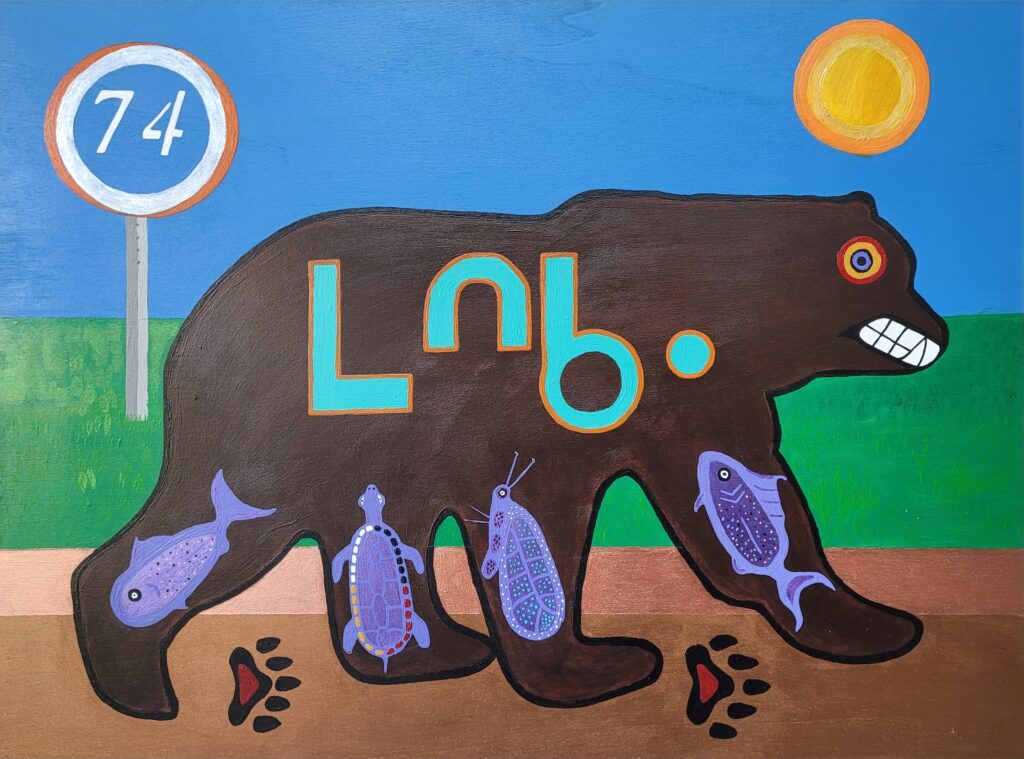
Above Left: Annette Sullivan, Traditional Metis ceremonial smoking hat
Above Right: Steve Maracle, Ethan Bear
122 Baseline Road (West London)
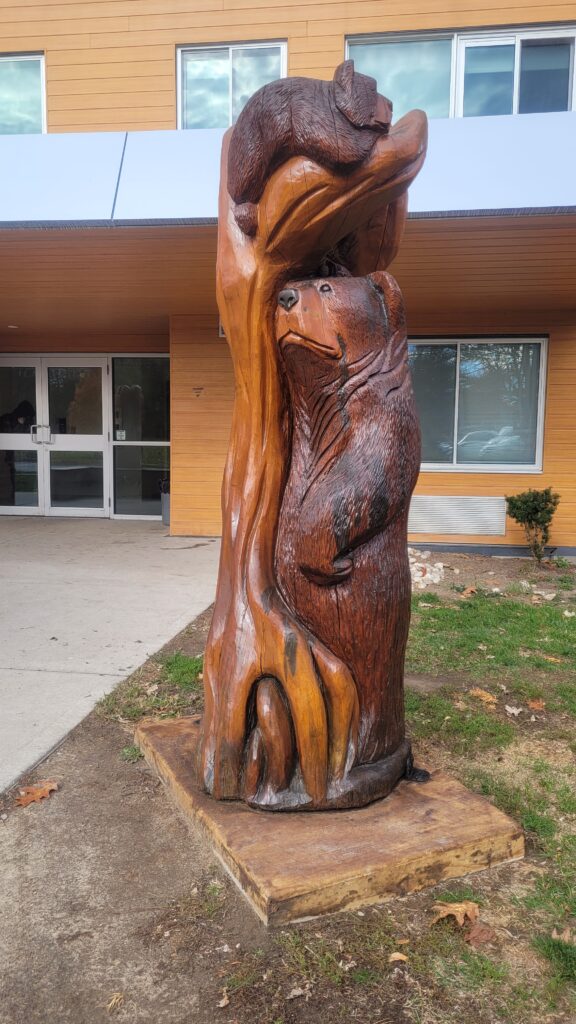
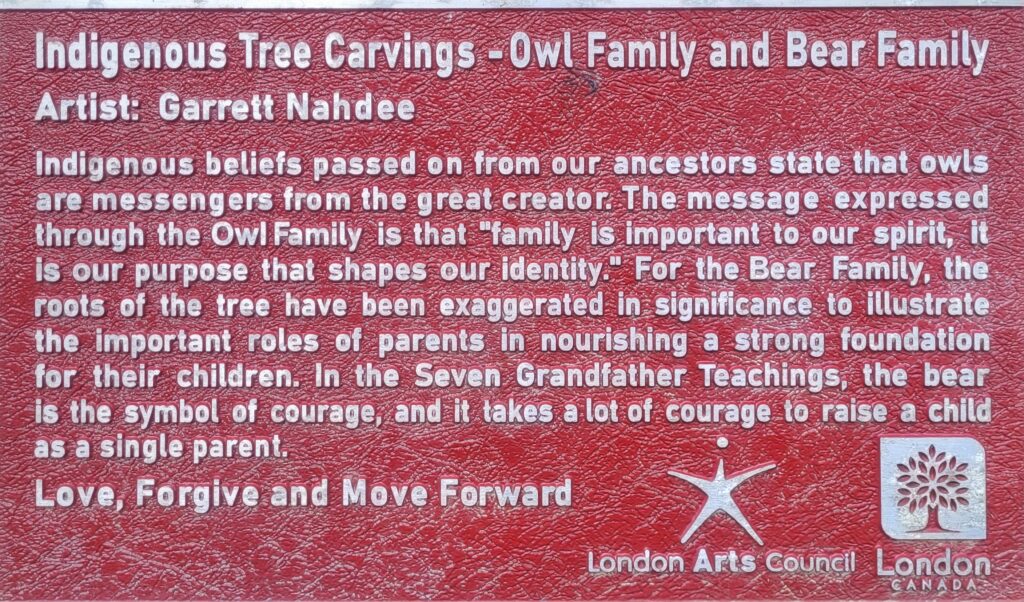
Two tree trunk sculptures sit on either side of the entrance to this apartment building at 122 Baseline Road West, welcoming visitors and providing an encouraging message for families, parents, and children.
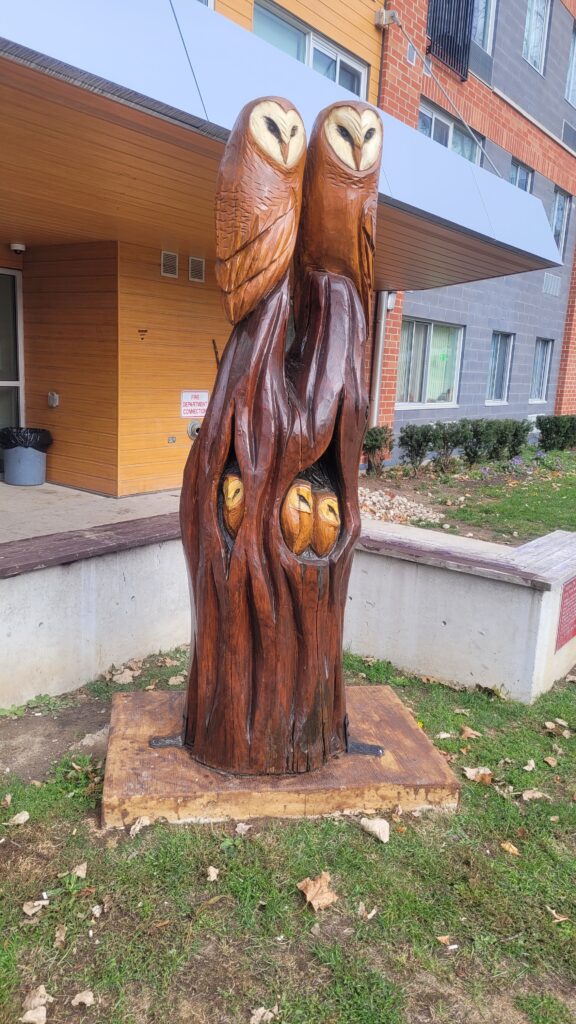
An Ongoing Story
These artworks are more than just decoration. They are a vital part of London’s journey toward reconciliation and a broader understanding of its own identity. They ensure that Indigenous voices and perspectives are seen, valued, and integrated into the shared story of the Forest City.
For visitors and residents alike, seeking out these pieces offers a richer, more meaningful experience of London – one that honours the past while celebrating a vibrant and continuing cultural presence.
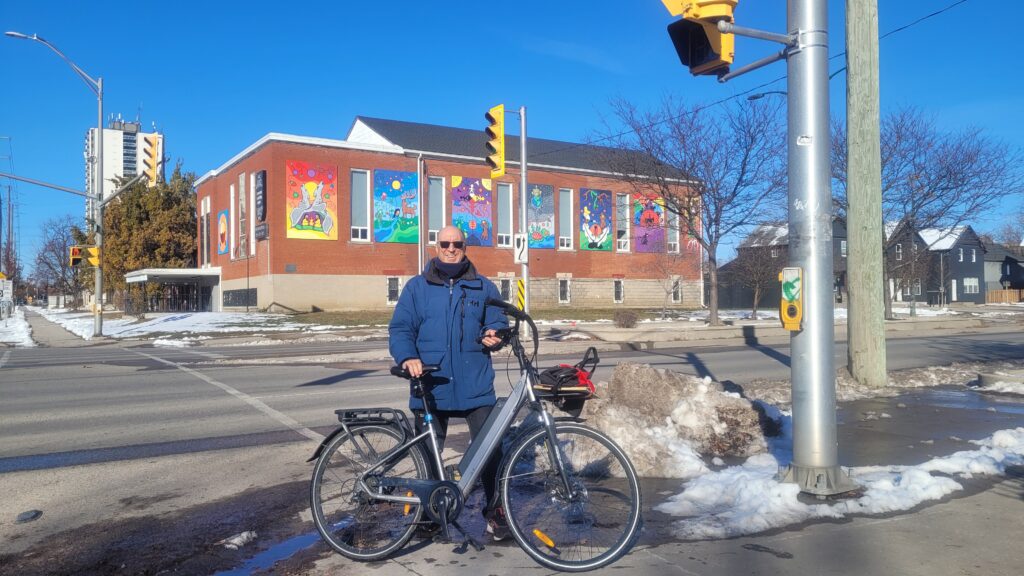
Hi, I’m Lawrence – bicycle tour guide, storyteller, and admirer of London’s hidden stories.
These are just some of the things I’ve discovered while riding around London on my bicycle. I get a real thrill from sharing this beautiful art and the powerful history that makes our city so unique.
Leave a Reply