
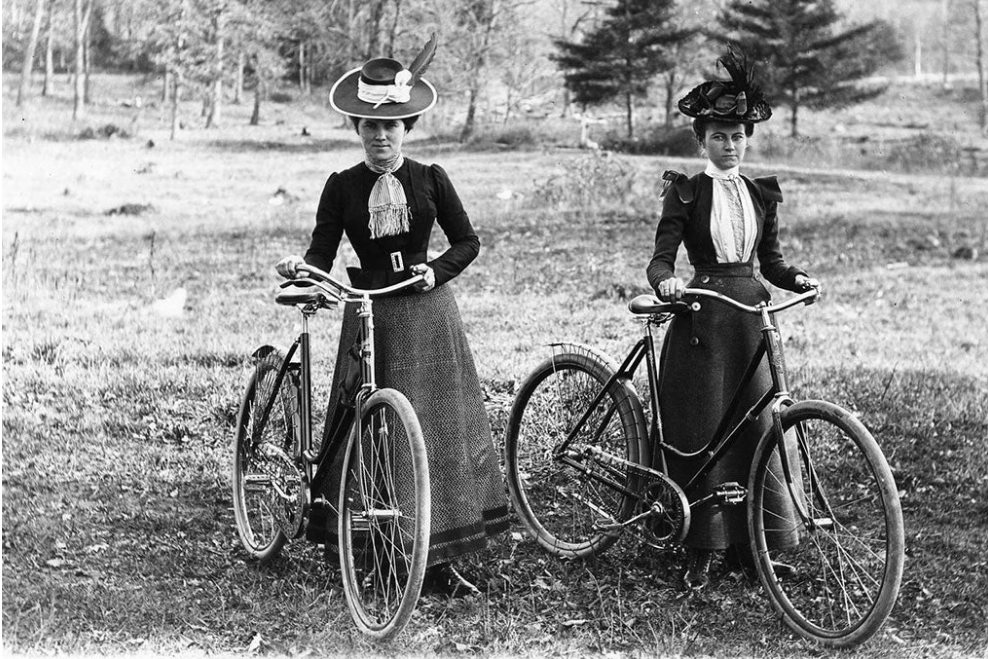
Before the 1890s, the bicycle was a death-defying contraption known as the “penny-farthing,” a towering machine with a giant front wheel that required a running leap to mount and a great deal of courage to ride. Unsurprisingly, women were largely excluded from this early, unwieldy craze.
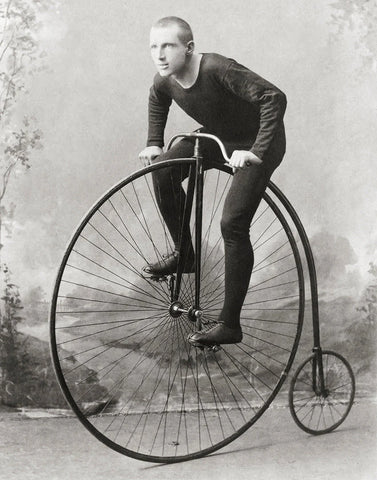
(Photo credit: Historical Pix).
But everything changed when English inventor John Kemp Starley introduced the “safety bicycle” in 1885. With two wheels of equal size, a chain drive, and pneumatic tires, the safety bicycle was stable, easy to mount, and, crucially, with the downward sloping top bar, accessible to riders of all genders.
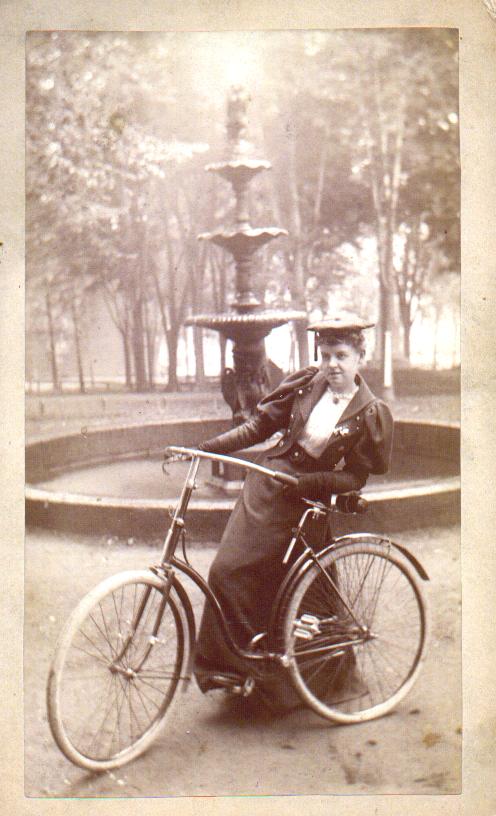
(Photo credit: Wikimedia Commons).
By 1895, women’s bicycles accounted for a staggering one-third of the market in the UK and North America, a statistic that would have seemed impossible just a decade earlier.
In London, Canada, this technological breakthrough ignited a social revolution.
London’s Early Cycling Scene
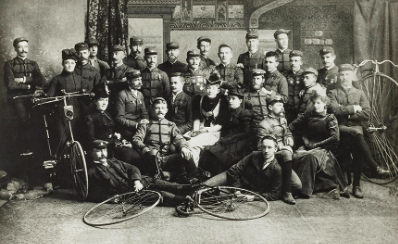
London’s cycling history runs deep. The Forest City Bicycle Club, one of the first cycling clubs to be organized in Canada, was founded on September 18, 1882, when a group of young men from London’s elite merchant and manufacturing classes gathered to legitimize this new and controversial pastime.
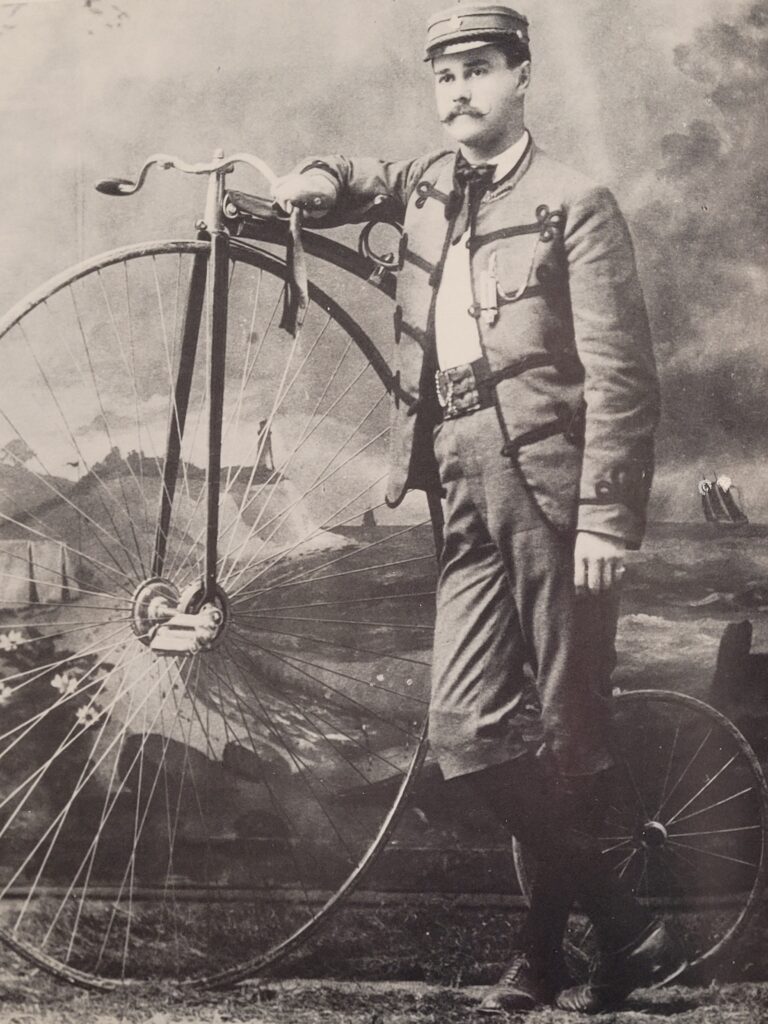
(Photo credit: Archives and Special Collections, Western University)
Initially, cycling was an expensive and exclusive hobby. A single high-wheel bicycle could cost the equivalent of several months’ wages for a worker at a local furniture factory. But as bicycle manufacturing expanded and prices dropped, the sport became accessible to a much wider cross‑section of Londoners, including middle‑class women.
Women Join the Forest City Bicycle Club
By the early 1890s, a small number of women began joining London’s premier cycling club, a change similar to that occurring in clubs across Canada. These pioneering women weren’t just passive participants.
An 1890 account in the London Free Press described the Forest City Bicycle Club’s annual 150‑mile tour between London and Goderich. Leading the party was Mr. and Mrs. Lamb on their tandem bicycle. The reporter noted that “the lady’s perseverance and strength surprised the male ‘cyclers.”
A group photograph of the Forest City Bicycle Club, taken around 1900 and now held in the collection of Museum London, shows female members posing proudly alongside their male counterparts, a visual testament to the club’s growing inclusivity.
(Photo credit: Museum London).
“Bicycle Face,” Bloomers, and the Battle for Rational Dress
Of course, progress was not without resistance. When women took to the streets of London on two wheels, they challenged deeply held Victorian gender norms. Learning to ride required middle‑class women to carefully navigate “a set of highly conservative and rigid gender norms.”
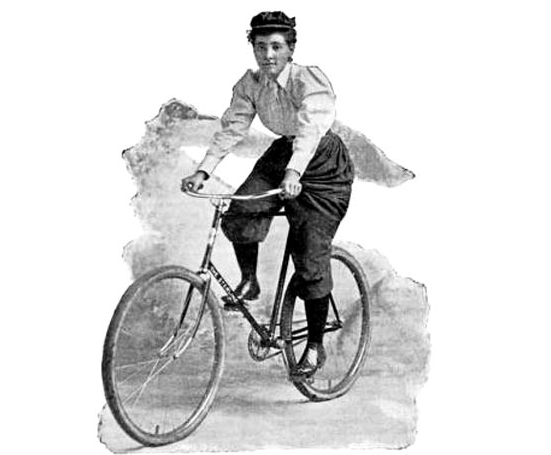
Physicians warned of a mythical ailment called “bicycle face,” a supposedly permanent expression of strain and exhaustion caused by cycling. Meanwhile, the most visible controversy surrounded clothing. Women cyclists abandoned heavy bustles and corsets for split skirts, bloomers, and “rational dress,” shorter skirts worn over voluminous trousers. The style was as practical as it was provocative. Women who adopted it reported being insulted and even pelted with rocks.
(Photo credit: Cycling History).
In London, as elsewhere, the bicycle became a flashpoint in the broader debate over women’s rights. But for every newspaper column mocking the “New Woman,” there was a Mrs. Lamb pedalling steadily from London to Goderich, proving that perseverance and strength were not gendered traits.
Freedom, Mobility, and the “New Woman”
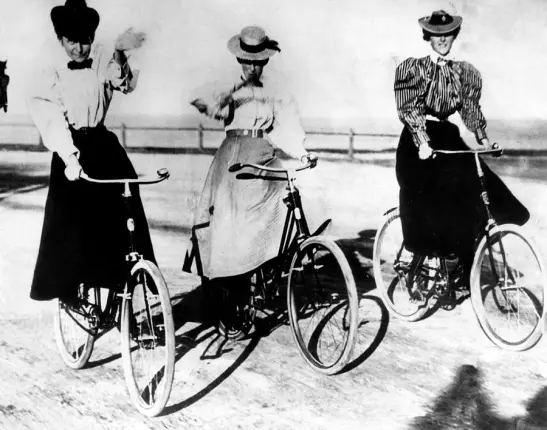
What the bicycle truly gave women was independence. For the first time, a woman could leave her home alone, travel freely through the city, and join mixed‑sex social excursions without a male chaperone. The bicycle provided “a freedom, mobility, and sense of adventure previously denied to them.”
Historian Glen Norcliffe notes that women first became active in Canadian cycling in 1890 and 1891, a direct result of the safety bicycle’s introduction. By the middle of the decade, cycling was being enthusiastically embraced by middle‑class women across the country, from young professionals in Toronto to trailblazers in small‑town Ontario.
(Photo credit: Cycling History).
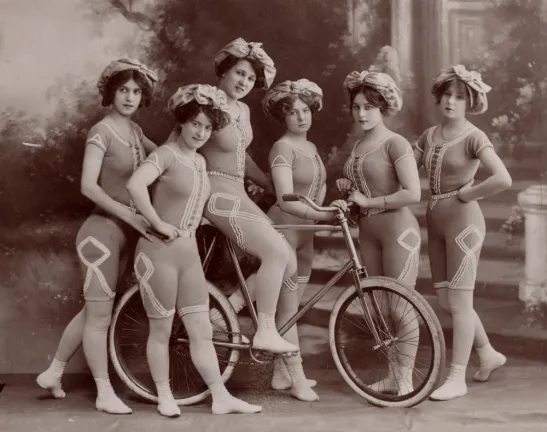
The figure of the “New Woman,” educated, independent, and free‑wheeling, became a cultural icon, celebrated by suffragists and satirized by conservative commentators. But the underlying message was undeniable: women on bicycles were here to stay.
(Photo credit: Cycling History).
From Victorian Riders to a Cycling Mayor: The Jane Bigelow Legacy
Fast‑forward to 1972. London elects its first female mayor, Jane Bigelow, a woman who embodied everything the 1890s “New Woman” movement had fought for. Bigelow, who served as mayor from 1972 to 1978, was an avid cyclist and a fierce advocate for active transportation. She often traveled by bike, sometimes with the family poodle Figgy riding in the carrier. She was also instrumental in the introduction of bicycle paths in London, promoting them as a way to protect the environment.
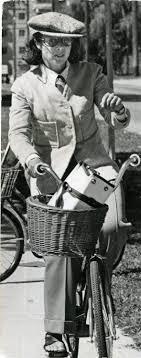
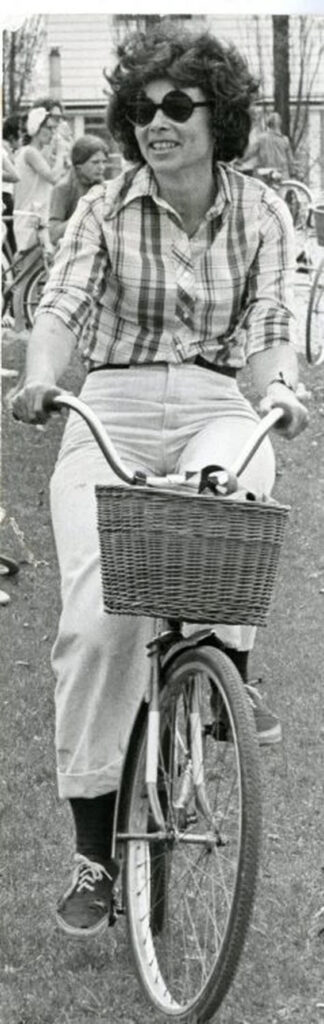
Mayor Jane Bigelow rode her bicycle everywhere, even to City Council and events where people expected her to arrive by car. (Photo credit: London Free Press).
Bigelow was a trailblazer in every sense of the word. She didn’t just break the glass ceiling; she shattered it, becoming a mentor to the women who followed her into municipal politics, including Dianne Haskett, Anne Marie DeCicco-Best, and Joni Baechler. On a rainy June day in 1973, she famously bucked protocol by declining to wear a hat while greeting Queen Elizabeth II in Victoria Park, simply stating, “I never wear a hat”. It was a small act of defiance that perfectly captured her character.
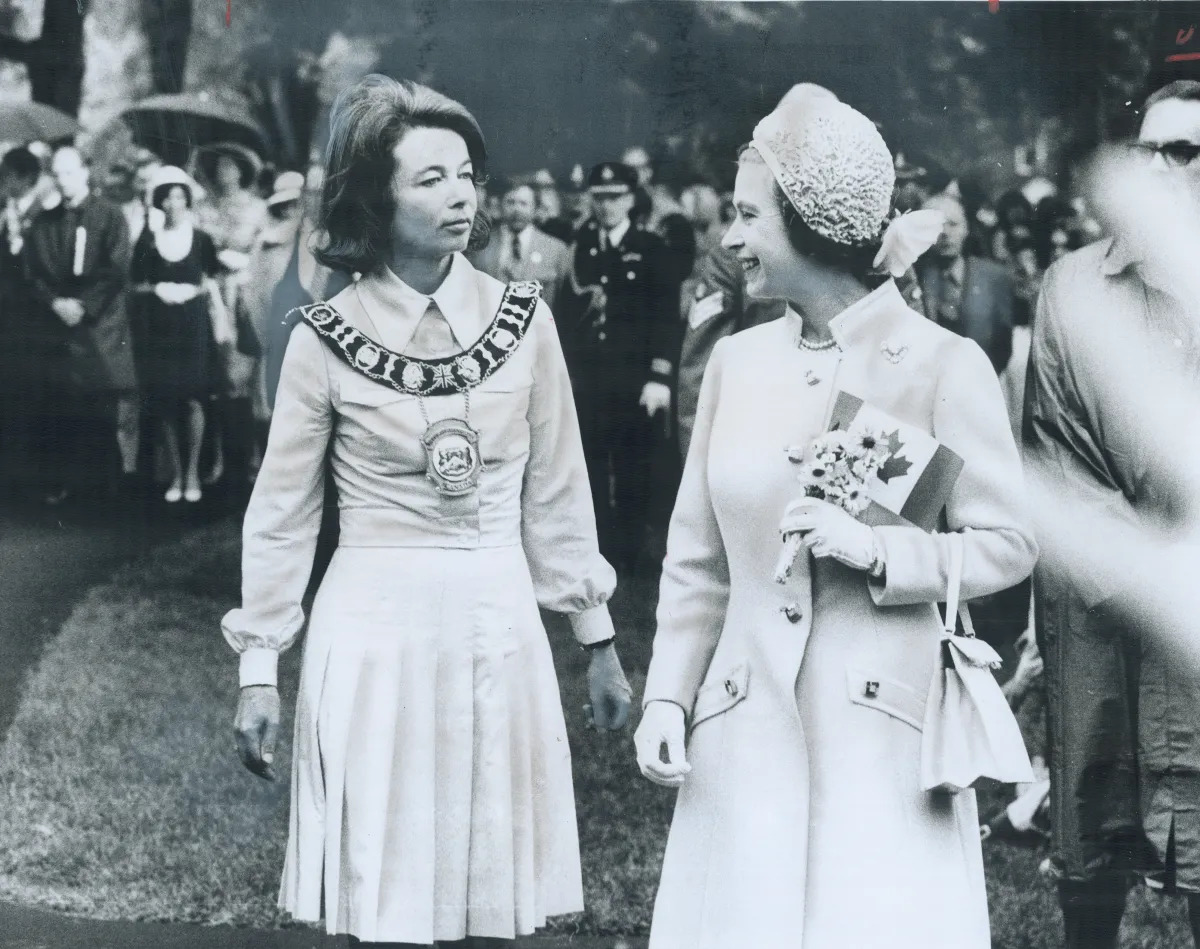
(Photo credit: Reg Innell/Toronto Star)
In 2018, on the occasion of her 90th birthday, the City of London officially named a section of its trail system the Jane Bigelow Pathway (located between Adelaide Street North and Wellington Road).
When the former mayor passed away in 2021, her children invited the community to walk the path in her memory, with an ice cream truck on hand, a nod to her sweet tooth. Her daughter Ann put it simply: “This is the passing of a dynamo”.
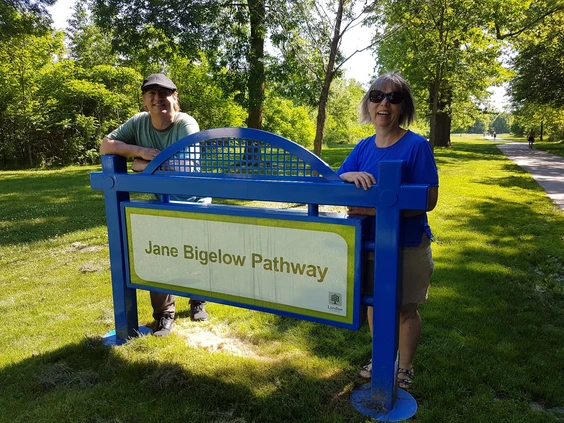
(Photo credit: London Free Press).
London’s Legacy on Two Wheels
The next time you glide along the Thames Valley Parkway or join a group ride through downtown, spare a thought for Mrs. Lamb, the women of the Forest City Bicycle Club, and Mayor Jane Bigelow. They pedalled through insults, scepticism, and heavy Victorian skirts (and, in Jane’s case, the weight of protocol) to prove that a bicycle seat could be a seat of liberation.

(Photo credit: Lawrence Durham).
Hi, I’m Lawrence, bicycle tour guide, storyteller, and proud chronicler of London’s two‑wheeled history. I believe every pedal stroke connects us to the past. From the cobblestone streets where the Forest City Bicycle Club once rolled, to the modern pathways that crisscross our beautiful city, London is a place where cycling has always meant freedom.
On my guided bicycle tours, we explore the hidden corners of the Forest City: the architecture, the nature, and the stories that make this place special.
Ready to ride into history? Small groups, big laughs, and a century of stories await you. Click here to learn more.
Featured cover photo by Après Vélo.
Leave a Reply