
If you’ve traveled through downtown London for any length of time, you’ve probably already had the experience of being stuck in traffic while slow-moving freight trains took forever to clear the tracks.
And wouldn’t you know it. It’s always when you’re running late.

So, there you are, fuming and cursing the flashing lights and the long freight trains cutting the city in half. But what if I told you that the trains are what helped make London a prosperous city in the first place?
The 1853 Game Changer: From Mud Paths to Iron Tracks
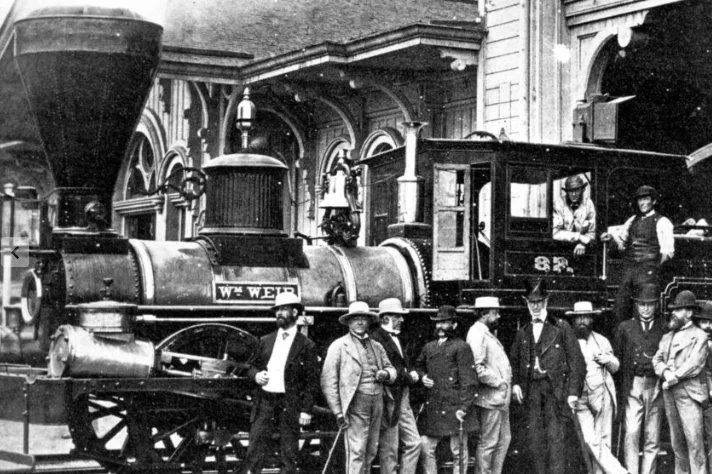
Long before London was a city with rail crossings that annoyed you, it was a town with muddy streets and boardwalks; really just a hopeful grid on a map. Then, in 1853, the Great Western Railway steamed in, and London went from being a provincial outpost to a booming city.
The trains didn’t just bring in goods; they brought people, money, and a reason for everyone else to show up. London became a strategic hub, with tracks stretching out in all directions.

(Photo credit: Toronto Railway Historical Association).
The Anatomy of a Railway City: By the Numbers
55 Level Crossings: That’s 55 official opportunities to sit in your car, sigh deeply, and contemplate your life choices. Consider it a city-wide, mandatory mindfulness exercise.
21 Bridges Over Railroads & 12 Under Them: Let’s talk about two recent improvements, since they are both near large urban train yards, each with many slow-moving freight trains.
- The Adelaide Street underpass project eliminated 25 to 43 instances of train delays per day. It may have cost the city a cool $88 million, $29 million higher than expected, but who doesn’t love a good budget surprise, right?
- The Hale/Trafalgar elevated roundabout reduced significant delays for the 15,000 vehicles that previously lined up to cross the tracks daily.

Up to 47 freight and passenger trains passed along these tracks every day, blocking traffic in all directions.
(Photo credit: Delcan Corporation).

More than five decades after residents initially complained about the busy rail crossing, the Hale/Trafalgar raised roundabout opened to traffic in 2010 to positive reviews from the community.
Of note, this unique design was the first of its kind in North America and won engineering awards and garnered international attention.
(Source: Canadian Consulting Engineers Awards 2011)
CN, CPKC, and the Art of the Inconvenient Pause
Today, railways in Canada are run by two giants: CN (Canadian National Railway Company) and CPKC (Canadian Pacific Kansas City). Even though their freight trains are the lifeline of our national economy, the level crossings constantly disrupt our daily routines.
The traffic delays? Think of them not as annoyances, but as a chance to put on your favourite podcast, check your messages, and appreciate the raw, industrial power rumbling past your windshield. It’s a free, unscheduled spectacle of commerce!
Your Ticket to Adventure
But here’s the secret for the culture seeker: this railway network is your best friend. The VIA train is your stress-free ticket to an amazing weekend.
Hop on a train in Toronto or Windsor, and a couple of relaxing hours later, without any white-knuckle traffic on Highway 401 (the busiest highway in North America), you’ll be deposited right in the heart of London, ready to discover our breweries, trails, and vibrant neighbourhoods.

(Photo credit: Balcer)
Opportunities Galore for Cyclists
Interestingly, because the railways intersect numerous roads and pathways in London, they offer train-loving cyclists many opportunities to cross over and under the tracks.
Here is but a sampling:
Photo credits: the following seven photos are by the author.


Cyclists and pedestrians pass under the Thames-Oxford Rail Bridge (in the foreground) and the Thames-Oxford Vehicle Bridge (in the distance).


Hi. I’m Lawrence – bicycle tour guide, storyteller, and lover of puns.
If you’re all done reading about our rail history and want to experience London, why don’t you come on a bicycle tour with me? Small groups, big laughs, and zero train-related delays (I promise). I help curious folks like you discover the best parts of our city (from the saddle of my bicycle, of course).
Leave a Reply