
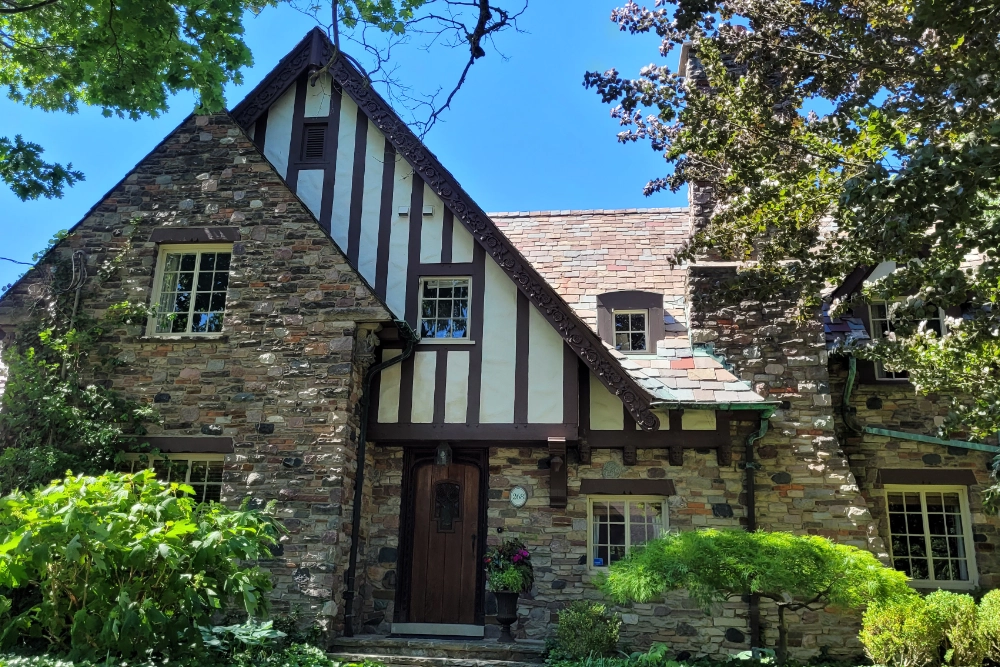
There’s something magical about turning a corner and discovering a building that seems to be straight out of a fairy tale. At the intersection of Regent and Wellington Streets in London, Ontario, you’ll find the place I affectionately call the “Gingerbread House.”
It isn’t just another heritage property. It’s a playful architectural confection that invites you to stop, stare, and smile. When I look at this house with its uneven roofline, mismatched windows, stone gargoyles, and hand-carved wooden details, it always seems to be winking back at me.
Let me take you on a tour of this whimsical treasure and explain why it should be on your itinerary when you visit London.
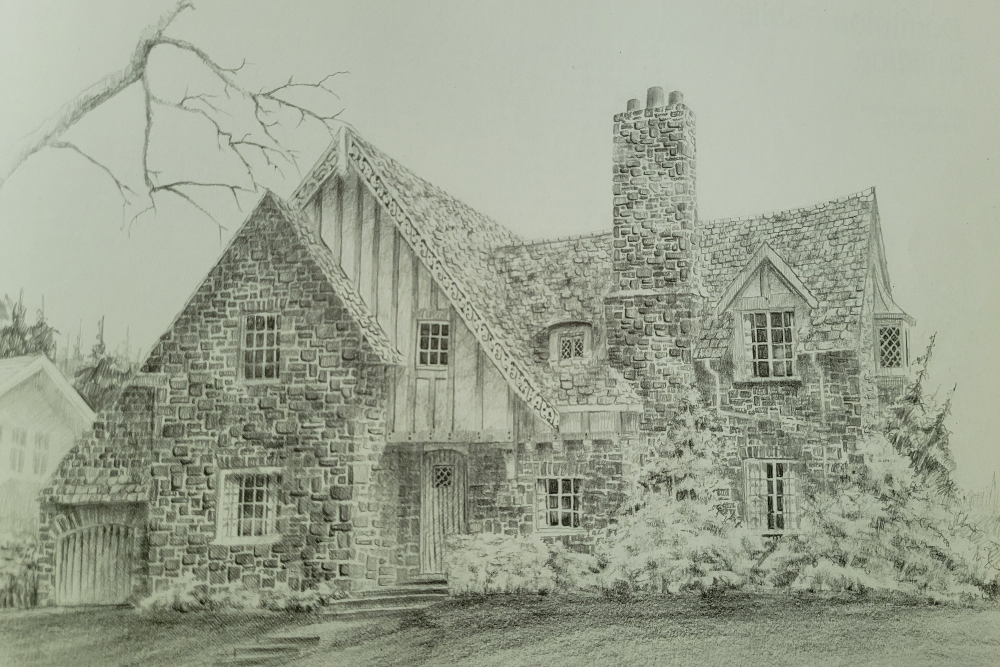
A Brief History: The Men Behind the Magic
Albert M. Masuret: A Grocer with Grand Vision
In 1935, as the world slowly emerged from the Great Depression, a successful wholesale grocer named Albert M. Masuret decided to build something extraordinary. Masuret had made his mark in London’s business community. Still, he wanted his home to make an entirely different kind of statement, one that celebrated craftsmanship, whimsy, and the enduring charm of Old World design.
He commissioned the project during an era when many homes were being built with practical efficiency in mind. Masuret, however, had other plans. He wanted a residence that would stand as a testament to artistry and imagination, a place where every stone, every shingle, and every carved detail told a story.
Herbert E. Murton: The Architect
Masuret found his creative partner in Herbert E. Murton, one of London’s most prominent architects of the period. Murton was known for his appreciation of fine materials and his ability to blend architectural traditions in unexpected ways.
For the Masuret House, Murton drew inspiration from the Arts and Crafts movement and the English Cottage style, architectural traditions that celebrated handcraftsmanship and a connection to nature. The result? A building that the City of London Heritage Register officially classifies as “Tudor Revival,” though that label hardly captures its full personality.
Today, 268 Regent Street is a heritage-designated property on the City of London Heritage Register, ensuring that this remarkable piece of London’s architectural history will be preserved for future generations to enjoy.
Architectural Wonders: A Feast for the Eyes
The 22-Ton Roof
Let’s start at the top, because this is where the Masuret House truly defies expectations. The roof is composed of massive, variegated stone slates, reputed to weigh an astonishing 22 tons. That’s the weight of approximately 14 cars resting on the top of a single-family home!
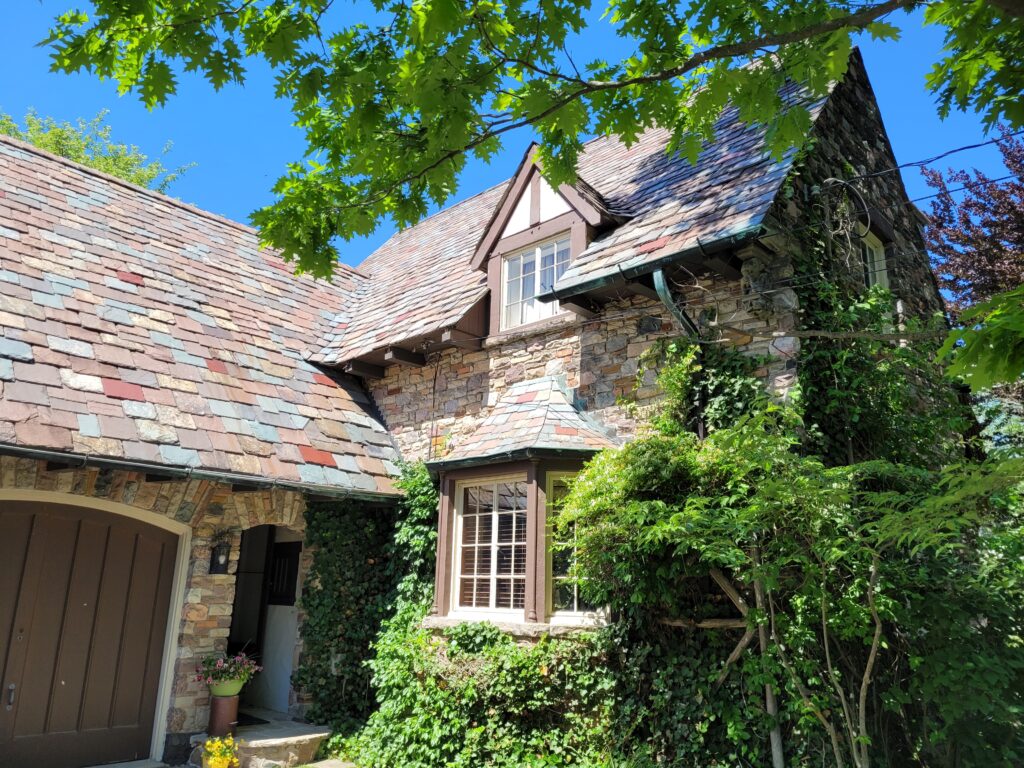
But it’s not just the weight that captivates; it’s the colour. Murton selected slates in a remarkable variety; shades of blue, green, red, and purple mingle with more sober greys and browns. The effect is almost painterly, like a palette of earth tones splashed with unexpected jewel tones.
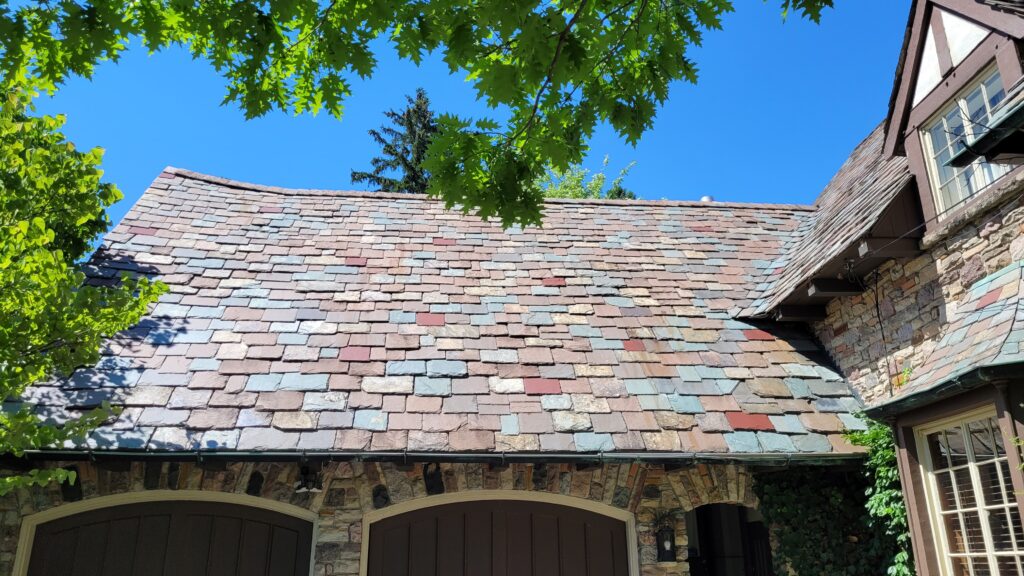
The slates are also graduated in size and thickness, becoming smallest at the ridge, a technical detail that speaks to Murton’s obsessive attention to craftsmanship. The roofline itself slopes up at the ridge end, creating the illusion that the centre has sagged with time, as if this house has stood for centuries rather than decades.
The Stone Walls
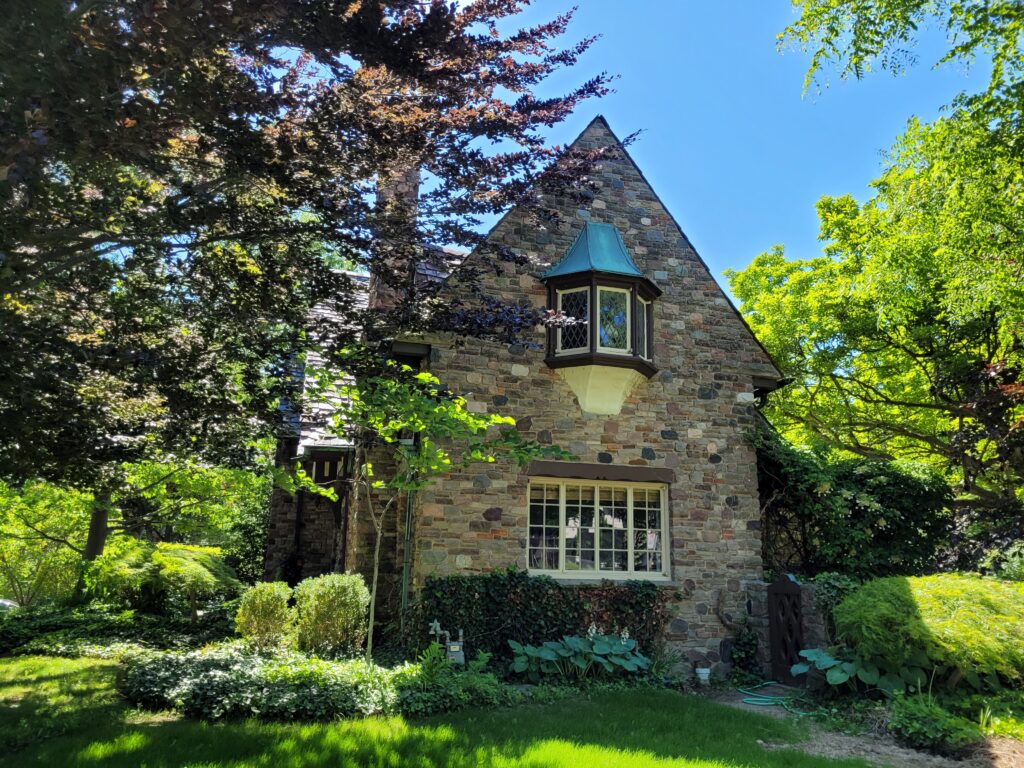
The exterior walls are composed of a rich mixture of Credit Valley stone and local fieldstone, creating a rugged texture that complements the playful roofline. The rusticated stonework gives the house an ancient, almost castle-like feel, as though it has been standing on this corner for hundreds of years, weathering seasons and centuries with quiet dignity.
The Whimsical Details
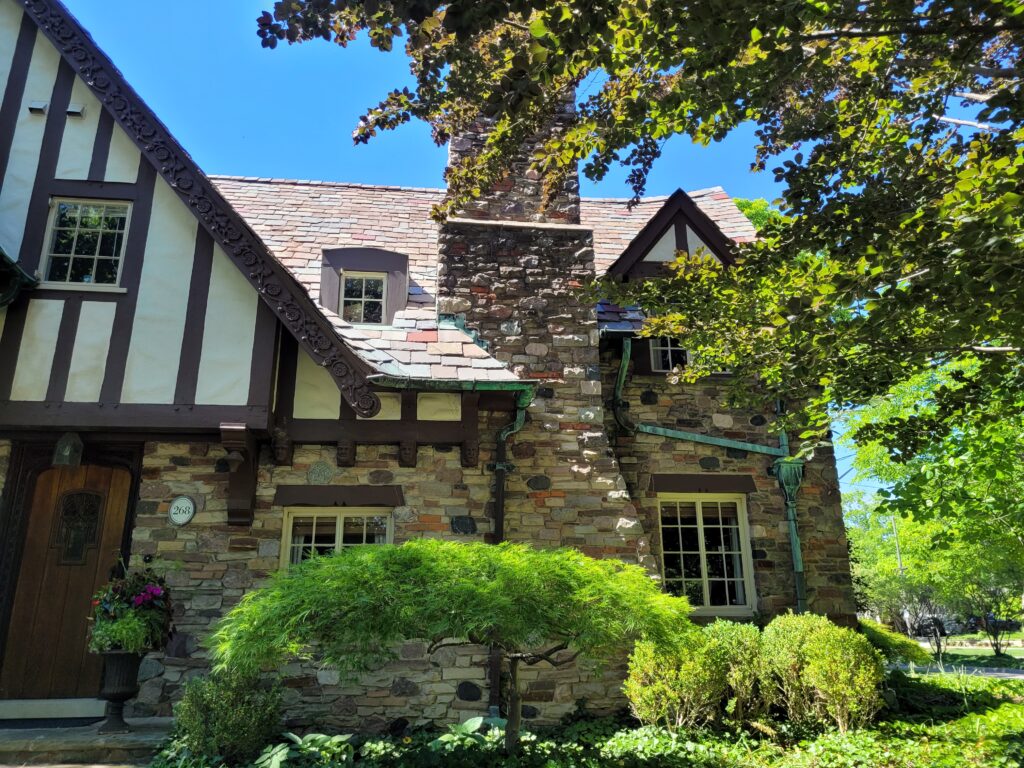
Here’s where the Masuret House truly shines. Murton and his craftsmen let their imaginations run wild, creating details that reward close inspection:
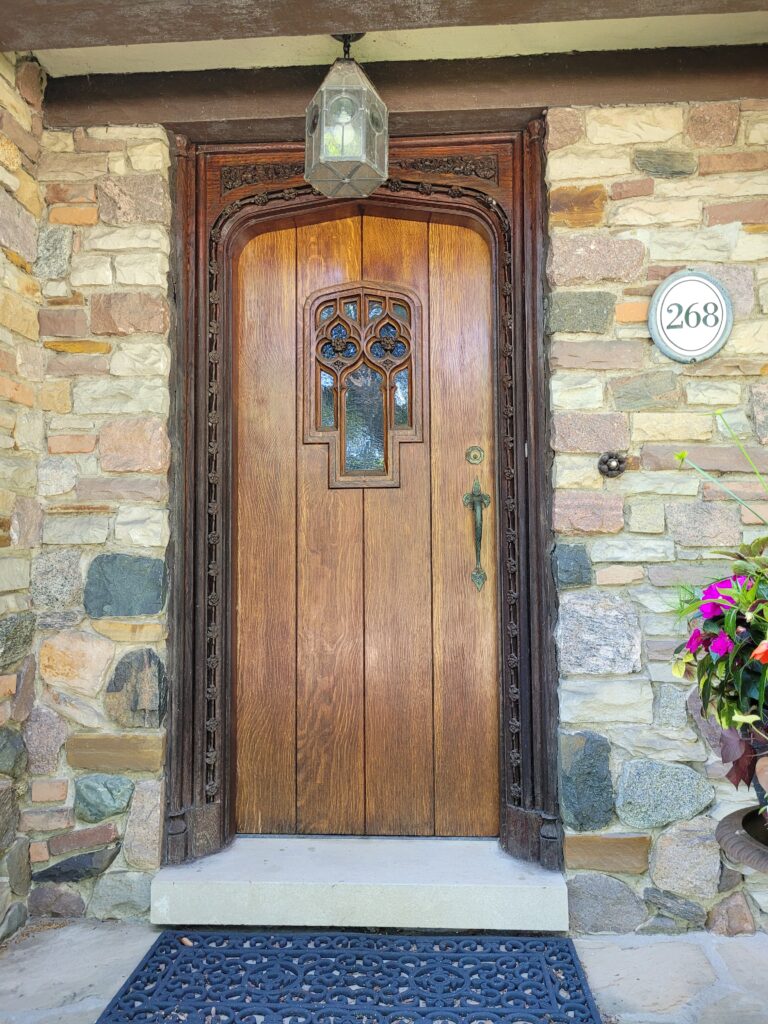
Carved Bargeboard: The decorative wooden boards that hang beneath the roofline are carved with intricate patterns, including wooden Tudor roses that seem to grow organically from the wood.
Tudor Heads: A series of hand-carved brackets features the faces of Tudor figures, each one unique, each one watching over the house with expressions that range from stern to bemused.
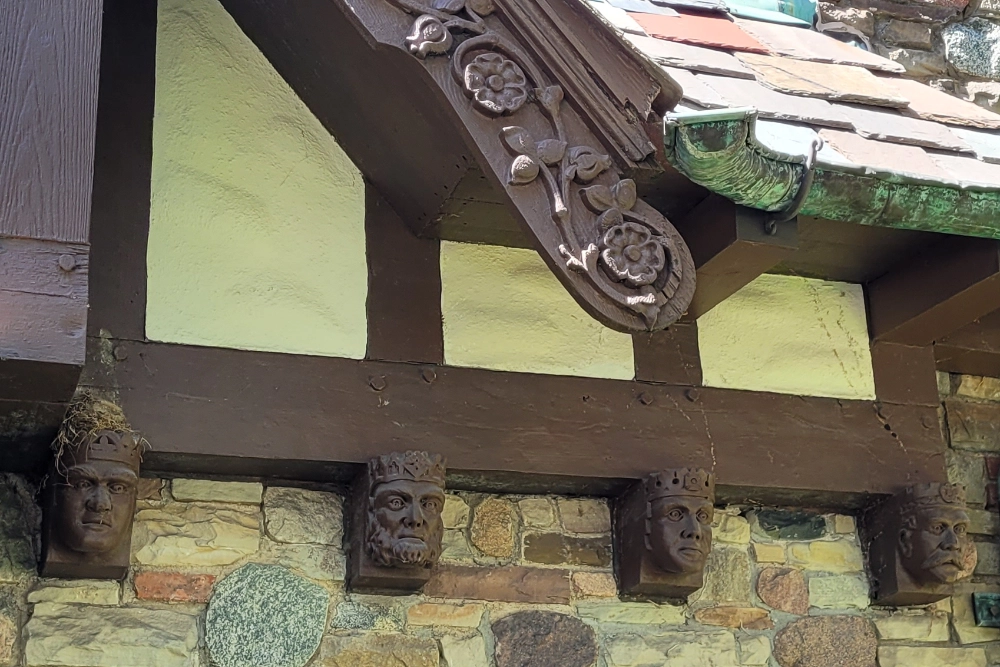
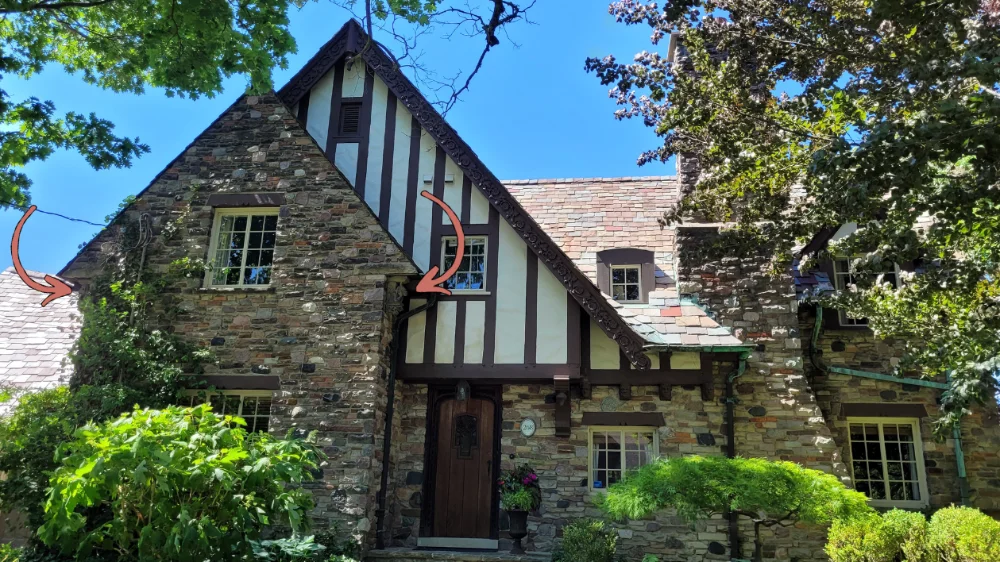
The Gargoyles: Yes, actual stone gargoyles guard the structure, playful, mischievous, and entirely unexpected on an Ontario street corner.
Casement Windows: Multi-pane windows in varying styles pierce the roof at different angles, as if added at different times in the house’s long (fictional) history.
Hansel and Gretel Vibes: The overall effect has been compared to a fairy-tale cottage, a Hansel and Gretel house whose “candy roofs” are varicoloured slates and whose “gingerbread” is skillfully hand-carved oak.
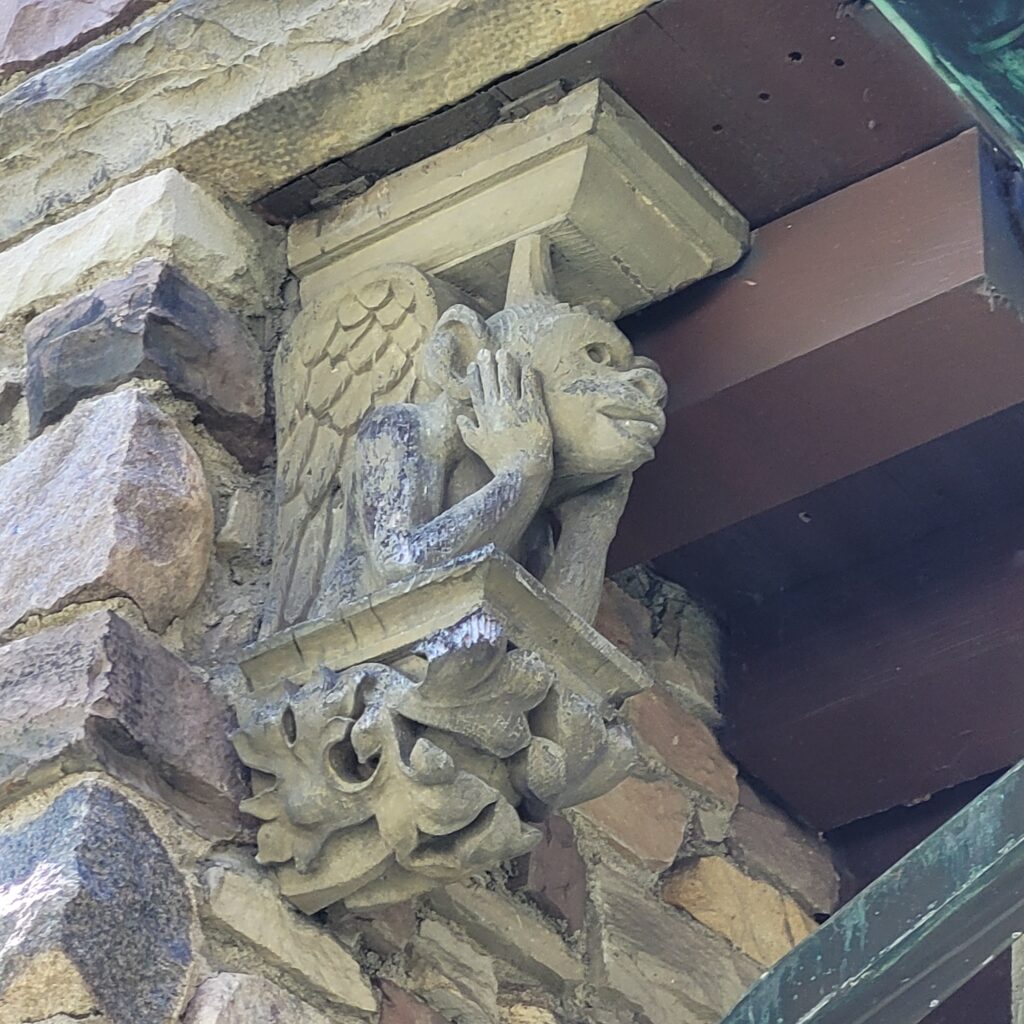
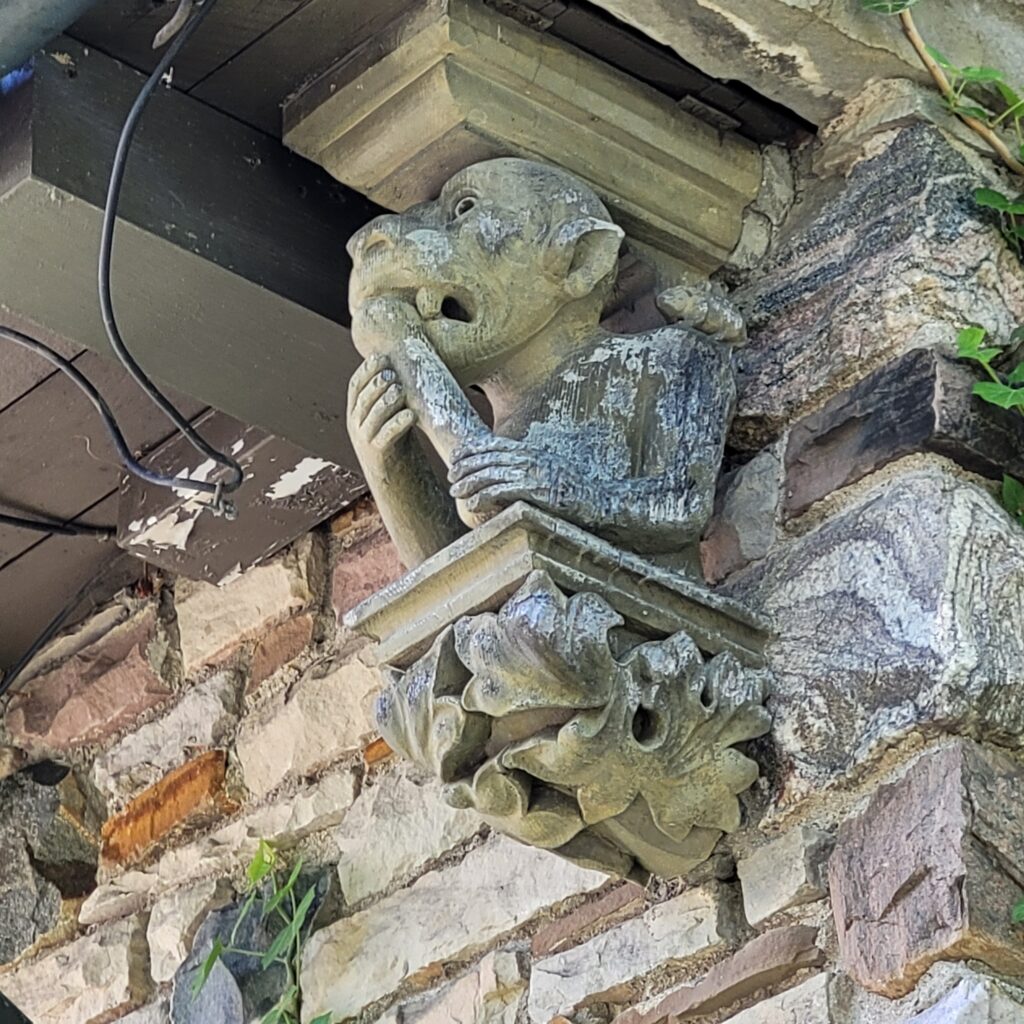
Gargoyles under the eaves (left photo and centre photo).
Solid oak door with hand-carved wooden frame (right photo).
The Arts and Crafts Influence
Murton’s work on the Masuret House clearly shows the influence of the Arts and Crafts tradition, a movement that emerged in Britain in the late 19th century as a reaction against industrialization and mass production.
The Arts and Crafts movement celebrated:
- Handcraftsmanship over machine production
- Natural materials and honest construction
- The integration of art into everyday life
- A connection to historical styles and traditions
At 268 Regent Street, these principles come alive. The hand-adzed timbers, the careful selection of local stone, the hand-carved details; every element speaks to the joy of making, the value of a skilled tradesperson, and the belief that houses should nourish the spirit as well as shelter the body.
The Interior
While the exterior captivates from the street, the interior of the Masuret House is equally impressive in its craftsmanship:
- The interior features rich black walnut trim, a wood prized for its dark, warm tones and durability.
- The floors are composed of 8-inch oak planks, cut on a quarter turn, a method that enhances the wood’s stability and showcases its beautiful grain pattern.
Every material was chosen with care, reflecting Murton’s emphasis on working with only the finest materials available.
A House That “Plays at Being Old”
Perhaps the most charming aspect of the Masuret House is what architectural historians describe as its playful pretence. With all its eccentricities, the house seems to “play at being old.”
It’s like a child dressed up in old-fashioned finery. The delight comes not from fooling anyone, but from the obvious joy in pretending.
This isn’t a house that takes itself too seriously. It’s a house that invites you to share in its joke, to appreciate the artistry behind the whimsy, and to remember that architecture can be both substantial and fanciful.
Why This House Matters
The Architectural Conservancy of Ontario (ACO) regularly features the Masuret House on its walking tours, recognizing it as one of London’s most significant residential buildings. It’s also a highlight of my “Old North” Bicycle Tour.
But beyond its official heritage status, the house matters because it represents something valuable: the belief that our built environment can inspire joy, spark imagination, and connect us to history in meaningful ways. In a world of cookie-cutter subdivisions and identical condominium towers, buildings like the Masuret House remind us that our homes can be expressions of personality and artistry.
A Final Thought
There’s something special about stumbling upon a place like the “Gingerbread House.” It’s the kind of discovery that makes you feel like you’ve found a secret, a treasure tucked away on a quiet corner, waiting for someone to notice and appreciate it.
In a world that often prioritizes speed and efficiency over beauty and craftsmanship, the Masuret House stands as a lovely reminder that taking time to create something beautiful is never wasted. And taking time to seek out those beautiful things, whether on foot, by car, or by bicycle, is how we find the magic hidden in our own cities.

Hi, I’m Lawrence, bicycle tour guide, storyteller, and proud Londoner. I believe the best way to discover a city’s hidden gems is at a pace that allows you to stop, look, and appreciate the details. The Masuret House is exactly the kind of treasure I love sharing with visitors, a place that embodies the charm, craftsmanship, and playful spirit that make London such a wonderful city to explore.
If you’d like to see the Gingerbread House and many other architectural delights up close, I’d love to show you around. My tours are designed for curious folks who want to experience the best parts of London, from a bicycle seat, of course. Click here to learn more! Your next adventure awaits!
Leave a Reply