
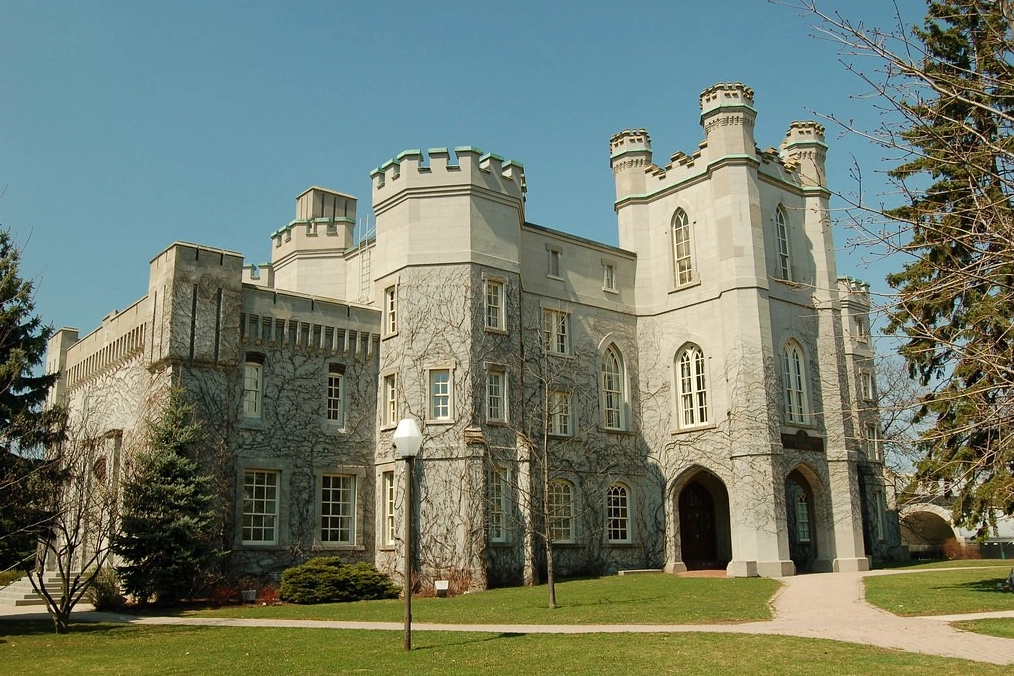
When visitors to London see the old courthouse on Ridout Street, they often ask the same question: “Is that a castle?”
It’s a fair question.
Overlooking the Thames River is a structure that looks as if it were plucked straight from the Irish countryside, complete with octagonal towers, crenellated parapets, and imposing stone walls. But it’s not a medieval fortress. Instead, it’s the oldest surviving building in the region, the Middlesex County Courthouse.
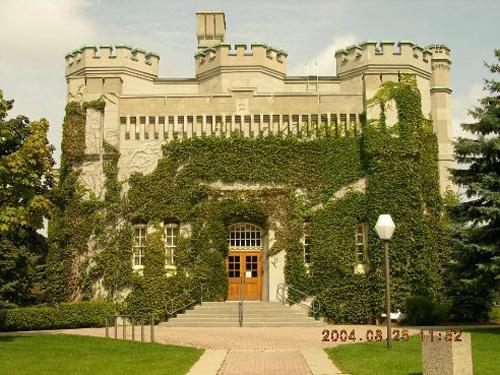
(Photo credit: Canada’s Historic Places)
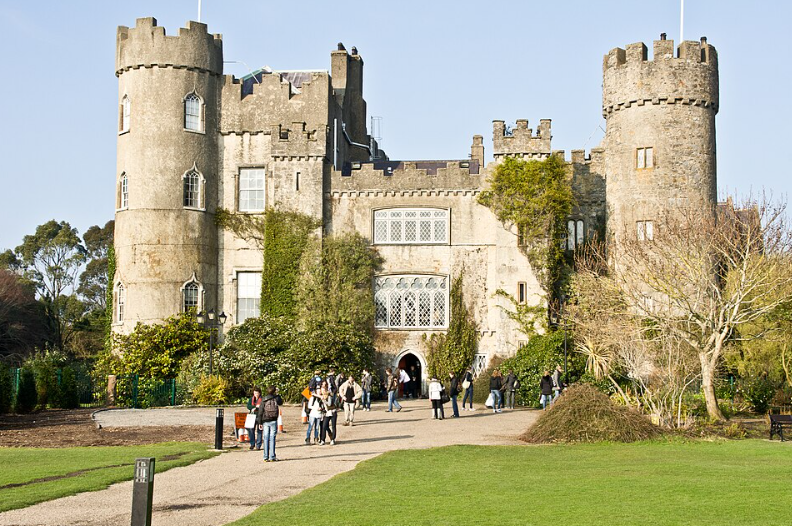
(Photo credit: William Murphy)
An Irish Vision in the Canadian Wilderness
To understand why the London courthouse of today looks like a castle from the past, we need to go back to a time when a certain eccentric Irishman had authority over this part of Ontario.
Born in Ireland in 1771 at Malahide Castle, Colonel Thomas Talbot was an Anglo-Irish aristocrat who, after a promising military career, did the unexpected. He sold his commission and immigrated to Canada, where he became a colonial administrator of a large tract of land in southwestern Ontario, known as the Talbot Settlement.
For the next 40 years, Talbot ruled his domain like a feudal lord, granting land to loyal British and Irish immigrants and building roads along the Lake Erie shore. He was powerful, controversial, and deeply nostalgic for his Irish homeland. So, when the time came to build a new district courthouse in the fledgling town of London in 1827, Talbot, who sat on the building committee, ensured it would remind him of his old castle home near Dublin.
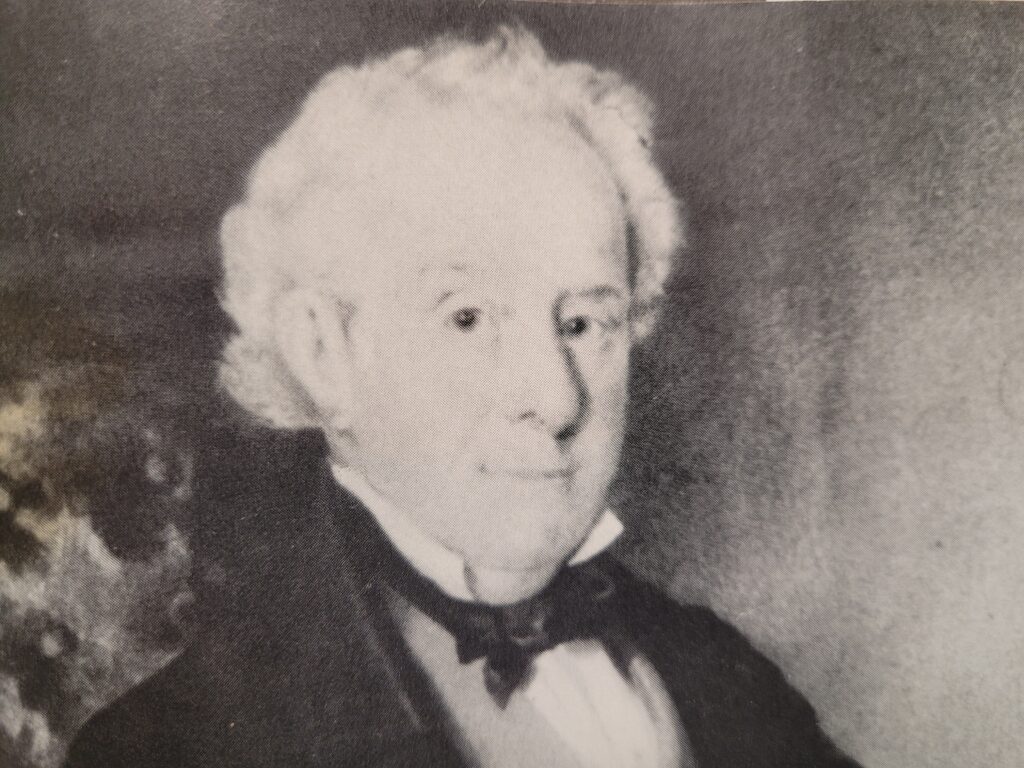
(Photo credit: Western University Archives, London Free Press Negative Collection)
Built to Exude Power
Construction of the courthouse began in 1827 and was completed in 1829.
The three-and-a-half-storey building was designed in the Gothic Revival style by Toronto architect John Ewart and was built with locally quarried stone.
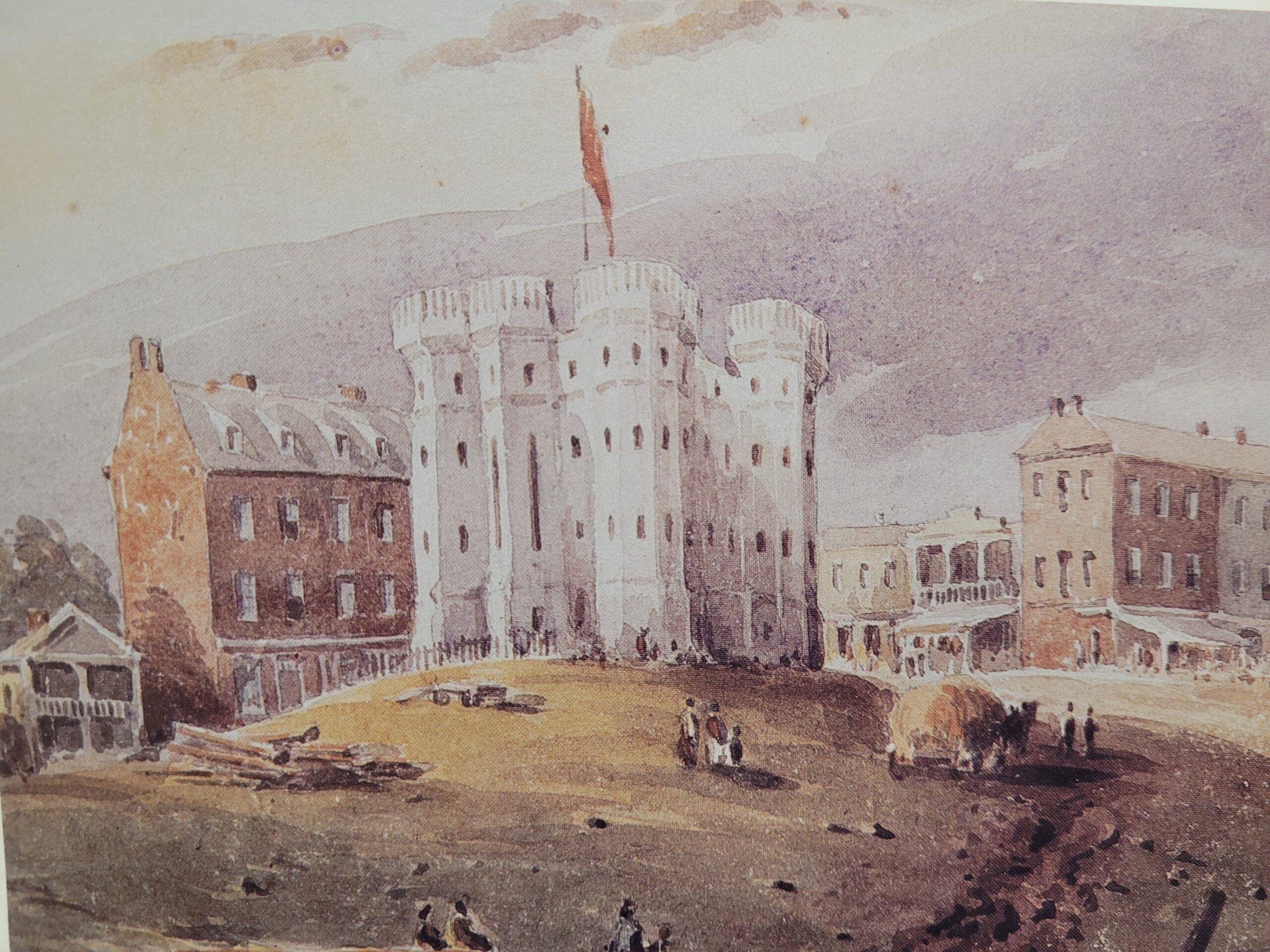
It had the look of a castle, sitting as it was in this prominent location on a hill overlooking the Thames River. It featured a central pavilion flanked by two octagonal towers, complete with battlements (crenellations) that gave it that fortress-like silhouette. The bricks were covered in stucco and scored to look like stone masonry, a clever illusion to make the building look even more durable and ancient. Add in pointed arch windows and doors, label mouldings, and an exposed timber ceiling in the courtroom, and the effect was one of permanence and power.
Interestingly, when first built, the front door of the courthouse faced west, toward the Thames River. That’s because, in the early days of London, the river was the highway. So when visitors and prisoners arrived by water in 1829, the first thing they saw was this impressive structure dominating the skyline.
In contrast, most of the remaining buildings in this emerging frontier town were constructed of wood.
(Photo credit: Toni Hafkenscheid, Museum London)
Where Justice was Served
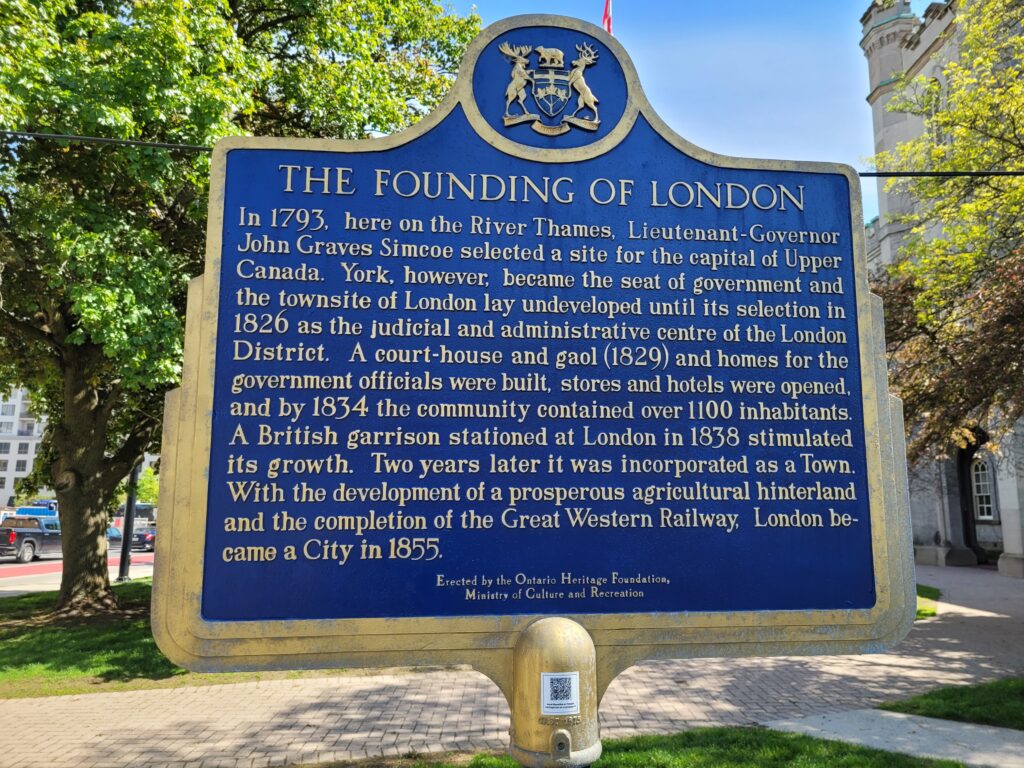
For nearly 150 years, from 1829 until 1974, this building served as the judicial and administrative hub for the London District (later Middlesex County).
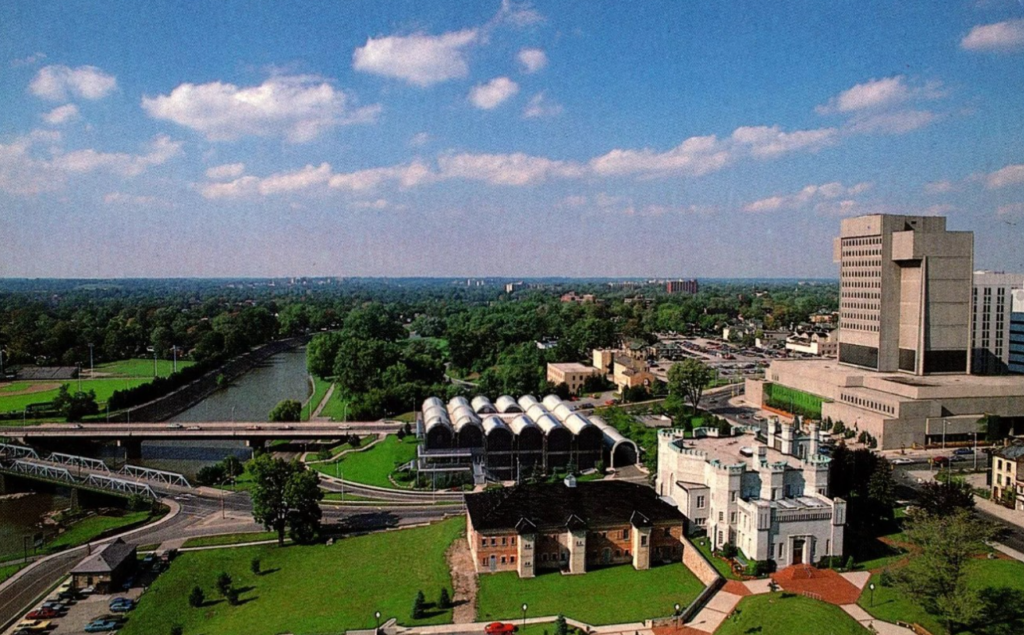
An extensive renovation in 1878 added more towers to the courthouse and changed the entrance to face east toward Ridout Street.
The Jail and its Yard
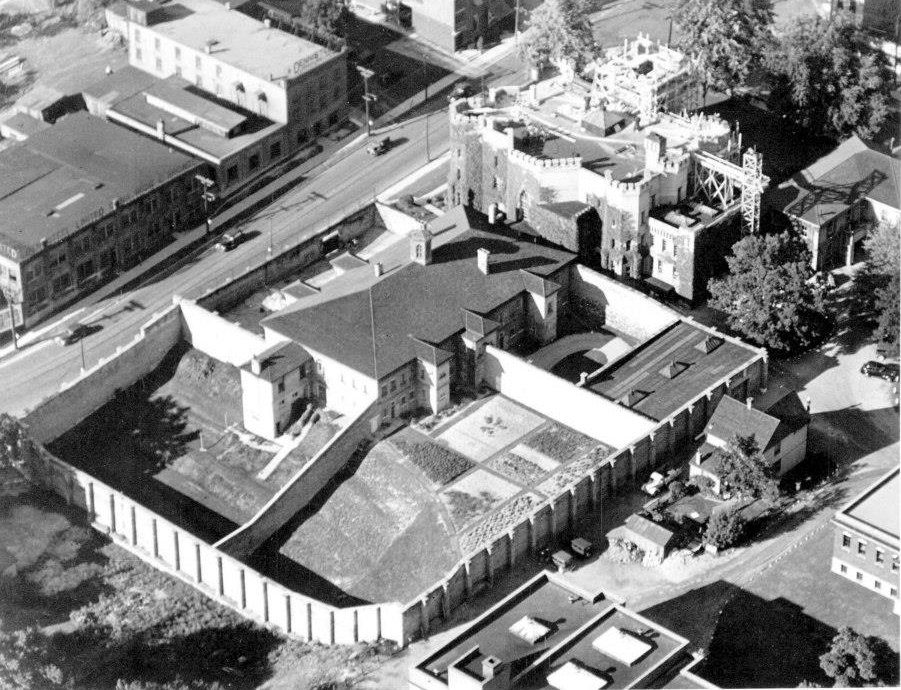
- Behind the courthouse, on the west side nearest the river, a jail was added in 1846, enclosed by a high brick wall.
Public Hangings
- In the 19th century, justice was a public spectacle. Crowds would gather on the grounds behind the courthouse to witness hangings.
- In all, 19 people were hanged in London over 121 years.
- By 1976, capital punishment was abolished nationwide.
(Photo credit: Ivey Family London Room, London Public Library, London, Ontario, Canada)
(Photo credit: London Post Card Collection, Box #98, Album #2, p. 82, pocket #1, Ivey Family London Room, London Public Library, London, Ontario, Canada)
Preservation, Recognition, and a New Chapter
Given its immense historical value, it’s no surprise that efforts to protect the courthouse began early.
- In 1955, the building was designated a National Historic Site of Canada, recognized for its early Gothic Revival architecture and its association with the administrative organization of the province.
- The courthouse is protected by an Ontario Heritage Trust easement and designated under Part IV of the Ontario Heritage Act.
A Modern Turning Point
- In 2021, the site entered a new chapter when it was sold to a private developer, York Developments. While the county maintains some offices there for the time being, the future use of the historic structure is evolving.
- Recent proposals for a high-rise development immediately to the south have sparked community conversations about how to balance modern growth with the protection of our irreplaceable heritage landmarks. It’s a reminder that the story of this building is not just in the past. It’s being written right now.
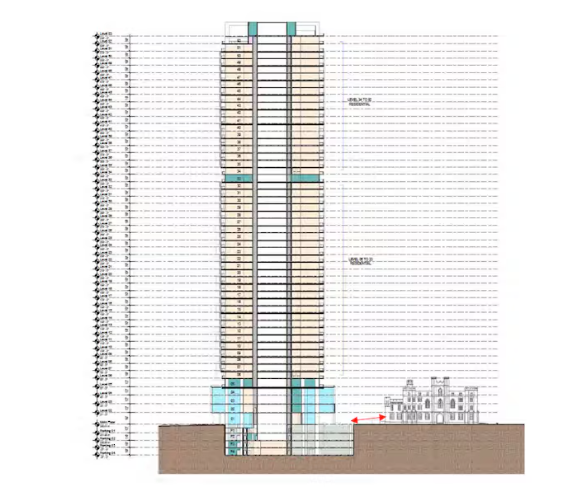

Above to the left: A cross-sectional drawing illustrates how close the 54-story tower would be to the 3-storey courthouse. (Zedd Architecture)
Above photo on the right: This rendering illustrates how the two-tower project proposed at 50 King St would dwarf the nearby courthouse to the north. (Photo credit: Jenifer Bieman)
The Surrounding Neighbourhood: London’s Founding Core
The courthouse does not stand alone. It is the jewel in the crown of London’s original administrative core. A short stroll from the front steps of the courthouse will take you to other heritage treasures.
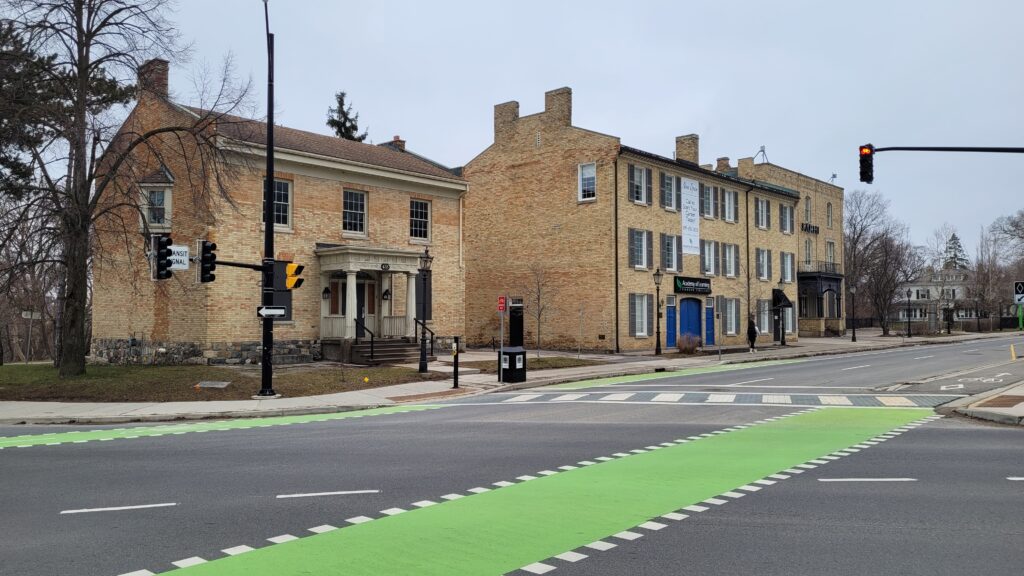
- Just up the street, you will find Banker’s Row: a collection of elegant 19th-century homes built by the city’s early banking and business elite.
- Also along Ridout Street to the north is London’s oldest surviving residence, Eldon House. Built in 1834 by the Harris family, it is now a museum.
(Photo credit: Lawrence Durham)

(Photo credit: Lawrence Durham)
(Photo credit: Lawrence Durham)
Hi! I’m Lawrence – bicycle tour guide, storyteller, and proud Londoner.
There is nothing I love more than riding my bike past the old courthouse and seeing its castle-like towers. Every building in this city has a story, and I love sharing them with others. If you want to experience London’s history up close, from the river valleys to the historic downtown, join me on a tour. We’ll laugh, we’ll learn, and we’ll see the city from the very best seat in the house, on a bicycle, of course.
Featured cover photo by Architectural Conservancy Ontario
Leave a Reply