
You’d never know it now, but what is currently one of the city’s most essential north-south arteries began as a patchwork of country sideroads, gravel paths, and a bridge that locals famously called “the bridge to nowhere.”
Today, Wonderland Road tells a story about how cities grow, how communities connect, and how a little patience and a lot of planning can transform the way we move about our city.
A Name Born from Music and Merriment
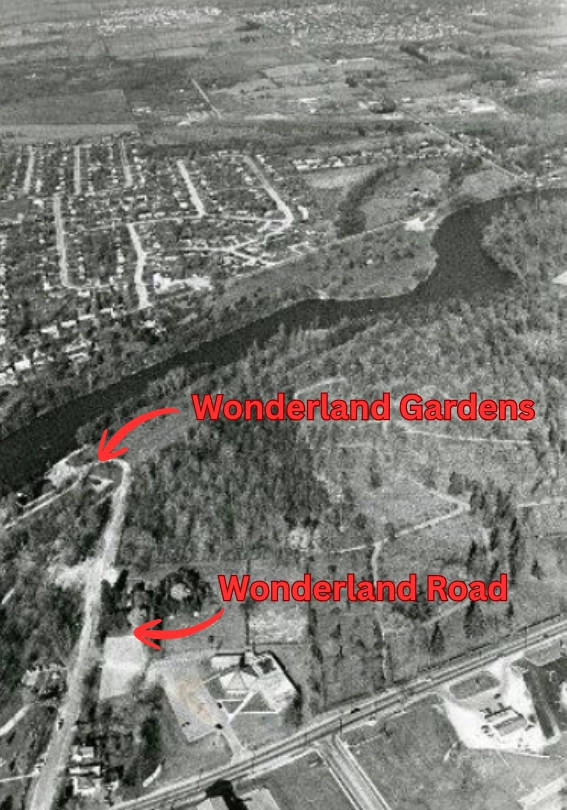
Wonderland Road takes its name from Wonderland Gardens, a concert hall and entertainment complex built near Springbank Park in 1935 by the Jones family.
The original road to Wonderland Gardens was nothing more than a 3-kilometre gravel path leading north from Southdale Road up to the river’s edge.
(Photo credit: Rachel Cree)
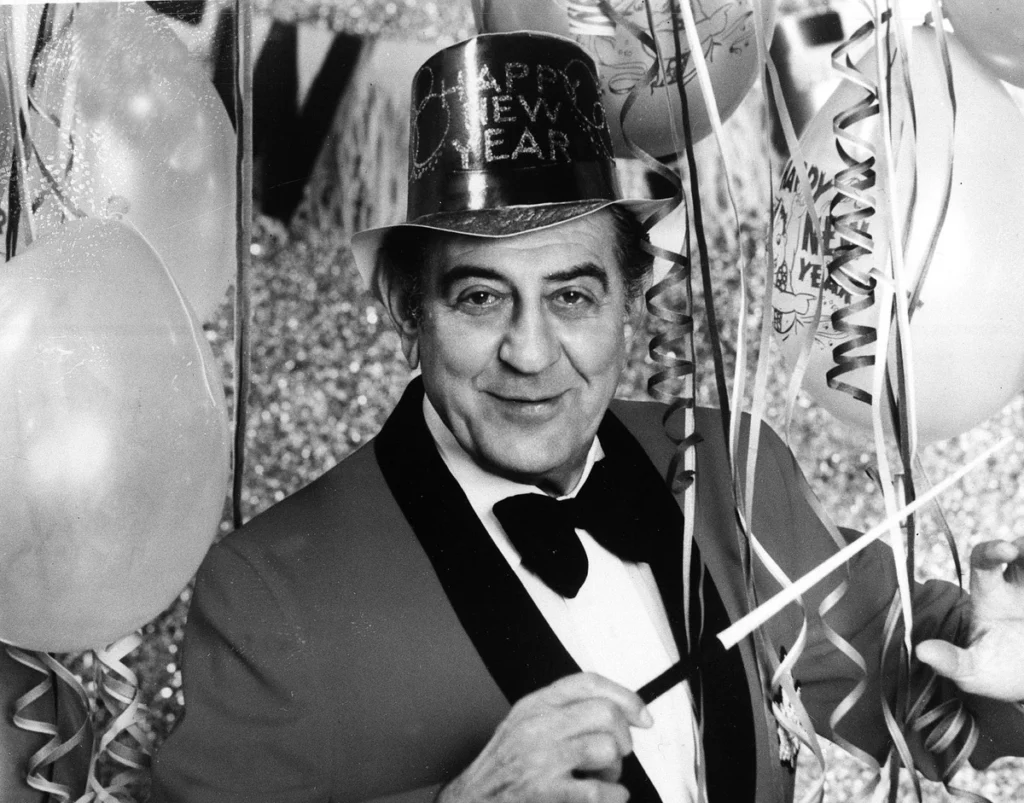
It was at Wonderland Gardens that a young Londoner named Guy Lombardo and his band, The Royal Canadians, first charmed audiences with what would become known as “the sweetest music this side of heaven”. Lombardo went on to become one of Canada’s most celebrated bandleaders, famous for his New Year’s Eve broadcasts and his signature rendition of Auld Lang Syne.
(Photo credit: London Free Press)
Shortly, we’ll see how Guy Lombardo’s name is connected to the Wonderland Road Bridge.
The Road Before It Was a Road
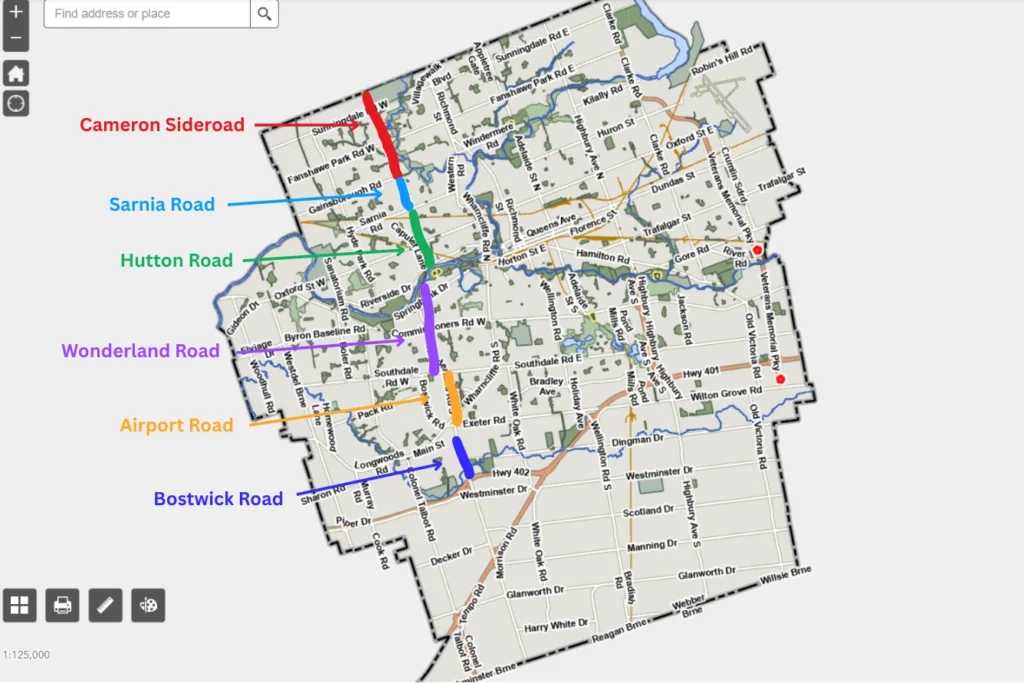
Here’s a fascinating piece of London trivia: the Wonderland Road we know today is actually a carefully stitched patchwork of six different historic roads (see map below).
North of the Thames River, the corridor consisted of:
- Hutton Road, running north from Riverside Drive
- A section of Sarnia Road that connected London on the east to Sarnia on the west, before being absorbed
- Cameron Sideroad, continuing north toward Highway 7
South of the river, the original Wonderland Road served as the spine, later supplemented by sections of Airport Road and Bostwick Road.
For much of the mid-20th century, these roads had existed as separate entities, country lanes that served local farms and scattered homes rather than a unified city corridor.
The Bridge That Divided Opinion
The story of Wonderland Road’s transformation really began in 1977, with the opening of a new four-lane bridge spanning the Thames River. The bridge was dedicated to Guy Lombardo, who had passed away just months earlier, and it was meant to finally connect Wonderland Road south of the river with Hutton Road to the north.
But here’s where things got complicated.
When the Guy Lombardo Bridge opened, it was an impressive structure, four lanes wide, beautifully built, and seemingly poised to revolutionize north-south travel in London. There was just one problem: the roads on either side weren’t quite ready for it.
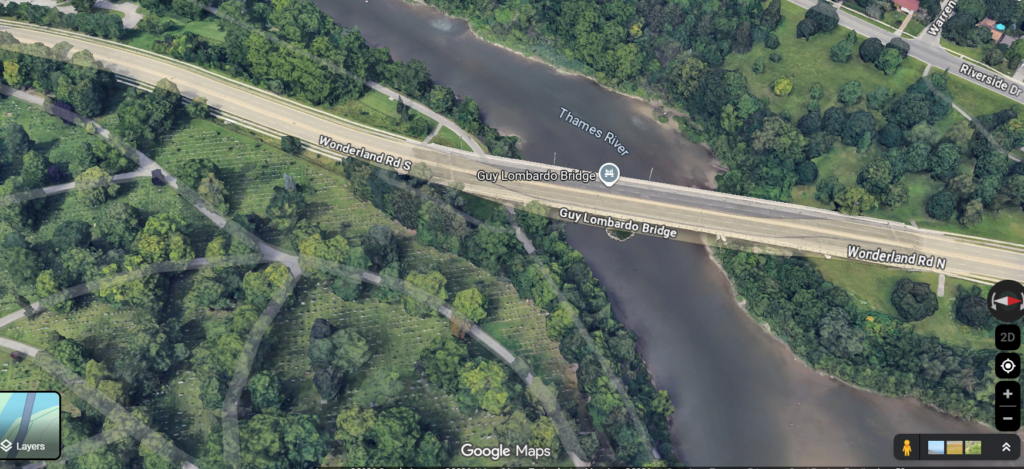
In the centre of the photo, you can see the bicycle path hugging the south bank of the Thames River, leading to the Wonderland Gardens (just out of frame). The pathways of the Woodland Cemetery are visible in the lower left of the photo.
(To explore the area shown on the map, click this link to Google Maps)
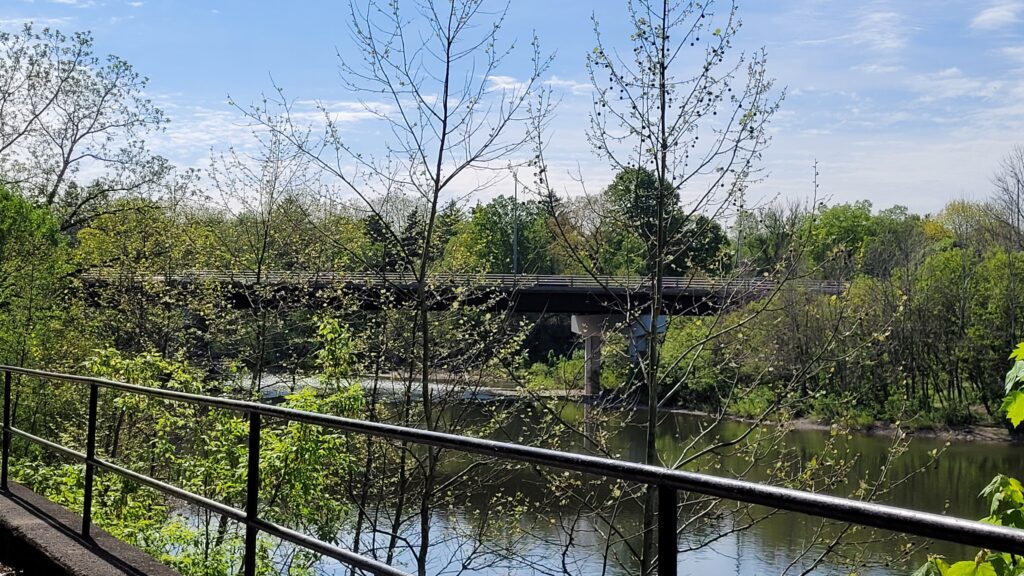
(Photo credit: Lawrence Durham)
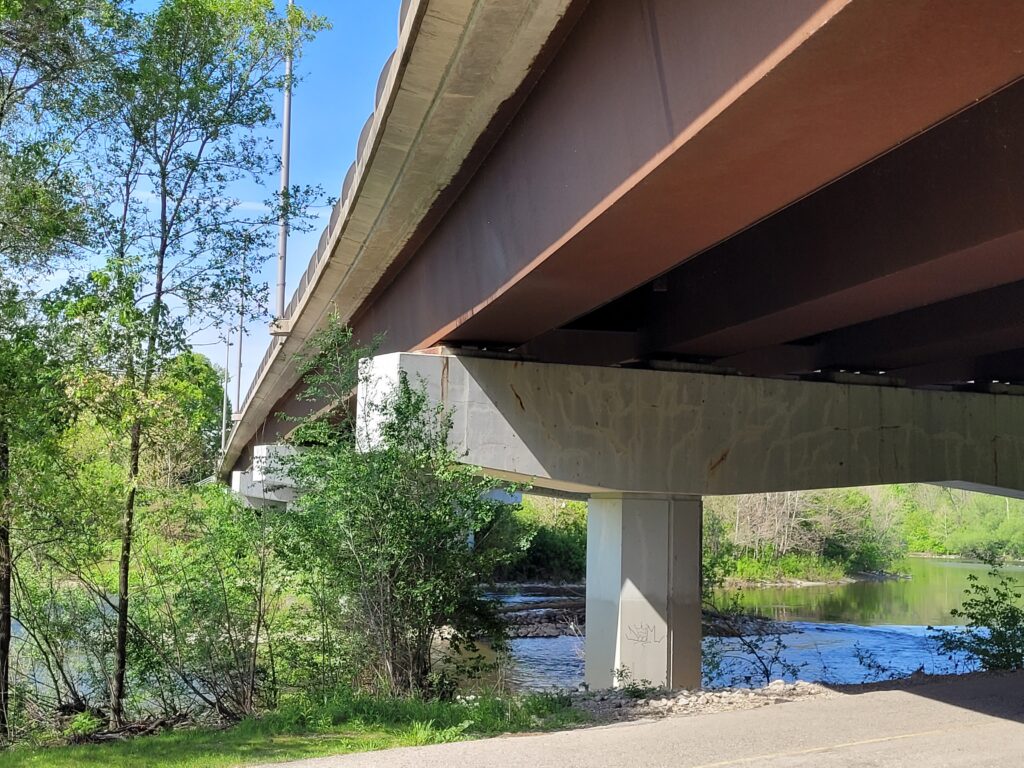
(Photo credit: Lawrence Durham)
The Challenges
Disconnected Infrastructure
- While the bridge itself was completed in 1977, the surrounding roadway network hadn’t caught up with the vision. The bridge was part of a long-term urban plan that wouldn’t be fully realized for years, leaving many Londoners scratching their heads at why such a substantial structure existed without a seamless corridor to support it.
Renaming Confusion
- At the same time the bridge opened, Hutton Road was officially renamed Wonderland Road North. On paper, this unified the corridor.
- In practice, however, many residents still thought of the two sides as separate entities. Old habits die hard, and for longtime Londoners, “Hutton” meant the north side, while “Wonderland” meant the south.
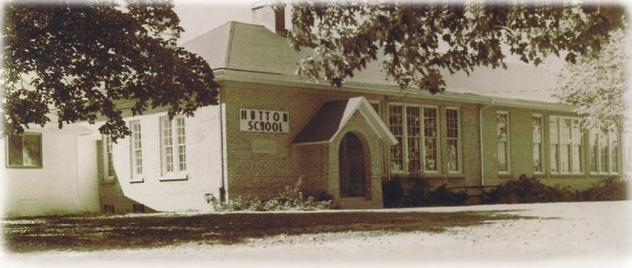
The school property was purchased by The Association for Handicapped Adults in 1973. They promptly adopted the name Hutton House for themselves in honour of the school.
(Photo credit: Vintage London, Ontario)
An Isolated Location
- The bridge’s location near the Guy Lombardo Museum was beautiful, but it was also somewhat isolated. The surrounding areas hadn’t yet seen the residential and commercial development that would later make this corridor a commuter powerhouse. To some, the grand bridge seemed to lead to not much of anything.
Thus was born the nickname that stuck for years: “the bridge to nowhere.”
Wonderland Road Now
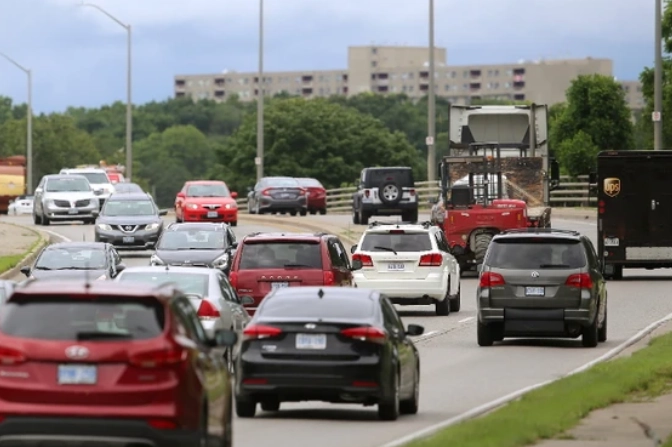
Today, Wonderland is one of the busiest roads in the city, carrying over 43,000 vehicles per day between Springbank Drive and Riverside Drive.
It is one of just two roads in London that traverse the city from north to south without any breaks or turnoffs, the other being Highbury Avenue to the east (see map below).
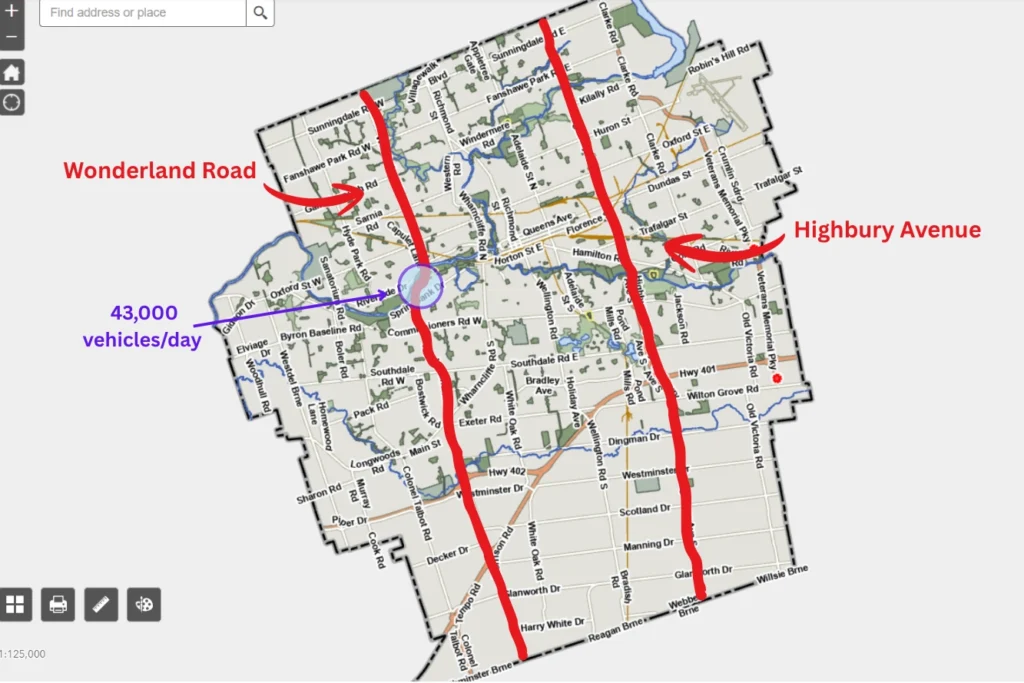
(Map by Lawrence Durham)
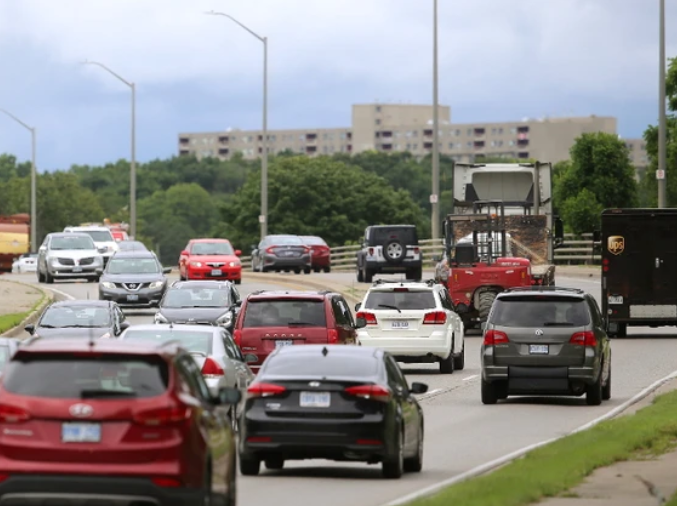
(Photo credit: Megan Stacey, London Free Press)
The Road Ahead
One of the most remarkable chapters in Wonderland Road’s story is still being written.
In 2021, the City of London made a decision that reflects changing priorities. After years of planning to widen Wonderland Road to six lanes from Sarnia Road to Southdale, city council voted 9-5 to halt the project due to environmental concerns.
Instead of pursuing a traditional road-widening approach, the city is now exploring alternative methods to improve traffic flow while accommodating pedestrians, cyclists, and transit. It’s a decision that signals a shift in how London thinks about its streets, not just as conduits for cars, but as spaces for people.
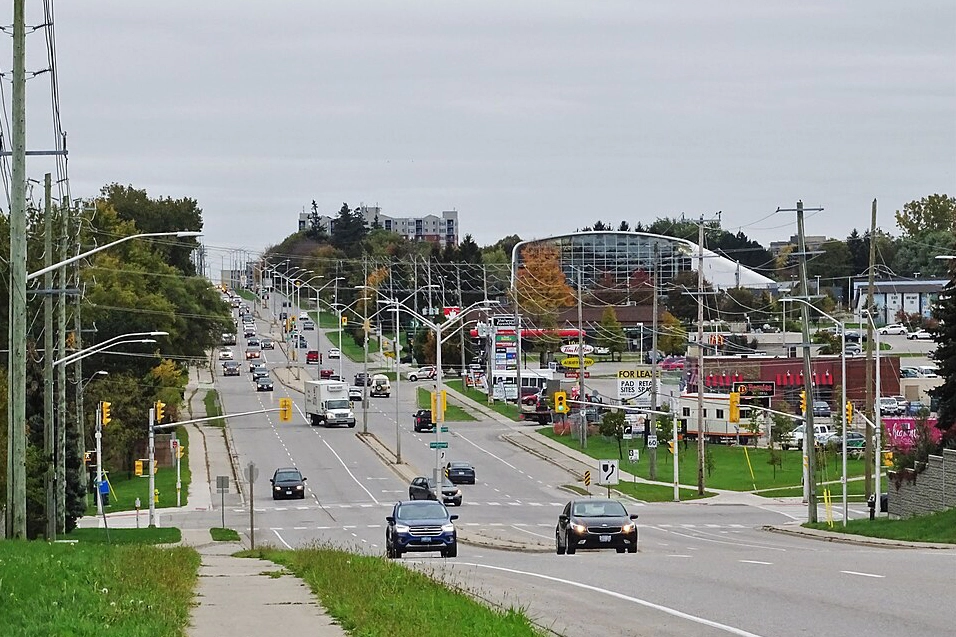
(Photo credit: mosbo6)
A Story Worth Exploring
Wonderland Road’s journey from gravel sideroad to bustling corridor, from “bridge to nowhere” to essential artery, mirrors London’s own evolution. It’s a story of vision and patience, of growing pains and eventual payoff, of a city that kept building toward a future that took decades to arrive fully.
And like so many of London’s best stories, it’s one you can experience on two wheels. For example, just off Wonderland Road is the Thames Valley Parkway, a multi-use pathway that snakes along the Thames River for 43 km, opening up a whole city to explore.
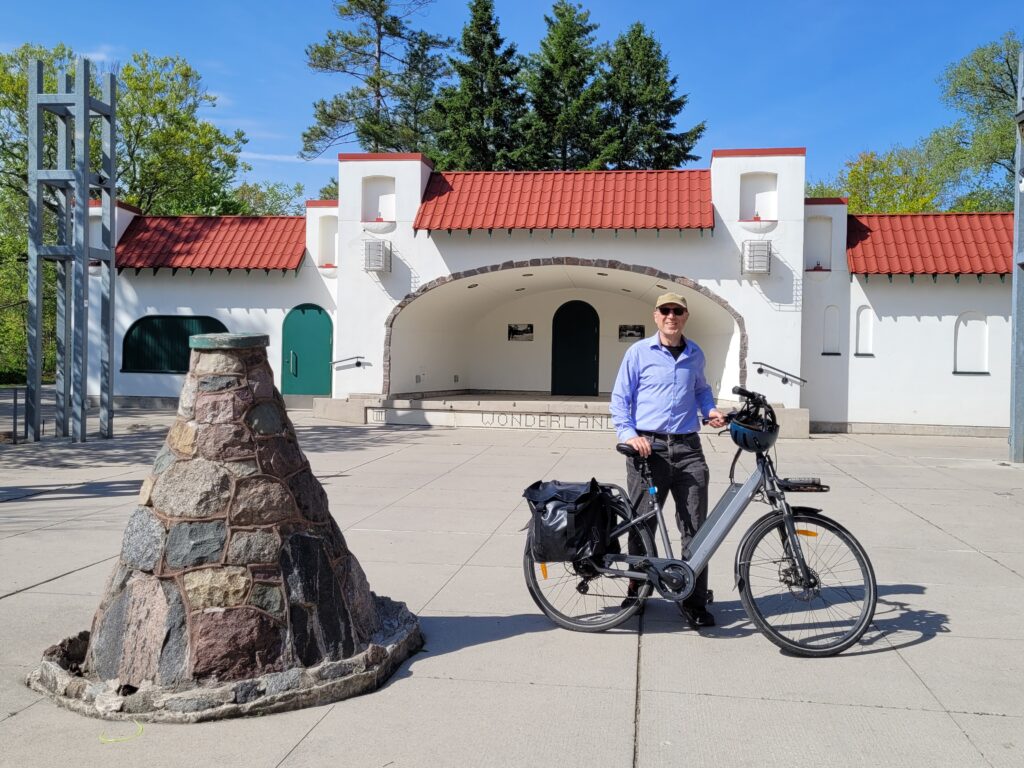
(Photo credit: Lawrence Durham)
Hi! I’m Lawrence, bicycle tour guide, storyteller, and unabashed London enthusiast.
I help curious visitors and locals alike discover the hidden stories woven into our city’s streets, parks, and neighbourhoods. From a bicycle seat, you see things differently: the way a bridge connects two halves of a city’s history, the quiet path that follows a river’s bend, the view that opens up when you slow down just a little.
If you’d like to experience the city from the best seat in the house, I’d love to show you around. Small groups, big laughs, and a whole lot of London, all waiting to be explored.
Leave a Reply