
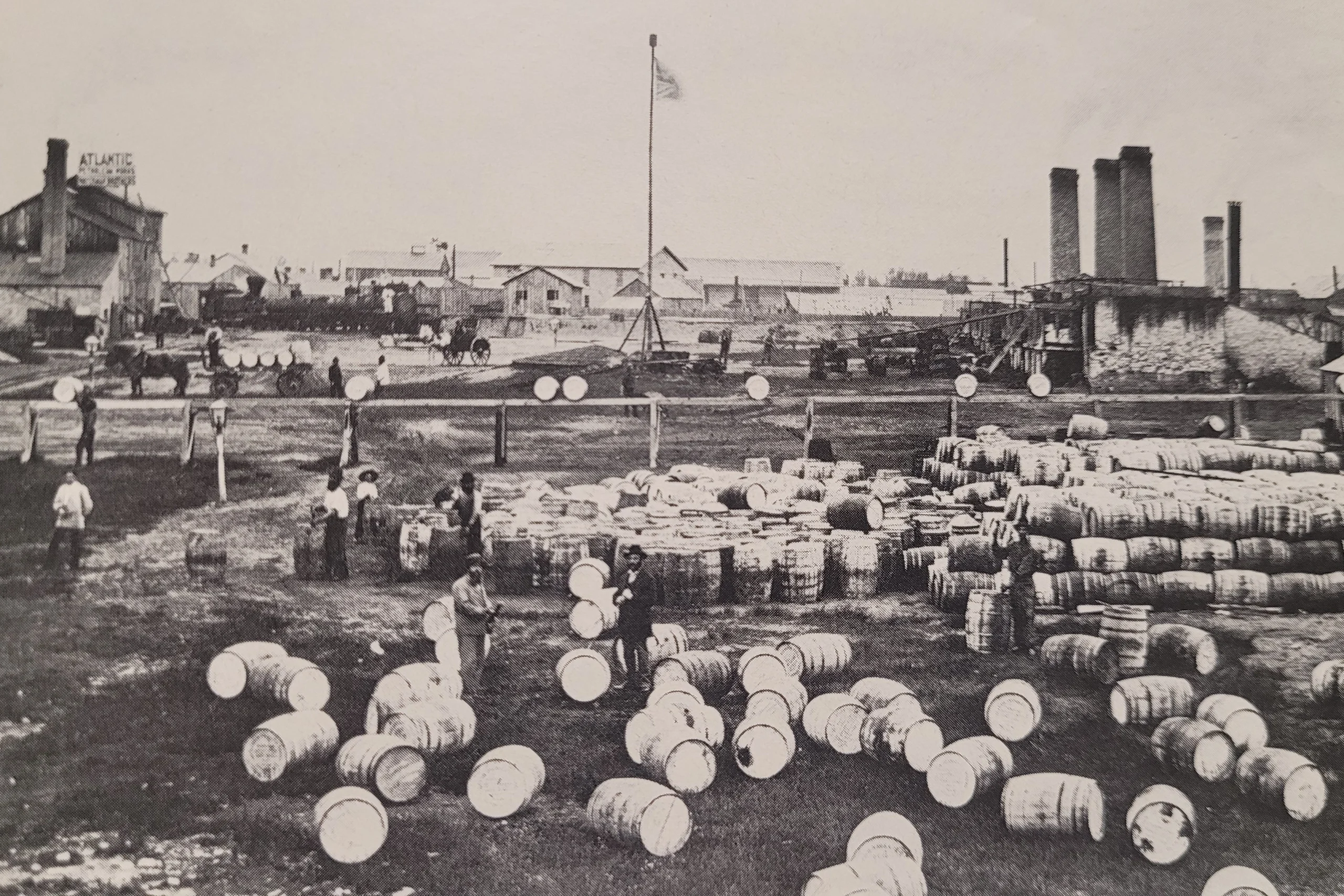
When you think of Canadian oil, your mind probably jumps to Calgary, Edmonton, or the oil sands of northern Alberta. But here’s a twist that might surprise you: more than 150 years ago, London briefly held the title of Canada’s oil capital.
Let me take you back to a time when the smell of sulphur hung in the air, Queens Avenue mansions were the talk of the town, and a little company called Imperial Oil was born.
The Discovery That Started It All
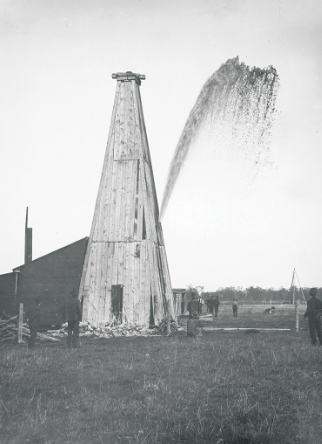
The Canadian oil story began in 1857, not in London, but about an hour’s drive west in Lambton County. When that first oil boom hit, you might expect the centre of processing to be somewhere closer to the wells. But the Board of Trade in London had other ideas. They negotiated favourable shipping rates via railroad to bring the crude oil to London for refining, and just like that, our city became the epicentre of Canada’s fledgling petrochemical industry.
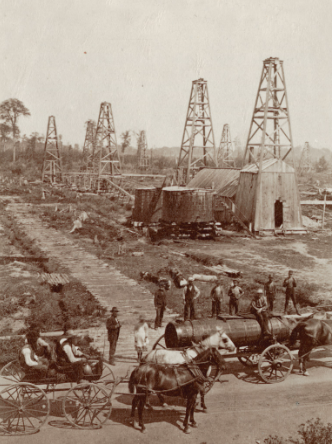
Left photo: The town of Oil Springs, Ontario, circa 1867. (Photo credit: Canada’s History)
Right photo: Oil shoots out of a well in Petrolia, Ontario, in 1902. (Photo credit: Canada’s History).
It was a classic tale of entrepreneurial hustle: Londoners didn’t have the oil, but they had the brains, the infrastructure, and the ambition to process it.
A Smelly Situation
Oil refining in the 1860s wasn’t exactly a fragrance you’d want in a candle. It was pungent. It was unpleasant. And Londoners hated it.
So, the city council passed legislation requiring the refineries to relocate beyond the city limits. Out of sight, out of mind, right?
The logic seemed sound:
- Move the smelly refineries downwind of their residents
- Keep the peace with voters
- Continue enjoying the economic benefits
The reality was far messier.
The smell didn’t magically stop at the city boundary. When winds blew from the east, sulphuric fumes wafted back over the city. And here is the ironic part. The newly constructed mansions of the oil barons on Queens Avenue, although safely within city limits, had their fresh paint eaten away by the very fumes their own industry produced.
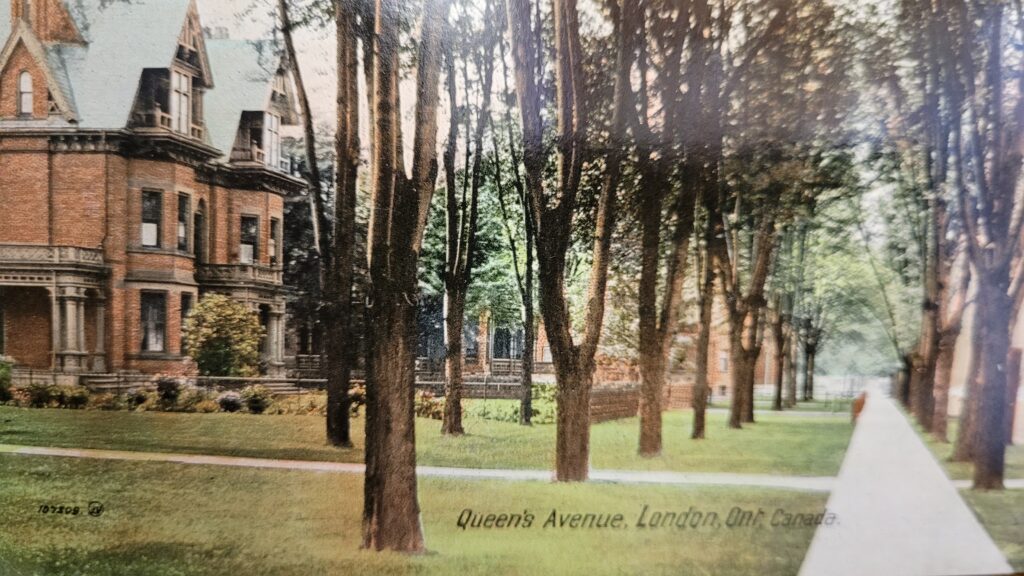
(Photo credit: London Post Card Collection, Box #97 Album #3, p. 27, pocket 2, Ivey Family London Room, London Public Library, London, Ontario, Canada)
But the most shortsighted part? By pushing the refineries outside the city limits, London’s assessors lost the ability to tax them. The odour remained, but the tax base disappeared. The village of London East, on the other hand, was laughing all the way to the bank.
Boom Times in London East
While city councillors in London were left scratching their heads, London East was just getting started. Soon, it became the epicentre of Canadian oil refining.
By the 1860s, a dozen different oil refineries were operating in the area, soon joined by secondary industries.
For example, the Canada Chemical Manufacturing Company was established in 1867 to meet the growing demand for sulfuric acid, a chemical essential for removing the objectionable odour of raw petroleum.
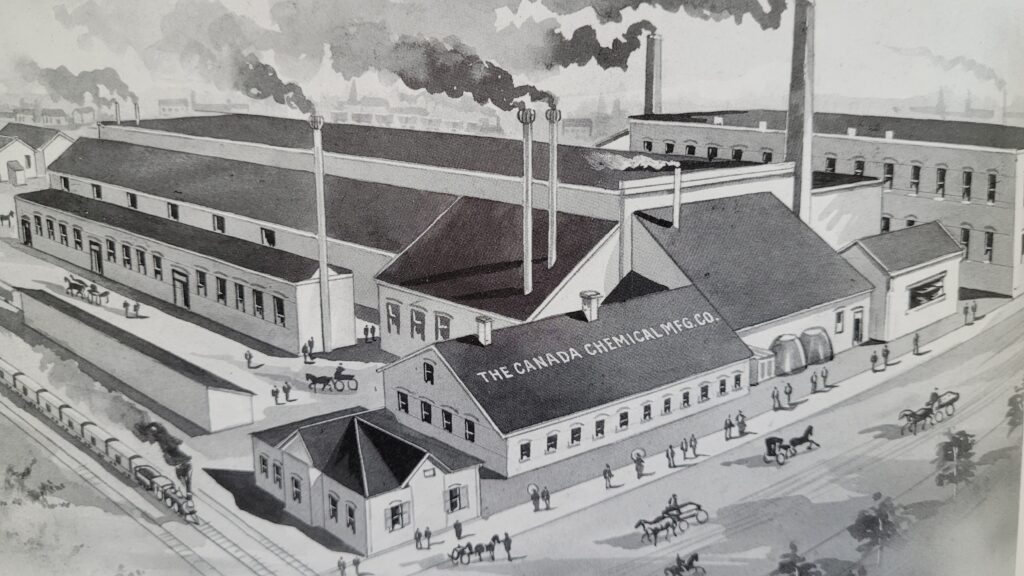
(This sketch first appeared in City of London, Ontario, Canada: the Pioneer Period and the London of Today, published by London Printing & Lithographing Co. in October 1900)
By 1876, East London had over 50 small oil refineries, all processing crude from Lambton County. Workers flocked to London East. Supporting businesses sprouted up. For a brief, glorious period, London East was where the industrial action was.
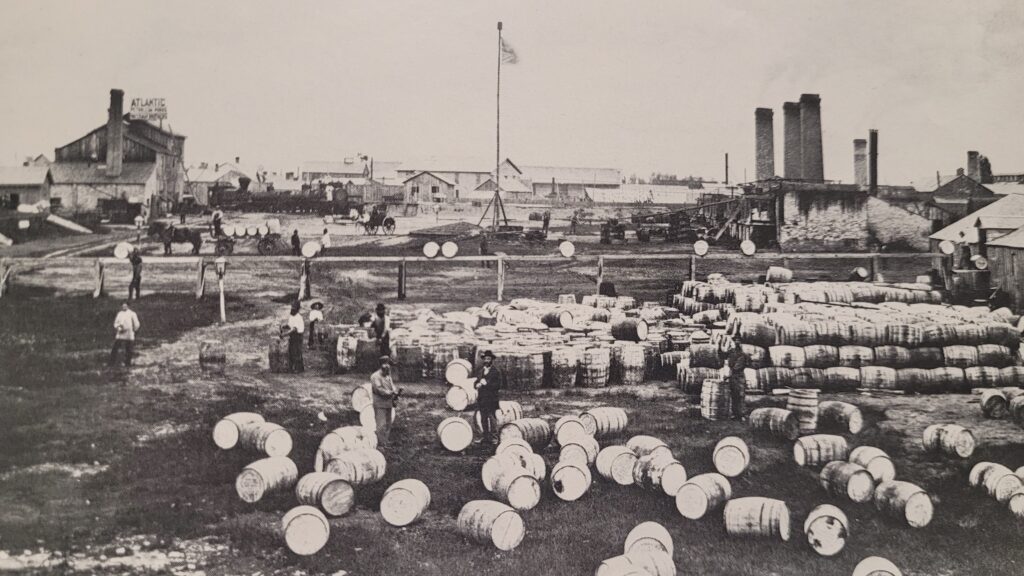
(Photo credit: Ivey Family London Room, London Public Library, London, Ontario, Canada)
The Birth of Imperial Oil
However, the refining business was tough, even back then. Competition from American refineries was fierce, and the technical processes were changing faster than small operators could keep up. Survival meant consolidation.
So in 1880, a group of prominent oil refiners from London banded together to form a new company called Imperial Oil. They established their head office in London, with another office in Petrolia. It was a moment of tremendous pride for the city because, at that time, Imperial Oil controlled 85% of Canada’s oil refining capacity.
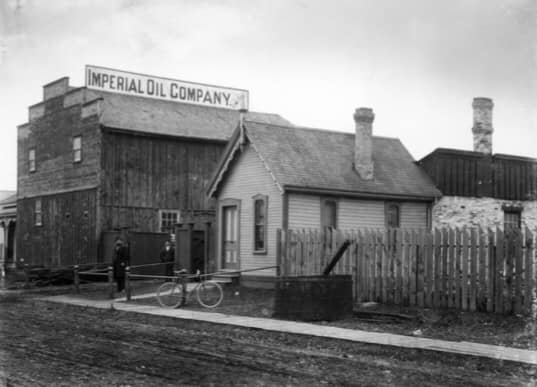
(Photo credit: Ricky Allan Gallerno )
Things looked good, but then …
Lightning Strikes (literally)
In 1883, lightning struck the London East refinery, and the facility burned to the ground.
Rather than rebuild in London East, Imperial Oil’s leadership made a strategic decision: they would build their new refineries closer to shipping facilities in Sarnia, where access to water transportation and an expanding railway network offered better long-term prospects.
And just like that, London’s reign as the oil capital of Canada was over. The head office eventually followed the refineries, first to Petrolia, then to Sarnia, later to Toronto, and finally, in 2005, to Calgary.
Our moment in the sun had passed.
What Remains Today
What became of that industrial stretch east of Adelaide? It evolved. The land gave way to other uses, other stories. The refineries are long gone today, and thankfully, the south branch of the Thames River no longer carries industrial waste. But traces of our oil legacy remain… if you know where to look.
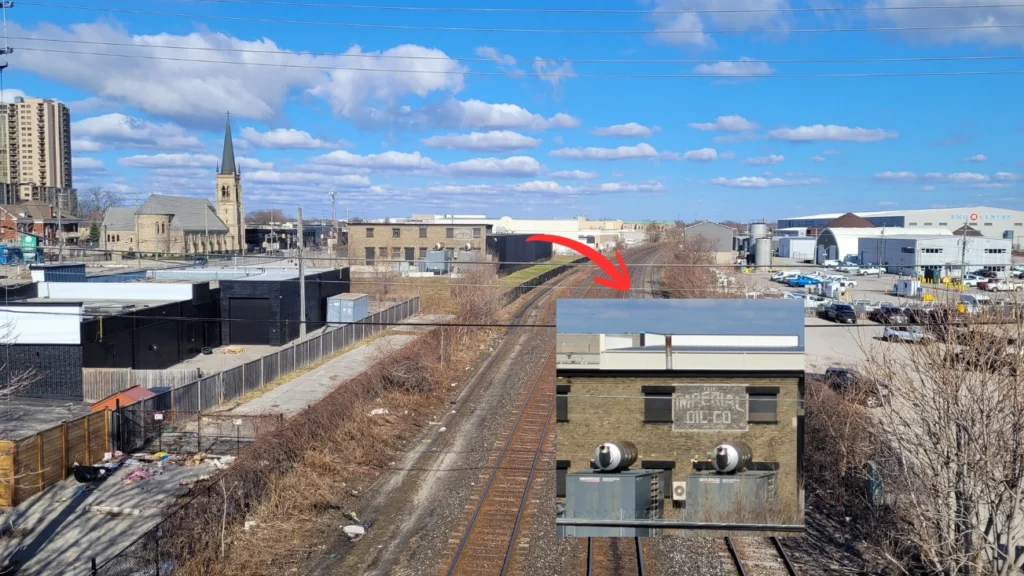
(Photo credit: Lawrence Durham)
As for the mansions on Queens Avenue, those grand Victorian homes, once victimized by the very fumes their owners’ wealth created, are now part of our architectural heritage. Some have been restored. Others house businesses and professional offices. They stand as quiet monuments to the brief period when London’s oil barons built their dream homes in the shadow of their own industry.
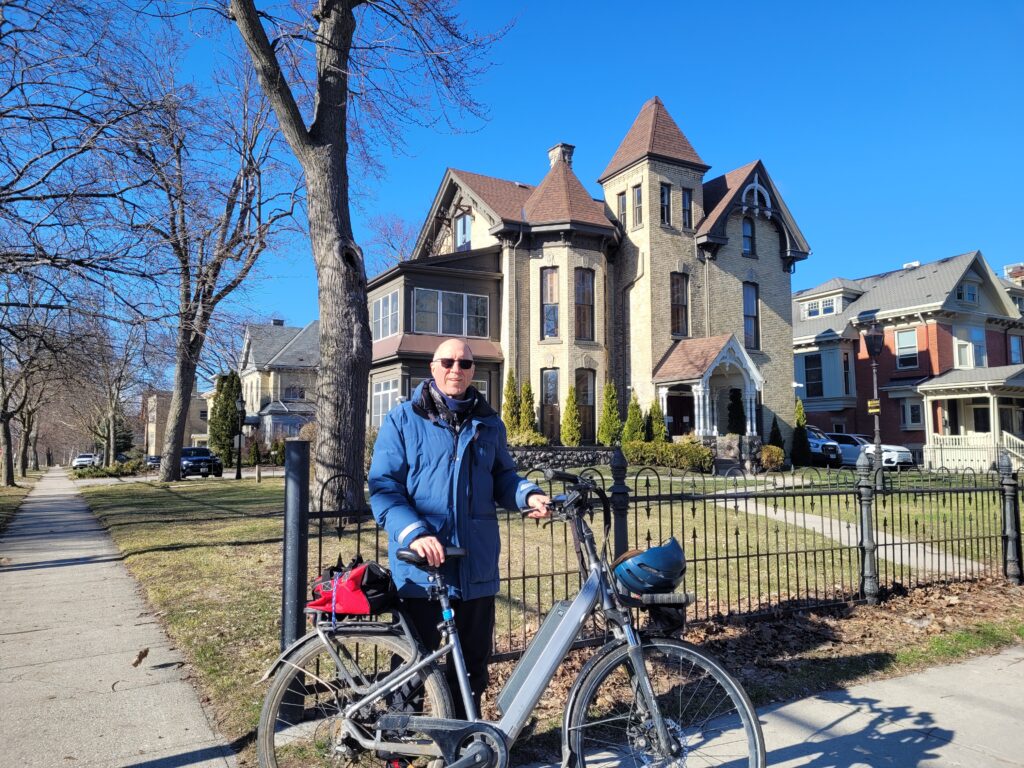
(Photo credit: Lawrence Durham)
Hi there. I’m Lawrence, bicycle tour guide, history enthusiast, and your friendly neighbourhood storyteller.
I started London Bicycle Tours because I genuinely believe this city is full of fascinating stories just waiting to be discovered. The oil boom might be long over, but the tales are still here, hiding in plain sight. If you’d like to explore London’s hidden history from the seat of a bicycle, I’d love to have you along. Small groups, big laughs, and the best views of the city you’ll ever get from two wheels.
Leave a Reply